This is why the Natural History Museum is the most important attraction in the UK
It comes as no surprise to Londoner Queenie Shaikh that the museum famous for its dinosaur skeletons has taken the crown as the most popular attraction in the UK. Here’s why she thinks it’s a must-visit for all ages
 ShanonG

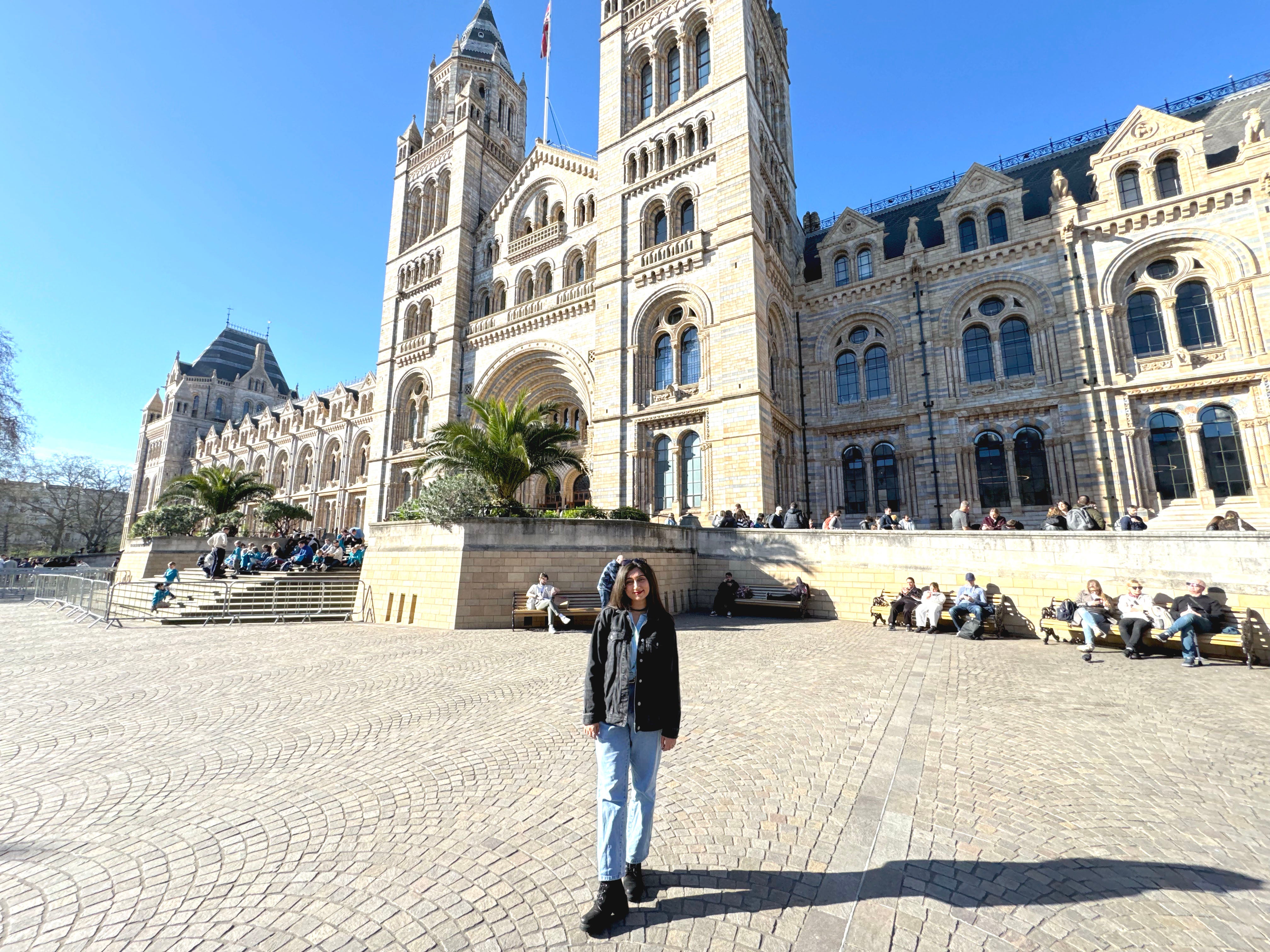
It was the official start of spring – not a single cloud in sight – and the first day that I had been liberated from a heavy coat in six long, miserable months. Though I spent far more of it than I should have wedged behind a mass of tourists, as all of us attempted to escape the clutches of South Kensington station. Meanwhile, queues snaked out of every pub outside, with punters trying their best to catch the midday sun.
The crowds were hardly a surprise. This is London’s museum quarter: home to the Victoria and Albert Museum, the Science Museum, the Royal College of Music Museum, and the Natural History Museum. The pavements were rammed with parents steering buggies in a single direction: the Natural History Museum, which was also where I happened to be going.
The museum was recently named the UK’s most popular attraction of 2025 by the Association of Leading Visitor Attractions (Alva). With its five-acre garden and new climate gallery, it drew a record-breaking 7.1 million visitors last year – a 13 per cent increase from 2024. Confirmation that I’m far from the only fan.
Read more: A fashion writer’s guide to staying, shopping and dining in London’s most stylish village
The Natural History Museum first opened its doors on 18 April 1881, though it dates back to 1753 with its roots in the career of Sir Hans Sloane. A high-society physician, Sloane travelled widely and amassed a vast collection of natural history specimens and cultural artefacts. After his death, his will enabled Parliament to purchase more than 71,000 items, which laid the foundation for the museum’s collection.
I’ve always been a bit of a museum nerd, and my love for the Natural History Museum really took shape when I was a child obsessed with the Jurassic Park franchise. Every time the characters ran straight into a dinosaur – despite knowing there was a T-rex on the loose – I felt a mix of fascination and fear.
That fascination only grew as I got older and watched Friends, in which Ross Geller tries – often unsuccessfully – to share his love of palaeontology with his friends. His idea of a date night with Rachel Green at the American Museum of Natural History – watching a projector scatter stars across the walls, surrounded by fossils – has always sounded ideal to me, whether as a couple, or even with family.
Judging by the number of parents pointing out exhibits to their children at London’s equivalent on this sunny day, plenty of people seem to agree with me.
Pop culture references aside, one of the things that makes the Natural History Museum so engaging as an adult – and central to its global appeal – is how the building’s Victorian Romanesque Revival architecture houses exhibits chronicling 4.5 billion years of history.
As we get older, “billions of years” becomes easier to understand, yet harder to truly grasp. Standing in front of a fossil that pre-dates humanity by thousands of millennia has a way of putting everyday concerns – unanswered emails, delayed trains – into perspective. There is a universal experience in the childlike awe evoked by the sheer size of dinosaurs, which also reflects something broader: an appreciation for biodiversity, evolutionary history and the urgent research needed to protect our planet.
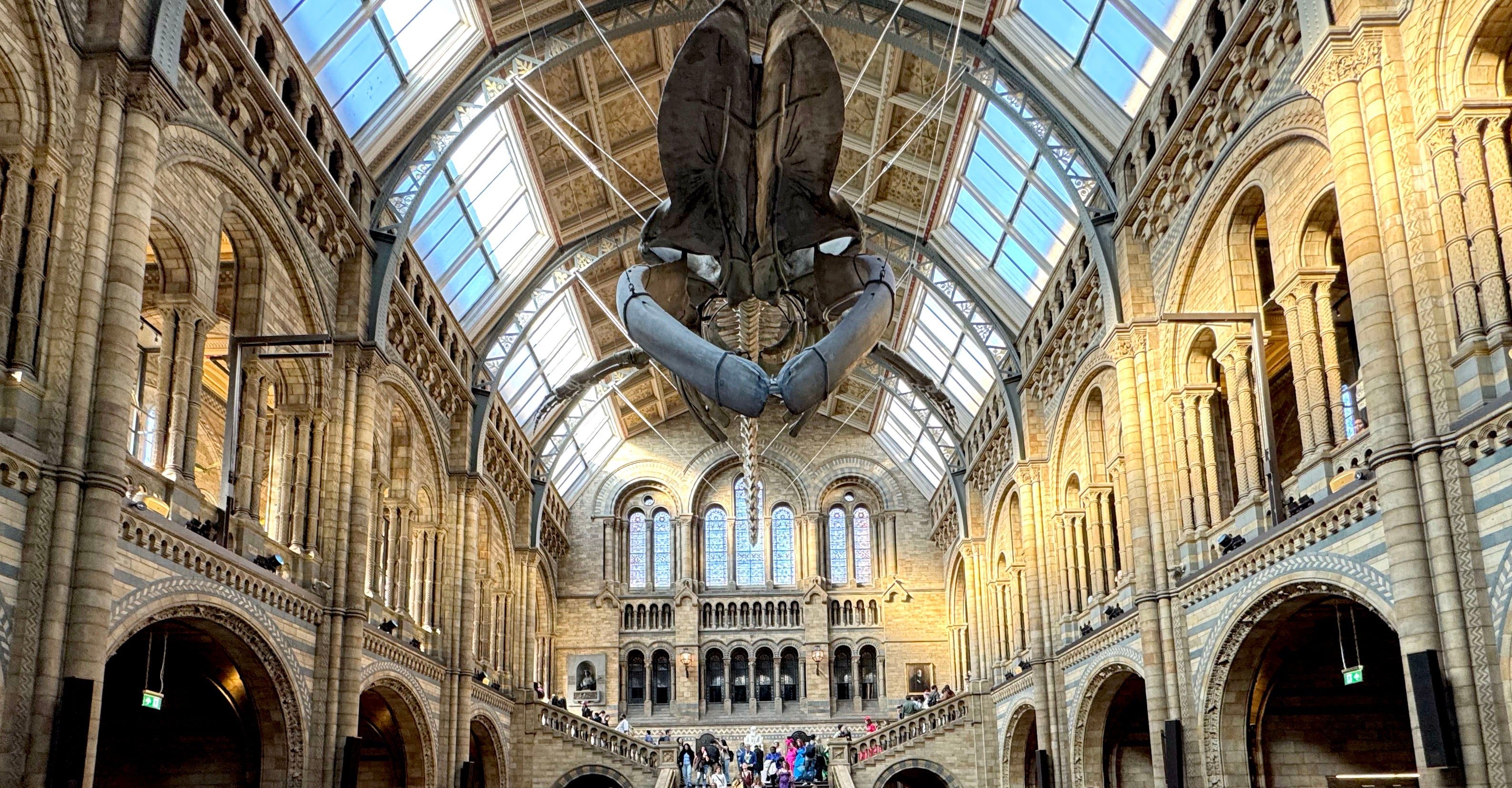
This is immediately evident upon entering the museum via Hintze Hall, where the 25-metre-long blue whale skeleton – “Hope” – hangs suspended from the ceiling as a symbol of ocean conservation. The museum is organised into colour-coded zones – Blue (dinosaurs, mammals), Red (geology, evolution), Green (birds, insects) and Orange (wildlife garden, spirit collection) – making it easier to navigate its expansive collection.
Unlike the The British Museum, which ranked second with 6.4 million visits last year – followed by Windsor Castle (4.9 million), Tate Modern (4.5 million), and the National Gallery (4.1 million) – the Natural History Museum stands out for how interactive it is.
Read more: This elegant hotel and brand-new champagne bar is a central travel treat
It offers hands-on exhibits and digital displays for all ages, including the Volcanoes and Earthquakes gallery, the Investigate science centre for children, live animal displays, multiple dinosaur sections and, more recently, Pokemon’s first UK museum pop-up shop. The Volcanoes and Earthquakes gallery also features a simulator recreating the 1995 Kobe earthquake inside a supermarket setting.
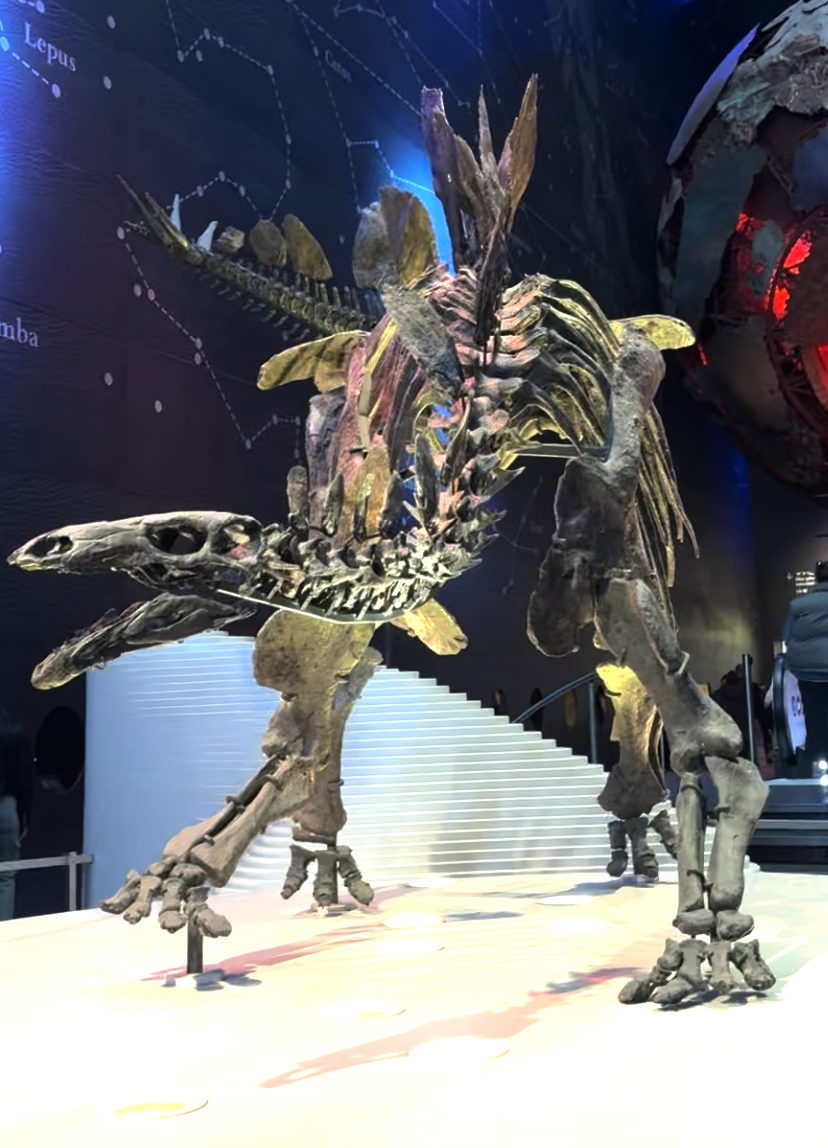
My favourite area is Earth Hall, where an escalator cuts through the space as it shifts in colour, watched over by one of the most complete Stegosaurus skeletons on display anywhere in the world. A celestial map stretches across the gallery walls, while the upper level houses gems, minerals, and even a piece of moon rock.
Here, during my visit, a wedding shoot was taking place, with the photographer ushering people aside to capture the bride and groom as they posed on the escalator running through the centre of Earth.
Back in the museum’s new climate gallery – “Fixing Our Broken Planet”, which drew more than two million visitors last year – I navigated crowds of adults and children, trying to read displays over a sea of bobbing heads.
Here, I was educated about practical, nature-based alternatives to the way we eat, power our lives and use materials – and how all of this shapes our health. The gallery holds more than 200 specimens – from a Sumatran rhino to an ancient cow skull – that highlight our impact on the natural world, while also pointing towards the opportunities we still have to protect it.
My final stop of the day was The Vault, home to a slice of the Imilac meteorite and the so-called “cursed Delhi Purple Sapphire”, a mysterious stone dating back to 1857, before stopping for an iced latte at Earth Hall cafe.
The further I moved through the building, the more it became clear why the Natural History Museum draws such a varied crowd – from solo visitors and couples to families and content creators. It’s not just the spectacle, but the range of ways to experience it all – whether you’re looking to learn, to linger, or simply to take it all in.
That appeal extends well beyond the galleries. In the coming weeks and months, there’s a silent disco planned, yoga sessions, and the popular “Dino Snores” sleepovers for adults, which include an overnight stay, a film marathon, a three-course meal, and even live comedy. These may be ticketed, but the fact that visitors can experience the museum itself – not just as a collection of curiosities, but as a vast, working research institution entirely for free – is truly remarkable.
Read more: The Victorian boozer-turned-boutique hotel with gastropub grub
How to do it
The Natural History Museum, London is free to enter, but suggests a voluntary donation of £5 per person to support its research and collections. Book a ticket before your visit at nhm.ac.uk.