What are your rights if you are on an overbooked flight?
Ryanair and Jet2 do not routinely sell more tickets than there are seats available, but easyJet and British Airways do
 AbJimroe
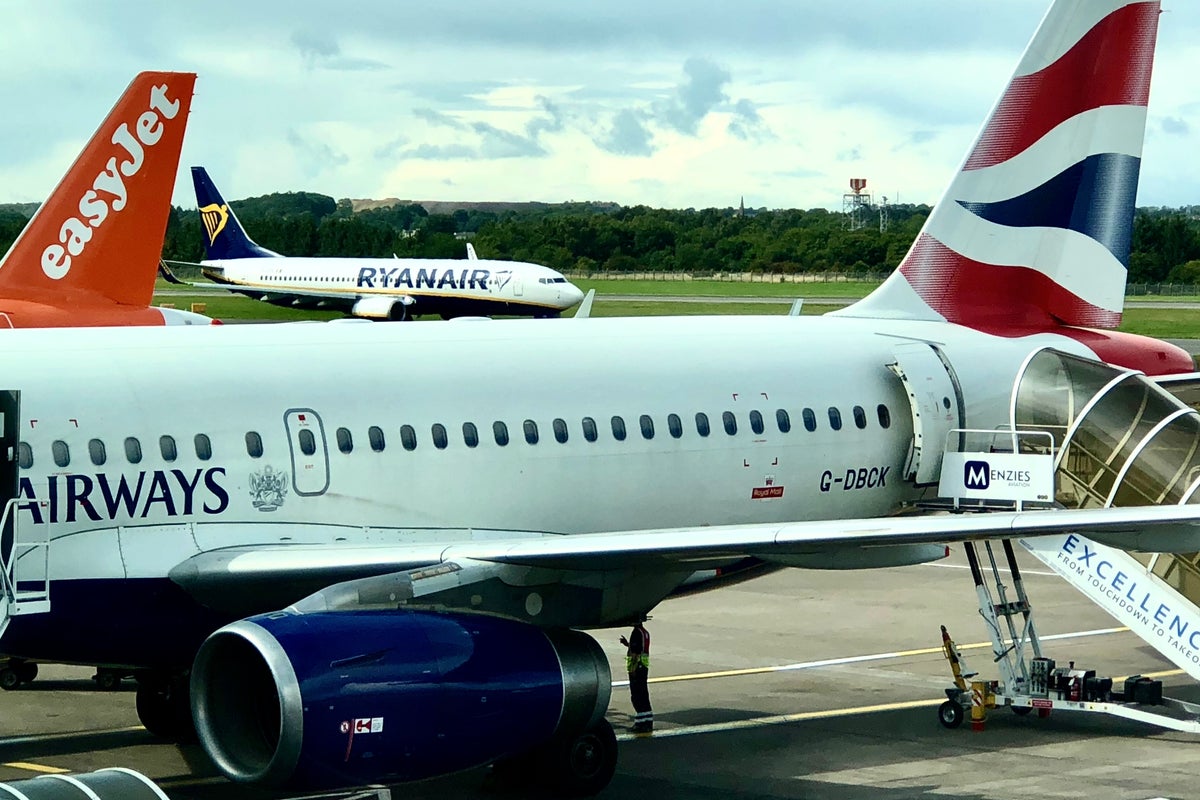
With airlines cutting flights by the thousands because of the high price and scarcity of aviation fuel, one inevitable consequence is that some aircraft will be flying fuller than ever before. Some airlines are “merging” flights, moving passengers from a cancelled one on to another which is operating.
That phenomenon has sparked fears of an increase in cases of overbooking – when airlines sell more tickets than there are seats actually available on an aircraft.
It has been a widespread practice among airlines including British Airways and easyJet for decades.
These are the key questions about how overbooking could potentially affect you – positively as well as negatively.
Two hundreds seats on the plane – you sell no more than 200 tickets, surely?
No responsible company would sell more tickets than there are seats available, surely? Put like that it sounds a deplorable business practice. After all, theatres and sports venues don’t sell the same seat twice. So how can airlines justify trying to boost their profits at the travelling public’s expense? Well, when handled correctly, overbooking makes good sense.
Airlines know from experience that on most flights, a proportion of passengers won’t show up. So they place a bet that a certain proportion (typically 5 per cent) will not be at the departure gate because of an event such as an illness, a work demand or simply being stuck in traffic on the way to the airport.
Good for the airlines but not the passengers, then?
By selling the same seats twice, an airline can sometimes make much more money: on busy flights, often the last passengers to book are desperate to travel and will pay very high fares.
But the carriers insist overbooking helps to keep fares low. Britain’s biggest budget airline, easyJet, says: “On any given day large numbers of passengers don’t show up for their flight. Filling our planes and minimising the number of empty seats we fly is one of the ways we can reduce the price you pay for your flight.”
There are other benefits – for passengers and the planet:
Mostly, the airlines get away with overbooking. You have probably been on plenty of oversold flights without realising it, because the number of “no shows” has been predicted correctly.
But what happens if too many people turn up for a particular flight?
When there are more passengers than seats, the law and good sense align. In the UK, the European Union and North America, the airline is required to seek volunteers to travel on a later flight.
The carrier should offer inducements until enough volunteers are found. These can include:
If the later flight is the following day, the airline must provide a hotel (together with transport to reach it) and meals as appropriate for the time spent waiting. The replacement may possibly be a departure to a nearby location, for example from Cologne rather than Dusseldorf or New York Newark instead of JFK.
How can the airline be sure that it will get enough volunteers?
By throwing money at the problem. Everyone has their price. People who need to travel urgently place a high value an immediate departure; other passengers may not and can be bribed to postpone their flight with promises of cash or future tickets. For example, someone on their way to a wedding or a funeral will want to travel whatever the incentive – while a retired passenger might be open to earning some money.
In my experience, the US handle overbooking very well, with airlines raising their bids at the gate until they have enough volunteers. The trouble is that in Europe there is no exact definition of what an airline must do and the evidence I’ve seen is that they don’t always try hard enough – and instead take their pick of the passengers.
I’ve been selected for overbooking against my will. I must travel. What can I do?
Insist that the airline seeks volunteers. If this fails, assert your right to be flown as soon as possible to your destination. If an airline denies you boarding a London-Los Angeles flight it should not be necessary to wait until the following day for that carrier’s next departure – if another airline has a flight on the same day. The rules state you are entitled to “re-routing as soon as possible”. Re-routing is a clumsy term; the meaning is that you are entitled to be flown to your original destination.
When finding solutions you can be creative: for example asking for a London-Chicago flight and an onward domestic connection to LA.
If you are booked to a provincial French or German city, note that Paris CDG, Lyon, Frankfurt and Berlin have high-speed rail stations built into the airport. So it may be that a London-Lyon journey could be made by air to Paris and train from there.
Under air passengers’ rights rules you are also due between £220 and £520 depending on the length of the flight. This should be in cash – although the airline can invite you to accept a voucher (which should be significantly more than the cash compensation).
My airline insisted there wasn’t time to ask for volunteers
This is nonsense and they should look at the good practice in the US. Passengers are often tapped up well ahead of the final call, so the carrier has a list of people prepared to leave the plane if the price is right. And I was actually sitting on a plane about to leave from Seattle to Cincinnati, when, 10 minutes before departure, an appeal went out for someone to travel later in return for $300 (£220). I dinged the call bell and left the aircraft.
At busy times – typically Friday and Sunday afternoons and evenings – the bidding starts significantly higher, and the problem for the airline can become having too many passengers desperate to leave the aircraft in return for a multiple of the fare they paid.
Isn’t there a better way to handle this, though?
Some airlines, notably Vueling, may offer passengers inducements in advance to travel on an alternative flight. This isn’t quite the same as overbooking – it simply allows the carrier to shift low-paying passengers onto less popular flights and sell their places for much higher fares.
How can I avoid being denied boarding?
Book with one of the relatively few carriers that do not overbook flights, notably Ryanair and Jet2. Even then, though, there may be a rare case where a change of aircraft or a weight limit requires some passengers to be left behind. As with any “real” case of overbooking, the airline should seek volunteers.
Is anyone safe from overbooking?
There are no guarantees. A plane ticket is nothing more than a vague expression of the airline’s hope to get you from A to B, and the carrier can pick anyone to offload that it likes.
But UK and European regulations state: “Operating air carriers shall give priority to carrying persons with reduced mobility and any persons or certified service dogs accompanying them, as well as unaccompanied children.”
Passengers who have checked in baggage may be safer, because the process of retrieving luggage can add faff and delay.
Does it help if you check in well ahead?
It appears that the odds of being denied boarding on an overbooked easyJet flight are much lower if you have already been assigned a specific seat through the online check-in process. This can be done up to a month ahead without a fee.
Does overbooking happen in other areas of travel?
Some hotels oversell routinely. Usually the manager will have spare rooms in another hotel in their back pocket – where excess guests can be packed off in a taxi with a bit of cash or a free dinner for the inconvenience. There’s even a hospitality industry expression, “being walked”, for when a guest is sent to another hotel.
What about on road and rail?
Intercity trains are ripe for some overbooking – particularly on “open access” operators such as Lumo. While the London-Newcastle-Scotland rail firm is good at selling its trains, I have never been on one that does not have a handful of empty seats, which represent unrealised revenue. The same applies on long-distance coach operators.
Korean Railways has a terrific sort-of overbooking policy on its intercity trains. When all the seats sell out, a certain number of standing tickets are sold at roughly half-fare. If seats are unclaimed, standees can take those places.
Read more: Why and how European airlines may cancel flights – and why passengers shouldn’t worry about holidays