What does the EU’s new entry-exit system mean for British travellers?
Under the entry-exit system, British travellers to the Schengen Area can expect to be fingerprinted and provide a facial biometric
 JaneWalter
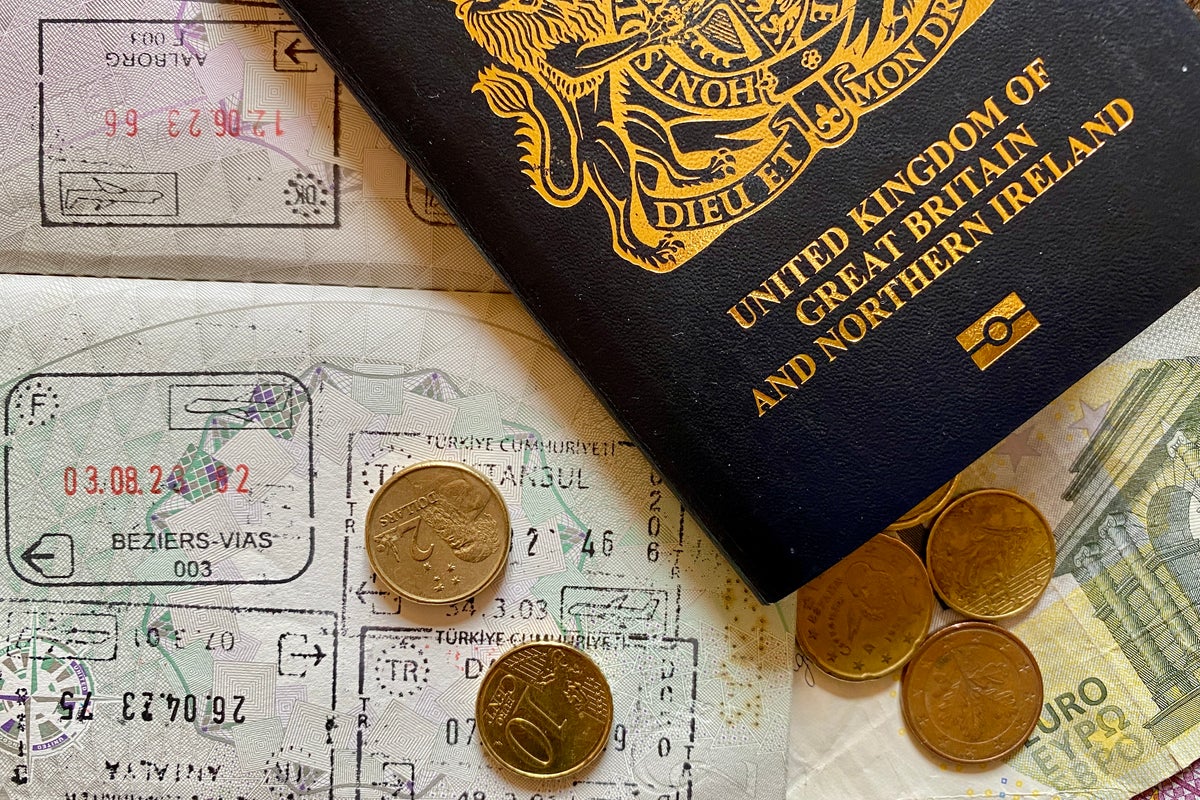
The EU plans to take fingerprints and facial biometrics from British travellers to Europe are almost complete – but there are many teething problems. The long-awaited “entry-exit system” (EES) has been rolled out over the course of 180 days from 12 October 2025 to 9 April 2026. It applies to all “third-country non-visa nationals” including UK passport holders.
The aims of the EES are:
British travellers, like other third-country nationals, are restricted to 90 days’ stay in any 180 days within the Schengen area. But enforcement currently depends on checking passport stamps and is applied haphazardly.
The entry-exit system is supposed to connect every frontier in the Schengen area with a central database. The Schengen nations comprise all EU nations except Ireland. In addition the EES will be brought in by Iceland, Norway and Switzerland.
The procedure for Irish citizens will not change when entering the Schengen Area. As now, they will simply be matched with their passport or passport card. Any UK citizen with the good fortune to have an Irish (or other EU) passport can use that document: skip the queues, swerve the fingerprinting.
What is the “entry-exit system”?
“The most modern digital border management system in the world,” according to the European Commission. “An automated IT system for registering non-EU nationals who are travelling to the EU for a short stay.”
The system aims to capture data from all “third-country nationals” when they either enter or leave at an external Schengen border – such as flying from the UK to Spain or crossing by road from Greece to Turkey. It is not used at internal frontiers within the Schengen Area.
EES registers the date and place of entry or exit. The first time a traveller encounters the entry-exit system, they are supposed to provide fingerprints and a facial biometric. But as The Independent revealed, demands for biometrics at every frontier have been quietly dropped by Brussels.
This system, says the European Union, “will replace the current system of manual stamping of passports, which is time-consuming, does not provide reliable data on border crossings, and does not allow a systematic detection of over-stayers”.
Why are British travellers affected?
Because we demanded to become subject to the EES, which was initially being developed while the UK was a member of the EU.
After the UK voted to leave the European Union, Boris Johnson’s government negotiated for British travellers to become third-country nationals subject to a range of restrictions. British passport holders must currently have their travel documents inspected and stamped.
The good news about the entry-exit system: passport stamping is officially ending. The bad news: the process of fingerprinting and/or providing a facial biometric is likely to prove slower and more onerous than quick checks by passport officers. And only when the EES is running flawlessly across Europe will passport-stamping end.
How will the border checks work?
Inbound and outbound passengers will go through the formalities at airports, land borders and ports in the Schengen area on arrival and departure.
Three locations in the UK have “juxtaposed” border controls, with French frontier police conducting checks on British soil: at the Port of Dover, Eurotunnel’s Folkestone terminal and the Eurostar hub at London St Pancras.
There is a supposed to be a difference between the first time you cross a Schengen area frontier where entry-exit system is in operation and subsequent entries and exits.
But some British travellers report being asked for both face and fingerprints on multiple occasions.
Sounds complicated ...
The Port of Dover, Eurotunnel and Eurostar have invested heavily and now believe they can handle outbound passengers without undue delay. Eurotunnel expects the procedure to add two minutes per traveller using LeShuttle between Folkestone and Calais, and that it can process 700 cars per hour. But motorists and passengers at these departure points are being processed manually, rather than using the kiosks.
At London St Pancras International, three locations have been set up with EES kiosks for registration of passengers’ documents. But none of these facilities is currently being used.
Across the Schengen area, biometric checks can initially be reduced to just one in 10 travellers if queues build up.
Local immigration officials will decide the appropriate number of travellers required to register their biometrics, on a range from 10 to 100 per cent, as a “relief valve” while the process is being rolled out.
How long does registration last?
Each new visit triggers another three years of validity of the initial registration. In other words, if you don’t cross a Schengen area frontier for three years, you will need to register again. It has been suggested that registration runs out when your passport does, but my reading of the legislation indicates that is not correct.
Unlike many border arrangements, the entry-exit system is concerned with the person, not the passport. The EES database has a record of Simon Peter Ritchie Calder, born in Crawley on Christmas Day 1955, with fingerprints and facial biometric ascribed to that person. The biographical information is extracted from whichever passport I happen to provide at the moment of registration.
On subsequent visits, the EES is agnostic about the passport I provide with name plus place and date of birth, so long as the biometric (overwhelmingly likely to be face rather than fingerprints) matches the record of that person.
This makes sense as it should end an illicit practice. At present people with two passports (whether both UK, or one British and one Australian, Canadian, etc) can stay more or less permanently – making judicious side-trips out of the Schengen area on one passport and back again on the other. Truck drivers in the Balkans have reportedly been caught using such techniques.
Do I need to pay anything to use EES?
No, payment starts, in theory, later in 2026 with the Etias permit (see more below). Etias is dependent on the entry-exit system running smoothly.
When I get a new passport, must I register again?
Not according to the official Procedures for entering data in the EES. It says that if “the third-country national presents a valid travel document which differs from the one that was previously recorded” (ie a new passport), the individual’s online file will be updated with the fresh details.
I am only changing planes at an EU airport. Must I go through the entry-exit system?
It depends on your routing and final destination, and also on the way you have booked the travel.
You will not need to go through the entry-exit system if the answers to the following are both affirmative:
But you will need to go through EES if any of the following applies:
I am on a cruise from a British port. When do I register?
If you are returning on the vessel to the UK, probably never. The Home Office says: “Sailings that start and finish their journey outside of the Schengen area (for example, at a UK port) will generally be exempt from EES checks, including for any day trips into the Schengen area that are part of their itinerary.”
If you leave the ship in a Schengen area port, you will need to go through the entry-exit system at that location.
What happens to EU travellers when EES starts?
They will breeze through the frontier via special lanes where the only check will be a glance at their passport to check (a) it’s valid and (b) it’s their’s. So, as it used to be for British passport holders before Brexit.
Must I provide proof of travel insurance?
The standard Schengen area requirements are unaffected by the introduction of the entry-exit system. A third-country national must:
Each member state can set its own criteria for the amount of funds the traveller must have available. France has chosen to resurrect a “dormant demand” for travellers to possess medical insurance. It is the only Schengen area country that requires insurance.
What is ‘Etias’ and when does it start?
The European Travel Information and Authorisation System (Etias) is the next step in tightening frontier controls. It is an online permit, price €20 (£17), for third-country nationals who do not require visas. It is similar to the US Esta scheme, but valid for longer: three years. While those under 18 or over 70 will still need to apply for and hold an Etias, it will be free.
In order to work, Etias requires EES to be fully operational. Once the entry-exit system is completed and is running smoothly, Etias is set to follow six months later.
But initially a six-month grace period will be granted – so it will not be mandatory for prospective UK visitors to apply online for permission to enter the Schengen Area for at least a year after the complete introduction of EES, ie not before 9 April 2027.
Is Etias a visa?
Officially, no. Europe says that Etias is “a pre-travel authorisation system”. It is a similar concept to the US Esta, the Canadian eTA and the British ETA, which are not technically visas. They are issued to international travellers who do not require a full visa.
But as Etias requires visitors to apply in advance, provide lots of personal information, pay money and be issued with a permit to cross a border, it is not surprising that it is commonly termed a “euro-visa”.
How will I apply?
When finally the EU is ready, at the heart of the system is an Etias app and website.
You must provide all the usual personal details: name, date and place of birth, gender, home and email addresses, phone number(s), passport number and expiry date.
In addition you must give:
(On the last point, the European Union helpfully points out that you are not bound to stick to that nominated location: “Once you have your travel authorisation in hand, you can change your plans.”)
You are required to reveal:
I have a criminal conviction from long ago. Will I face problems?
Nothing will change with the entry-exit system. The EES is nothing more than the long-overdue digitisation of frontiers of the Schengen area, and personal background is not relevant. But in October 2026, if all goes according to plan, one’s history becomes of interest with the introduction of Etias.
It will be incumbent on the prospective visitor to answer truthfully on “details about any past criminal convictions”. But every indication is that only serious crimes (which I infer as those with a substantial prison sentence attached) and terrorist offences could result in an application for Etias being rejected. This is in marked contrast with the US Esta, for which convicted criminals cannot register.
What happens to the information I provide?
Every Etias application will be checked against EU and relevant Interpol databases, as well as “a dedicated Etias watch-list”.
The system will be tuned to pick out individuals suspected of being involved in terrorism, armed robbery, child pornography, fraud, money laundering, cybercrime, people smuggling, trafficking in endangered animal species, counterfeiting and industrial espionage.
Is Etias going to be the next online scam?
Yes, As with other online travel permits, commercial intermediaries are allowed – but according to Frontex, the EU organisation implementing Etias, there are many scam sites out there that are likely to apply fees way above the basic €20.
Any site other than europa.eu/etias is unofficial and should not be trusted.
One “imposter” site, based in California, claims “Etias will be operational from 2025”.
Another site offers a 40 per cent discount for early applications. Some use the EU logo, which is illegal.
Frontex, the EU border control agency, also warns about the risk of identity theft if you provide personal information to an imposter site.
How far in advance must I apply?
The European Union says: “We strongly advise you to obtain the Etias travel authorisation before you buy your tickets and book your hotels.”
The aim is for an Etias to be granted within minutes, though even a straightforward application could take up to four days.
If an application is flagged (ie there is a “hit” with one of the databases) the applicant may be asked to provide additional information. Alternatively, says the EU, the applicant may be asked “to participate in an interview with national authorities, which may take up to additional 30 days”.
Assuming yours is granted, there is no certificate issued, and nothing needs to be printed. The frontier guard will get the information he or she needs from the passport you used to apply.
In a case of mistaken identity, will I be able to appeal?
Yes. Details of how to appeal will be included with the notice of rejection.
Once I have an Etias, am I guaranteed admission to the Schengen Area?
No. “Mere possession of a travel authorisation does not confer an automatic right of entry,” says the EU. As with the US, travellers can be turned away for any reason.
There is likely to be a mechanism in place for an Etias to be rescinded.
Do I need to apply for an Etias every time I travel to Europe?
No. The permit will be valid for three years, or until your passport runs out, whichever is the earlier.
Will I need an Etias to travel to Ireland?
No. The Common Travel Area incorporating the UK, Ireland, the Isle of Man and the Channel Islands transcends European Union rules, and in any event, Ireland is not in the Schengen area.
If I have a long-stay permit from one of the EU nations, must I obtain an Etias?
No.
How are people without internet access supposed to apply?
They will be expected to get a friend, a family member or a travel agent to make the application for them, in the same way as the US Esta and similar schemes.
Just remind me about the 90/180 day rule?
This rule, to which the UK asked to be subject after leaving the European Union, means that British travellers cannot stay more than 90 days in any stretch of 180 days.
As an example of what it means: were you to spend the first three months of 2026 in the Schengen area, you would have to leave on 31 March and could not return until 90 days later, ie 30 June.
Is the UK being punished because of Brexit?
No. Work on strengthening the European Union’s external border began a decade ago. British officials participated in initial planning for the entry-exit system and online registration for third-country nationals.
The UK asked to be subject to all the extra red tape that everyone already knew was on the horizon. The EU agreed. So Brussels is delivering exactly what the British asked for.
Had we remained in the EU but outside Schengen, would we still be subject to all the new red tape?
No. Were the UK still in the EU, neither EES nor Etias would affect British passport holders.
Citizens of Ireland, which is in the EU but outside Schengen, need not go through the entry-exit rigmarole nor get an Etias. They simply have their passport/ID checked on arrival and departure, usually via a fast-track line.
That’s what the UK chose to give up.
What’s the back story behind the delays?
Originally the entry-exit system was due to start in 2021. But the body responsible for implementation – the European Union Agency for the Operational Management of Large-Scale IT Systems in the Area of Freedom, Security and Justice (EU-Lisa) – has repeatedly pushed back the date because the database was far from ready.
In August 2024, the EU’s Home Affairs commissioner, Ylva Johansson, said: “I have decided that the entry/exit system will enter into operations on 10 November. That will be a great day – entry-exit system day.” But a month before the big day, ministers decided to postpone the introduction.
Many airports, ports and railway stations have already installed expensive equipment, which has been lying unused. Officials in Brussels then kicked the can down the road to October 2025 – with a full roll out not complete until April 2026.
This piece was first published in August 2025 and is kept updated with the latest information
Additional research by Dr Nick Brown