A 10-Year Study Found This Eating Habit Supports Mental Health As You Age
One simple habit may give your mental health a boost as the years go by.
 Astrong

August 26, 2026 As the years go by, it's pretty easy for your diet to fall into a routine. You find a few breakfasts you love, rotate the same vegetables and proteins, and suddenly you can't remember the last time you bought something you've never tried before. While that isn't necessarily a problem, new research1 suggests there may be a reason to keep some variety in the mix. Researchers tracked how older adults' eating patterns changed over a decade, and how those changes related to depressive symptoms. Here's what they found. 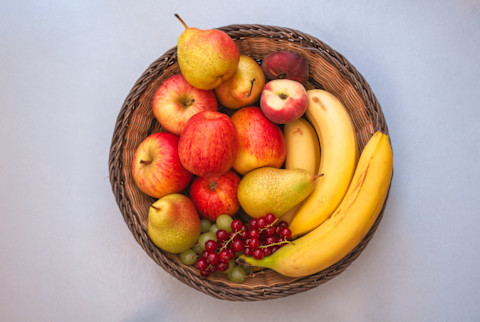
About the study
Researchers used data from the Chinese Longitudinal Healthy Longevity Survey, which follows older adults across China. Researchers analyzed 1,538 people who were at least 65 years old when they entered the study in 2008.
Participants reported what kinds of foods they regularly ate in several follow-ups over the next decade. From those reports, researchers calculated each person's dietary diversity, which is essentially a measure of how many different food groups a person were eating. They then looked at how those eating patterns changed over time and compared them with participants' depressive symptoms.
One eating pattern was linked to more depressive symptoms
Researchers identified three broad patterns. Some people's diets stayed consistently varied, some diets became less varied over time, and others started with relatively little variety but increased it over time.
Data showed that this last group, who started with low dietary variety and only modestly increased it over time, had higher depressive scores at the end of the study. Further analysis found this group also had significantly greater odds of experiencing depressive symptoms.
There was one less straightforward finding. People whose dietary variety declined over time actually had lower depressive scores than those whose variety stayed stable. The researchers could not produce a clear explanation for this result.
Why food variety affects mental health
There's a simple nutritional reason dietary variety could matter. Eating a wider range of foods gives you access to a broader mix of nutrients, including vitamins, minerals, fiber, and plant compounds that support the brain and the rest of the body.
Then there's the practical side of eating. If you're missing teeth or have tooth pain, certain foods may be difficult to chew. This may lead you to naturally start skipping things like raw vegetables, nuts, or firmer proteins.Over time, this can decrease diet variety.
Data from the study supported this, finding a connection between dental health and mood. Depressive scores dropped notably among people who had more than 20 natural teeth.
It's also important to keep the findings in perspective.This was an observational study, so it can't show that eating a more varied diet or having more teeth directly prevents depression.
How to keep more variety on your plate
You don't need to turn every trip to the grocery store into an adventure, but there are simple things you can do to prevent your diet from becoming too repetitive.
The takeaway
Dietary variety was associated with fewer depressive symptoms in some older adults, while having more natural teeth was also linked to better mental health. While these findings don't prove that either one prevents depression, they highlight how nutrition and oral health intersect with healthy aging, and the importance of paying attention to these things in your later years.