A road trip through New England revealed the region’s vast cultural legacy
Taking in the houses of literary giants such as Emily Dickinson, Mark Twain and Herman Melville, Geordie Greig and his daughter embarked on a remarkable drive through the east coast
 Koichiko
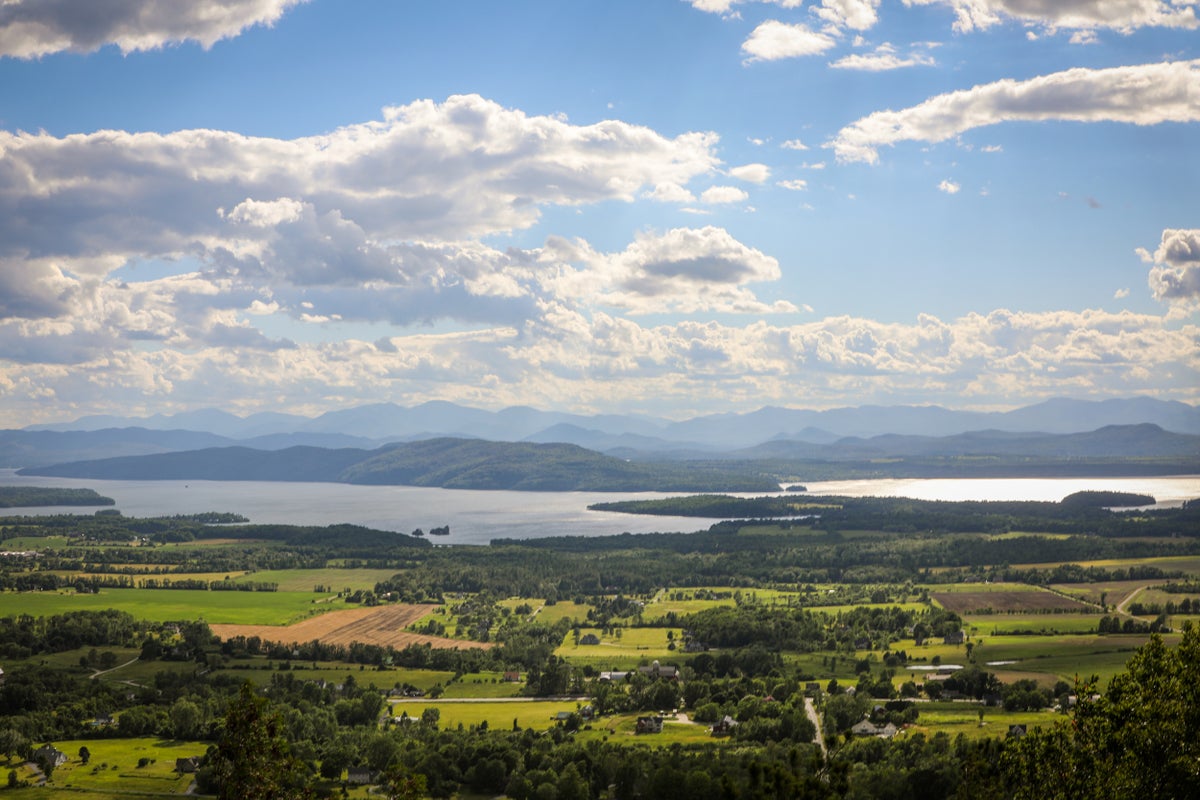
“It’s better to keep your mouth shut and appear stupid than to open it and remove all doubt,” my daughter Monica said, quoting a phrase often attributed to Mark Twain, as we stepped into the great novelist’s wonderfully eccentric Connecticut home on the second day of our father-daughter road trip through New England.
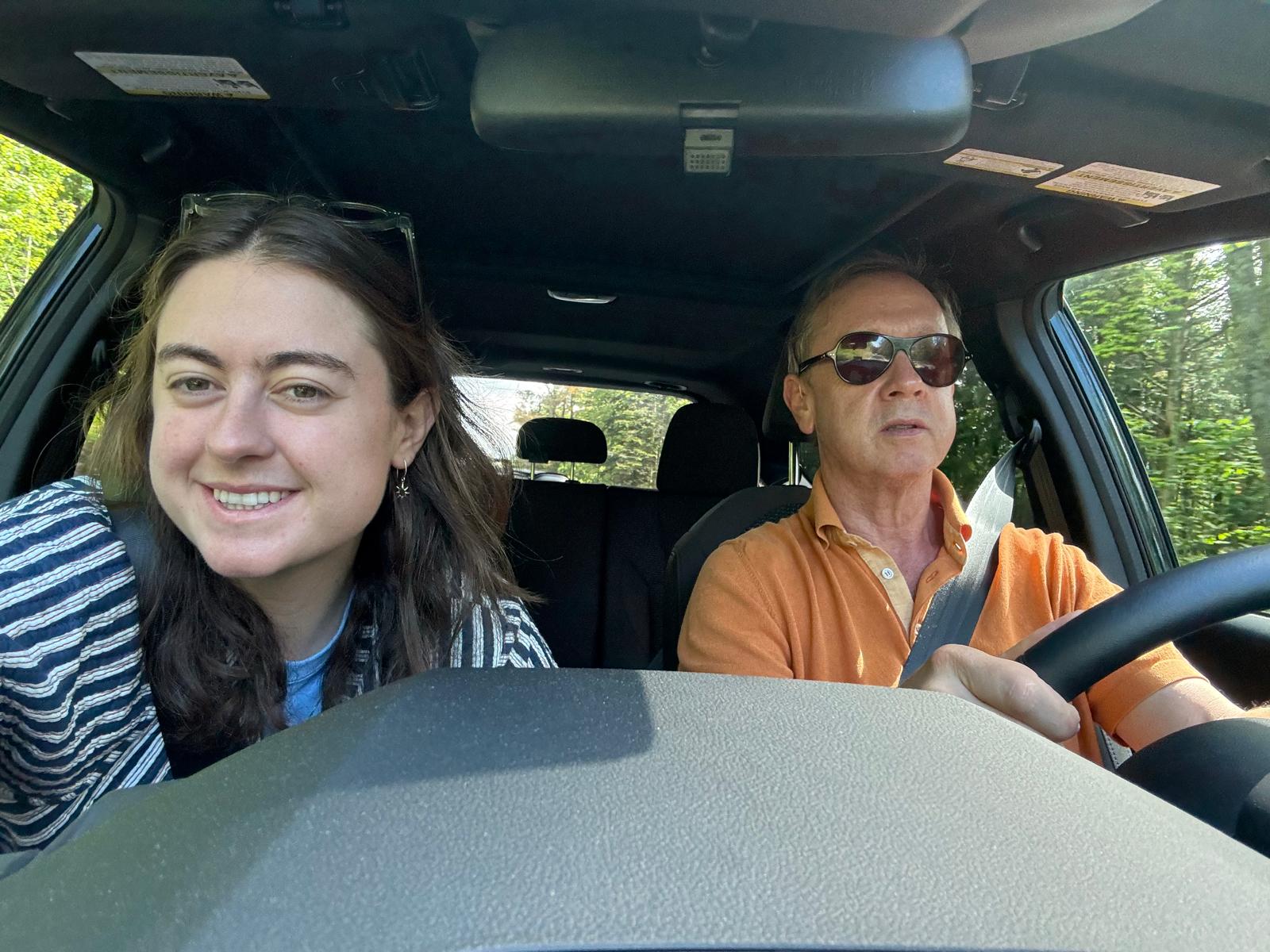
We had collected a black Subaru Forester from JFK airport and set off on an unusual 2,000-mile pilgrimage through the literary heart of New England. The idea was simple enough: visit the homes of America’s greatest writers, trace the landscapes that shaped them, and see whether genius leaves any trace in the places it once inhabited. It also doubled as a search for good food and long, uninterrupted conversations on the open road.
Mark Twain’s Hartford house is unlike any literary shrine. It looks as though a Mississippi steamboat has collided with a Victorian Gothic mansion and then been left to settle into something exuberantly American. Red brick, ornate chimneys and playful gables give it the air of a building that refuses to take itself too seriously.
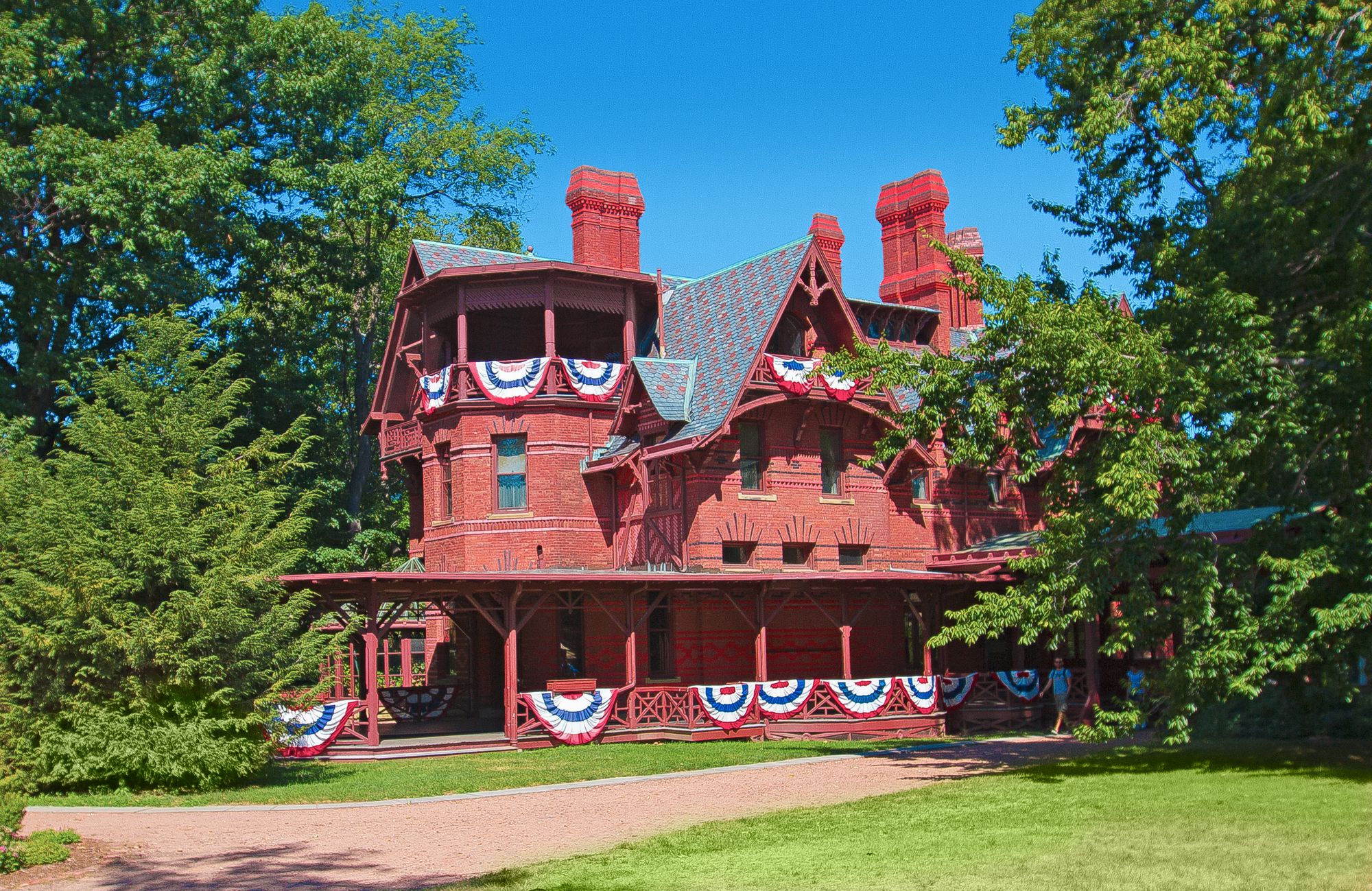
Inside, the guide referred to him exclusively as “Sam”, as though Samuel Clemens had simply stepped out for a moment. Monica happily discussed Huckleberry Finn while I quietly realised how much I had forgotten. Parents are supposed to know more than their children. Literary pilgrimages have a way of correcting such assumptions.
The house, built with the fortune of Twain’s heiress wife Olivia, was one of the first in America to have electricity and central heating. In 1881 they commissioned Louis Comfort Tiffany to transform the interiors into a theatrical blaze of embossed wallpaper, stencilled ceilings and deep reds and golds. It was spectacularly expensive and eventually helped drive Twain back onto the lecture circuit to repair the family finances.
Just a short walk away stands the more modest home of Harriet Beecher Stowe, author of Uncle Tom’s Cabin. It is hard to imagine a more concentrated patch of American literary history. In the billiard room upstairs Twain wrote much of Huckleberry Finn, the novel often described as the foundation of modern American literature. Standing there, it was impossible not to see his journey – from riverboat pilot and penniless journalist to national figure – as a version of the American dream itself.
That first stop set the tone for everything that followed.
Over the next fortnight we crossed much of New England, tracing the lives of Herman Melville, Emily Dickinson, Louisa May Alcott, Edith Wharton, and the transcendentalists Ralph Waldo Emerson and Henry David Thoreau. Between them came bass fishing, canoeing, long glacial lakes, strawberry fields, village greens and white-steepled churches. And everywhere, inevitably, lobster rolls and clam chowder.
The journey had been inspired partly by cinema. Paper Moon and On Golden Pond had long suggested that travel matters as much as arrival. (Fans of On Golden Pond should stay at the Von Horn Estate which is a contry house hotel actually on the lake.) Our version was considerably calmer. The only recurring dispute was musical. I leaned towards Pink Floyd; Monica introduced Geese, whom she described as “the modern Bob Dylan”. We found as much agreement over books as playlists as we juggled from the Grateful Dead to Oasis.
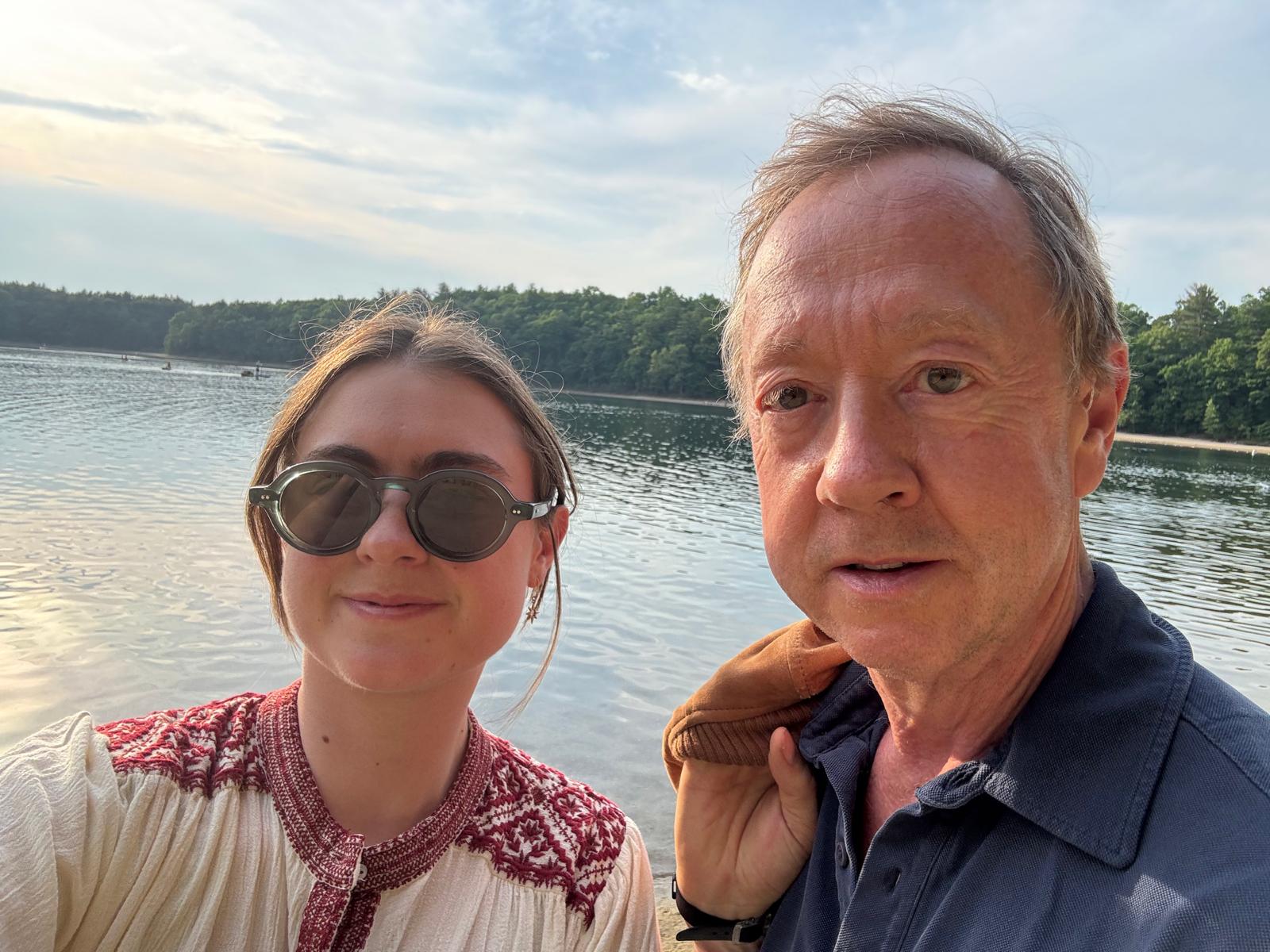
As the miles accumulated, something subtle shifted. Long hours in the car created a space for conversation that ordinary life rarely allows. Books gave way to politics, music, careers and the strange pleasure of simply observing America unfold beyond the windscreen. New England itself became part of the dialogue: maple forests blazing green, empty highways, and towns where white clapboard houses still gathered around village greens as though time had paused.
New England contains both astonishing beauty and an extraordinary density of history. Here the first shots of the American Revolution were fired. Here a young nation began to imagine itself. Here writers would later find the landscapes that defined its literature. We stayed in a treehouse at The Winvian, a Connecticut country estate of cottages and seasonal delicacies in their restaurant. There were warnings to look out for wild bears, but the more obvious reality was charming bike rides in the nearby woods. Hotels are part of the American Dream.
By the time we left Hartford, the purpose of the journey had already begun to shift. We had set out in search of writers’ houses. What we were discovering instead was something less tangible but more enduring: the pleasure of uninterrupted time together, measured in miles rather than minutes.
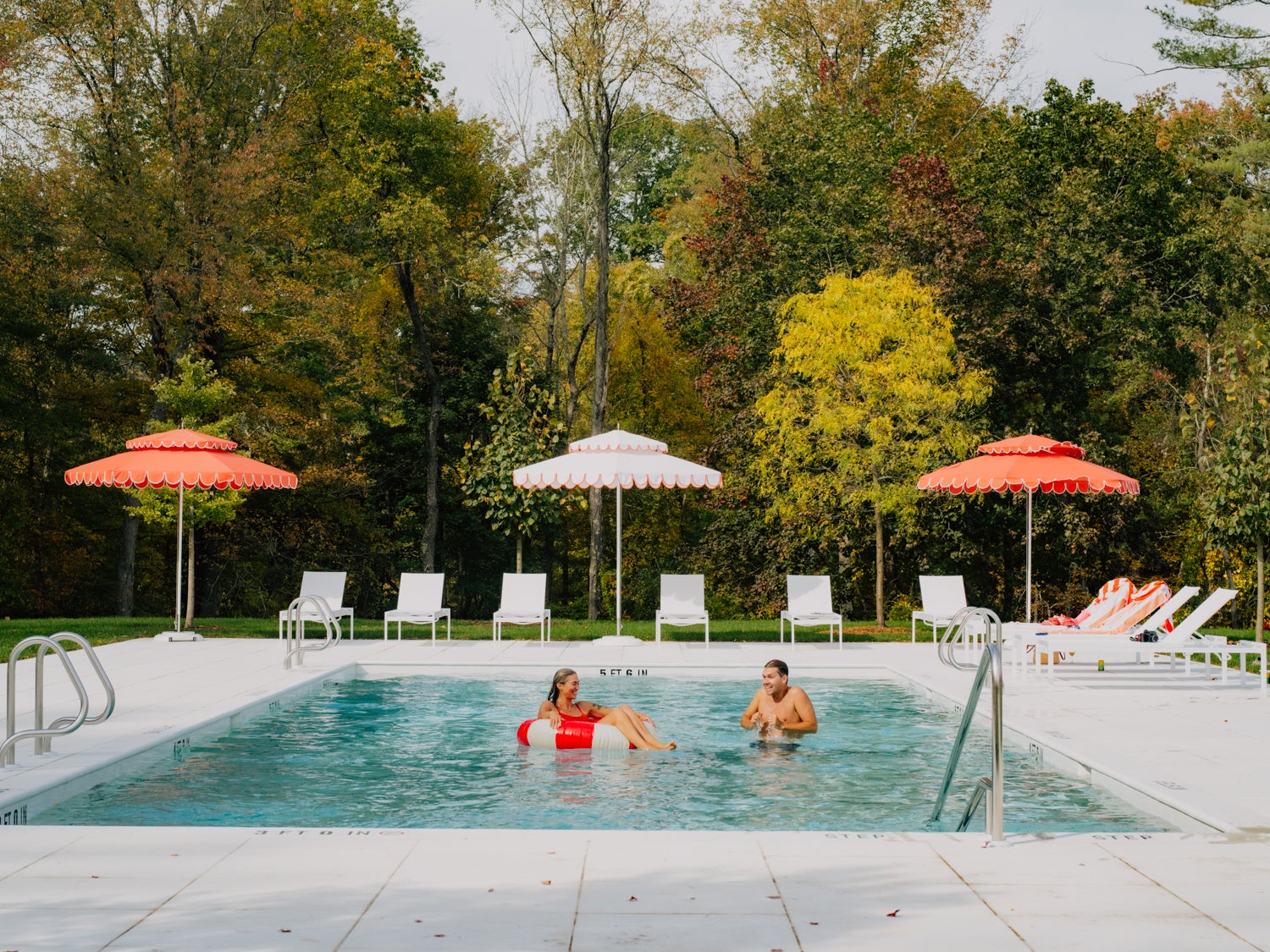
In the Berkshires, Herman Melville’s house at Arrowhead sits quietly beneath the shadow of Mount Greylock. It is modest, almost understated, and all the more powerful for it. Here Moby Dick was written – an epic that failed on publication and would not find its audience for decades.
Looking out across the landscape, it was easy to imagine Melville wrestling with his creation while the world outside remained indifferent. Every literary house seemed to carry the same lesson: recognition and talent rarely arrive at the same time. A wonderful diversion from the driver's seat was staying at Prospect Berkshires on a lake with super styish cabins and sauna huts, a zeitgeisty resort which leans into its stunning waterscape.
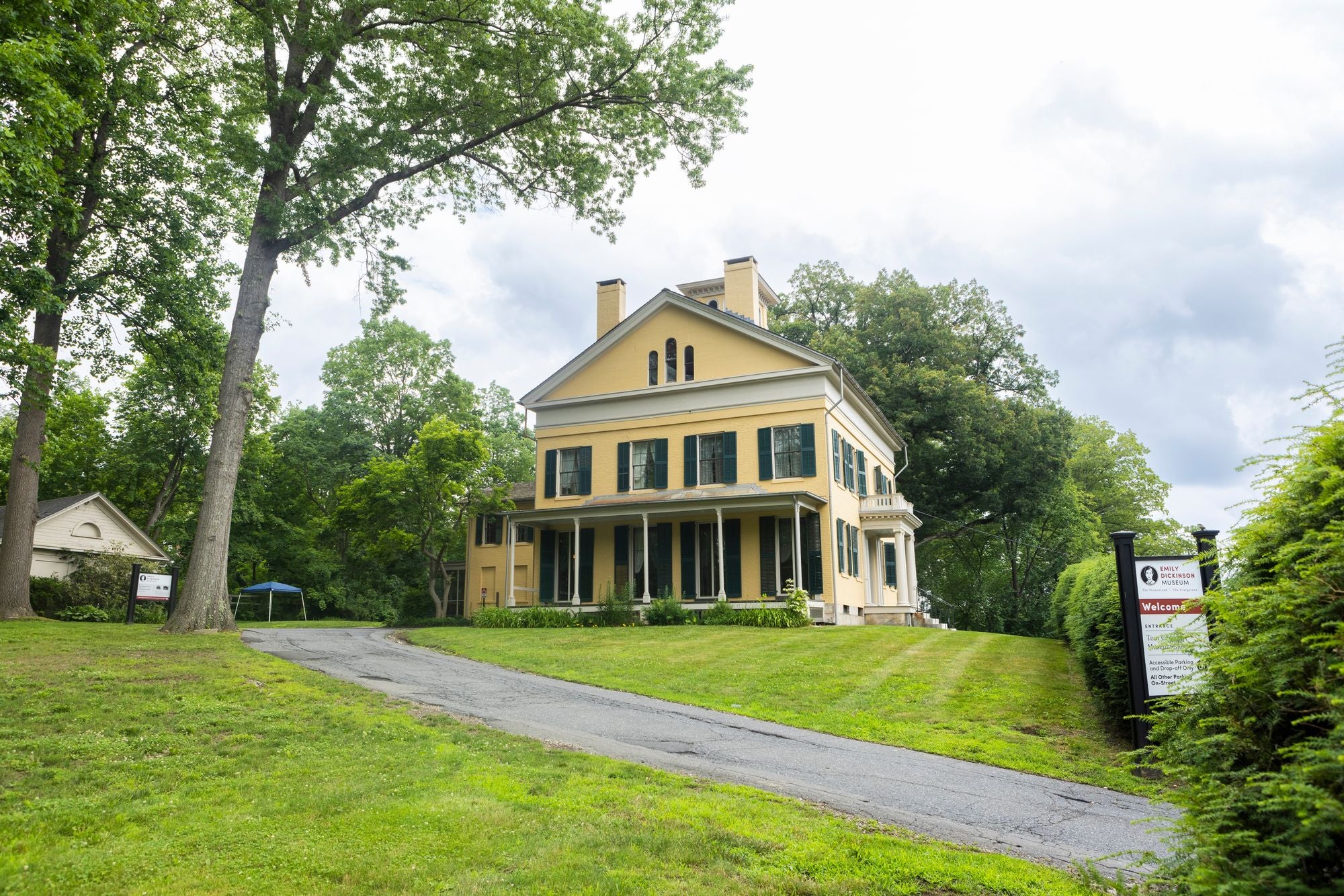
In Amherst, Emily Dickinson’s house offers a different kind of intensity. Small rooms, restrained light and a life deliberately narrowed to allow imagination to expand. She published almost nothing in her lifetime, yet her poetry now feels foundational to modern literature.
A short drive away, Louisa May Alcott’s Orchard House tells another story entirely – one of family, imagination and quiet radicalism. Little Women was written here, drawing directly on domestic life yet reshaping it into something far more enduring. If Dickinson represents solitude, Alcott represents connection.
At Concord, Emerson and Thoreau’s world feels more conceptual than domestic. Walden Pond, in particular, where Thoreau lived in a wood hut for two years, two months and two days, resists cliché. It is smaller than expected, quieter, more ordinary – and yet it remains one of the most influential landscapes in American thought.
Here, nature was not scenery but philosophy. Simplicity was not aesthetic but moral. Walking the shoreline, it was easy to see how a new relationship between people and the natural world was once imagined here.
Between these lit-stops, New England revealed itself in less formal ways. Diners with creaking porches served eggs, hash browns and endless coffee. Coastal towns offered lobster rolls eaten at picnic tables overlooking grey Atlantic water. Lakes stretched long and still beneath impossible skies.
Standout in New Haven, Connecticut was a sessional family pizza restaurant Modern Apizza and an ocean side seafood restaurant Shell and Bones which has true piquancy and zest for utterly delicious seafood. Do not pass on the oysters. Another stunning food high spot was Woods Hill Table, a perfect local restaurant in Lexington, Massachusetts, with a sophisticated vibe.
New England has always been, we reminded ourselves, at the forefront of Americana: Jaws, The Stepford Wives, Nathaniel Hawthorne’s The Scarlet Letter and Arlo Guthrie’s plaintive anti- Vietnam tour de force “Alice’s Restaurant”.
At Lexington, Massachusetts, history becomes physical. On the village green where the first shots of the American Revolution were fired, Gerry Marrocco, a charismatic guide in period costume, recounted Paul Revere’s midnight ride, warning “the Brits are coming” with evangelical precision. It is easy to forget how recent this history is.
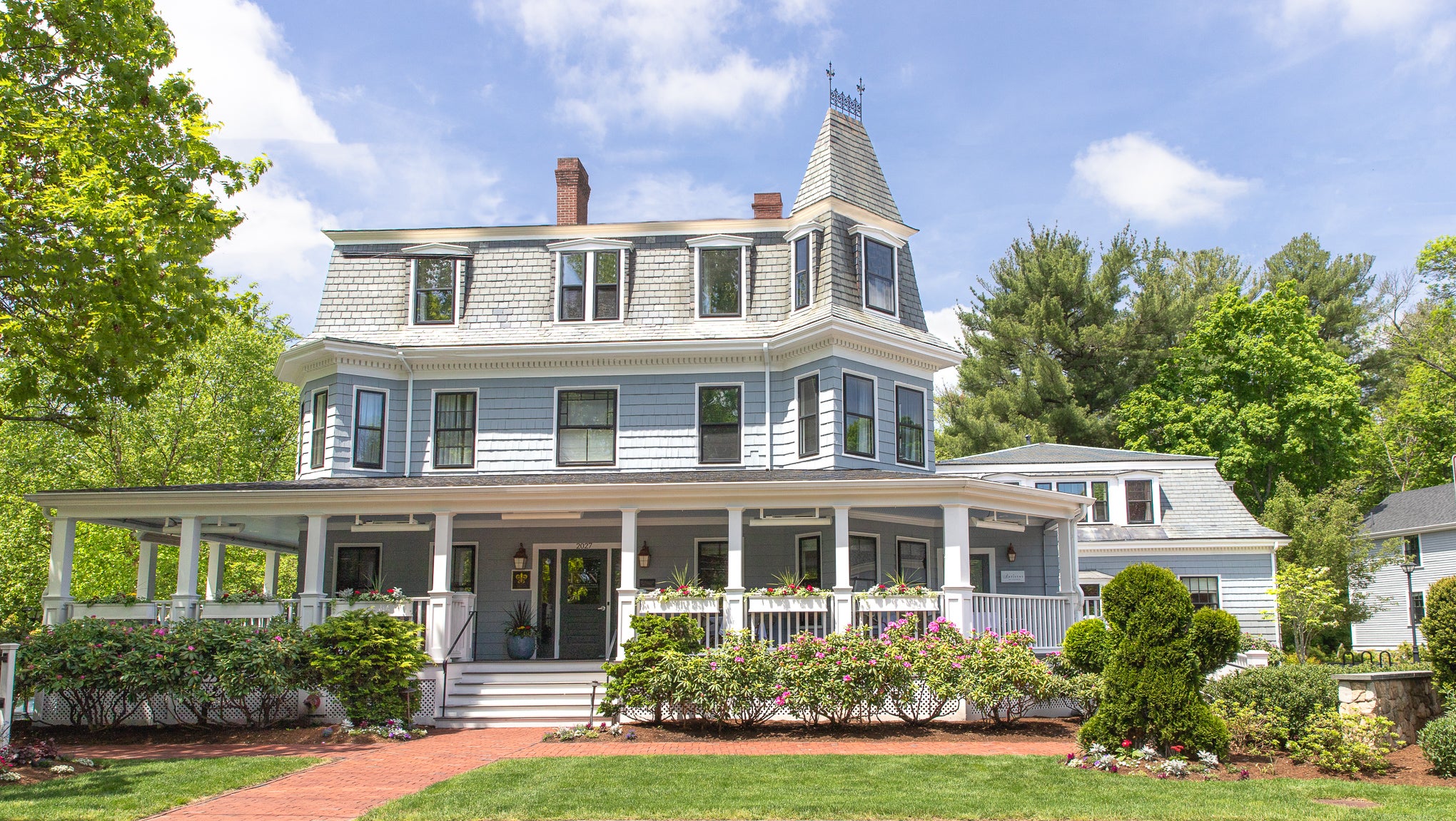
We stayed at the Inn at Hastings Park in Lexington, Massachusetts, which has been converted by its perfectionist owner Trisha Keneally to be a beacon of high American cuisine. It is on the old Boston coach road and worth any diversion.
Nearby, architecture tells a different story of reinvention. The Bauhaus-inspired house designed by Walter Gropius in Massachusetts feels like a clean break from the past – precise, modern, almost radical in its simplicity. New England is rarely one thing for long. Gropius’s house is enchanting and revolutionary.
Somewhere along these roads, another journey was taking place.
Monica and I shared driving, music and long stretches of silence punctuated by argument and laughter. We disagreed over playlists, agreed over food and slowly accumulated a shared map of references that belonged only to us.
The landscape itself seemed to encourage it. Maple-lined roads, sudden glimpses of lake, and towns with names that echoed American history – Concord, Salem, Lexington, New Haven – created a rhythm that made conversation inevitable. New ventures reflect the entrepreneurial as well as the indulgent.
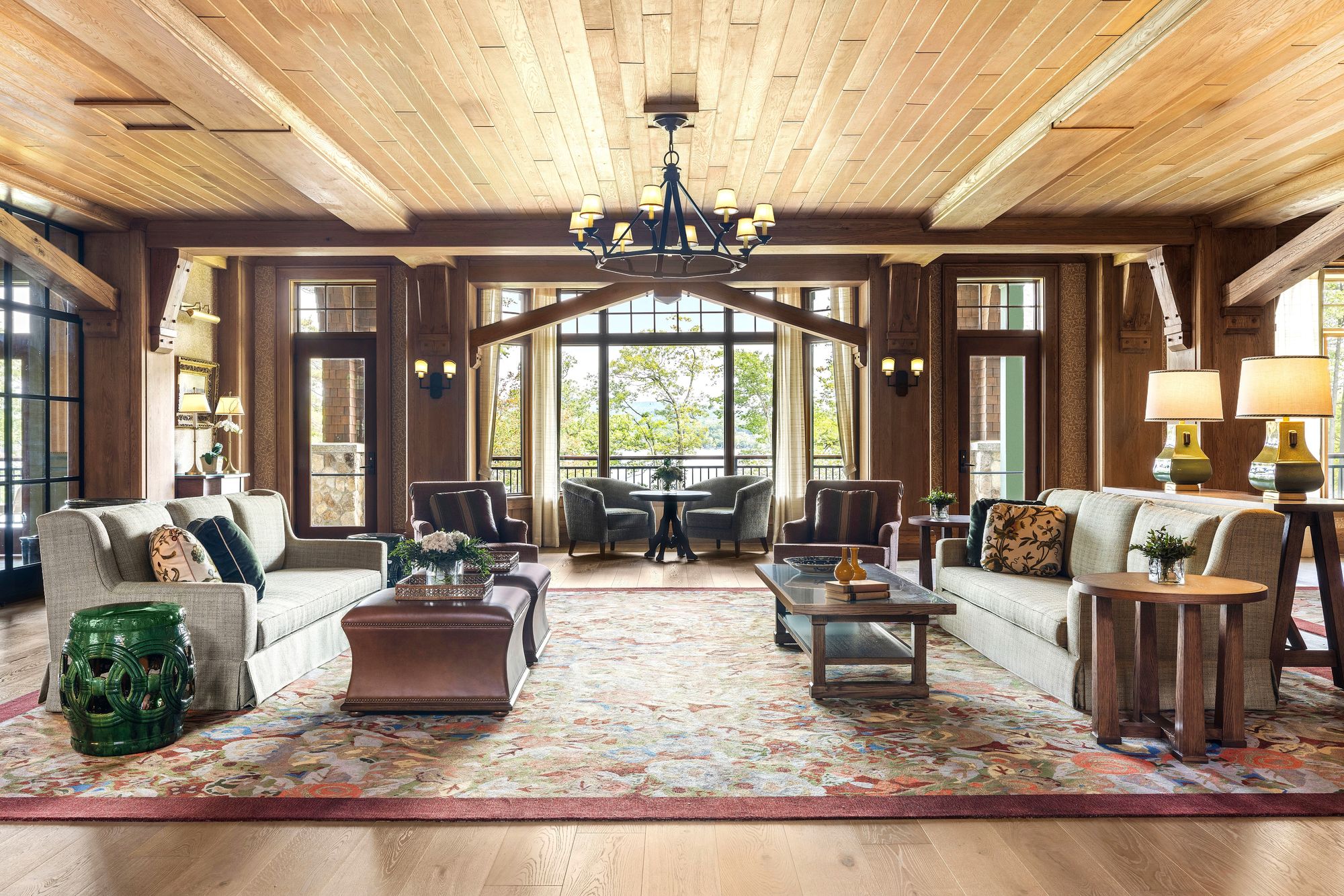
The Lake Estate on Winnisquam is a £100m dream vacation spot created by Patty and Ed Rocco. It’s straight out of a Robert Redford idyll, arcadian and ambitious. It seems to whisper from their side of the pond: eat your heart out Lake Como. What began as a literary pilgrimage had become something else, a reminder that time together is not an incidental benefit of travel, but its real purpose.
By the end of 2,000 miles, we had visited writers who shaped a nation’s imagination and landscapes that shaped theirs. But the most lasting impression was not literary at all. It was the sense that journeys rarely deliver what they promise– and often deliver something better instead.
We set out to understand America through its greatest writers. We ended up understanding something simpler: that travel changes not only what you see, but how you talk to the person beside you. Twain believed that travel is fatal to prejudice. He might also have added that it is remarkably good for families.
How to do it
Journeyscape offers a 14-day Classic New England package, including visits to Boston, Plymouth, Cape Cod and the islands, Acadia National Park, the Berkshires, New Hampshire Lakes, Connecticut, Woodstock, Portland and more. From £4,180pp per person, excluding flights.


























.jpg&h=630&w=1200&q=100&v=c0f97a310e&c=1)