
AI citation tracking tools to monitor and increase visibility
The brand tracking dashboard says awareness is up. Social listening tools show steady mention volume. The PR platform logged a dozen media hits last quarter. But, none of those tools show how a brand shows up when a buyer...
 AbJimroe
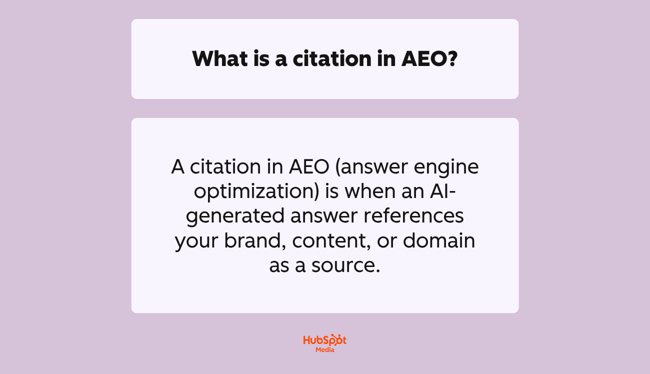
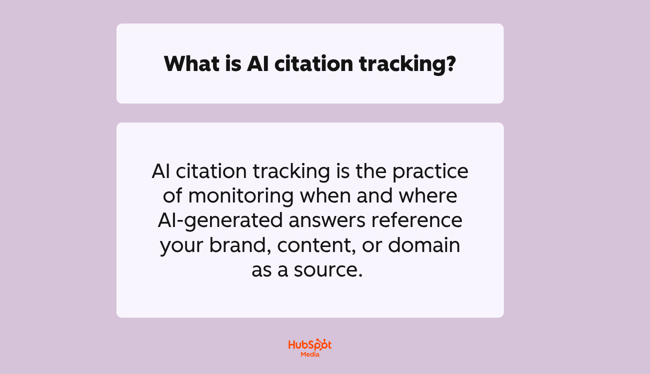
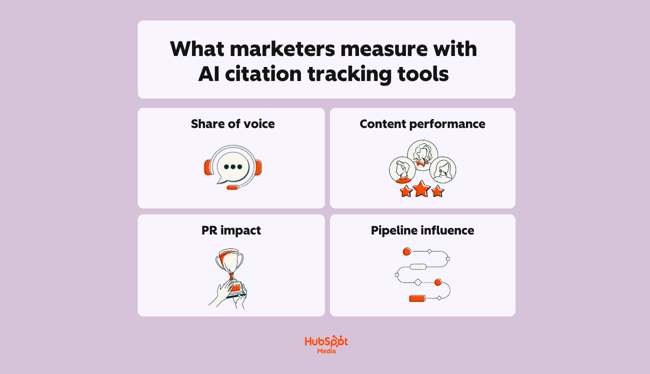
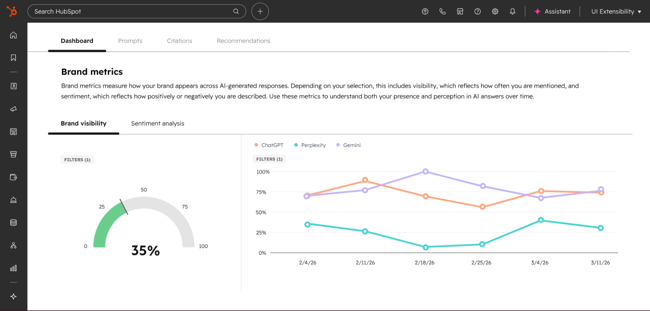
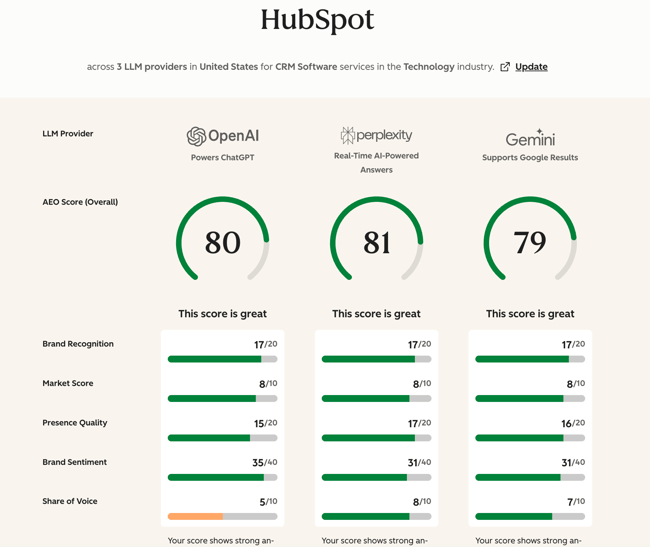
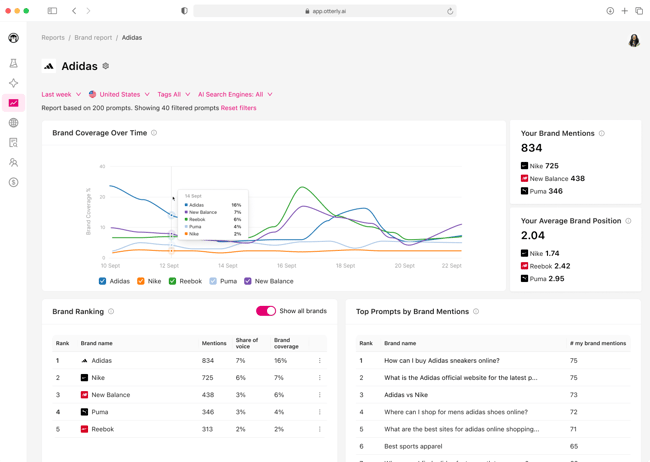
The brand tracking dashboard says awareness is up. Social listening tools show steady mention volume. The PR platform logged a dozen media hits last quarter. But, none of those tools show how a brand shows up when a buyer asks ChatGPT, Perplexity, or Gemini for a recommendation. AI citation tracking monitors when AI-generated answers cite a brand as a source. That requires a fundamentally different toolkit than traditional SEO or media monitoring. Think purpose-built platforms that query across multiple answer engines, run prompt variations, and surface competitive share of voice. Most tool stacks can’t do this, even with AI market research tools in the mix. This guide covers what AI citation tracking means, which features to prioritize, and how eight leading tools compare on pricing and capabilities. It also walks through a four-dimensional framework to score each option. Looking to track AI citations? Get started with HubSpot AEO today. Table of Contents A citation in AEO (answer engine optimization) is when an AI-generated answer references a brand, content, or domain as a source. It’s the AI equivalent of being quoted in a news article, except the “journalist” is ChatGPT, Perplexity, or Gemini, and the “article” is the answer a buyer reads before they ever visit a website. In practical terms, when someone asks an answer engine, “What’s the best CRM for small businesses?” and the response says “According to HubSpot’s 2026 Marketing Report…” or links directly to a page on a business’s domain, that’s a citation. The AI selected a specific brand’s content from everything it indexed and presented it as a credible source in its answer. That selection is what makes citations in AEO fundamentally different from traditional mentions. The LLM didn’t just reference a brand; it recommended the brand as the answer. That said, citations in AI answers typically take three forms: Most teams only track the first type. That’s a problem, because all three shape how visible a brand is in AI-generated answers. If a team only tracks direct URL citations, they’re undercounting their AI presence. They also miss signals about where their brand has authority but isn’t getting explicit credit. HubSpot AEO captures all three citation types — direct links, brand mentions, and indirect references — so teams don’t undercount their true visibility in AI-generated answers. Its citation analysis shows how often each citation type appears across prompts and engines. Citations in AI answers carry more weight than traditional search rankings or social mentions because they influence buyer behavior. When an answer engine cites a brand’s content, it’s doing three things simultaneously: In short, AEO citation tracking focuses on citations and source references shown in AI-generated answers. But the downstream impact extends well beyond what any tool can fully attribute. This is why tracking for AEO has become a priority for marketing leaders, SEO strategists, and PR teams alike. Pro tip: Unsure whether a brand is being cited in AI answers at all? Start with a free baseline before investing in paid tools. HubSpot’s AEO Grader benchmarks brand visibility in answer engines across ChatGPT, Perplexity, and Gemini, and scores brands on recognition, sentiment, share of voice, market positioning, and presence quality. An AEO citation is a source reference inside an AI-generated answer. It means the LLM selected a brand’s content as relevant, credible, and useful enough to include in its response. This definition should not be confused with other uses of the word “citation” in academia, SEO, and PR. In traditional SEO, a citation often refers to a NAP listing (name, address, phone number) in a local business directory. In academic research, it’s a footnote referencing a source. In PR, it’s a media mention. Here are the key distinctions between traditional and AEO citations: Understanding this distinction is the first step toward choosing the right AEO citation tracking tools. The tools, metrics, and optimization strategies are entirely different from traditional citation management. HubSpot AEO and AEO features in Marketing Hub Pro and Enterprise show where content is being selected or passed over in AI answers. Built-in competitor comparisons turn citation tracking into a true share-of-voice analysis, not just a visibility check. AI citation tracking monitors when and where AI-generated answers reference a brand, content, or domain as a source. When a user asks ChatGPT, Perplexity, or Google’s AI Overview a question, the AI pulls from indexed web content such as articles, reports, product pages, and documentation. Then, it often cites those sources directly in the response, which are the “citations” in LLM answers that marketers need to track. AI citations differ from traditional brand monitoring. Traditional brand monitoring tells marketers that someone mentioned their company on X or in a news article. Citation tracking for AEO tells them that ChatGPT named their blog post as a source when answering a user’s question about their industry. It’s a fundamentally different kind of visibility with different implications for traffic, authority, and pipeline. AI-generated answers are now a primary way decision-makers consume information. That makes AEO citation tracking essential. If a brand’s content is cited in an AI answer, it’s influencing the buyer before they ever visit the site. If it’s not, the brand is invisible in a growing share of how decisions actually get made. Traditional monitoring and AI citation tracking don’t just measure different things; they look in completely different places. For teams trying to track citations to their site in AI results, this means existing PR dashboards and social listening tools won’t surface the data they need. They need purpose-built AEO tools that query LLMs directly and log when their domain appears as a source. Top tools for tracking citation data address this by automating multi-model, multi-prompt verification at scale. HubSpot AEO automates prompt tracking across ChatGPT, Perplexity, and Gemini, running queries daily and logging when a brand or its competitors are cited. Results roll up into a single answer engine visibility score so teams can quickly see where they stand. Pro tip: Want to learn more about AEO in under 30 minutes? Check out this video from HubSpot’s Marketing YouTube channel: Marketers use AI citation tracking tools to measure: But the specific use cases vary by function. Let’s see below. SEO and content strategy professionals use AEO citation tracking tools to assess: HubSpot AEO helps content teams identify which prompts trigger citations and which pages influence those outcomes. Then, it generates prioritized recommendations for what to create or optimize next. PR and communications teams use AI citation tracking tools to quantify: HubSpot’s AEO tool includes sentiment analysis alongside citation tracking. So PR teams can see not just where they’re mentioned in AI answers, but how their brand is being portrayed. Here’s how marketing ops and leadership use an AEO citation tracking tool to measure: AEO features in Marketing Hub Pro and Enterprise connect citation data directly to CRM records. This lets teams trace answer engine visibility from prompt to site visit to lead and pipeline, without cobbling data together manually. Finally, here’s how to use an AI citation tracking tool to run a thought leadership program. The key takeaway: AI citation tracking closes the gap between publishing great content and being recognized as an authority by AI systems. In the next section, let’s break down the must-have features to look for when choosing an AI citation tracking tool. Not every tool that claims to monitor answer engine visibility actually does the job. Marketing teams need a tool that tracks citations across multiple LLMs, captures brand mentions, measures share of voice, and delivers actionable insights. Start with LLM coverage: does the tool track citations across the models customers actually use, or just one? ChatGPT, Perplexity, and Gemini each pull from different indexes, weigh content signals differently, and surface different citations for the same query. A tool that monitors only one gives teams a fragment of the picture. The best tools track citation data across all major answer engines simultaneously, and present the results in a consistent format so teams can compare performance across models. When evaluating LLM coverage, look for: Pro tip: If a vendor can’t say exactly which models they query, how many prompt variations they run per keyword, and how often they refresh results, that’s a red flag. AEO citation tracking is only as reliable as the methodology used to query it. HubSpot AEO tracks visibility across multiple engines in one dashboard. It shows which prompts cite a brand, which cite its competitors, and where a brand is completely absent. There’s a very important distinction between a direct citation and a brand mention. Both matter, and the best citation analysis options for AEO capture both. If a tool only tracks linked citations, it undercounts a brand’s actual presence in AI answers. That said, look for tools that distinguish between: This granularity is what distinguishes a monitoring tool from an actual AI citation-tracking platform. Without it, marketers can’t answer the basic question: “How visible is our brand in AI-generated answers?” HubSpot AEO breaks down citations by type and source, including which domains and content formats answer engines rely on most. This helps teams understand not just if they’re visible, but why. Knowing a brand’s own citation count is useful. Knowing it relative to their competitors is actionable. Any good tool should answer: For the queries that matter to our business, how often are we cited versus the competition? The share of voice for AI answers differs from traditional SERP results. In organic search, a web page either ranks or it doesn’t. In AEO, multiple sources can appear in a single response, meaning a brand might show up alongside two competitors, or not at all. Strong AI citation tracking tools provide competitive analysis that includes: HubSpot AEO and Marketing Hub include competitor analysis that shows share of voice across tracked prompts. This reveals where competitors consistently earn citations and where gaps exist. Most tools stop at dashboards. They show the data but don’t tell teams what to do with it. Raw citation counts and mention logs are data. What marketers need are insights that drive decisions: Which content should we restructure? Which entities need reinforcement? Where are we losing citations we previously held? When tracking citations to a site in AI results, the data should connect to action. Specifically, look for: Pro tip: Before evaluating paid tools, establish the baseline. HubSpot’s AEO Grader benchmarks brand visibility in answer engines for free. This shows marketers where they currently appear, where they don’t, and what to prioritize. HubSpot AEO pairs citation data with clear, prioritized recommendations. In Marketing Hub Pro and Enterprise, those recommendations connect directly to content tools so teams can go from insight to published updates in one workflow. When comparing AI citation tracking tools side by side, score each option against these five criteria, HubSpot AEO is designed to help marketers understand how their brand appears in AI-generated answers and act on that visibility. Unlike tools that only monitor visibility, HubSpot AEO combines citation tracking, content insights, and optimization workflows in one platform. This allows teams to move from insight to action. Core Features Limitations Best for: Marketing teams that want an all-in-one platform to monitor, optimize, and improve brand visibility across AI search and answer engines. Pricing: $50/month (or $45/month billed annually). No HubSpot platform subscription needed. HubSpot Marketing Hub (Pro and Enterprise tiers) includes built-in AEO features that allow teams to optimize content for AI-generated answers without adding a separate tool. These capabilities extend HubSpot’s existing SEO, content, and analytics tools to support answer engine optimization. Teams can adapt their current workflows to AI-driven discovery without starting from scratch. Another advantage of HubSpot Marketing Hub’s AEO capabilities is how tightly they connect with a company’s CRM and customer data. Because everything lives within the same platform, teams can tie content performance directly to real business outcomes like leads, pipeline, and revenue. This closed-loop reporting makes it easier to understand which content is being surfaced in AI-generated answers. More importantly, it shows which pieces are actually driving customer engagement and conversions. By combining AEO insights with rich customer data, marketers can create more targeted, personalized content. They can also continuously refine their strategy based on what’s proven to work across the entire customer journey. Core Features Limitations Best for: Growing and enterprise marketing teams that want to embed AEO directly into their existing content, SEO, and campaign workflows. Pricing: HubSpot’s AEO Grader benchmarks brand visibility across ChatGPT, Perplexity, and Gemini. It scores brands across brand recognition, market positioning, presence quality, sentiment analysis, and share of voice. Users enter their brand name, and the tool handles the rest automatically. Core Features Best for: Marketing leaders, brand managers, and SEO professionals who need an immediate answer engine visibility baseline before committing to paid monitoring tools. Pricing: Free (no credit card, no usage limits, no features locked behind a paid plan). Otterly.ai is a subscription-based AI citation tracking platform that monitors brand mentions and website citations across ChatGPT, Google AI Overviews, Perplexity, and Microsoft Copilot. Gemini and Google AI Mode are available as paid add-ons. Users define tracked prompts (conversational questions that mirror real user queries), and Otterly automatically runs them across answer engines on a daily or weekly cadence, logging which brands get cited, how often, and in what context. Core Features Limitations Best for: Small to mid-size marketing teams and agencies that want continuous, automated monitoring of citations at an accessible price point. Pricing: AirOps is fundamentally different from the other tools on this list. Most tools focus on monitoring visibility. AirOps is built as an end-to-end content operations platform with answer engine visibility tracking as one layer within a broader production system. The platform tracks brand presence across ChatGPT, Perplexity, Gemini, and Google AI Mode, identifies citation gaps. From there, it provides the workflow infrastructure (i.e., Power Agents, Grids, and CMS integrations) to create and publish content that closes them. Core Features Limitations Best for: Established content teams and agencies with a proven strategy that need to combine AI citation tracking with scalable content production workflows. Pricing: Start with a 14-day free trial for any plan. Solo plans start at $199 per month. Profound positions itself as a “read/write” marketing platform for AI, meaning it both monitors visibility and generates optimized content. The platform processes millions of citations daily and tracks brand mentions across ChatGPT, Perplexity, Google AI Overviews, Google AI Mode, Gemini, Copilot, Claude, and Grok. Core Features Limitations: Best for: Enterprise brands and large agencies that need deep competitive intelligence, compliance-grade security (SOC 2 Type II), and cross-engine citation data at scale. Pricing: Peec.ai is a pure-play AEO analytics platform. It tracks visibility across ChatGPT, Perplexity, Google AI Overviews, Copilot, Gemini, and Google AI Mode, but doesn’t bundle content creation or optimization tools. This focus keeps the interface simple and the data clean, which teams that already have separate content workflows prefer. Core Features Limitations Best for: Marketing teams and agencies that want clean, focused answer engine visibility analytics with a strong UX and Looker Studio integration for custom reporting. Pricing: Scrunch AI monitors brand visibility across seven answer engines: ChatGPT, Claude, Perplexity, Gemini, Google AI Overviews, Google AI Mode, and Meta AI. The platform’s GA4 integration is a differentiator. It tracks AI crawler bot traffic to a site and provides traffic attribution from AI platforms. This helps teams connect citation data to actual site visits and conversions. Core Features Limitations Best for: Mid-market to enterprise organizations and agencies that need the broadest answer engine coverage, GA4 integration for traffic attribution, and SOC 2 compliance. Pricing: Now that we’ve walked through the top tools on the market, let’s talk about how to evaluate which one actually fits a team’s stack. Choosing between AI citation tracking tools isn’t a feature-checklist exercise — it’s a stack decision. The right tool depends on: The scorecard framework below provides a structured, repeatable way to evaluate any AI citation tracking platform against four dimensions: Score each tool on a 1–5 scale per dimension, then weigh the dimensions based on company priorities. Coverage is the foundation. If a tool doesn’t monitor the answer engines where a business’s audience searches, nothing else matters. AI citation tracking tools differ from traditional brand monitoring by tracking citations within LLMs and AI-generated answers. But each tool covers a different set of engines. Score 1–5 based on these criteria: Most AEO citation tools live in their own dashboard, separate from the CRM, analytics platform, and content workflows a team already uses. The most common trap isn’t bad data; it’s data nobody acts on because it never shows up where decisions get made Score 1–5 based on these criteria: Pro tip: Before evaluating paid tool integrations, establish the brand’s baseline for free. HubSpot’s AEO Grader benchmarks brand visibility across ChatGPT, Perplexity, and Gemini. It produces a report marketers can share with their team immediately and reference as they evaluate paid platforms. Pricing across AEO citation tracking tools is designed to obscure actual costs. The base plan looks reasonable, until marketers add the engines needed, account for how quickly prompt credits deplete, and hit the tier jump that doubles the bill. To compare costs fairly, measure every tool by the same metric. Score 1–5 based on these criteria: The AI citation tracking definition a team adopts matters less than whether they can act on the data a tool provides. A platform with deep analytics that requires a dedicated analyst to interpret is a poor fit for a three-person marketing team. A simple dashboard with no optimization guidance is a poor fit for an enterprise content operation with 20 writers. Score 1–5 based on these criteria: Once marketers have evaluated each platform against these criteria, score each tool across all four dimensions, then weight the scores based on the team’s primary need. HubSpot AEO is a quick starting point for teams new to AEO. It delivers a visibility score, competitor benchmarking, and actionable recommendations without requiring a broader platform commitment. For teams already using HubSpot Marketing Hub, the built-in AEO features extend those capabilities by connecting insights directly to execution. Teams can go from identifying a citation gap to publishing the fix all in the HubSpot platform. Marketing teams should audit AI citations weekly for high-priority queries and monthly for broader keyword sets. Because LLM outputs are non-deterministic, a single snapshot can’t reliably represent citation visibility. A weekly cadence helps teams detect shifts early, before competitors gain sustained visibility through new or updated content. HubSpot’s AEO Grader benchmarks brand visibility in answer engines for free. Marketers should run it monthly on both their brand and their top three competitors to catch positioning shifts between their automated monitoring cycles. Then use those monthly snapshots to verify that the reports from paid tools align with what the answer engines actually show. AI systems can produce hallucinated citations by referencing nonexistent sources or misattributing claims to brands. Marketing teams should implement a verification workflow that includes checking URLs for accuracy, validating claims on cited pages, and testing multiple prompt variations to assess citation consistency across runs. Organizations should normalize pricing by calculating cost per tracked query per engine per month, as vendors use different billing models that can obscure true costs. Evaluating this standardized metric allows teams to make accurate comparisons across tools with varying prompt limits and engine coverage. Content teams should structure pages to align with how AI systems extract and cite information. This includes leading with clear definitions, using consistent entity names, and organizing content with question-based headings that match common user queries. Marketers can’t compete in the AEO era without a system to measure and improve how their brands appear in AI-generated answers — and that starts with the right tooling. Platforms like ChatGPT, Perplexity, and Google AI Overviews now determine which sources get cited. This shifts visibility from traditional rankings to whether content is selected, trusted, and reinforced across responses. HubSpot offers AEO capabilities through two routes: its dedicated AEO product and built-in features within Marketing Hub Pro and Enterprise. Both help teams track AI citations, analyze performance in generative search, and translate those insights into action.
What is a citation in AEO?
Why do AEO citations matter for marketers?
How are AEO citations different from traditional citations?
What is AI citation tracking in AEO?
Who needs AI citation tracking, and for what?
SEO and Content Strategists
PR and Communications Teams
Marketing Ops and Leadership
Thought Leadership Programs
Must-have Features in AI Citation Tracking Tools for Marketers
Tracking Across Multiple LLMs
Brand Mention Captures Beyond Direct Citations
Measure Share of Voice and Competitive Position
Provide Actionable Insights, Not Just Dashboards
A Quick Evaluation Scorecard for AI Citation Tracking Tools
Best AI Citation Tracking Tools
1. HubSpot AEO
2. Marketing Hub Pro and Enterprise
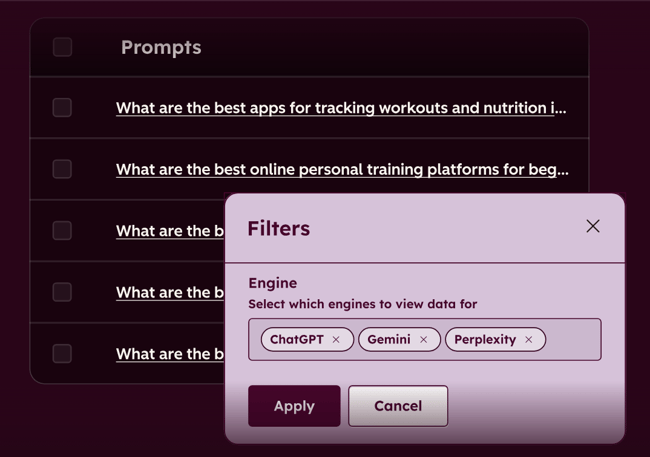
3. HubSpot’s AEO Grader
4. Otterly.ai
5. AirOps
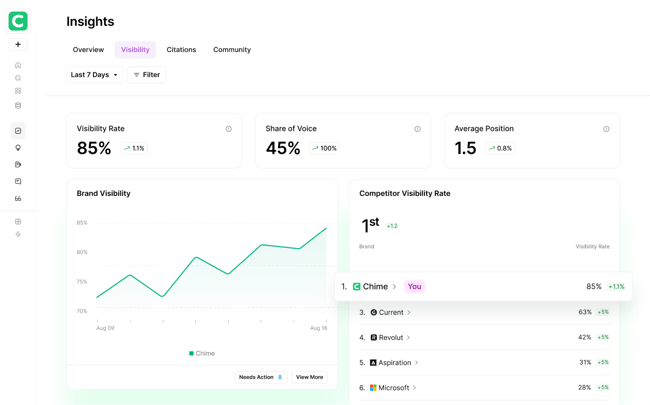
6. Profound
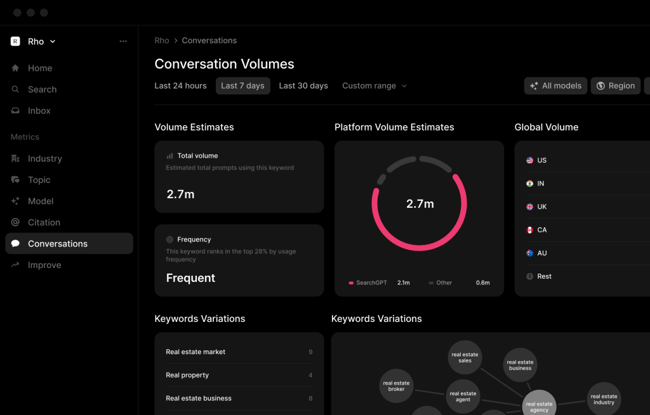
7. Peec.ai
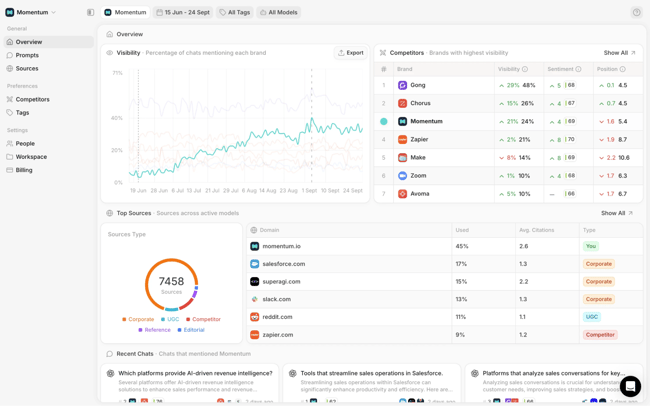
8. Scrunch
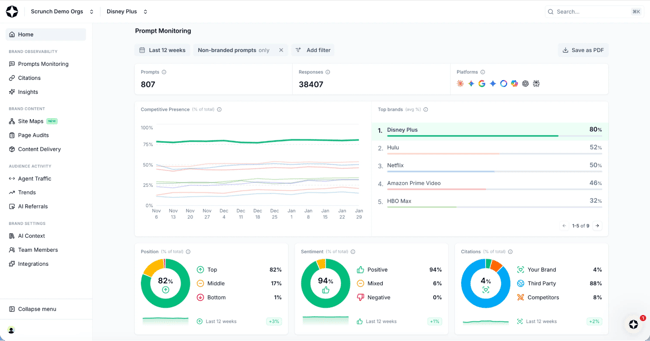
How to Evaluate AEO Citation Tracking Tools for Your Stack
Dimension 1: Coverage (Which answer engines and data types does it track?)
Dimension 2: Integrations (Does it connect to your existing workflow?)
Dimension 3: Cost (What’s the real price for the coverage you need?)
Dimension 4: Team Fit (Can your team actually use it?)
Putting the Scorecard to Work
Frequently Asked Questions About AI Citation Tracking Tools
How often should you audit LLM and AI answer citations?
How can you verify citations and handle AI hallucinations?
How do you fairly compare costs across tools?
What are the basics of improving AEO metrics?
You can’t survive the AEO era without an AEO tracking tool























.jpg&h=630&w=1200&q=100&v=c0f97a310e&c=1)