Costco Marketing Strategy Explained: Campaigns Behind Its Global Success
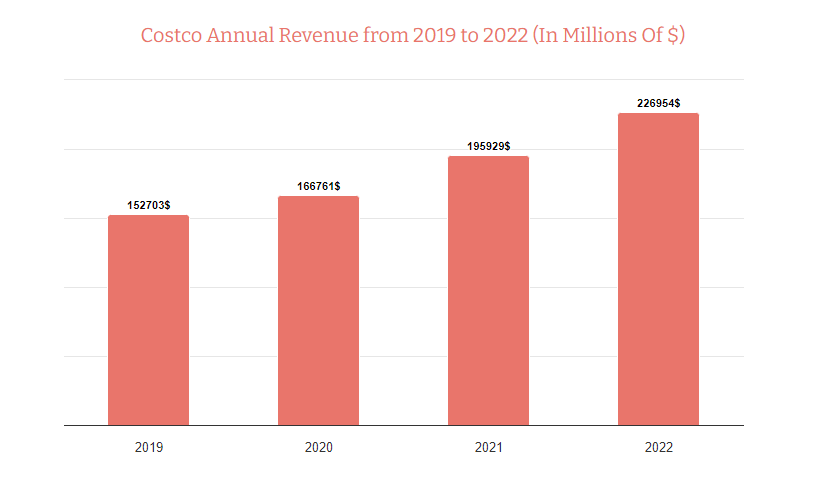
Costco’s annual revenue for the first 8 months of 2023 is $242.29B, which is 6.76% more than the last year. So, is it the Costco digital marketing strategy or the bulk-selling that’s doing wonders for the company? Since Costco’s...
 BigThink
Costco’s annual revenue for the first 8 months of 2023 is $242.29B, which is 6.76% more than the last year. So, is it the Costco digital marketing strategy or the bulk-selling that’s doing wonders for the company?
Since Costco’s first warehouse store opened in 1983, it has continued to embody “Low price, high quality” through numerous strategic campaigns and marketing strategies. So, the answer to the question lies in closely studying the Costco market strategy.
Learning about its strategies, however, is step 2.
Understanding its business model, of which these strategies are a part, is the first step.
Let’s explore what Costco does for the sake of marketing success!
Inside Costco Marketing Campaigns
Business Model of Costco Costco’s Marketing Mix Strategy Digital Marketing Strategy of Costco Leveraging Memberships to Foster Customer Loyalty In-house Brand Launch “Kirkland Signature” Partnerships with Credit Card Providers and Its Travel Program Costco Marketing Campaigns Quick & Easy Series Booze at Costco? We’ll Drink to That! | This Hour Has 22 Minutes The 93-Inch Bear & Me Here’s to 30 Years of Kirkland Signature™ Filling up Carts Children’s Miracle Network CollaborationBusiness Model of Costco
While Costco successfully sells the idea of being a “budget-friendly” store to attract customers and implement it, it isn’t why the store has over 123 million active members. The reason lies within its business model.
Costco’s business model benefits three entities:
Customers Stakeholders/potential investors EmployeesThe cumulative result of these three entities benefiting from the model results in Costco’s revenue growth.
The retail recipe of Costco goes against the grain as it urges its customers to visit the stores while most retail businesses are going digital. Making its customers visit the store, however, is exactly why it stands solid in the market.
Stay Solid in Retail Marketing—The Costco Way
Retail marketing requires more than just great products; it takes strategy, creativity, and a deep understanding of what drives shoppers. We reviewed case studies and chose Major Tom for its mastery in this space.
Let’s break down all aspects of Costco’s business model:
Membership-Based Model
For a customer to purchase at the Costco store, they need to be a member, which creates a loyal customer base. The company offers varying levels of membership for individual customers and business membership for small businesses, each adding value.
Tight Supply Chain Management
Costco uses just-in-time inventory, minimizing excess inventory and storage costs. This tight control over its supply chain lets it pass on the operational cost savings to its customers through lower prices.
Private Label Products
Kirkland Signature is Costco’s private-label product offering brand alongside other regional brands. Products from this brand offer higher margins, improving profitability for the company.
Quality Over Aesthetics
The store could be more visually attractive per se; however, since it has a warehouse-like appearance, it keeps the operating costs low, offering its customers the benefit of low prices.
Employee Happiness
69% of Costco employees say they’re excited to go to work each day. (Wow!)
The company strongly believes that taking good care of employees results in excellent customer satisfaction. So, it offers multiple yearly bonuses along with other perks!
Digital Expansion
Costco has continued to expand its online presence, letting members shop online and get products delivered to their doorsteps. All they need is Costco’s digital shopping card.
The hows of this model is in the understanding of the 4Ps of Costco’s marketing mix strategy.
Costco’s Marketing Mix Strategy
The Costco marketing mix wows its customers and investors. With high-quality products at low prices, it lures its customers, and with a sustainable business model, it invites new investors willing to invest in a stable model.
To understand how it keeps both parties happy, take a look at the Costco marketing strategy, starting with pricing.
Pricing
When looking at Walmart’s marketing strategies, we find that its pricing model is similar to that of Costco: low prices on high-volume purchases.
However, the perks a Costco member gets as part of being a member of the Costco club differ from those of a Walmart customer.
People who subscribe to any of Costco’s subscription plans can avail of special discounts and prices on the goods.
Costco improves its value proposition by maintaining a low markup percentage on products, enabling it to offer products at lower rates. With its membership-based model, Costco ensures a stable income stream. The company doesn’t overstock, leading to lower operational costs. The store minimizes advertising costs, store decorations, etc., benefiting its customers by offering products at low prices.Product
Delivering the best products while maintaining profitability is what makes Costco’s product strategy unique.
As one of the top retail chain brands in the U.S., the company offers an array of product offerings as per customer needs:
Art Castles, Wines, Books and computer software, Home furniture, Electronics, Food items, etc.Costco also has its own food court and offers perishable items such as dairy, fruits and vegetables, etc., making it a go-to store for everyday essentials.
Here’s what you should take away from the strategy:
Costco offers a limited selection of products, streamlining its inventory and reducing operational costs. It offers private-label products under Kirkland Signature, gaining full control over the production and pricing of products. Despite the low prices, it offers high-quality products, enhancing customer loyalty. It takes a bulk-selling approach, making it easy for families and small businesses to buy products. The company cuts out intermediaries and maintains direct relationships with suppliers, ensuring products at lower prices.Place
Although Costco’s former competitor was based in California, Costco has its headquarters for worldwide operations in Washington. As of August 2023, the company has 859 locations globally, with a small presence in Taiwan, the UK, Mexico, Japan, Australia, South Korea, and Spain.
Costco focuses on managing its warehouse stores spread across these locations with a strategic distribution strategy.
Since Costco operates a limited number of warehouse stores, it creates a sense of urgency among customers. They choose high-density areas for warehouses, increasing accessibility to nearby businesses and households. They ensure cultural relevance when opening a store in a new location. Except for physical stores, it has expanded its online presence, letting online shoppers leverage its delivery services.Promotion
Costco isn’t exactly a retail giant that’s thrifty with advertising budgets, as the Costco marketing strategy revolves around offering high-quality products to value-conscious consumers.
While it promotes heavy discount promotions and coupons on luxury items offline, it leverages social media platforms to promote its sales and discount schemes with targeted advertising.
Costco largely relies on word-of-mouth marketing. It leverages newsletters and social media platforms to communicate new product arrivals and promotions to its customers. It attracts new customers by doing joint promotions with other businesses. It partners with credit card companies to offer co-branded credit cards to its members, incentivizing them to make more purchases.Now that we know the Costco marketing mix, let’s dig deeper into its digital marketing strategies.
Digital Marketing Strategy of Costco
Reaching out to digital marketing agencies to devise effective strategies is smart; however, analyzing and learning from Costco’s digital marketing strategies is smart and cost-effective!
Let’s unveil its membership model to start with.
Leveraging Memberships to Foster Customer Loyalty
In 2022, the global membership fee revenue of Costco amounted to 4.22 billion U.S. dollars. Evidently, the signature membership is at the heart of Costco’s marketing strategy.
Costco primarily offers two types of membership:
Executive, costing 120$ (for businesses) Gold Star, costing 60$ (personal)By requiring customers to pay annual fees to access discounted prices, Costco generates a major portion of its revenue from membership charges. This way, customers receive substantial savings on bulk purchases.
Costco relies on targeted direct mail to attract new customers and personalized coupons to encourage repeat purchases.
Once a customer pays to become a member, they continue to shop at Costco, generating a stable revenue stream for the company. It provides exclusive online offers to its members, generating a sense of urgency among members. It leverages email marketing to send personalized emails to its members regarding new product arrivals, promotions, etc.In-house Brand Launch “Kirkland Signature”
Since the brand’s inception in 1995, Kirkland Signature has become a household name for all Costco members.
The brand’s products span across clothing, household essentials, groceries, and more. A member is certain to find something in every department and, most importantly, at prices lower than other national brands.
The Costco digital marketing strategy leans heavily on innovation and data. Launching an in-house brand was simply the next obvious step for Costco after serving a customer base accounting for millions.
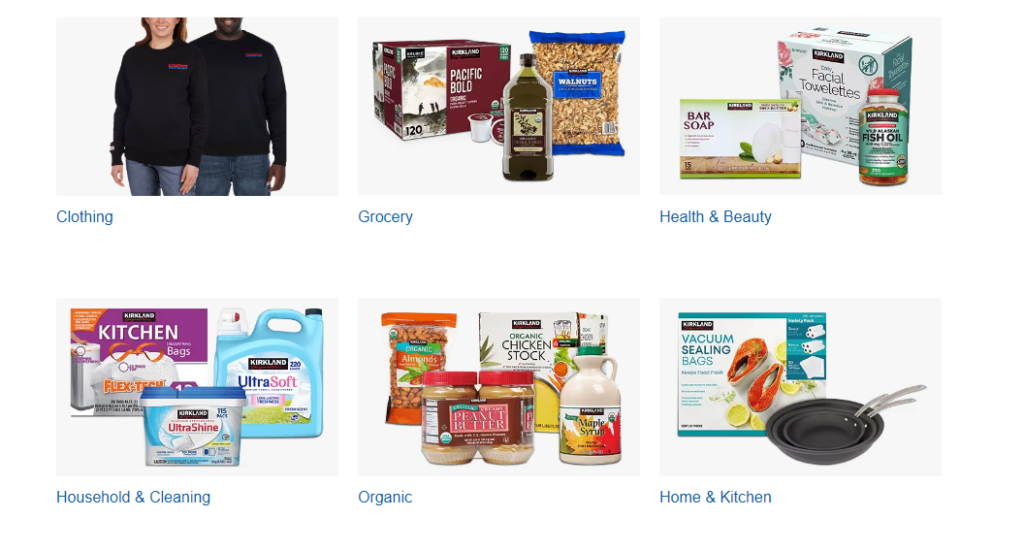
A few pointers for you to take note of:
Costco launched this brand after it became the next-door retail store for its members, strengthening an already-existing Customer loyalty. The brand’s association with Costco fosters exclusivity, quality, and customer trust. The wide product segments let members make purchases as per their needs. Costco ensures its members get high-quality products under the brand label, furthering its value of ‘high quality, low prices.’Through the launch of this brand, Costco instigates customer loyalty while also enjoying sustainable profitability!
Partnerships with Credit Card Providers and Its Travel Program
The journey for Costco, from getting customers to getting loyal customers, is no easy feat.
A brand campaign or strategy that sticks with its customers adds value beyond its regular services. Costco members benefit from more than just their Costco shopping cards when buying products.
Cash prices, reward points on credit cards or planning a vacation make the lives of its members easy and more fun!
For example, Costco Travel has special prices for rental cars, guided group trips and cruises, and domestic and international vacations.
Plus, it compliments its product offering with a branded credit card that offers:
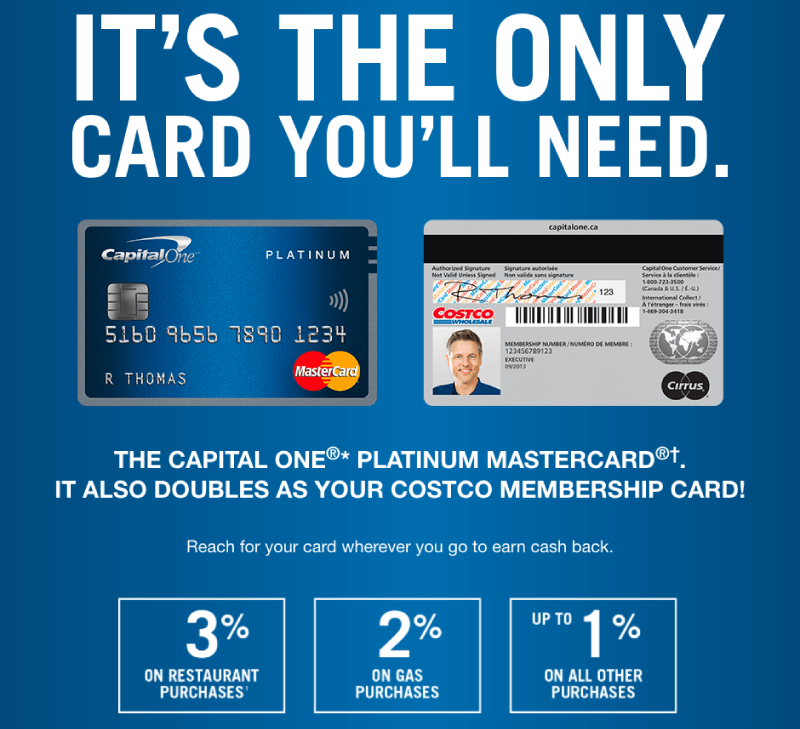
Such financial and travel perks, accompanied by Ott and gym subscriptions, give Costco an edge over its competitors. More importantly, it makes its customers happy. And happy customers are likely loyal customers too!
Costco Marketing Campaigns
In that section, we focused on Costco campaigns and cultural touchpoints that highlight how a retail warehouse club can build an incredibly protective, multi-generational cult following without ever relying on traditional television or print ad buys.
The campaign selections are filtered to capture Costco’s operational ecosystem: showcasing how they transform mundane bulk-buying into high-utility digital content, viral cultural artifacts, and localized community acts of goodwill.
What’s more, every featured campaign was evaluated on its structural ability to drive membership retention, establish value authority, or weaponize organic word-of-mouth marketing. We discarded basic promotional flyers to focus on the precise narrative levers that reinforce Costco’s underlying treasury model—proving that “buying in bulk” is as much an identity as it is an economic choice.
Below is the breakdown of each campaign, detailing how it operated and why it succeeded.
Quick & Easy Series
An ongoing, highly successful digital video series published across Costco’s websites, social feeds and distributed via their monthly member magazine.
While famous for its family-sized culinary tutorials, the series extends into everyday home logistics, technology deployment, and lifestyle hacks—featuring step-by-step videos on setting up home electronics (like Arlo security systems or Windows PCs), maximizing car maintenance tech, and getting the most out of Kirkland Signature household utilities.
Why It Worked
It directly solves the friction of multi-category bulk buying. Members don’t just buy bulk food; they purchase heavy consumer electronics, automotive gadgets, and home infrastructure. By supplying frictionless, visually engaging solutions that demystify everything from tech installation to everyday household organization, Costco transforms complex product logistics into convenient household victories, significantly driving up membership utility across all store departments.
Booze at Costco? We’ll drink to that! | This Hour Has 22 Minutes
A brilliant example of capitalizing on earned media and cultural parody, this segment stems from CBC’s long-running political satire show This Hour Has 22 Minutes.
The sketch humorously targets the intense consumer hysteria, political maneuvering, and border-crossing retail pilgrimages sparked whenever a local government opens up liquor retail licenses to big-box wholesalers like Costco.
Why It Worked
The sketch worked because it tapped into a hyper-relatable regional consumer obsession, treating access to “Costco-priced liquor” as a legendary middle-class milestone and fueling massive organic word-of-mouth demand.
The 93-Inch Bear & Me
This Costco marketing campaign represents the organic, viral explosion surrounding the brand’s surreal, oversized Hugfun 93-inch plush bear.
Originally introduced simply as a seasonal toy section anchor, the 50-pound product mutated into a global internet meme. Millions of users created user-generated content (UGC) tracking the bizarre real-world logistics of transporting and living with the giant bear—clogging sedans, sitting at dining tables, and riding in subways.
Why It Worked
It perfectly illustrates Costco’s internal “treasure hunt” retail philosophy. By placing an absurd, hyper-visible, and low-margin spectacle item deep inside the store, Costco engineered a physical and digital tourist attraction. The bear succeeded because it stripped away corporate stuffiness, transforming a standard wholesale warehouse into a viral backdrop for community humor, generating billions of unpaid digital impressions.
Here’s to 30 years of Kirkland Signature™ Filling up Carts
Launched to commemorate three decades since the 1995 consolidation of Costco’s diverse private labels into a single unified house brand, this digital retrospective campaign celebrates the history of Kirkland Signature.
The storytelling focuses on the quality benchmarking tests each product must undergo. It demonstrates how Costco enforces a rule that house-brand items must match or exceed the quality of national brands while maintaining a strict 15% margin ceiling.
Why It Worked
It codified “private label pride.” For decades, buying store brands carried a subtle financial stigma; Costco completely reversed that psychology. By pulling back the curtain on their quality metrics, the Costco campaign validated the customer’s financial savvy.
And, it proved why Kirkland Signature drives over $50 billion in annual sales, transforming a house logo into a prestigious badge of smart, premium consumerism.
Children’s Miracle Network Collaboration
An annual register-donation and corporate matching campaign executed across thousands of warehouses globally. The program uses localized visual storytelling (featuring portraits and milestones of actual children treated at regional member hospitals) connecting the pennies and dollars rounded up at individual checkout registers to millions in localized pediatric healthcare funding.
Why It Worked
It used micro-philanthropy at an industrial scale. Because Costco members view the warehouse as a core pillar of their local neighborhood economy, the invitation to donate at checkout did not feel like empty, top-down corporate virtue signaling.
It established a powerful moral contract between the consumer, the regional cashiers, and the immediate community.
Conclusion
Costco, being one of the top five retailers in terms of revenue generation, emphasizes how innovative retail strategies hold the power to reshape the industry.
Its consistent effort to put quality over aesthetics and align with today’s consumer needs showcases its customer-centric approach. While the membership model is the highest contributor to sustained revenue growth, value-added services and the wholesome in-store shopping experience it gives to its customers solidify its position in the market.
Use these strategies as inspiration, or reach out to retail marketing agencies for more guidance. Eventually, it’s about finding things that make your customers tick and implementing strategies to keep giving them that!








![How to Create a Complete Marketing Strategy [Data + Expert Tips]](https://www.hubspot.com/hubfs/marketing-strategy.webp)