Behind the Scenes of Adobe’s Marketing Success: Innovative Campaigns
Photoshop, Illustrator, InDesign, After Effects, Premiere, and more… Adobe has been dominating the agency ecosystem with its creative tools for many years. From design and photography to web development and video editing, Adobe’s suite of tools is the industry...
 ShanonG

Photoshop, Illustrator, InDesign, After Effects, Premiere, and more… Adobe has been dominating the agency ecosystem with its creative tools for many years.
From design and photography to web development and video editing, Adobe’s suite of tools is the industry standard, shaping workflows and expectations across the agency landscape.
It’s crystal clear these applications are useful enough to make themselves popular all around the globe, however, we also know that Adobe’s marketing strategy contributed to that great recognition.
Let’s explore together.
Inside Adobe Marketing Campaigns
Adobe’s Marketing Strategy Teaming Up With Organizations For A Good Cause Getting the Power of AI Sharing Experiences & Tips Collaborating with Artists Building a Community & Hosting Events Targeting Micro-Influencers Adobe’s Digital Marketing Campaigns #CreateWithAdobe Adobe Spark Creators Program Photoshop Battles Adobe’s Movie References Made to Create: Celebrating the Boldness of Creative Professionals Adobe Firefly | The World is What You Make It FAQ: Adobe Marketing CampaignsAdobe’s Marketing Strategy
Adobe clearly knows how to build a brand.
It’s not surprising when considering that they combine informative content, community engagement, targeted advertising, and a focus on customer success. So, essentially, the company creates a standout brand that deeply connects with those who live and breathe creativity. Adobe’s marketing moves, coupled with the utilization of the best graphic design tools, have nailed it, securing its spot at the top of the creative software game.
Although Adobe’s prices might be on the higher side and its products closely interlinked, its marketing genius has played a pivotal role in embedding the brand within the creative industry’s collective consciousness.
What about discovering what Adobe makes different in its digital marketing approach? Keep reading.
Teaming Up With Organizations For A Good Cause
Adobe proves that reaching new segments & opening doors to potential new customers is possible by collaborating with CSR initiatives.
In addition to portraying the brand as a socially responsible company that cares about making a difference, these collaborations allow Adobe to reach new audiences they might not have connected with through traditional marketing channels.
Moreover, Adobe gets opportunities for authentic storytelling and content creation due to its collaborations with organizations. Sharing stories about the positive impact of their collaborations resonates with audiences and generates genuine engagement.
Take Adobe’s recent #dreambigger campaign which promotes the National Women’s Soccer League:
Another post showing Adobe’s support for NWSL:
By carefully picking grounds, creating authentic partnerships, and integrating CSR initiatives into their overall marketing strategy, Adobe’s marketing team successfully enhances brand image, attracts new audiences, and makes a positive impact on the world.
Getting the Power of AI
When considering Adobe’s approach to its users & prospects, it’s clear that the brand uses AI to make its digital marketing smarter, more effective, and more human-centered.
In addition to powering each creative tool with AI (Adobe Sensei, Adobe Analytics, Adobe Photoshop, Adobe Experience Manager, and more), Adobe is very willing to show its commitment to innovation, especially artificial intelligence. Many creators also rely on various image editing tools to complement Adobe’s suite, enhancing their workflow with specialized features and integrations.
The brand is heavily investing in optimizing its websites via AI; so much so that, when a user browses Adobe’s website, AI algorithms analyze his browsing history & purchases, and interactions to identify relevant products and services. Of course, this provides a more engaging experience.
Besides using AI in digital marketing strategy, Adobe also educates its audience about how AI works. Since the brand recognizes the potential fear surrounding AI, takes its place in the phase.
As digital marketers already know, this year, AdobeMAX – Adobe’s annual event – focused on how AI revolutionized creativity. And, the brand’s mind-blowing digital dress powered by AI was displayed in that event.
Sharing Experiences & Tips
Adobe’s digital marketing strategy is focused on providing guidance and inspiration to people for their creative works. The company achieves this by sharing a mix of hands-on tutorials, inspiring stories from users, and deep dives into creative expertise. Through these efforts, Adobe has established itself as a thought leader and a trusted resource in the creative community.
Beyond the commitment to helping users, Adobe also subtly demonstrates the value proposition of its products by showcasing the success stories of real users. At the end of the day, this inspires viewers to consider using Adobe solutions and drives conversions.
With October 10th just around the corner, our social team can’t wait for AdobeMAX! We’re sharing all the excitement as we prepare for the conference and get ready to blow your minds with new releases. 🤯 Tune in to Adobe MAX to experience the future of creativity and AI. See you there!
♬ original sound – AdobeAs a golden rule of social media, sharing real experiences, tutorials, stories, and tips fosters a sense of community. This, of course, promotes user engagement, knowledge sharing, and mutual support, further strengthening brand loyalty and creating a positive ecosystem around Adobe.
What’s your dream project? For @atnndesign, it’s to design the branding for a cool coffee shop. ☕️ Check out what she dreamed up for her concept café, Drip 💧
♬ original sound – Adobe – AdobeCollaborating with Artists
Another way Adobe is using to support the creative community is teaming up with local artists.
Adobe often showcases the work of local artists on their social media platforms, providing them with valuable exposure and promoting their art to a broader audience. However, this move offers more than just benefits to the artists. Displaying diverse local artworks enriches Adobe’s social media and marketing channels, providing them with fresh inspiration and engaging their audience.
As a great example, Adobe partnered with local artists and communities within Behance x Local Gallery Events and promoted Behance as a platform for portfolio building and networking.
By promoting local art and artists, Adobe contributes to the cultural vibrancy and creative energy of communities. It also shows Adobe’s commitment to giving back and empowering local communities.
Adobe goes beyond just building strong software. The brand actively hosts events & builds communities, contributing significantly to their digital success.
Besides hosting summits and online webinars tailored to specific creative fields, the marketing team solidifies Adobe’s position as a thought leader via annual events like Adobe Max. As social media users may know, Adobe hit each channel this year to share insights from its annual event.
We were absolutely dazzled ✨ by these incredible #AdobeMAX Sneaks! These AI innovations are revolutionizing creativity, pushing boundaries and inspiring us like never before. Which one of these projects is a must-have for you? Tell us which Sneak you want to see in product below.
♬ original sound – Adobe – AdobeWhen it comes to building community, Adobe is very good at creating vibrant platforms serving as a social network for creatives. Take Behance as an example: The platform showcases portfolios, fostering feedback and collaboration, and offering career opportunities.
Targeting Micro-Influencers
While Adobe’s influencer marketing surrounds various talents all around the world, actually, its strategic focus on micro-influencers stands out as a success factor – remember Adobe Spark x Jessica Kobeissi & Adobe Photoshop x Aaron Blaise.
That’s not surprising when considering that micro-influencers (with follower counts between 1,000 and 100,000) bring a diverse range of creative styles & voices to the table. This adds variety and freshness to Adobe’s marketing content, preventing it from becoming monotonous or repetitive.
On the other hand, teaming with micro-influencers can be more cost-effective than working with mega-stars of the net. This approach allows Adobe to reach a wider audience while staying within budget and experimenting with different campaigns.
Adobe’s Digital Marketing Campaigns
From leveraging AI to empower users and personalize experiences to teaming up with local artists and encouraging communities, Adobe’s digital marketing campaigns, in collaboration with innovative tech marketing agencies, go beyond mere product promotion.
In this section we delve into the world of Adobe’s digital marketing, exploring the creative strategies that firm their position as a leader.
To curate this specific list of Adobe’s most impactful campaigns, we bypassed the sterile product update announcements. Instead, we looked for instances where Adobe successfully humanized its tech stack.
We chose these specific benchmarks based on how effectively they turned complex workflows into cultural conversation starters, their brilliant execution of community-led growth, and how gracefully they have managed to introduce disruptive technology without losing the trust of the fiercely protective creative community that built them.
#CreateWithAdobe
The #CreateWithAdobe is a multifaceted campaign that inspires creators of all levels to release their potential & share their work with the world.
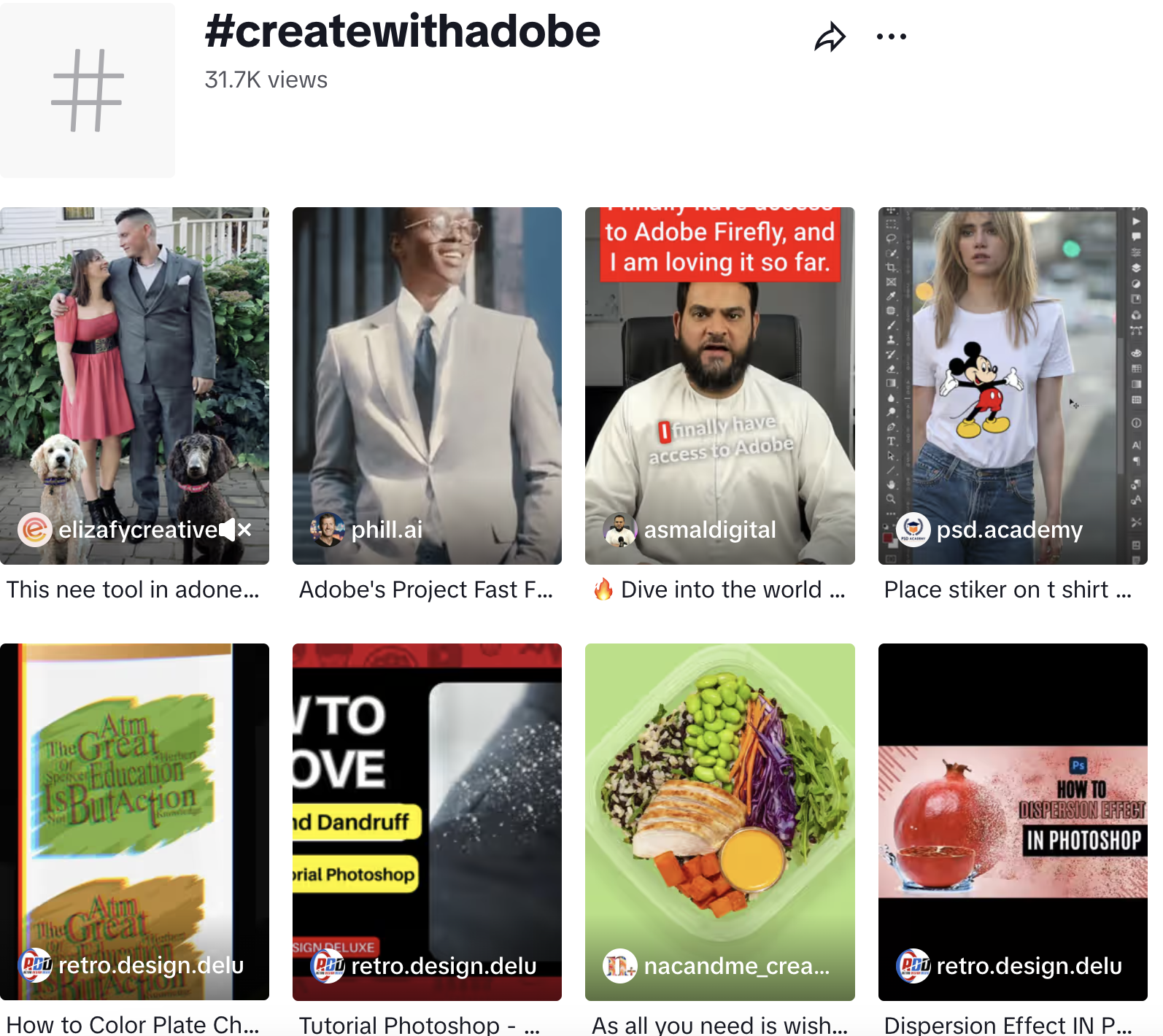
In other words, #CreateWithAdobe is all about encouraging people to use Adobe’s tools to share their unique visions. This campaign possesses everything from static designs and captivating videos to photography and social media content. And it allows Adobe to take advantage of user-generated content.
With its multifarious content, global reach, and focus on user-generated creativity, #CreateWithAdobe paints a picture of the future of digital expression.
Why That Campaign Worked
No doubt that this campaign eliminated the cold, transactional feel of a massive software monopoly. It stopped shouting about what their tools can do and let their community provide the ultimate social proof. The campaign ensured Adobe’s marketing feels like a living, breathing extension of modern creative culture. It inspired users to experiment with the software purely for the chance to achieve community validation.Adobe Spark Creators Program
Another campaign that Adobe designed to inspire creators of all levels is The Adobe Spark Creators Program. That exciting initiative helps users explore the possibilities of Adobe Spark, a universal platform for creating engaging social media content, graphics, and more.
The campaign/program has already empowered countless users to share their stories with the world; their success stories highlight the program’s potential to boost creativity, raise voices, and build a stronger community around storytelling.
Why That Adobe Campaign Worked
It established technical expertise by making design accessible. It validated the anxieties of everyday entrepreneurs who felt overwhelmed by Photoshop, positioning Spark as a liberating, friction-free companion. By letting micro-influencers lead the narrative, the tone felt grounded and genuinely helpful. It proved that you don’t need a formal design degree to command a professional, high-impact digital presencePhotoshop Battles
This user-driven initiative on Behance challenges all levels of users to recreate a specific image using Adobe Photoshop. It sparks community engagement, showcases the endless possibilities of the software, and generates organic buzz and user-generated content around the brand.
Additionally, it provides an understanding of user preferences and trends, informing future product development and community.
Why That Campaign Worked
Adobe went native. They stepped into an existing, thriving community and honored its traditions. The campaign took advantage of the internet currency: memes and internet glory. It reinforced Photoshop’s undisputed authority in image manipulation while projecting a self-aware, deeply comedic brand tone that resonated perfectly with internet culture.Adobe’s Movie References
Though it cannot be accepted as a digital marketing campaign, Adobe’s movie references in its content spark excitement among users.
By referencing popular movies and shows (including well-known chick flicks like Mean Girls), Adobe taps into cultural touchstones and nurtures a sense of connection. This also allows users to bond over their shared love of both Adobe and pop culture. So, it’s a clever way to connect with users and strengthen their brand image.
Why It Worked
Software tutorials can be incredibly dry. By wrapping technical training in a recognizable, nostalgic cinematic skin, Adobe commanded user attention mid-scroll. It targeted the shared passion of its core demographic: a love for film, storytelling, and visual culture. That Adobe campaign created an instant inside joke, shifting Adobe’s brand image from a corporate utility to a fellow pop-culture-obsessed creator.Made to Create: Celebrating the Boldness of Creative Professionals
This high-concept global brand platform completely steps away from interface screenshots to focus entirely on the raw psychological identity of the creator. Spanning high-production cinematic spots and massive, city-scale out-of-home (OOH) public art installations, the campaign champions the grit, sleepless nights, and sheer boldness required to build an idea from nothing.
Creativity steals the spotlight at Adobe MAX—the ultimate hangout for creative minds. This fly on the wall video features a fearless storm chaser, a talented illustrator/toy maker, a street photographer who makes cyanotype prints, a videographer who brings absurdity to set, and the first AI-created commercial for Too Faced Cosmetics.
The visual narrative acts as an open canvas, showing how human imagination shapes culture, anchoring on the core belief that “everyone is made to create.”
Why That Campaign Worked
This campaign acted as a powerful statement of corporate integrity. Adobe aggressively aligned itself with the artist, validating their emotional journey and personal worth. It moved past the functional level. It built immense brand affinity among the industry’s heaviest users by making them feel seen and respected.Adobe Firefly | The World is What You Make It
This marketing campaign introduced Adobe’s next-generation generative AI engine, Firefly, and its conversational creative assistants.
Set to a pulsing, contemporary house soundtrack, the visual narrative shows a seamless transition from a user typing text prompts or adjusting 3D primitives to breathtaking, intricate digital worlds instantly materializing on screen.
The campaign emphasizes that the AI is directly guided by the human hand, showing precision tools like “AI Markup” and “Precision Flow” to prove control remains with the artist.
Why That Campaign Worked
This campaign succeeded because it carefully positioned AI not as an automated replacement for human labor, but as a frictionless accelerator for raw imagination (“The world is what you make it”). Adobe established absolute ethical authority. It reassured anxious enterprise marketers and indie designers alike that they can embrace the future of creation without sacrificing their legal or creative integrity.FAQ: Adobe Marketing Campaigns
What makes Adobe’s marketing strategy different from other creative software companies?
When we look at how Adobe builds its brand, the thing that stands out is how many different pieces it weaves together: informative content, community engagement, targeted advertising, and a focus on customer success. As we mentioned, the company’s prices sit on the higher side and its products are closely interlinked, so it can’t just win on features alone. What Adobe does is embed itself in the creative industry’s collective consciousness through partnerships, education, and community building, so the brand feels like part of a creator’s daily life.
We see this happen on several levels at once. Adobe shares tutorials, real user success stories, and creative deep dives that position it as a trusted resource, not just a vendor. It also puts real people at the center through platforms like Behance, where creators showcase portfolios, get feedback, and even find career opportunities. On top of that, Adobe runs community-driven initiatives like Photoshop Battles, where users recreate images inside an existing creative community rather than a brand-manufactured contest, and that kind of respect for an organic community is exactly what keeps people loyal.
What role does AI play in Adobe’s marketing strategy?
AI shows up in two ways for Adobe: powering the tools themselves and shaping how the brand talks to people. As we mentioned, tools like Adobe Sensei, Adobe Analytics, and Photoshop are all AI-powered, and Adobe uses browsing and interaction data to personalize what shows up on its website for each visitor. But we think the more interesting move is how Adobe handles the messaging around AI, with Adobe Firefly, the campaign frames AI as something guided by the human hand, using precision tools like “AI Markup” so the artist stays in control. It matters a lot to a creative community that’s naturally protective of its craft.
How does Adobe use creators and micro-influencers to strengthen its brand?
Adobe leans on creators with smaller, dedicated followings (think 1,000 to 100,000 followers) like its work with Jessica Kobeissi for Adobe Spark or Aaron Blaise for Photoshop. We think this works so well because micro-influencers bring different creative styles and voices, so Adobe’s content stays fresh, without repeating the same polished brand voice everywhere. It’s also more budget-friendly than working with huge celebrities, which lets Adobe run more campaigns and reach more niche audiences at once.
A few lessons jump out to us. First, letting your audience become the content, as Adobe does with #CreateWithAdobe, builds trust because the community itself provides the social proof. Second, showing up inside communities that already exist, the way Adobe did with Photoshop Battles on Behance, works far better than trying to build a brand-new audience from scratch. And third, humanizing complex products through real stories, movie references, and cultural touchstones (Adobe’s Mean Girls nod is a great small example) makes a technical product feel like a fellow creator rather than a corporate utility. As we mentioned earlier, this all builds toward the same goal: making users feel seen, not sold to.
How does Adobe balance product innovation with authentic storytelling in its marketing?
Adobe pairs its biggest technical leaps with campaigns that ground them in human emotion. The “Made to Create” platform is a good example; it steps away from interface screenshots and focuses on the grit and sleepless nights behind creative work, anchored on the idea that everyone is made to create. With Firefly, Adobe takes the same approach with AI: the campaign centers the artist’s hand and intention, not the algorithm. We think this pairing works because Adobe frames new technology as something that serves the creator’s vision, which keeps innovation from feeling like a threat to the very community it’s built for.








![Here‘s Everything I’ve Learned About Internet Marketing [Data + Expert Tips]](https://www.hubspot.com/hubfs/internet-marketing-1-20250128-2273831.webp)



_1.png)