Cruise ship pollution could increase risk of viruses, study suggests
The organisation that runs Southampton’s port has disputed the findings
 Fransebas
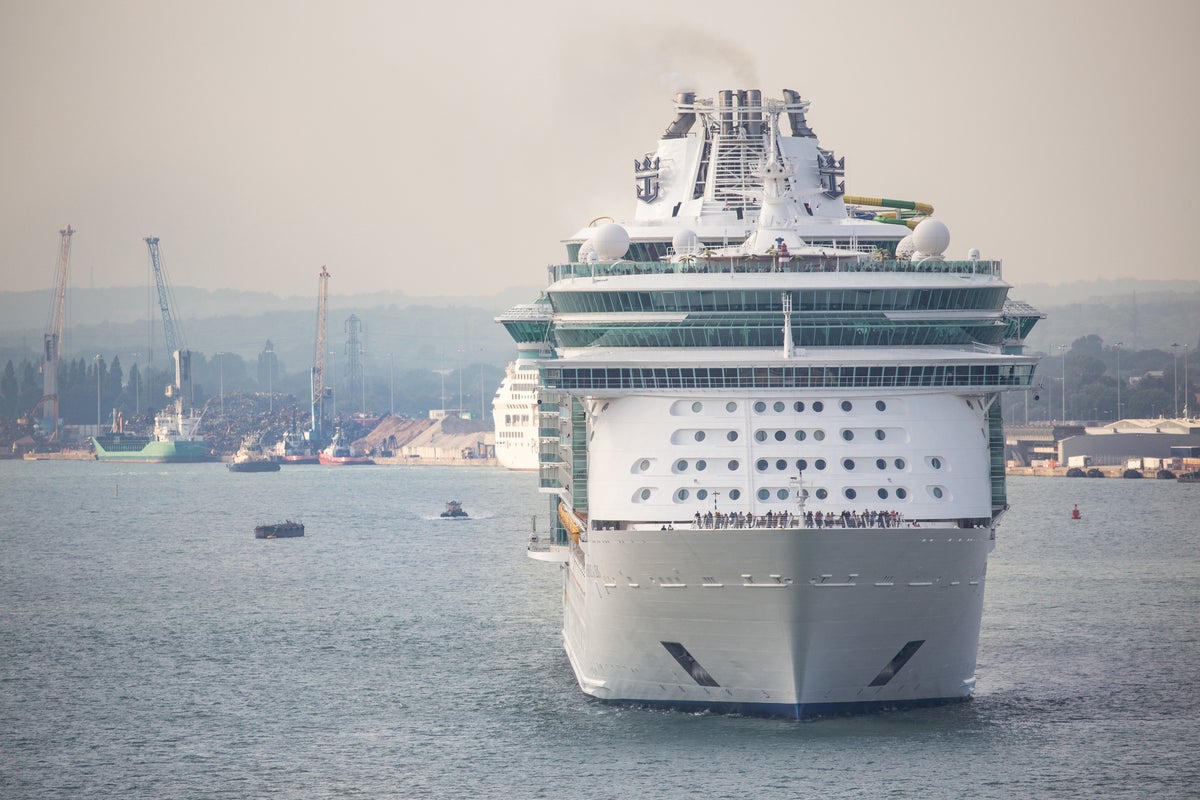
Air pollution from cruise ships could spread respiratory illnesses such as the common cold and Covid-19, a study has suggested.
Researchers from the University of Southampton traced the source of pollution in the city to cruise ship terminals at its port. The pollution particles were found to increase inflammation and weaken cell’s resistance to infection, the University of Southampton said.
The research team chose five sampling sites across Southampton’s port area, such as a dock gate used for heavy goods vehicles, a container ship terminal and a busy cruise terminal.
This sample collection took place between February 2018 and March 2020, and found that at the cruise terminal, there were higher levels of vanadium, nickel and cobalt in air particles during the busy summer season than in the quieter winter months.
They also sampled a site five kilometres away from the port for comparison and found that the trace elements were generally higher across the port than at the comparison site.
Associated British Ports (ABP), which runs Southampton’s port, said that it is concerned about the methodologies used in the study and said it has implemented measures to improve air quality.
“We’ve identified a clear air pollution ‘signature’ coming from cruise ships burning fuel in ports,” Matthew Loxham, professor of respiratory biology and toxicology and senior author of the study, said.
“The ultrafine particles contained in these ships’ emissions can penetrate deeper into the lungs than larger sizes of particulate matter, and may be able to enter the bloodstream, but particles of this size are essentially unregulated and generally not monitored.
“We found that exposure of cells to these particles, and vanadium – the most enriched element in the particles – was both pro-inflammatory and facilitated the replication of viruses.”
The researchers said their findings could add to the growing demand to find ways to reduce emissions from ships. They also said increased monitoring of pollution and its impacts on health is needed to inform regulators.
An ABP spokesperson said: “As a major employer and a responsible neighbour, we are proud of the role we and the wider port community have played in accelerating air quality improvements in Southampton.
“The Port of Southampton is a leader in the UK port sector in introducing measures to improve air quality, such as being the first port in the UK to introduce large-scale shore power connections so vessels can shut off their engines for zero emissions at berth in the port.
“The Port’s state of the art real time air quality monitoring demonstrates that emissions like nitrogen dioxide and particulate matter are well within National Air Quality Objective mean annual limits. We are concerned about some important aspects of the methodologies of the study and the strength of inference of some of findings that have been presented to the media.”
“The cruise sector contributes around £1bn a year to the economy of Southampton and the wider region. ABP will continue to implement initiatives to drive further air quality improvements whilst ensuring the port maintains its critical role in the economy of Southampton and as a leading gateway for the UK with the world."
A Cruise Lines International Association (CLIA) spokesperson also commented: "Cruise lines are committed to responsible operations and continue to invest in environmental technologies and practices in pursuit of net-zero emissions by 2050.”
Read more: Turkey and Egypt turned away an LGBTQ+ cruise ship – it’s their loss





















.jpg&h=630&w=1200&q=100&v=1a56ad72fe&c=1)