AI is finding Apple security flaws faster than Apple can sort through them
Apple is limiting simultaneous bug reports as AI floods its security team with questionable findings, even while the same tools uncover genuine Mac vulnerabilities that demand patches.
 MikeTyes
Apple has limited how many bug reports researchers can keep open as AI tools produce both genuine Mac vulnerabilities and a flood of questionable submissions
 Bangyu Wang / Unsplash
Apple has capped the number of security reports researchers can keep open at once after AI bug hunting put its review process under pressure, according to the Financial Times.
Some submissions describe hallucinated or purely theoretical risks. Others uncover vulnerabilities serious enough to require patches. Bynario told the FT that it found more than 50 possible macOS flaws in three weeks, including a privilege-escalation chain that could give an attacker full control of a Mac.
Every report still needs human verification, although Apple is now using AI to help triage the backlog. Finding possible weaknesses is getting easier. Working out which ones pose an immediate threat has become the harder job.
How real are the AI-found flaws
Bynario has already shown that its system can produce more than automated guesswork. Its Atlas platform used GPT-5.5 to uncover a macOS Screen Sharing flaw that let an authenticated VNC viewer access protected data and create files with root privileges.
 Unsplash
The attack required Screen Sharing or Remote Management to be enabled, along with legacy VNC password access. Apple assigned it CVE-2026-43760 and patched it in macOS Tahoe 26.6.
Bynario also demonstrated how the flaw could be extended to run commands as root. That gave Apple a working exploit to investigate rather than another vague warning generated from a code scan.
Why Apple needs the same AI
Apple’s recent security advisories credit researchers working with Claude for a kernel vulnerability. OpenAI Codex Security has also helped identify several WebKit issues.
AI-assisted research is already contributing to fixes shipped for macOS and Safari. Restricting submissions too aggressively could delay useful discoveries, while leaving the gates open risks burying Apple’s team under convincing-looking nonsense.
 Pete Linforth / Pixabay
The bottleneck is verification. Models can generate possible attack paths quickly, but Apple still has to reproduce the behavior, confirm the required conditions and decide how urgently it needs a fix.
Can Apple keep the signal
Apple has redesigned its bug bounty program around stronger evidence. Its maximum payout now exceeds $5 million for the most serious exploit chains, while Target Flags help researchers prove that a flaw reaches protected parts of the system.
That gives Apple a better way to separate demonstrated exploits from automated speculation. Mac users can’t solve the reporting backlog, but they can limit their exposure by installing security updates promptly. AI bug hunting is already finding flaws that reach Apple’s patch queue.

Paulo Vargas is an English major turned reporter turned technical writer, with a career that has always circled back to…
Anthropic is paying $1.5 billion over pirated books, but it can still legally cut up purchased ones
The settlement addressed unauthorized ebook downloads, not the destructive scanning of lawfully bought physical copies, a distinction now alarming booksellers

A federal judge has approved Anthropic’s $1.5 billion settlement over nearly half a million pirated books. The same litigation also protected a more physical method of feeding its AI systems. Anthropic bought print books, removed their bindings, scanned every page and destroyed the originals.
The legal divide came down to acquisition. The settlement covers books downloaded from LibGen and PiLiMi, while the court treated Anthropic’s one-for-one conversion of purchased books into private digital files as fair use. Training AI models on lawfully acquired material was also considered transformative.
Google Earth’s AI misadventure lasted only a day. It was a tale of dangerous ignorance.
Nuclear reactors, tanks, and historical destruction on a life-like satellite map? Yeah, that's bad.
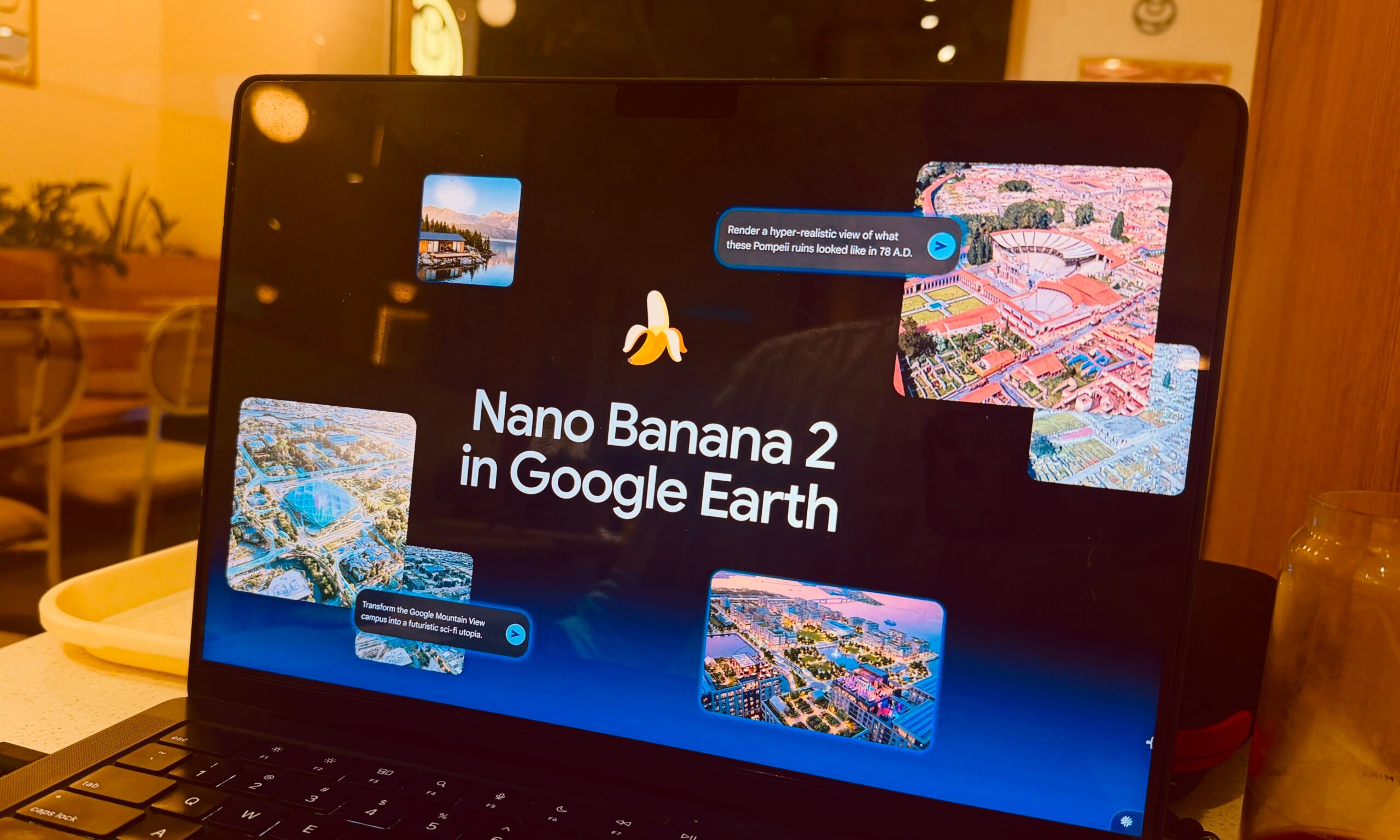
Technology behemoths are clearly not reading the room, or they are just moving faster than they should when it comes to AI deployment. Google has already stuffed its Gemini AI in every corner of its software stack, from Android to daily productivity tools like Gmail that are used by hundreds of millions of users every day. AI is everywhere. Not all of it is bad, mind you. But in a few places, it just feels forced.
In its latest AI-fication experiment, the company targeted Google Earth. The idea was to let the audience use its Nano Banana 2 AI image generator and make images that can be placed on the map view. On paper, it's a cool idea. What would the Colosseum of Rome look like in your urban neighborhood? Yeah, fun stuff like that.
AMD is apparently gearing up to raise GPU prices right after Nvidia’s steep hike
AMD has reportedly told AIB partners about a price hike that goes into effect in. August.

AMD is next in line to raise the asking price of its Radeon GPUs, merely days after the news of a similar hike coming for Nvidia graphics cards started making waves. As per ChannelGate on Weibo (h/t VideoCardz), AMD has informed its board partners that the price of GPU and memory bundles will go up by at least 10% in August.
Is a similar price hike coming for standalone graphics cards? I won't be surprised if that happens. The situation is so bad that AMD is planning to bring back graphics cards with 4GB of onboard memory. AMD just introduced the RX 9050 GPU, which costs $279. Notably, it's just $20 less than the RX 9060 XT that offers double the graphics memory.






















.jpg&h=630&w=1200&q=100&v=c0f97a310e&c=1)