Foraging Weeds
Healing Earth, presence, and polycrisis The post Foraging Weeds appeared first on Tricycle: The Buddhist Review.
 UsenB
UsenB
We live in a world that rewards speed. Many of us rush to understand problems, rush to implement solutions that make sense to us, then rush to face the next crisis and often burn out. But there is a kind of wisdom that only comes slowly—the kind that requires us to sit with a place long enough to truly see it. In my Zen Buddhist lineage, we call this beginner’s mind—approaching even the familiar as if for the first time, without the armor of conclusions.
I recently had the honor of attending a session led by Amy Anderson, an urban forager based in Boulder, the unceded lands of the Arapaho, Ute, and Cheyenne peoples. What she offered was more than just practical knowledge about which parts of plants we can eat in Colorado at specific times of the year. It was an invitation into a different way of relating to the living world around us.
Amy taught us that to harvest wisely from local plants, shrubs, or trees, we must begin to notice things we have collectively stopped seeing. We can notice when flowers, leaves, or seeds first arrive for different plants each spring, and whether they are arriving earlier than last year due to the climate crisis: Many plants in Colorado are arriving two to four weeks earlier in 2026. One thing she shared has stayed with me: When you harvest from native plants (as opposed to weeds), no one should know you have been there. It reminded me immediately of the Zen teaching “Leave no trace.” To practice this in a living ecosystem is to understand a felt responsibility.
Thich Nhat Hanh called this interbeing—the understanding that nothing exists independently, that the boundary between self and world is, at root, a useful fiction. My dear friend and Buddhist teacher Kaira Jewel Lingo writes, “Touching this interbeing, we can experience deep reverence for life and the earth, accepting that whatever we do to the Earth (or any living being) we are really doing to ourselves.” Foraging makes interbeing edible.
Amy also advised us to notice which birds or animals depend on the same leaves or fruits we are harvesting, and we should learn to leave enough for them.
She also made important distinctions: Native plants have evolved over thousands of years in relationship with the local ecosystem—they are, in the truest sense, home. Weeds are nonnative plants, but some of them can outcompete natives and disrupt the relationships that local insects, birds, and soil organisms depend on. As a result, we must correctly harvest invasive weeds as much as possible.
Needless to say, the most authentic and sacred version of ecological literacy is best learned from Indigenous or animist elders who are less concerned with speed. These elders can show us the way to becoming a keystone species, an organism that helps hold their surrounding ecosystem together.
Reindigenizing and Belonging to the Land
At the heart of foraging is something deeper than environmental action. It is the slow, patient building of a relationship with the place where we live. And that relationship, I would argue, is one of the most radical and necessary things we can cultivate right now in these times of polycrisis. This belonging to our local ecosystems is what, following the lead of Indigenous elders and scholars, I have been describing as reindigenizing. Reindigenizing, for me, includes a return to ways of knowing and being that treat the land not as a resource to be extracted but as our living community.
The late Larry Ward put it simply: “Pick a place that you want to get intimate with, that you want to look at deeply and learn how to respect all the beings that are there. It would take years and years for me to crawl around on the ground to meet all the beings that are in the field behind me.” It is an instruction for foraging and reindigenizing.
But who gets to build a relationship with the land in the modern world?
At some point, all our ancestors lived in deep relationship with their local ecosystems. But today Indigenous peoples across the world have been forcibly separated from lands they were inextricable, sacred parts of. We are being asked to protect and revitalize the ecological wisdom of living Indigenous cultures while remembering and reclaiming our own indigeneity, however distant that connection may feel.
Black, Brown, and other communities of the global majority carry broken relationships with land—not only as a legacy of colonization but as an ongoing reality. Enslaved Africans were forced to work land that was never theirs under law. Black farmers in the United States lost an estimated 90 percent of their farmland—12 million to 14 million acres—between 1910 and 1997, as a direct result of systemic racism embedded in government policies, private lending, and acts of terror, which together dismantled a significant source of Black wealth and land ownership in the 20th century. Chicanx and other farmworker communities are among the most exposed to the pesticides we produce, the least able to access the food they grow, and among the first to face displacement when land values rise. These are living wounds that shape who feels safe on the land, who has access to urban or rural green space where foraging can occur, and whose relationship with local ecosystems has been most violently disrupted. We need to reckon with all of these histories simultaneously.
Foraging Is a Response to Polycrisis, Not a Lifestyle Choice
Foraging can reduce demand for synthetic fertilizers and the emissions they produce. It can create a personal incentive to keep local ecosystems intact and diverse rather than manicured or sprayed. It can replace nutritionally depleted industrial food with something genuinely nourishing. It can make part of our food supply free and accessible regardless of income. It can support the soil biology that stores carbon. And perhaps, most importantly, it can rebuild something that industrial civilization has systematically deconstructed: a felt relationship between people and the living places they inhabit.
The larger truth is that we are not facing just the ecological crisis. Our crises—ecological breakdown, fascism, public health, inequality, cultural disconnection—are not separate. They are different parts of the same broken system. The concept of polycrisis asks us to resist the temptation of solving one problem at a time. Which means responses that address only one thread at a time will always be insufficient.
A culture that outsources its nutrition to a globalized commodity system while poisoning its local ecological substrate is likely structurally incapable of that response—regardless of the quality of its climate models.
A culture that sees weeds as food, sees local ecosystems as pantries, and sees itself as embedded in rather than separate from ecological systems is a culture capable of responding to polycrisis.
Learning to eat wild plants and weeds is not the only or most important solution, but it is something more interesting: a convergence point for facing polycrisis. A single shift in practice and perception that pulls on multiple threads at once.
Systems thinkers have argued that the highest leverage points in a complex system are not technologies or policies but paradigm shifts—changes in the goals, values, and worldviews from which systems arise. A culture that sees weeds as food, sees local ecosystems as pantries, and sees itself as embedded in rather than separate from ecological systems is a culture capable of responding to polycrisis.
We Need a BIPOC Reclamation
For BIPOC readers, I humbly acknowledge the fact that foraging in public or urban green spaces carries real risks for us. Racial profiling, over-policing, and the criminalization of simply being on land are not hypothetical. They are present realities that any honest conversation about reclaiming relationship with land must design around.
And yet—and this is important—the relationship between BIPOC communities and wild, living food has never truly been severed.
This relationship has been suppressed, criminalized, displaced, and grieved. The suppression of this relationship by structural racism has been a root cause of the climate crisis. Yet this relationship persists: in grandmothers who know which leaves to pick; in diaspora kitchens where bitter greens from the old country are still cooked without a recipe; in the Bhil and Lepcha elders I have sat with in India, who never stopped knowing the land as a living relative; in African American foodways that carry plant knowledge born in the South—knowledge that was itself a form of survival and resistance; in Chicanx communities where quelites—wild greens gathered from fields and roadsides—have been eaten continually for thousands of years, through colonization, through migration, through everything.
This knowledge did not disappear. It went quiet. And it can be reawakened. Here are some ways to do that with both joy and safety:
Start on land that is ours or trusted. A backyard or a community garden plot—these are spaces where we can grow and harvest plants without navigating the risks of public space. Weeds do not need to be invited. They will come. Forage in community, with community. There is both safety and joy in going out together—with neighbors, friends, a congregation, a mutual aid group. Reclamation does not have to be solitary. In many ways, it should not be. Seek out and support BIPOC-led foraging and food sovereignty spaces. Organizations rooted in Black and Indigenous food sovereignty—and urban foraging collectives led by and for communities of color are doing this work already. Joining them, learning from them, and contributing resources to them is part of the reclamation. Go back to our own ancestral food knowledge. If our lineage is African, South Asian, Latin American, Southeast Asian, Middle Eastern—our ancestors knew wild food deeply. Let us talk to elders. The knowledge lives in seeds, in recipes, in bodies. It is waiting to be called forward. Know our legal ground. In many US cities and national forests, foraging small amounts for personal use is legal. Knowing this, carrying it with us, and sharing that knowledge within our community is itself a form of power.The systems that told us land was not for us, that wild food was not food, that our presence in green spaces was suspicious—these systems were lying. They were lying to protect an economic arrangement that needed us separated from the land and dependent on what they were selling.
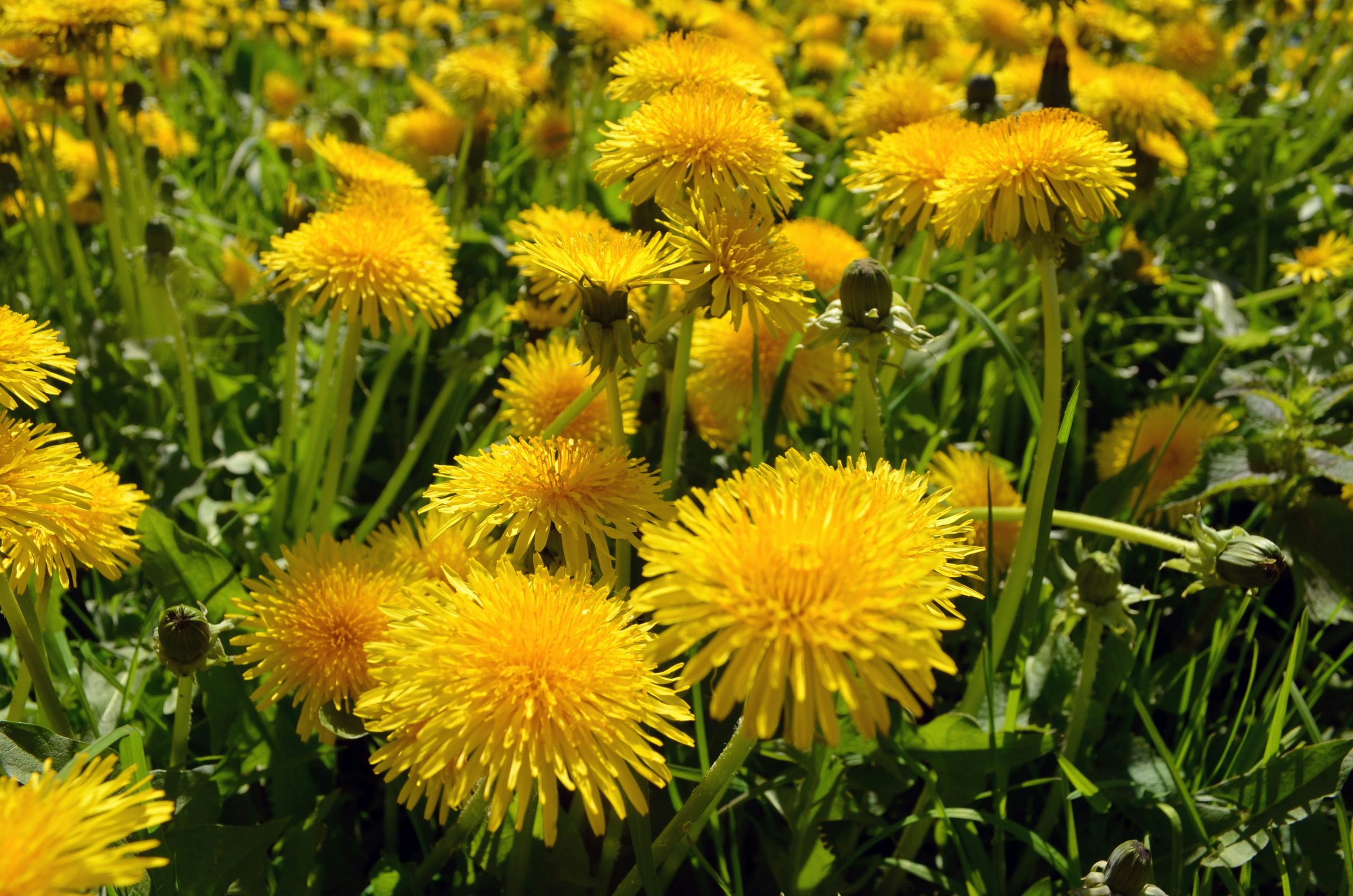
The dandelion growing through a sidewalk crack does not know about those systems. It is simply doing what life does—finding a way through, offering what it has, asking nothing in return. Gary Snyder, the Zen poet and ecologist, wrote about the practice of “reinhabitation”—learning to live in a place as if you intended to stay, as if the land were a teacher and not a backdrop. For many BIPOC communities, this is not a new practice to adopt. It is an ancient one to remember.
That is, perhaps, the deepest teaching in this whole piece. Not that foraging is a political act, though it can be. But that the land has been waiting for us. That it never stopped.
Relationship Between Inner Trauma Healing and Ecological Presence
There is a quiet prerequisite to healing our relationship to the land that rarely appears in environmental writing: We cannot truly notice the natural world if we are not, at least some of the time, truly present for ourselves.
To observe whether a flower is arriving earlier this spring than last. To notice which bird depends on the berry we are about to harvest. To sit still long enough to hear what an ecosystem is telling us. None of this is possible when our minds are running the familiar loops of worry, guilt, self-criticism, unfinished conversations, or the ambient dread that comes with living in a time of cascading crises. Deep ecological attention is not simply a matter of putting the phone away. It asks something more of us.
What it asks, I believe, is some degree of inner settledness—and that settledness, for most of us, requires tending to the layers of trauma we carry, often without fully knowing it. These layers are not unusual. They are the ordinary inheritance of being human: childhood experiences that left marks, systemic injustices absorbed into the body over years, losses that were never fully grieved, and—increasingly—climate dread.
When these unprocessed stresses and traumas live in our nervous systems, they keep us in a state of readiness, scanning for threat, pulling us out of the present moment and into the urgent noise of our own inner weather. We cannot, from that place, inhabit the slow, attentive, reciprocal presence that foraging—and real ecological relationship—requires.
There is a way through this, though it is not a shortcut. In my experience as a Zen Buddhist leader of grief-rage ceremonies, it begins with learning to belong to our own hurt and angry parts—to turn toward our pain rather than away from it, to let it be witnessed, and in that witnessing, to slowly release its grip on our attention. When we can do that—when we can be with what is most tender and difficult in ourselves without fleeing—we find that we can be with the world in the same way. We become capable of sitting with a dying ecosystem not just intellectually but fully, the way we might sit with someone we love who is suffering. That is a different quality of presence altogether.
This healing is not individual work alone. As I have written elsewhere, trauma heals most fully in community—in spaces where vulnerability is welcomed, where grief can move through a group, where no one has to carry their pain in silence. The environmental movement urgently needs these spaces. Beloved Buddhist systems thinker Joanna Macy, whose Work That Reconnects has guided thousands of activists, including myself, in moving through ecological grief rather than around it, describes this as “honoring our pain for the world”—the necessary passage between numbness and genuine action.
The practice of slowing down to notice the living world around us, and the practice of tending to our inner lives, are not separate practices. They nourish each other.
None of this means that an environmental advocate must be fully healed before they are allowed to pay attention to a dandelion. As many of our Ecodharma retreat participants experience, some of us tend to slow down and notice the pain of the natural world first before we can begin to have the capacity to be with our inner human pain.
It means something simpler and more human: that the practice of slowing down to notice the living world around us, and the practice of tending to our inner lives, are not separate practices. They nourish each other.
Every moment of genuine presence in a living ecosystem is also a moment of returning to ourselves. And every time we learn to stay with something difficult inside us, we become a little more capable of staying—really staying—with the world outside. Buddhism has taught me that the most precious gift we can offer the world is our true presence. The weeds, it turns out, are one of the places we can practice this.
◆
This article was adapted from a piece originally published on Kritee Kanko’s website.