How to Be Present with Grief
Through painting, photography, and meditation, Erin Eberle explores how creative practice can help us be present with our grief, reconnect with the world, and find our way back to ourselves. The post How to Be Present with Grief appeared...
 Lynk
Lynk
These days, many of us carry a palpable grief that lacks a clear object. It isn’t attached to a single loss that can be pointed to or to a moment in time with a specific date. There’s a sense that something is wrong that can’t fully be named. A fatigue that sleep doesn’t touch; an ache for something we’re not even sure we ever had. I’ve come to believe this mysterious grief is real and indeed does have a source. It’s what it feels like to be a living being inside systems that are breaking — ecological, social, relational — while simultaneously moving too fast to register what’s at stake.
“When it’s held rather than avoided, grief moves too.”
Modern life has been organized around a particular story: humans are separate from the natural world. Land has become a resource to manage. Water has become an infrastructure to optimize. Life is viewed as something to extract value from rather than something to participate in. While in some ways this story has enabled extraordinary forms of growth, it’s also produced a rupture between people and the living systems they depend on. This rupture runs so deep in so many of us that we’ve stopped noticing it as a rupture at all. We take it for the inherent shape of things.
The body keeps a different account. Something in us still knows what our systems have forgotten. We are not separate from the world. The forest, the watershed, and the soil are not a backdrop to human life, but the very conditions of it. We are, in the most literal sense, made from what surrounds us — the water, the air, the accumulated intelligence of ecosystems that evolved over millennia.
When that connection is severed, or simply ignored long enough, something in us grieves. This grief operates as a low hum beneath the surface — a sense of numbness, anxiety, and restlessness that no amount of productivity or consumption quite resolves.
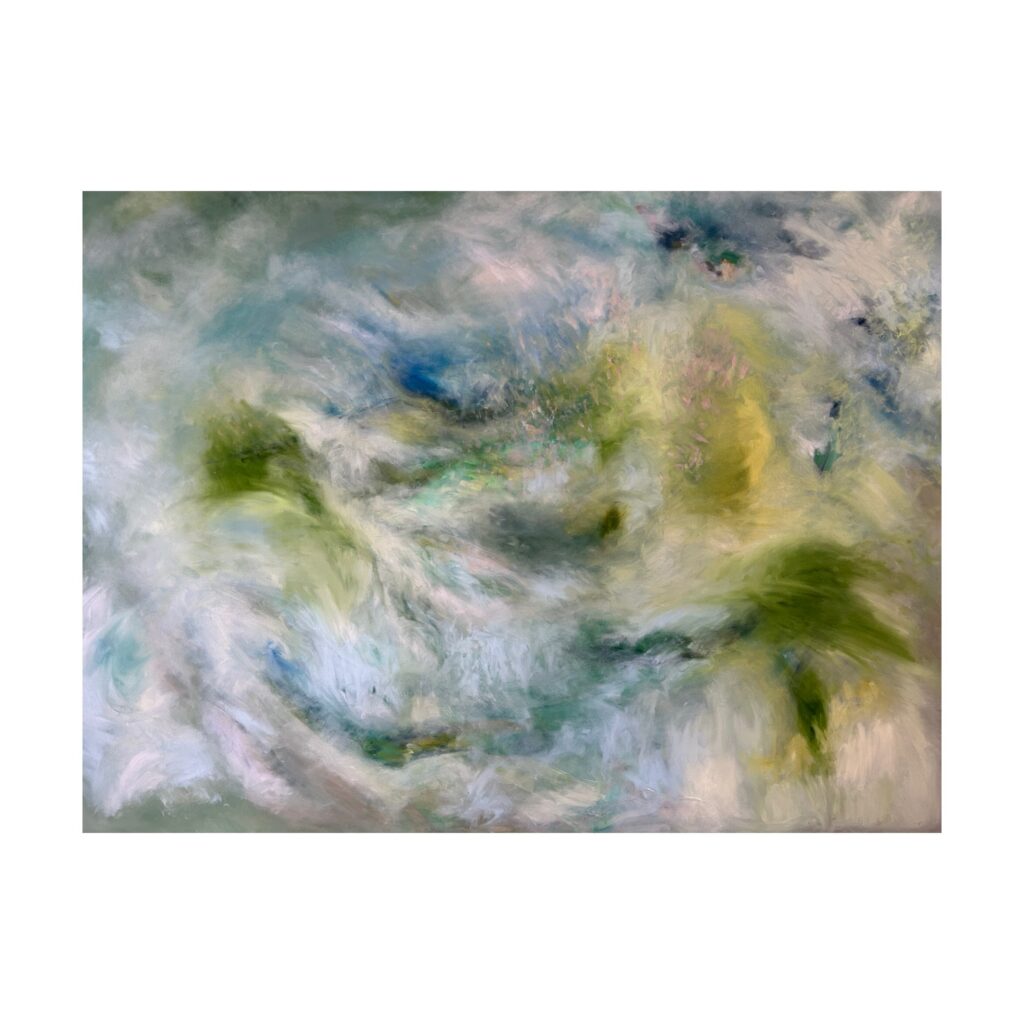 Paintings courtesy of the author.
Buddhist wisdom offers a frame I keep returning to. Indra’s Net describes reality as a vast web in which every point reflects every other. Nothing exists independently. Each part contains and is shaped by the whole. Thich Nhat Hanh called this “interbeing” — the understanding that a flower contains the cloud that rained on it, the soil that fed it, and the sun that reached it. Pull on any one thread and the whole web moves.
This is not only a spiritual teaching but also, increasingly, what ecology, systems science, and complexity theory are telling us about how the world actually works. The loss of a forest can change rainfall patterns hundreds of miles away. The health of soil microbiomes can affect the mental health of the communities that eat from them. A disruption in one part of a system propagates through the others in ways that defy simple cause-and-effect. Everything is entangled. Separateness is an illusion. We’ve built an entire civilization on it.
The crises of this moment — climate disruption, biodiversity collapse, the erosion of social and political coherence — are not separate problems to be solved one at a time but rather different expressions of the same foundational disconnection. They call not only for new policies and solutions (though we need those too), but for a different way of understanding ourselves in relation to everything else. That shift is harder to legislate. It happens somewhere else — in perception, practice, and the slow work of learning to feel what we have been taught not to feel.
This is where grief unexpectedly becomes a kind of resource.
Grief is evidence of connection. It means we are not fully numb. It tells us that, at some level beneath adaptation, coping, and forward motion, something in us still recognizes what’s lost. We grieve these things because we are not separate from them. Grief is the connection making itself felt.
We turn away from grief by staying busy, distracted, and productive enough not to feel it. By doing so, we lose something important — not because suffering is valuable in itself, but because grief, when we can stay with it, keeps us in contact with what actually matters. It’s the feeling of caring — and caring is what makes it possible to act from something beyond fear, obligation, and habit.
Contemplative and meditative practices have long recognized what modern life tends to forget: that the capacity to be present is a trainable quality. Learning to be with whatever arises — pleasant or painful, clear or confusing — doesn’t come from thinking more or analyzing better. It comes from practice. From returning, again and again, to direct experience rather than our stories about it. From learning to remain with what is difficult long enough to let it teach us something.
Can we find ways to stay with our grief? To let it be present without being overwhelmed by it? To remain open rather than armored?
Meditation in its many forms — sitting practice, walking, breath awareness — offers one path into this. This path is the opposite of escape; it is a way of meeting reality more directly, without the constant filtering by urgency, judgment, and the need to resolve. Over time, practice builds a kind of steadiness that is distinctly different from numbness. We can feel more, not less, without being knocked over by it. We can hold grief, beauty, and uncertainty together without forcing a resolution that isn’t there.
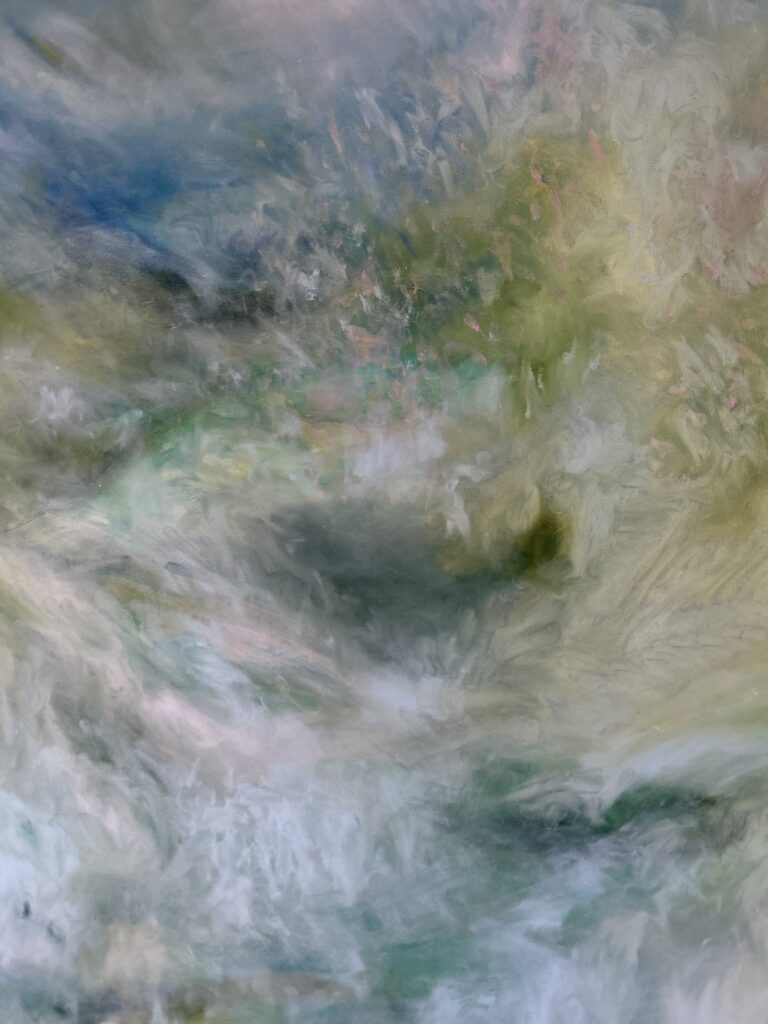
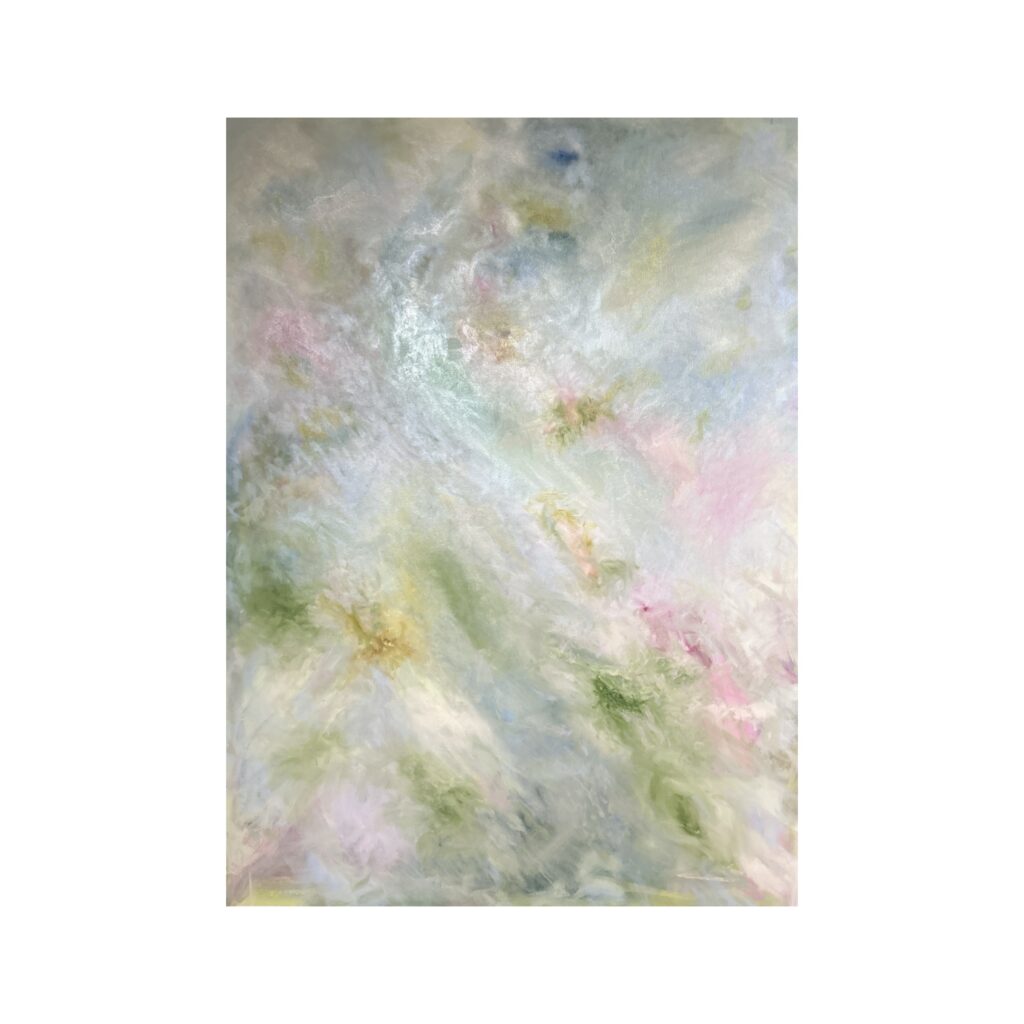
For me, making art is a practice of attention. As a painter, when I’m at the canvas, applying pigment with a brush, a stick, or my hands, I am doing something that thinking cannot do. When I’m working through layers of color that arrive before I know what they mean, I’m staying with what’s present. In my art practice, I let form dissolve and reconstitute, allowing the surface to tell me what it needs rather than imposing what I expect of it.
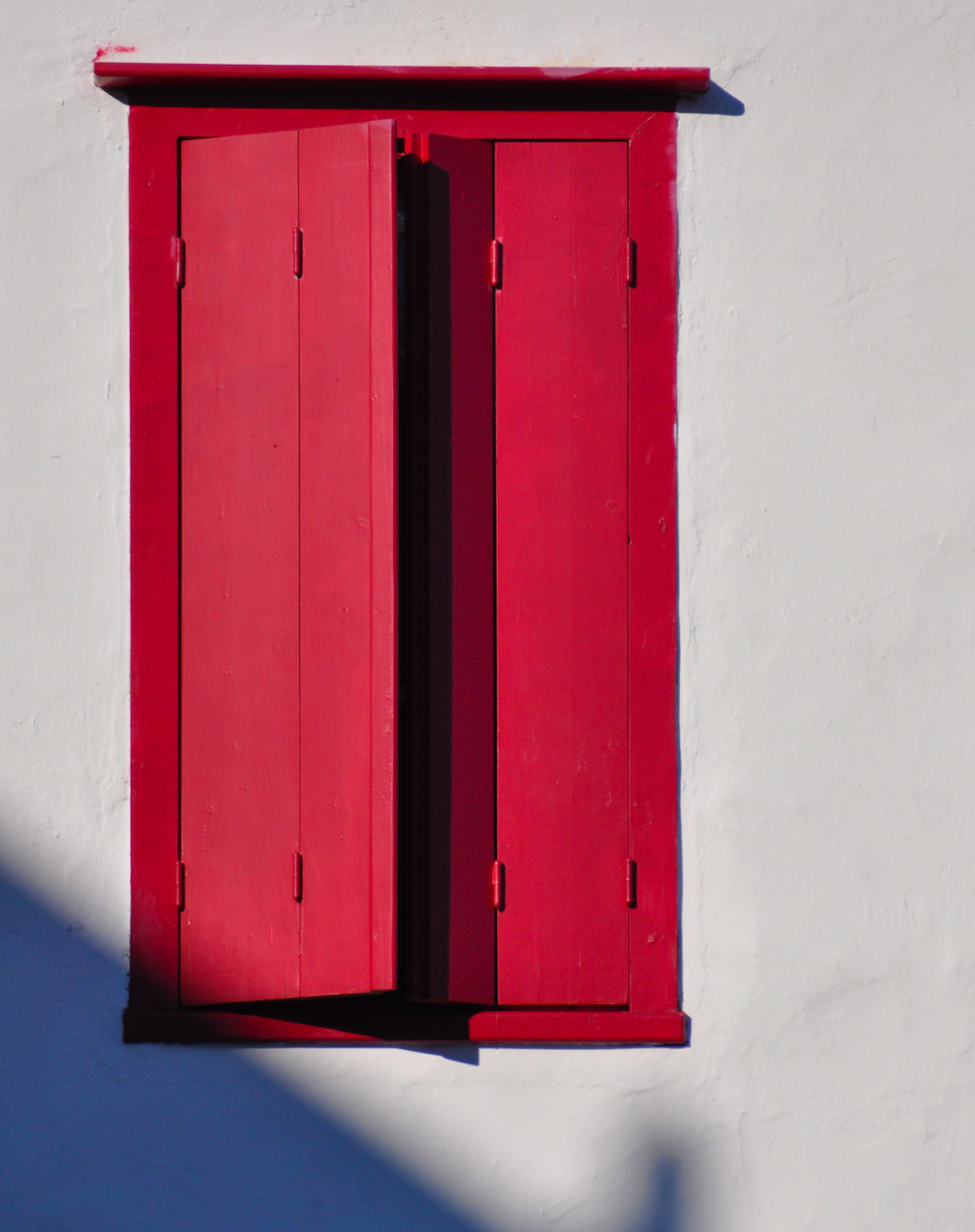
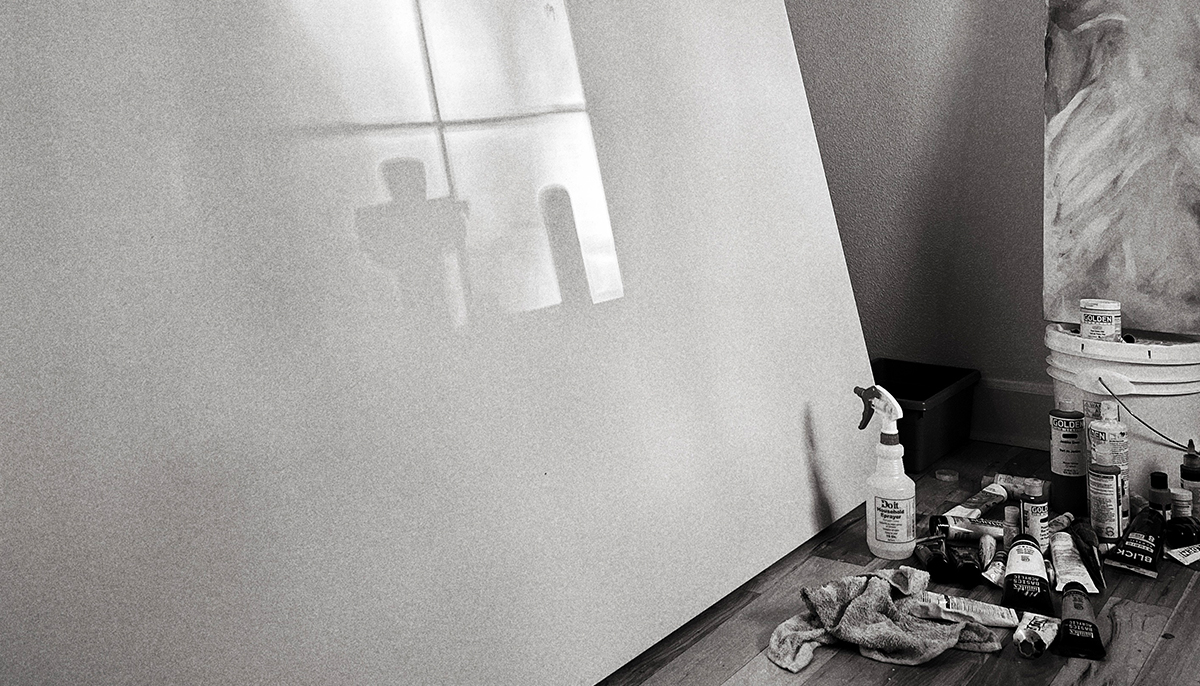
My photography works differently, but toward something similar. My series, I call Daily Noticing, began by simply looking at what was close at hand, making images slowly, without agenda. Light falling across an ordinary surface. The texture of something worn. The way a space holds the trace of what has happened in it. Over time, that practice changed how I moved through the world. It slowed perception down enough to notice what is already here — which is, it turns out, quite a lot.
Both practices require the same fundamental disposition: presence without agenda. The willingness to be with what is, not only what we wish were there. To allow grief and beauty and uncertainty to coexist without forcing one to cancel the others. This is less about making something and more about becoming someone who can see.
Time moves differently in these practices. The time spent making art is older and more patient than the compressed and optimized time of modern productivity. This type of time is attentive to recurrence, rhythm, and the way things move through phases of growth, loss, and regeneration. It’s more cyclical than linear. This is the time of forests, watersheds, seasons, and bodies. It’s the time that runs beneath the surface of daily life, largely unacknowledged. The time of living systems.
To slow down enough to feel it is a way of reconnecting with the depth from which meaningful response comes. Quick action from a place of disconnection produces more of what created the problem. Slower action from a place of genuine contact has a different quality.
I don’t think the answer to the crises we face is for everyone to become a meditator or a painter, though I certainly wouldn’t argue against it. Fundamentally, we need practices for remaining in relationship with what is actually happening. We need to feel the weight of loss without being paralyzed by it. We need to keep our hearts open when everything in us wants to close. Many traditions have cultivated them for centuries. Many communities — particularly Indigenous communities — have never lost them. What’s required is a remembering and a willingness to be changed by what we find when we do.
Indra’s Net holds in both directions. If every point reflects every other, then shifts in perception matter. Changes in how we understand ourselves in relation to the world don’t stay private. They move and shape which questions get asked. They decide which trade-offs get made and what futures feel possible.
When it’s held rather than avoided, grief moves too. It becomes something closer to love — the love of what’s real. What’s here. What we’re genuinely part of. I think this is the ground from which anything worth building has to grow.
We are not separate from the world we are trying to navigate. We never were. The practice is to come back to that, again and again, with open hearts and minds.