Therapeutic Yoga: The Complete Guide to Healing Through Practice
⚡ Quick Answer BoxTherapeutic yoga is a specialized, evidence-informed yoga practice adapted to address specific physical, mental, or emotional health […]
 JimMin


⚡ Quick Answer Box
Therapeutic yoga is a specialized, evidence-informed yoga practice adapted to address specific physical, mental, or emotional health conditions. Unlike general yoga classes, therapeutic yoga uses carefully selected poses, breathwork, meditation, and guided relaxation — modified for the individual’s unique health needs — to support healing, manage symptoms, and improve quality of life. It bridges ancient yogic wisdom with modern clinical understanding of the nervous system, musculoskeletal health, and mind-body medicine. Common applications include chronic pain, anxiety, depression, back pain, PTSD, cancer recovery, and chronic illness management.
Not everyone who needs yoga can walk into a regular yoga class and feel at home.
If you are living with chronic pain, recovering from injury, managing anxiety or depression, navigating a serious illness, or carrying trauma in your body — the standard yoga class was not designed with your needs in mind. The pace may be too fast. The poses may be contraindicated. The instructor may not know your history. And the experience of struggling to keep up in a room full of seemingly able-bodied people can feel more discouraging than healing.
Therapeutic yoga was developed specifically for people in exactly these circumstances.
It is yoga adapted — intelligently, compassionately, and with clinical awareness — to support real healing for real bodies with real health conditions. It meets you precisely where you are: in pain, in recovery, in grief, in illness, or simply in a body that needs a different kind of practice than what a standard drop-in class offers.
This guide covers everything you need to know about therapeutic yoga — what it is, how it differs from regular yoga and yoga therapy, the conditions it addresses, the science behind how it works, the specific poses and practices most commonly used, and how to begin a therapeutic yoga practice today.
What Is Therapeutic Yoga? A Clear Definition
Therapeutic yoga is the intentional application of yoga practices — poses (asana), breathwork (pranayama), meditation, guided relaxation, and philosophical principles — to support individuals dealing with specific health conditions, injuries, or life challenges.
The key word is intentional. In a general yoga class, poses are selected for fitness, balance, and general wellbeing. In therapeutic yoga, poses are selected — and individually modified — based on a specific clinical or therapeutic goal.
Therapeutic yoga operates at the intersection of three disciplines:
Traditional yoga philosophy — the understanding of prana (life force energy), the chakra system, the five koshas (layers of being), and the mind-body-spirit framework that has guided yogic healing for thousands of years Modern anatomy and physiology — understanding of the musculoskeletal system, nervous system function, endocrine regulation, and the pathophysiology of specific health conditions Mind-body medicine — the growing evidence base for how mental and emotional states influence physical health, and vice versaTherapeutic Yoga vs. Regular Yoga: Key Differences
| Primary goal | Fitness, flexibility, wellness | Healing, symptom management, recovery |
| Class structure | Same sequence for all participants | Individually adapted for each person |
| Instructor training | General yoga certification | Specialized therapeutic training |
| Pace | Fixed by class style | Determined by individual capacity |
| Contraindications | Generally addressed minimally | Central to practice design |
| Props | Used for alignment | Used extensively for support and modification |
| Breathwork | Supportive element | Often the primary therapeutic tool |
| Appropriate for | Generally healthy individuals | People with health conditions or injuries |
| Setting | Studio, gym, online | Clinical, studio, home, hospital |
Therapeutic Yoga vs. Yoga Therapy: An Important Distinction
These two terms are often used interchangeably — but they are not the same thing, and the distinction matters.
Therapeutic yoga is a style of yoga practice — adapted for therapeutic purposes — that can be delivered in group or individual settings. A therapeutic yoga class for people with back pain is therapeutic yoga.
Yoga therapy is a one-on-one clinical service delivered by a certified yoga therapist (C-IAYT — certified by the International Association of Yoga Therapists). It involves formal assessment, individualized treatment planning, and ongoing monitoring — functioning more like a clinical intervention than a group class.
Think of the relationship this way: therapeutic yoga is to yoga therapy what a fitness class is to personal training. Both are valuable — they serve different levels of individual need and clinical complexity.
The Science Behind Therapeutic Yoga: How It Heals
Therapeutic yoga does not work through mysticism. It works through well-documented physiological mechanisms — the same ones that underpin evidence-based medicine. Understanding these mechanisms helps practitioners use therapeutic yoga more effectively and helps skeptics appreciate why it belongs alongside conventional medical care.
Mechanism 1: Autonomic Nervous System Regulation
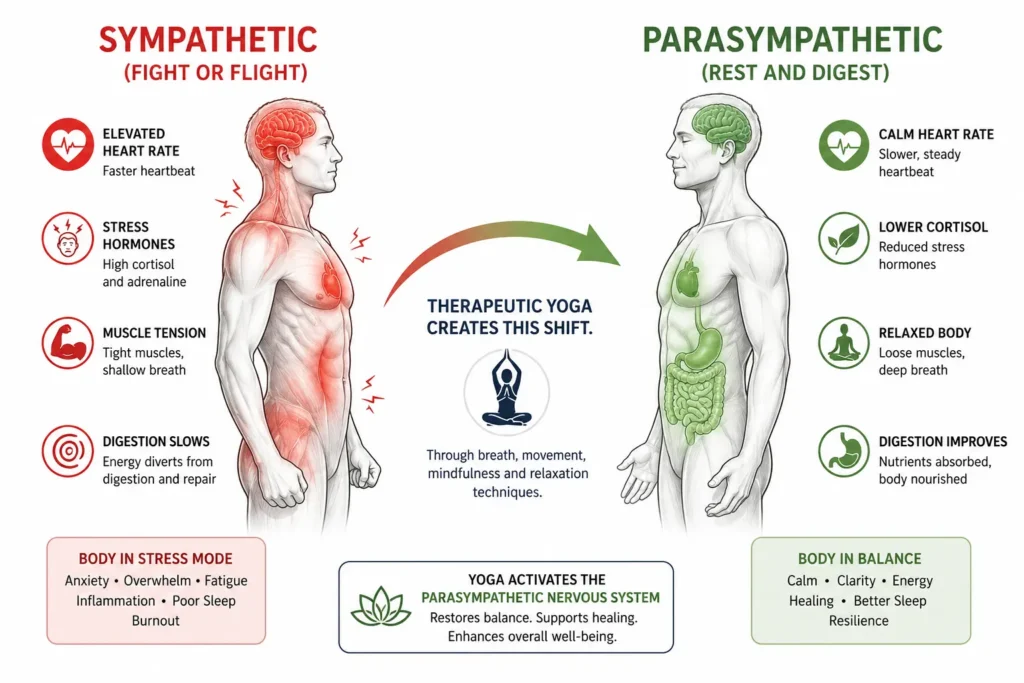
The autonomic nervous system (ANS) governs the body’s automatic functions — heart rate, breathing, digestion, immune response, and stress reaction. It operates in two primary modes:
Sympathetic nervous system (SNS) — “Fight or flight.” Activated by stress, pain, fear, and threat. When chronically dominant, it drives inflammation, muscle tension, sleep disruption, immune suppression, anxiety, and pain amplification.
Parasympathetic nervous system (PNS) — “Rest and digest.” Activated by safety, slow breathing, physical stillness, and gentle movement. Reduces inflammation, releases muscle tension, restores immune function, and reduces pain perception.
Most people living with chronic pain, anxiety, PTSD, autoimmune conditions, and chronic illness are stuck in a state of chronic sympathetic dominance — their nervous system cannot find its way back to the parasympathetic state where healing occurs.
Therapeutic yoga is one of the most effective available tools for restoring parasympathetic dominance — through slow movement, extended exhale breathing, guided relaxation, and the cultivation of body safety.
Research published by the National Center for Biotechnology Information confirms that yoga and pranayama directly activate the parasympathetic nervous system, reducing cortisol and inflammatory markers with measurable clinical effects. (Read the research)
Mechanism 2: Neuroplasticity and Pain Reprocessing
Chronic pain is not simply a signal from damaged tissue. In most cases of chronic pain — back pain, fibromyalgia, chronic headaches, and similar conditions — the pain is maintained and amplified by a process called central sensitization: the central nervous system becomes hypersensitized to pain signals, generating pain that is disproportionate to (or entirely independent of) actual tissue damage.
Therapeutic yoga addresses central sensitization through neuroplasticity — the brain’s capacity to reorganize itself. By creating repeated experiences of safe, comfortable, pleasurable body movement — particularly in areas associated with chronic pain — therapeutic yoga gradually retrains the nervous system’s pain-processing pathways.
This is not “thinking away pain.” It is a measurable neurological process in which the brain’s pain maps are reorganized through repeated positive somatic experience.
Mechanism 3: Polyvagal Regulation (Trauma and PTSD)
Dr. Stephen Porges’ Polyvagal Theory describes three states of autonomic nervous system function:
Ventral vagal (safe and social) — calm, connected, present. The state in which healing, learning, and relationship occur. Sympathetic (mobilization) — fight or flight. Survival mode. Dorsal vagal (shutdown) — freeze, collapse, dissociation. Extreme threat response.People living with trauma and PTSD frequently oscillate between sympathetic hyperactivation (hypervigilance, panic, anger) and dorsal vagal shutdown (numbness, dissociation, depression) — with limited access to the ventral vagal “window of tolerance” where normal functioning occurs.
Trauma-informed therapeutic yoga — with its emphasis on choice, agency, body awareness, and the gradual cultivation of safety in the body — is one of the most effective available approaches for expanding the window of tolerance and restoring consistent access to the ventral vagal state.
Mechanism 4: HPA Axis Regulation (Stress and Hormones)
The hypothalamic-pituitary-adrenal (HPA) axis is the body’s primary stress response system — governing the production of cortisol, adrenaline, and other stress hormones. Chronic HPA axis dysregulation drives:
Fatigue and adrenal exhaustion Immune suppression Hormonal imbalance Digestive disruption Mood dysregulation Sleep disruptionTherapeutic yoga — particularly restorative poses, yoga nidra, and extended pranayama — directly downregulates HPA axis activity, reducing chronic cortisol elevation and supporting the hormonal rebalancing that underlies recovery from many chronic conditions.
Mechanism 5: Interoception and Somatic Awareness
Interoception is the nervous system’s ability to sense the internal state of the body — heartbeat, breathing pattern, gut sensation, muscular tension, hunger, temperature, and emotional tone.
Impaired interoception is a central feature of many conditions that therapeutic yoga addresses — including chronic pain (where interoceptive signals are distorted), trauma (where body awareness is disconnected or threatening), eating disorders (where body signals are ignored or overridden), and depression (where somatic aliveness is blunted).
Therapeutic yoga systematically rebuilds interoceptive awareness through guided body scanning, breath awareness, slow movement with internal focus, and the cultivation of non-judgmental attention to physical sensation. This rebuilding of the body’s internal sensing capacity is foundational to healing in most therapeutic yoga applications.
Conditions Therapeutic Yoga Can Address
Therapeutic yoga has an evidence base or strong clinical rationale across a wide range of conditions. The following represents the most well-supported applications:
Therapeutic Yoga for Chronic Pain
Chronic pain — including lower back pain, fibromyalgia, osteoarthritis, and chronic headaches — is one of the most extensively researched applications of therapeutic yoga.
Therapeutic yoga reduces chronic pain through three simultaneous pathways: reducing the central sensitization that amplifies pain signals, releasing the muscular tension patterns that maintain pain, and activating the parasympathetic state in which the nervous system’s pain-processing calibrates back toward normal.
A systematic review published in the Annals of Internal Medicine found that yoga produced significant reductions in chronic lower back pain and functional disability — comparable to other recommended treatments including physical therapy.
Most effective poses for chronic pain: Supported Child’s Pose, Constructive Rest, Legs Up the Wall, gentle Cat-Cow, Supported Reclined Butterfly, and extended Savasana with body scan.
Therapeutic Yoga for Anxiety and Depression
Anxiety and depression are the most common mental health applications of therapeutic yoga — and the evidence base is robust.
For anxiety: Therapeutic yoga activates the parasympathetic nervous system, reduces cortisol, and — through extended exhale pranayama — directly stimulates the vagus nerve to reduce the physiological arousal that underlies anxiety.
For depression: Yoga activates the body’s dopamine and serotonin systems through movement and achievement, reduces the inflammatory markers associated with depression (particularly IL-6 and TNF-alpha), and breaks the somatic stillness and withdrawal that perpetuates depressive states.
A 2017 meta-analysis published in the Journal of Psychiatric Research found yoga significantly reduced depression symptoms across multiple populations, with effects comparable to antidepressant medication in mild-to-moderate depression.
Most effective practices for anxiety and depression: Alternate nostril breathing (Nadi Shodhana), extended exhale pranayama, Warrior Pose series (for embodied confidence), heart-opening backbends, Yoga Nidra, and regular Savasana.
Therapeutic Yoga for Back Pain
Lower back pain is the world’s leading cause of disability — and therapeutic yoga is one of its most evidence-supported non-pharmacological treatments.
Therapeutic yoga addresses back pain at three levels: structural (releasing the muscular tension patterns that compress the spine), neurological (reducing central sensitization of spinal pain pathways), and functional (rebuilding the core stability and movement patterns that protect the spine during daily activity).
Most effective poses for back pain: Cat-Cow, Knees-to-Chest (Apanasana), Supine Spinal Twist, Bridge Pose, Child’s Pose, Legs Up the Wall, and Thread the Needle.
Critical caution: Poses that increase back pain — particularly forward folds with a rounded spine and deep backbends — should be avoided or significantly modified. Therapeutic yoga for back pain should always be supervised initially by a qualified instructor with specific training in spinal conditions.
Therapeutic Yoga for Trauma and PTSD
Trauma-informed therapeutic yoga is one of the fastest-growing and most clinically significant applications of yoga therapy — supported by the pioneering work of researchers including Bessel van der Kolk (author of The Body Keeps the Score) and the Trauma Center Trauma-Sensitive Yoga (TCTSY) protocol.
Trauma lives in the body — in patterns of muscular holding, breath restriction, dissociation, and autonomic dysregulation that persist long after the traumatic event has passed. Therapeutic yoga for trauma is specifically designed to:
Rebuild felt safety in the body Restore agency and choice (offering options rather than instructions) Develop the capacity to notice body sensation without being overwhelmed by it Gradually expand the window of tolerance for physical and emotional experience Reconnect the person with their body as a source of information and comfort rather than threatMost effective practices for trauma: Trauma-sensitive restorative poses, breath awareness (without breath control), gentle movement with choice, Yoga Nidra with safety anchoring, and long Savasana with options for modification.
Therapeutic Yoga for Cancer Support
Therapeutic yoga for cancer patients and survivors is one of the most well-researched integrative oncology interventions available.
Clinical evidence supports therapeutic yoga for reducing:
Chemotherapy-related fatigue (one of the most debilitating side effects) Cancer-related anxiety and depression Sleep disturbance during and after treatment Neuropathic pain from chemotherapy Lymphedema (through specific lymphatic drainage poses)The most commonly used therapeutic yoga protocol in oncology research is a gentle, restorative practice — never vigorous or heating — focused on breathwork, guided relaxation, and mild movement within the patient’s current capacity.
Therapeutic Yoga for Chronic Illness
Therapeutic yoga is increasingly integrated into the management of numerous chronic conditions including:
Type 2 diabetes — improves insulin sensitivity, reduces HbA1c, supports weight management Hypertension (high blood pressure) — reduces systolic and diastolic BP through parasympathetic activation Hypothyroidism — specific poses (Bridge, Shoulder Stand, Fish) stimulate thyroid function Irritable Bowel Syndrome (IBS) — reduces the stress-driven gut-brain dysregulation central to IBS Endometriosis — releases pelvic floor tension, reduces cortisol-driven inflammation Multiple Sclerosis (MS) — improves balance, fatigue, and mood in mild-to-moderate MS Chronic Fatigue Syndrome — gentle restorative practice reduces HPA axis dysregulationCore Principles of Therapeutic Yoga Practice
What makes a yoga practice “therapeutic” is not just the choice of poses — it is the underlying principles that govern how the practice is approached.
Principle 1: Ahimsa (Non-Harming)
The foundational ethical principle of yoga — non-violence toward self and others — is the cornerstone of therapeutic yoga. Every pose modification, every prop use, every decision to rest rather than push is an expression of ahimsa toward your own body.
In therapeutic yoga, “no pain, no gain” is not just wrong — it is the opposite of the practice. The threshold is never pain. It is always: what does this body need right now?
Principle 2: Individualization
There is no single therapeutic yoga practice. Every practice is shaped by the individual’s specific condition, current capacity, response to specific poses, and evolving therapeutic goals. What is therapeutic for one person may be contraindicated for another with the same diagnosis.
Principle 3: Interoceptive Awareness Over External Form
In general yoga, the primary reference point is often external — does the pose look right? Am I in the correct alignment? In therapeutic yoga, the primary reference point is always internal — what do I feel? What is this body communicating? What does this sensation mean?
Principle 4: The Therapeutic Relationship
Effective therapeutic yoga — particularly for trauma, chronic pain, and mental health — depends on a relationship of safety, trust, and genuine attunement between practitioner and teacher. The quality of this relationship is itself therapeutic.
Principle 5: Breath as the Primary Tool
In therapeutic yoga, breathwork is not a supplementary element — it is often the primary intervention. The breath directly regulates the autonomic nervous system, the emotional state, and the body’s pain response. When in doubt, return to breath.
10 Essential Therapeutic Yoga Poses: Step-by-Step
These poses form the foundational toolkit of therapeutic yoga practice. Each is selected for its therapeutic mechanism — not just its general yoga benefit.
1. Constructive Rest Position
Constructive Rest is the most therapeutically fundamental pose in this guide — and the one most consistently used across all therapeutic yoga applications regardless of condition.
Therapeutic mechanism: In Constructive Rest, the psoas muscle — the deep hip flexor that connects the lumbar spine to the femur and runs directly through the pelvic cavity — is placed in its optimal length without any active support. Over 5–10 minutes, the psoas releases through passive neurological inhibition (the Golgi tendon organ reflex), reducing lumbar compression, pelvic floor tension, and the chronic “bracing” posture associated with chronic pain and stress.
How to do it:
Lie on your back on a firm but comfortable surface Bend your knees and place your feet flat on the floor, hip-width apart Let your knees rest against each other or fall slightly apart — whichever feels natural Place your hands on your lower belly or let them rest at your sides Close your eyes Do nothing except breathe slowly and allow gravity to work Notice your lower back gradually softening toward the floor with each exhaleHold: 10–15 minutes for maximum therapeutic benefit
Therapeutic note: The psoas muscle is described by somatic therapists as “the muscle of the soul” — it is intimately connected to the body’s stress and trauma response. Its release in Constructive Rest often produces not just physical relief but emotional shifts — a sense of safety, release, or unexpected emotion. This is normal and is part of the therapeutic process.
2. Diaphragmatic Breathing with Extended Exhale
The single most therapeutically powerful tool in therapeutic yoga — more immediately effective than any physical pose for nervous system regulation.
Therapeutic mechanism: The diaphragm and pelvic floor move in anatomical coordination — when the diaphragm descends on the inhale, the pelvic floor descends and releases. Extended exhale breathing (exhale longer than inhale) directly stimulates the vagus nerve through the diaphragm’s abdominal branches, shifting the autonomic nervous system from sympathetic to parasympathetic dominance within minutes.
How to do it:
Lie in Constructive Rest or sit comfortably Place one hand on your chest and one on your belly Inhale slowly through your nose for 4 counts — belly rises, chest stays relatively still Exhale slowly through your nose for 6–8 counts — belly falls The extended exhale is the active therapeutic element — never shorten it Practice 10–15 cycles before any physical practice and return to it whenever needed during practiceHold: 10–15 breath cycles (3–5 minutes)
Therapeutic note: For people with anxiety or PTSD, breath control can initially feel threatening — bringing awareness to breathing may trigger panic or dissociation. In this case, begin with awareness of breath (simply noticing it) rather than control of breath. Gradually introduce the extended exhale over multiple sessions as the person’s comfort with breath awareness develops.
3. Cat-Cow (Marjaryasana-Bitilasana) — Therapeutic Version
Cat-Cow in its therapeutic application is not primarily a spinal warm-up — it is a neuromodulation tool that uses rhythmic spinal movement to regulate the sympathetic nerve chain running alongside the vertebrae.
Therapeutic mechanism: The paravertebral sympathetic chain — a network of ganglia running alongside the thoracic and lumbar vertebrae — governs much of the body’s stress response in the torso and abdomen. Gentle, rhythmic flexion and extension of the spine at a breath-synchronized pace creates oscillating mechanical stimulation of this chain, progressively reducing its output and shifting the system toward parasympathetic dominance.
How to do it:
Come to hands and knees — wrists under shoulders, knees under hips Make the movement half as large as you think it needs to be — therapeutic Cat-Cow is subtle Inhale (4 counts): belly drops toward the floor, chest lifts gently, tailbone rises Exhale (6 counts): spine rounds gently to the ceiling, chin draws toward chest, belly draws in Move at the pace of the breath — the breath leads, the body follows Close your eyes and direct attention to the internal sensation of the movementHold: 15–20 very slow breath cycles (5–6 minutes at therapeutic pace)
Therapeutic note: For people with spinal conditions — herniated discs, spinal stenosis, scoliosis — the range of motion in Cat-Cow should be significantly reduced. Even micro-movements (1–2 cm of flexion and extension) produce the same neuromodulatory benefit. The rhythm and breath-synchronization are the therapeutic elements — not the depth of the movement.
4. Supported Child’s Pose (Balasana — Fully Propped)
Supported Child’s Pose is one of therapeutic yoga’s most universally applicable poses — used across chronic pain, anxiety, trauma, cancer support, back pain, and virtually every other therapeutic application.
Therapeutic mechanism: Three simultaneous mechanisms operate in supported Child’s Pose. Forward fold position stimulates the vagus nerve through abdominal compression. Forehead contact with the mat or a bolster activates the frontal lobe’s parasympathetic centers through mechanoreceptor stimulation. The fetal position activates the nervous system’s deepest evolutionary associations with safety and containment.
How to do it:
From tabletop, place a bolster or stack of blankets lengthwise between your thighs Bring big toes together, widen knees around the bolster Exhale and lower your torso completely onto the bolster — let it support your full weight Turn your head to one side (switch halfway through) or rest forehead down Arms can rest forward or alongside the body Do absolutely nothing — allow the bolster to hold you completelyHold: 5–10 minutes
Therapeutic note: The full torso support is what converts this from a yoga pose into a therapeutic intervention. Without the bolster, some muscular effort is required. With it, the entire nervous system can surrender. Invest in a bolster or use firm, stacked pillows — the difference in therapeutic effect is clinically significant.
5. Legs Up the Wall (Viparita Karani)
Legs Up the Wall is therapeutic yoga’s primary restorative inversion — combining lymphatic drainage, venous return support, and complete parasympathetic activation in a single effortless pose accessible to virtually everyone.
Therapeutic mechanism: Elevation of the legs above the heart assists venous return — reducing the cardiac workload and lowering heart rate measurably within 5 minutes. Simultaneously, lymphatic fluid drains from the legs toward the thoracic duct, supporting immune function and reducing peripheral edema. The supine, legs-elevated position is one of the body’s clearest evolutionary signals of complete safety — deeply activating parasympathetic dominance.
How to do it:
Sit sideways next to a wall Swing your legs up the wall as you lower your back to the floor Hips can be close to the wall or 15–30 cm away — find what is comfortable Optional: place a folded blanket or bolster under the hips for elevation Arms rest at sides, palms up — the position of complete openness and non-doing Close your eyes and breathe naturally — no direction needed Simply allow your legs to be held by the wallHold: 10–15 minutes
Therapeutic contraindications: Avoid during menstruation if uncomfortable. Avoid with glaucoma, severe hypertension, or recent abdominal surgery. Always consult your healthcare provider if you have had recent surgery before practicing any inversion.
6. Supine Bound Angle / Reclined Butterfly (Supta Baddha Konasana — Supported)
The supported Reclined Butterfly is therapeutic yoga’s primary hip-opening restorative pose — addressing the chronic adductor and pelvic floor tension that underlies many cases of chronic pelvic pain, lower back pain, and anxiety-related muscular holding.
Therapeutic mechanism: The inner thigh muscles (adductors) and the pelvic floor muscles are connected through fascial chains. In people with chronic stress, anxiety, pelvic pain, or trauma, these muscles are held in a state of chronic contraction. The supported Reclined Butterfly creates a passive, gravity-assisted stretch through these structures — without triggering the protective muscle guarding that active stretching would produce.
How to do it:
Lie on your back Bring the soles of your feet together, knees falling open to the sides Place yoga blocks or folded blankets under each knee — fully supporting the weight of both legs Place a folded blanket under your head One hand on your lower belly, one on your heart Close your eyes and breathe slowly With each exhale — feel the inner thighs releasing slightly, without any effort or forcingHold: 7–10 minutes
Therapeutic note: The knee support is non-negotiable for therapeutic benefit. Without it, the inner thigh muscles must work to hold the position — preventing the release that is the entire purpose of the pose. Full support transforms this from a stretch into a release.
7. Seated Spinal Twist (Ardha Matsyendrasana — Gentle)
The therapeutic seated spinal twist targets the paravertebral muscles, thoracolumbar fascia, and abdominal viscera — making it one of the most useful poses for back pain, digestive conditions, and the spinal tension associated with chronic stress.
Therapeutic mechanism: The compression-and-release of the abdominal organs during a sustained spinal twist creates three specific therapeutic effects: stimulation of peristalsis (improving digestive motility, relevant for IBS and stress-related digestive conditions); compression of the spleen and liver (supporting immune and detoxification function); and progressive release of the thoracolumbar fascia (the dense connective tissue layer covering the lower back that is a primary contributor to chronic back pain).
How to do it:
Sit on your mat with legs extended Bend your right knee and cross it over the left leg, foot flat on the floor Inhale — lengthen your spine upward as tall as possible Exhale — rotate your torso to the RIGHT, left elbow outside right knee Right hand rests behind you for support Keep the lengthening on every inhale — never collapse the spine into the twist Hold for 10 slow breaths, then slowly unwind and repeat on the LEFT sideHold: 10 breaths each side
Therapeutic note for back pain: If either direction of twist produces back pain, reduce the range of rotation significantly. The therapeutic benefit occurs in the first 20–30% of available rotation — not at the limit of range. A micro-twist held for 10 breaths is more therapeutic than a maximum-range twist held for 2.
8. Bridge Pose (Setu Bandha Sarvangasana) — Active and Passive Versions
Bridge Pose in its therapeutic application is used in two distinct ways — as an active strengthening pose for spinal rehabilitation, and as a passive supported pose for nervous system restoration and chest opening.
Therapeutic mechanism (active): The active Bridge Pose strengthens the gluteus maximus, hamstrings, and multifidus (deep spinal stabilizer) — the three muscle groups most commonly weakened in chronic lower back pain. Strengthening these muscles through the repeated action of lifting and lowering the pelvis is one of the most evidence-supported exercises for chronic back pain rehabilitation.
Therapeutic mechanism (passive/supported): With a block under the sacrum, Bridge Pose becomes a gentle inversion that opens the chest, stimulates the thymus, and creates traction through the pelvic floor — without any muscular effort.
Active version:
Lie on your back, knees bent, feet flat, hip-width apart Inhale — press through feet and arms, lift hips toward ceiling Hold 5 breaths at the top Exhale — lower slowly, one vertebra at a time Repeat 3–5 timesPassive version:
Lie on your back, knees bent Lift hips briefly and slide a block under the sacrum Lower hips onto the block — finding the height that is comfortable Arms rest at sides, palms up Hold 5–10 minutes in complete muscular release9. Extended Savasana with Body Scan
Extended Savasana with a systematic body scan is the therapeutic yoga equivalent of a clinical relaxation intervention — producing measurable reductions in cortisol, heart rate, blood pressure, and subjective pain and anxiety scores.
Therapeutic mechanism: The body scan in Savasana directs non-judgmental attention to each body region sequentially — rebuilding interoceptive awareness, identifying areas of tension or holding that were outside conscious awareness, and creating the neurological conditions for voluntary release of those patterns. Extended Savasana (15–30 minutes) induces a theta brain-wave state — the same state produced by Yoga Nidra — in which the HPA axis downregulates, cytokines are produced, and tissue repair processes are prioritized.
How to do it:
Lie flat on your back — bolster under knees, blanket over body, eye pillow on Take 5 slow, deep breaths to settle Begin the body scan — right foot, right calf, right knee, right thigh, right hip Left foot, left calf, left knee, left thigh, left hip Lower belly — release. Lower back — release. Upper belly — release. Middle back — release. Chest — release. Upper back — release. Right hand, right arm, right shoulder — release. Left hand, left arm, left shoulder — release. Throat — release. Jaw — release. Face — release. Forehead — release. Crown — release. Rest in whole-body awareness — not trying to sleep, not trying to stay awakeHold: 15–30 minutes
Therapeutic note: Many people with chronic pain, anxiety, or trauma find extended Savasana initially difficult — the stillness can feel threatening, and body awareness can trigger discomfort. Begin with 5 minutes and extend gradually over multiple sessions. Offer the option to keep eyes slightly open or to have a blanket over the face — choice and agency are therapeutic.
10. Yoga Nidra (Yogic Sleep — Guided)
Yoga Nidra is therapeutic yoga’s most powerful single intervention — a guided lying-still practice that systematically induces the theta brain-wave state where the deepest available healing processes occur.
Therapeutic mechanism: Yoga Nidra induces a state of consciousness between waking (beta/alpha waves) and sleep (delta waves) — the theta state (4–8 Hz) in which:
Cytokine production occurs (immune signaling proteins produced primarily in sleep-adjacent states) HPA axis downregulation reaches its maximum available depth outside of actual sleep Trauma processing can occur with less triggering than in full waking consciousness Neural reorganization of pain maps and stress response patterns is most accessible Deep physical restoration equivalent to several hours of sleep is produced in 20–30 minutesHow to do it:
Lie in fully supported Savasana (bolster, blanket, eye pillow) Follow a guided Yoga Nidra recording or teacher’s voice through the following stages: Physical relaxation and body scan Breath awareness Setting of Sankalpa (healing intention) Rotation of consciousness through the body Visualization Return to waking awareness The practice is entirely passive — there is nothing to do except follow the guidance If you fall asleep — this is fine. The body needed the sleep more than the practice.Hold: 20–45 minutes
Therapeutic note: Yoga Nidra is particularly valuable in therapeutic yoga for trauma, chronic pain, cancer support, and severe anxiety — conditions where active physical practice is either impossible or counterproductive. It is the one therapeutic yoga practice that can be delivered even in bed, in hospital, or during illness.
Building a Therapeutic Yoga Practice: A 4-Week Framework
Week 1: Foundation (15–20 Minutes Daily)
Goal: Establish safety, breath awareness, and basic interoceptive contact
Diaphragmatic breathing with extended exhale — 5 minutes Constructive Rest — 10 minutes Supported Savasana — 5 minutesWhy: Before any physical yoga practice, the nervous system needs to experience that the practice itself is safe. Week 1 is entirely about establishing that safety through breath and supported stillness.
Week 2: Gentle Movement (20–30 Minutes, 4–5 Sessions)
Goal: Begin introducing movement within the safe container established in Week 1
Diaphragmatic breathing — 5 minutes Constructive Rest — 5 minutes Therapeutic Cat-Cow — 5 minutes (very slow, very small range) Supported Child’s Pose — 5 minutes Savasana — 10 minutesWhy: Movement is introduced gradually — always at the pace of breath, always within the comfort threshold, always with the option to return to Constructive Rest if any discomfort arises.
Week 3: Expanding the Practice (30–40 Minutes, 4–5 Sessions)
Goal: Add targeted therapeutic poses specific to your condition
Breathing — 5 minutes Cat-Cow — 5 minutes Condition-specific poses (3–4 poses from the list above, selected for your health goals) — 15 minutes Legs Up the Wall or Supported Bridge — 7 minutes Savasana with body scan — 10 minutesWeek 4: Integrated Practice (40–50 Minutes, Daily)
Goal: A complete, personally tailored therapeutic yoga practice
Breathing — 5 minutes Gentle warm-up (Cat-Cow, neck rolls) — 5 minutes Core therapeutic sequence (5–6 poses) — 20 minutes Restorative closing pose (Legs Up the Wall or Supported Reclined Butterfly) — 10 minutes Yoga Nidra or extended Savasana — 15 minutesHow to Find a Qualified Therapeutic Yoga Teacher
Not every yoga teacher is qualified to teach therapeutic yoga. Here is what to look for:
Credentials to look for:
C-IAYT (Certified by the International Association of Yoga Therapists) — the gold standard for yoga therapy E-RYT 500 with specialized therapeutic training — experienced yoga teacher with advanced hours Specialty training in your specific condition area (trauma-informed yoga, cancer support yoga, yoga for chronic pain, etc.)Questions to ask before working with a therapeutic yoga teacher:
What is your training in therapeutic yoga or yoga therapy? Do you have experience working with my specific condition? How do you adapt your approach for individual students? Do you work alongside medical or healthcare providers? What does a first session look like?Red flags to avoid:
Claims that yoga can cure medical conditions No willingness to communicate with your healthcare provider One-size-fits-all approach with no individual modification Pushing through pain as part of the practiceConclusion
Therapeutic yoga begins with a radical premise: that your body — however it is right now, whatever it is carrying, wherever it is in its healing journey — is enough to begin.
Not when the pain is better. Not when you are more flexible. Not when you feel ready. Now. As you are.
The poses in this guide do not ask you to perform or achieve. Constructive Rest asks you to lie still and breathe. Supported Child’s Pose asks you to be held. Extended Savasana asks you to do nothing at all. These are not failures of ambition — they are the practice. They are where the healing happens.
Therapeutic yoga has spent thousands of years and the last several decades of clinical research discovering what bodies have always known: that healing is not a fight. It is a gradual, patient, compassionate process of creating the conditions in which the body’s own intelligence can do what it was always designed to do.
Your nervous system knows how to regulate. Your pain system knows how to recalibrate. Your body knows how to heal.
Therapeutic yoga simply creates the space for it to happen.
Begin where you are. Breathe. Rest. Practice. Visit TheShivYoga.com and heal with us.
Medical Disclaimer: This article is for informational and educational purposes only. It does not constitute medical advice and is not a substitute for professional medical or psychological care. Therapeutic yoga is a complementary practice. Always consult your healthcare provider before beginning any new yoga or movement practice, particularly if you have a diagnosed medical or mental health condition. If any pose or practice increases your symptoms, discontinue immediately and seek professional guidance.
Key Takeaways
Therapeutic yoga is yoga intentionally adapted for specific health conditions — different from general yoga in its individualization, clinical awareness, prop use, and therapeutic intent. Therapeutic yoga differs from yoga therapy — therapeutic yoga is a practice style; yoga therapy is a formal clinical service delivered by a certified practitioner (C-IAYT). Therapeutic yoga works through five measurable mechanisms: autonomic nervous system regulation, neuroplasticity and pain reprocessing, polyvagal regulation, HPA axis downregulation, and interoceptive awareness rebuilding. Chronic pain, anxiety, depression, PTSD, back pain, and chronic illness are the most evidence-supported applications — but the principles apply across virtually any health condition. The most universally applicable therapeutic yoga pose is Constructive Rest — used across all conditions for psoas release and autonomic regulation. Diaphragmatic breathing with extended exhale is the single most therapeutically powerful tool in the entire practice — more immediately effective than any physical pose. Yoga Nidra induces the theta brain-wave state where the deepest available healing processes occur — making it the most restorative single intervention in therapeutic yoga. The foundational principle is ahimsa (non-harming) — pain is never part of therapeutic yoga. The threshold is always: what does this body need right now? Daily practice of 15–20 minutes produces more consistent therapeutic benefit than occasional long sessions. Consistency is the mechanism.FAQ Section
Q1: What is the difference between therapeutic yoga and yoga therapy?
Therapeutic yoga is a group or individual yoga practice adapted for people with health conditions — focused on healing and symptom management using modified poses and breathwork. Yoga therapy is a formal one-on-one clinical service delivered by a certified yoga therapist (C-IAYT) involving individual assessment and treatment planning. Therapeutic yoga is accessible to anyone; yoga therapy is a specialized clinical intervention.
Q2: What conditions can therapeutic yoga help with?
Therapeutic yoga has clinical evidence or strong rationale for chronic lower back pain, anxiety, depression, PTSD, fibromyalgia, cancer-related fatigue, hypertension, Type 2 diabetes, IBS, endometriosis, chronic fatigue syndrome, and multiple sclerosis. It is most effective as a complementary practice alongside conventional medical treatment — not as a replacement for it.
Q3: Can I practice therapeutic yoga at home without a teacher?
Yes — the foundational therapeutic yoga practices (diaphragmatic breathing, Constructive Rest, Supported Child’s Pose, Legs Up the Wall, and extended Savasana) are safe for most people to practice at home independently. For specific medical conditions — particularly back pain, PTSD, or post-surgical recovery — working with a qualified therapeutic yoga teacher initially is strongly recommended before establishing an independent home practice.
Q4: How often should I practice therapeutic yoga to see results?
Daily practice of even 15–20 minutes produces the most consistent therapeutic benefit — particularly for nervous system regulation and chronic pain management. The nervous system learns through repetition: a short daily practice conditions the parasympathetic response more effectively than an occasional long session. Most practitioners report meaningful improvement in symptoms within 4–8 weeks of consistent daily practice.
Q5: Is therapeutic yoga safe for people with serious medical conditions?
Therapeutic yoga — particularly restorative and breath-focused practices — is generally very safe for people with serious medical conditions and is specifically designed to be adaptable to any level of capacity. However, always inform your therapeutic yoga teacher of your complete medical history and current medications, and obtain clearance from your healthcare provider before beginning. Some specific poses or breathwork techniques may be contraindicated for specific conditions.