How to optimize your website for AI search
Learning how to optimize your website for AI search is one of the hottest skills for marketers right now, because the audience for these tools is growing fast. Monthly unique visitors to the major answer engines climbed from 634...
 BigThink
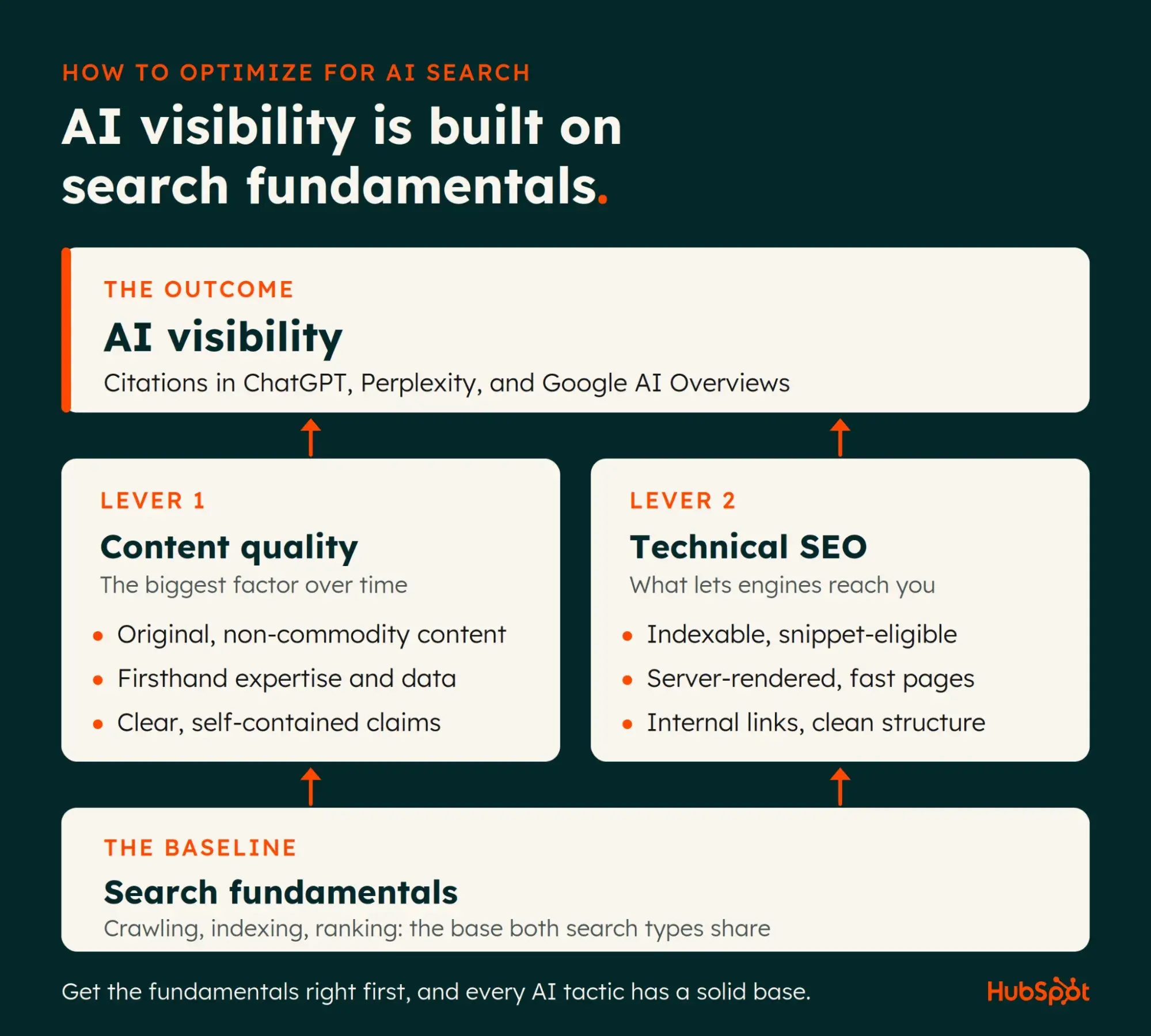
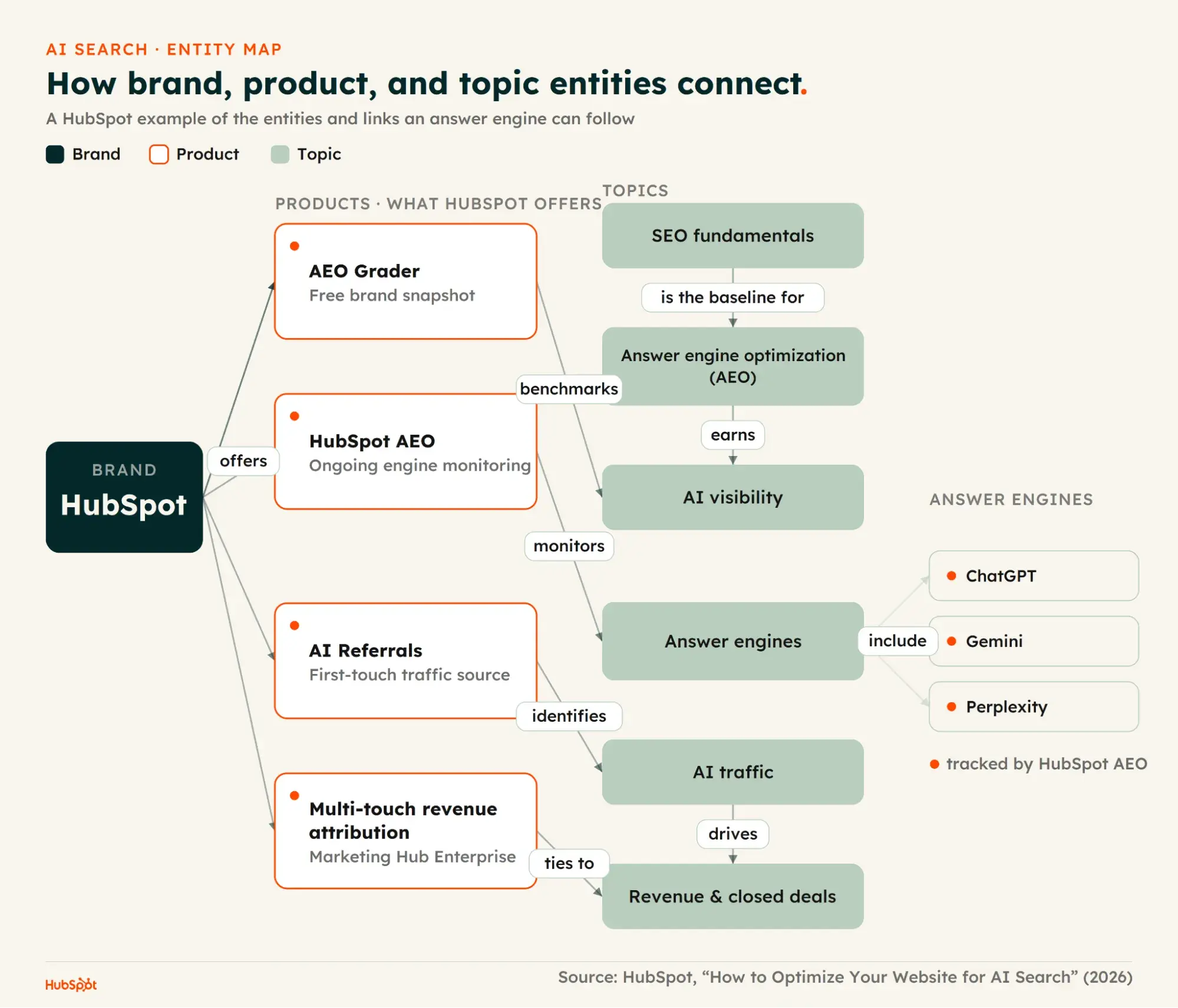
Learning how to optimize your website for AI search is one of the hottest skills for marketers right now, because the audience for these tools is growing fast. Monthly unique visitors to the major answer engines climbed from 634 million in Q1 2025 to 904 million in Q1 2026, up more than 40% in a year, according to Wix Studio. But AI search, also known as answer engine optimization (AEO), hasn’t replaced SEO. The two are linked: The fundamentals that earn traditional rankings also open the door to AI citations. Since your customers use both classic search and answer engines to research their options, your business needs to show up in both. This guide is built as a repeatable framework that keeps working even as large language models (LLMs) update. I’ll cover the technical setup, the content worth quoting, the differences between engines, and how to tell whether your AI SEO strategy is actually earning traffic. Table of Contents AI search often relies on the same infrastructure as traditional search, and understanding how Google’s ranking algorithm works provides crucial context for both channels. Answer engines still have to crawl a page, index it, and weigh it against everything else before they can cite it in a response. Google has said its AI Overviews run on a customized version of Gemini that works with the same Search systems already in place. ChatGPT search returns web results through providers that include Bing in some contexts, so the discoverability signals feeding traditional search also feed the answer. That shared foundation is why AI search optimization builds on SEO fundamentals instead of replacing them. A page that search engines cannot crawl, render, or index has fewer paths into an AI answer. Content quality carries equal weight: Engines cite sources they can parse and trust, and the standards that earn rankings can help earn citations too. Before optimizing for any answer engine, confirm your site clears the SEO baseline. Everything that follows depends on it. Content quality is the biggest factor in AI search visibility over time. By Google’s own account, “unique, compelling, and useful” content probably shapes a site’s presence in generative AI search more than any other step in its AI optimization guide. The company separates commodity content, which repackages common knowledge, from non-commodity content built on real expertise and firsthand experience. An answer engine has far less incentive to cite a page it could generate itself from its training data. People-first, non-commodity content improves citation potential by supplying what a model cannot truly supply: original data, subject-matter expertise, and a human perspective. The correlation shows up in the data. In SE Ranking’s analysis of 216,524 pages, content quoting experts drew 4.1 ChatGPT citations on average, against 2.4 for content without; pages carrying 19 or more data points averaged 5.4, versus 2.8 for data-light pages. State each insight plainly so an engine can lift it as a clear, self-contained claim. That is what makes original thinking worth citing. Answer engines can only cite pages they can reach and index. Google is explicit that “a page must be indexed and eligible to be shown in Google Search with a snippet” to appear in AI Overviews or AI Mode, with no extra technical requirements beyond that. So confirm the page is crawlable and snippet-eligible — the two conditions Google names above. Speed reinforces this: SE Ranking found that pages with a First Contentful Paint under 0.4 seconds averaged 6.7 ChatGPT citations, roughly three times the 2.1 for pages slower than 1.13 seconds. Internal links help engines discover related pages, so structure them to make your content findable. A clean page experience across devices matters too: Keep your main content available as text and easy to distinguish from other page elements, not dependent on scripts a crawler may skip. JavaScript is a common failure point. Googlebot renders JavaScript when it isn’t blocked, but many other AI crawlers read only raw HTML and never run your scripts, so client-side content can reach ChatGPT or Perplexity as a blank page. Serve primary content in server-rendered HTML and follow JavaScript SEO best practices. Finally, Google recommends giving pages a clear structure. Descriptive headings and logical sections help both readers and models navigate and parse a page. Structured data hands answer engines a machine-readable map of your page, so they have to guess less about what your content means and whether it is safe to cite. That map only helps if it’s honest. Google’s guidance is that your markup has to reflect the text a visitor actually sees, so schema should describe what’s on the page rather than claims the copy never makes. Serving one version to crawlers and another to people is a form of cloaking, which the myths section below rules out. Schema amplifies copy that is already clear and credible; it can’t prop up a thin page. Snippet controls decide how much of a page an engine may lift, which makes them a gatekeeper for AI visibility. Google surfaces a page in AI Overviews or AI Mode only if it is indexed and eligible to show with a snippet, so the directives that limit snippets limit AI answers, too. Three preview controls govern this. Two are directives you set for the whole page, in the robots meta tag or the equivalent X-Robots-Tag HTTP header: The third, data-nosnippet, works differently: It’s an inline HTML attribute you apply to a single element in the page body rather than a page-level directive. It withholds just that passage, which suits a sensitive block you don’t want quoted out of context, while the rest of the page stays eligible. The catch is that these controls govern classic results and AI answers alike, so restricting one restricts the other. If a strong page isn’t getting picked up, check its robots meta tag first: a stray nosnippet or max-snippet:0 shuts it out, and a low character cap starves the model of context to quote. To change a setting, edit the robots meta tag in the page’s HTML head or serve it through the X-Robots-Tag HTTP header; most CMS and SEO plugins expose these fields without touching code. Generative AI results can display images and videos next to text links, which opens up extra places for your pages to appear. You don’t need separate files for this: Pairing your writing with strong, relevant image and video assets under standard SEO best practices also optimizes them for AI features. Video earns real visibility: In Fan Out’s off-site study, YouTube ranked as the second most-cited platform, with 1,531 citations. Don’t assume AI systems can watch a video the way humans do. AI search systems often rely on the surrounding text to judge relevance. Add transcripts, write descriptions that summarize the content, and include timestamps; Fan Out found 13.7% of YouTube citations pointed to a timestamped moment. Local and merchant data matters when a query points toward a purchase or a specific business. Google says its generative AI responses can, where appropriate, pull in product listings, product information, and details about local businesses. To make your products and services eligible for those responses, keep your Merchant Center feeds and Google Business Profile current; Google names both as products that help you show up in AI responses and other Search results alike. Depending on your business type, Google also points merchants toward newer options like Business Agent, a conversational experience on Search that lets customers chat with your brand directly. Answer engines reward pages that resolve the question up front. CXL’s analysis of AI Overview citations found that most cited passages came from the top third of a page, while only about a fifth came from the bottom 40%. So lead with the answer. HubSpot’s AEO guide advises putting the main answer within a section’s first 40 to 60 words, then layering in the detail. Question-led subheads reinforce that pattern. In Kevin Indig’s study of ChatGPT citations, cited text was twice as likely to contain a question mark, and headings accounted for 78.4% of the citations linked to questions. Phrasing an H2 or H3 as the exact question a reader would ask can give the engine a prompt to match and a paragraph to lift as its reply. Supporting bullets and short summaries make that reply easier to extract. A 2026 preprint on structural formatting found that lists and tables delivered 43% higher extraction accuracy than the same facts written as prose. Answer-first formatting turns a page into a set of self-contained, quotable units that answer engines can cite cleanly. The same page can land very differently depending on which engine reads it. Perplexity is the heavier citer by far: It supplies 59% of off-site citations and draws on roughly 10.8 sources per answer, where ChatGPT stays selective at about 3.3 citations per query, according to the data from Fan Out. Their tastes diverge, too. Perplexity leans on discussion pages (like LinkedIn, G2, and Reddit), which account for 17.35% of its citations, while ChatGPT skews toward traditional long-form articles, according to Wix Studio. In Fan Out’s dataset of B2B SaaS queries, 96% of LinkedIn citations trace to Perplexity alone. Timing separates them as well. In a controlled experiment by SE Ranking and Search Engine Land, Perplexity pushed newly published pages to the top spot within one to three days, though its citations often went to supporting test domains (where the researchers had published extra content about the fake brand) rather than the fake brand’s own site. ChatGPT reacted more slowly but strengthened its citations for the fake brand as the month went on. Those habits rarely overlap. Fan Out found that just 7.7% of cited URLs appear in more than one engine, so earning citations from one engine is no guarantee of the same on the next. Treat each engine as its own channel instead of assuming a single page satisfies both. The tactics above hold up best when you run them as a repeatable process instead of a one-time cleanup. Here is a workflow that moves a page from research to refresh. 2. Draft answer-first. Write each section to resolve its question in the opening lines, using the question-led subheads and answer-first formatting from earlier. Lead with the claim, then back it with original data and expertise. 3. Add structured data. Apply schema that mirrors what’s visible on the page, following the structured-data rules covered earlier so markup supports understanding rather than overstating the content. 4. QA before publishing. Confirm the page is crawlable, renders its main content in server-side HTML, and validates in a schema testing tool. A page that an engine can’t parse can’t be cited. 5. Publish and baseline. Record where the page stands in answer engines at launch so you have a starting point to measure improvement against. Not every AEO tactic making the rounds holds up to scrutiny. Some widely repeated tips lack supporting data or run counter to official search guidance, so here are four worth skipping. Visibility signals tell you whether answer engines mention or cite you. Conversion data tells you whether that visibility helps your bottom line. Track both. Use this as a pre-publish pass on any page you want answer engines to surface and cite. AI search optimization requires ongoing maintenance and updates, just like SEO. Use the first 90 days to set up your AEO strategy, then let it run on the cadence you’ve built. Build an AI SEO strategy this way and it keeps improving on its own: The people, cadence, and guardrails stay fixed even as the engines change. No. Google says AI features need no dedicated schema, and a page just needs to be indexed and snippet-eligible. Adding markup won’t earn citations on its own, though it remains worthwhile as standard SEO practice. No evidence supports it. Across nearly 300,000 domains, SE Ranking found llms.txt had no link to AI citations, and its prediction model grew more accurate once the file was removed. Set a fixed refresh cadence instead of chasing one universal number, and prioritize pages whose stats, examples, or claims go stale fastest. Publish current, well-structured, source-linked content, which Perplexity favors and cites generously, averaging about 10.8 sources per answer, according to Fan Out. It leans harder on discussion content than other models, pulling 17.35% of its citations from discussion pages (more than double the cross-model average), according to Wix Studio. No. Answer engines still crawl, index, and rank pages before citing them, so classic SEO complements AI search. Google’s AI Overviews run on its existing Search systems, meaning the same fundamentals that earn rankings open paths into AI answers.![See Your Brand's Visibility in Answer Engines [Free Tool]](https://no-cache.hubspot.com/cta/default/53/d4233c10-60b6-46d7-9852-c71dde8507b6.png)
Why SEO Still Matters for AI Search
How to Optimize a Website for AI Search With People-First Content
How to Optimize a Website for AI Search With Strong Technical Foundations
How to Optimize a Website for AI Search With Structured Data and Snippet Controls
Structured Data
Snippet Controls
How to Optimize a Website for AI Search With Images, Video, and Local and Product Data
How to Optimize a Website for AI Search Using Q&A Formatting
How to Optimize a Website for AI Search Across Perplexity and ChatGPT
AI Content Optimization Workflows That Improve AI Search Visibility
Myths to Ignore in AI Search Optimization
How to Optimize a Website for AI Search with Measurement and Iteration
AI Search Optimization Checklist
Foundations
Confirm every page is crawlable, indexable, and eligible to show with a snippet.
Serve primary content in server-rendered HTML, not client-side scripts.
Keep page speed fast, since slow pages surface less often.
Content
Publish non-commodity content built on original data, firsthand expertise, and a clear point of view.
State each insight as a self-contained claim that an engine can lift.
Technical and Structured Data
Point internal links to related pages so crawlers can find them.
Match schema to what’s visible on the page; don’t overstate it.
Check that robots.txt allows the crawlers you want.
Multimodal, Local, and Product
Pair your writing with relevant images and video.
Add transcripts, descriptions, and timestamps to video.
Keep your Google Business Profile and Merchant Center feeds current.
Formatting
Answer the question in a section’s first 40 to 60 words.
Phrase subheads as the exact questions readers ask.
Break key facts into bullets or tables, not dense prose.
Per Engine and Measurement
Treat each answer engine as its own channel.
Baseline your visibility, then re-check on a fixed monthly cadence.
Track engagement and conversions, not citation counts alone.
Skip These
llms.txt files, bot-only Markdown pages, special AI markup, and manufactured brand mentions
Building an AI SEO Strategy That Evolves With Users
Frequently Asked Questions About AI Search Optimization
Do I need special markup to appear in AI Overviews?
Should I add an llms.txt file?
How often should I update content for AI search?
How do I increase my chances of getting cited in Perplexity?
Does AI search replace classic SEO?