I took an expedition cruise from Iceland to Greenland and it was the trip of a lifetime
Rainbow-covered glaciers, hundreds of humpback whales and a lucky eclipse sighting – Jake Hall spotted some of the world’s most phenomenal natural sights on board a New Scientist Discovery Tour
 JimMin

As the sky darkens, my eyes well up with hot, fat tears. I’ve spent the last hour gazing in wonder at the sun through a pair of soggy cardboard eclipse glasses, drawing sharp breaths each time the blazing circle is interrupted by another slice of blackness. The temperature drops. Goosebumps prickle my bare chest as the animated chatter around me fades to hushed awe. For more than two minutes, the rhythm of daylight is halted as we are collectively humbled by this cosmic spectacle, reminded of our smallness in this unimaginably vast universe.
A total solar eclipse is one of the world’s rarest wonders. I was six years old when I saw one for the first time, in 1999. Mum had procured a pair of eclipse glasses from a cereal box. I was perched atop a plastic chair in my back garden in Doncaster, my fingers sticky from a syrupy ice lolly. Nearly 30 years later, I can barely believe that I’m witnessing my second eclipse from a jacuzzi on the top deck of a luxury expedition cruise ship, the lolly replaced by a celebratory flute of champagne.
I’m here as part of an epic 12-day voyage facilitated by New Scientist Discovery Tours and Aurora Expeditions. The journey begins in Reykjavik with a bus tour around Iceland’s Golden Circle, led by a charismatic guide named – yes, really – Gød, who wears black trousers with rainbow stripes stitched down the sides, in honour of Reykjavik Pride week.
We stop at Thingvellir, a beautiful national park, as well as Gullfoss, a waterfall so imposing that an activist named Sigriður Tómasdóttir threatened to throw herself into its lethal mouth if plans to turn it into a power plant went ahead. Thankfully, they didn’t. But the most memorable stop is at Geysir, where tourists gather around Strokkur Geyser, waiting to record a moment of gigantic eruption. Instead, they’re met with a modest burble.
It’s a valuable lesson: you can pay as much and travel as far as you like, but you can’t make nature behave as you expect.
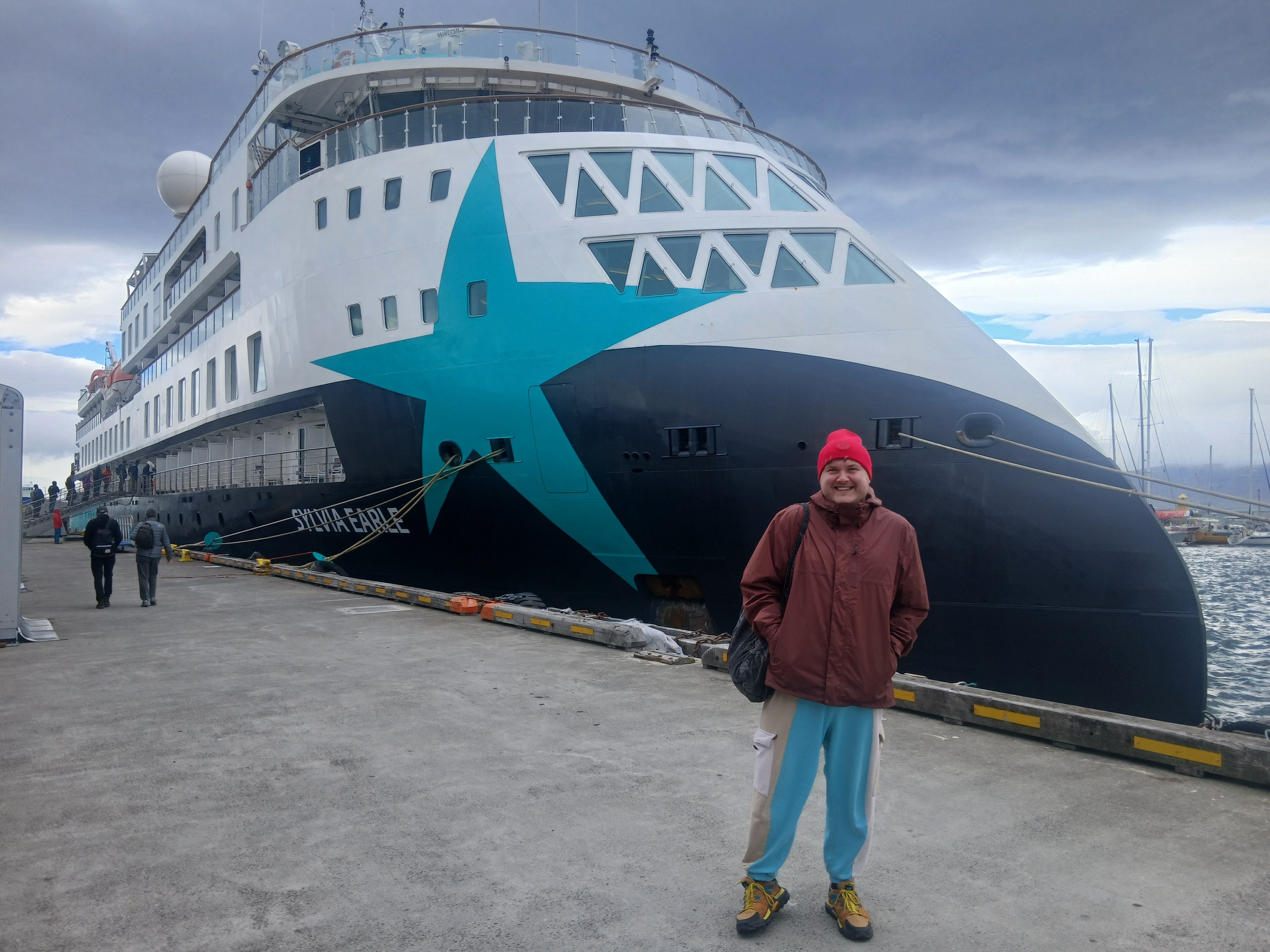
I hold onto this truth as I board the Sylvia Earle, a nine-deck expedition cruise ship named after a legendary marine biologist. Unlike the colossal vessels docked around the harbour, it has room for just 130 passengers, and thankfully, it’s designed to feel smooth on even the choppiest of seas.
There’s a focus on sustainability, which includes a pledge of carbon neutrality, the opportunity to take part in citizen science projects and funding for ocean regeneration projects. It’s a beautiful ship with two restaurants, a lecture theatre, a gym, two jacuzzis, a swimming pool and my personal favourite room: the onboard library.
My cabin is bright and spacious with a balcony, where I bundle up in my two jackets (included as standard) to watch the waves lap against the ship as black-legged kittiwakes and Iceland gulls swoop past. I experience a brief spell of seasickness, but it’s quickly remedied by the tablets given to me by the friendly receptionist, who laughs and assures me that I’ll find my sea legs soon enough. By day two, I’m relieved to report that she’s right.
The days before the eclipse are blissful. I attend lectures delivered by the New Scientist experts: I learn about exoplanets, the lakes of Saturn’s moons and the story of Karl Lemstrom, the Finnish physicist determined to create an artificial aurora. There’s onboard wifi but it’s shaky at best, so I’m delighted to discover the television is pre-loaded with a wide array of films: I watch The Devil Wears Prada 2 one day, Black Box Diaries the next.
Breakfast and lunch are buffet-style, and the dinner menu rotates daily. I eat like a king: herb-crusted racks of lamb with celeriac purée, seared rainbow trout, thick strands of pappardelle covered in a creamy, peppery mushroom sauce. I pick a favourite table on the ship’s starboard side, where I can sip red wine and gaze longingly at the sea. My favourite waiter, Villroy, decides by day three that I should try all of the desserts, every night. I pretend to protest, but not for long.
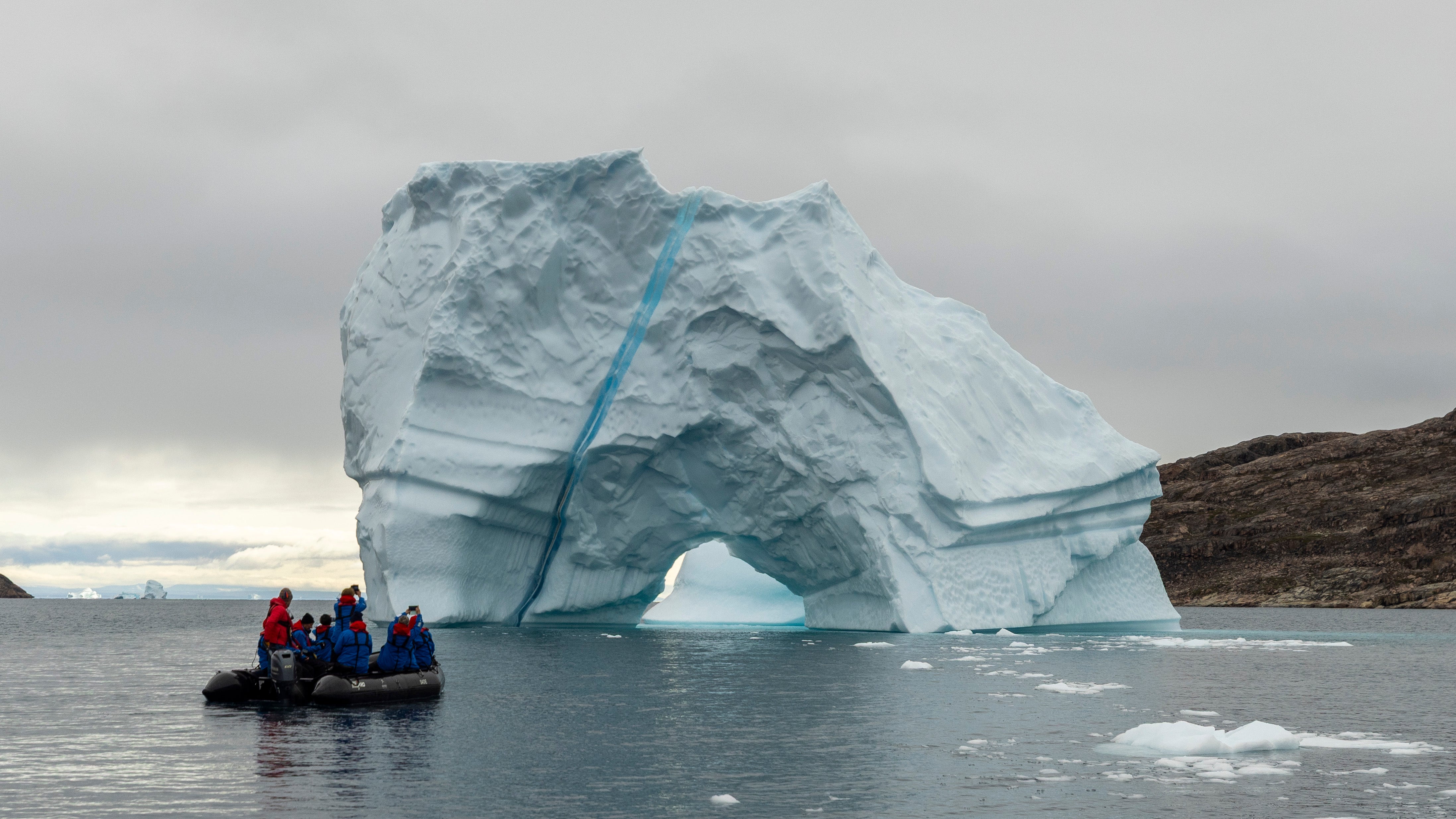
I may be relaxed, but behind the scenes, the days leading up to the eclipse are stressful. Jamie Carter, the onboard eclipse expert, explains the difficulty of choosing an exact location. “The path of totality is narrow, and you need a clear sky,” he tells me. “Greenland was one of the most daunting challenges yet, with frequent clouds and a network of narrow fjords to navigate.”
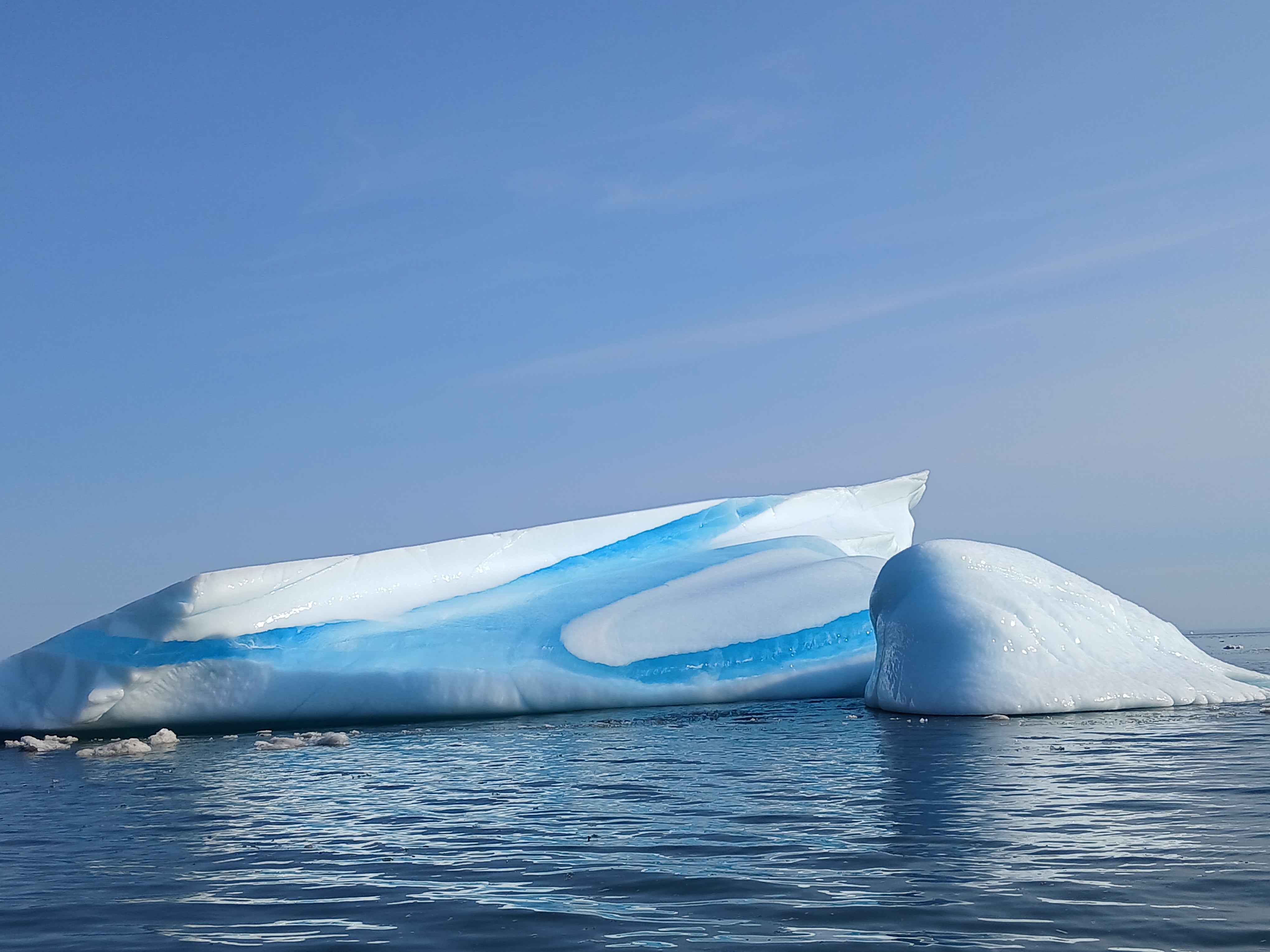
The team eventually decides to anchor in Hare fjord, part of the maze-like Kangertittivaq fjord system on the east coast. The landscape is studded with icebergs of varying size and smoothness, enclosed by towering cliffs whose rugged edges have been shaped by glaciers over hundreds of millions of years. This was a risky decision, Jamie adds, that paid off; unlike the disappointed tourists along Iceland’s coastline, our view was unobscured by clouds throughout each stage of the eclipse.
A trip like this always comes with uncertainty, but for the other passengers I speak to, the thrill of an eclipse viewing is in the chase. Sandy, a retired American surgeon, joined her daughter in 2008 on a cheap cruise across China to view that year’s solar eclipse. She was hooked; this trip marks her fifth solar eclipse viewing. I soon learn that there’s a global community of “eclipse chasers,” who pick their travel destinations based on eclipse dates and treat them as once-in-a-lifetime trips.
Read more: I took my family on a Galapagos Islands cruise and it changed how I feel about wildlife
Throughout the voyage, I meet and befriend anaesthetists, nuclear physicists, the founder of an acclaimed publisher, a pair of retired Australian dairy farmers celebrating their 40th anniversary, a cruise ship chef who tells me stories of being dive-bombed by albatrosses while helping out an ornithologist. There’s even a Brazilian pop star on board.
Just a few days before the trip ends, a tannoy announcement declares that whale blows have been spotted in the distance. The captain turns off the engine as we all gather on the observation deck with binoculars, our jaws slowly dropping as we begin to spot not just one or two whales, but hundreds of them.
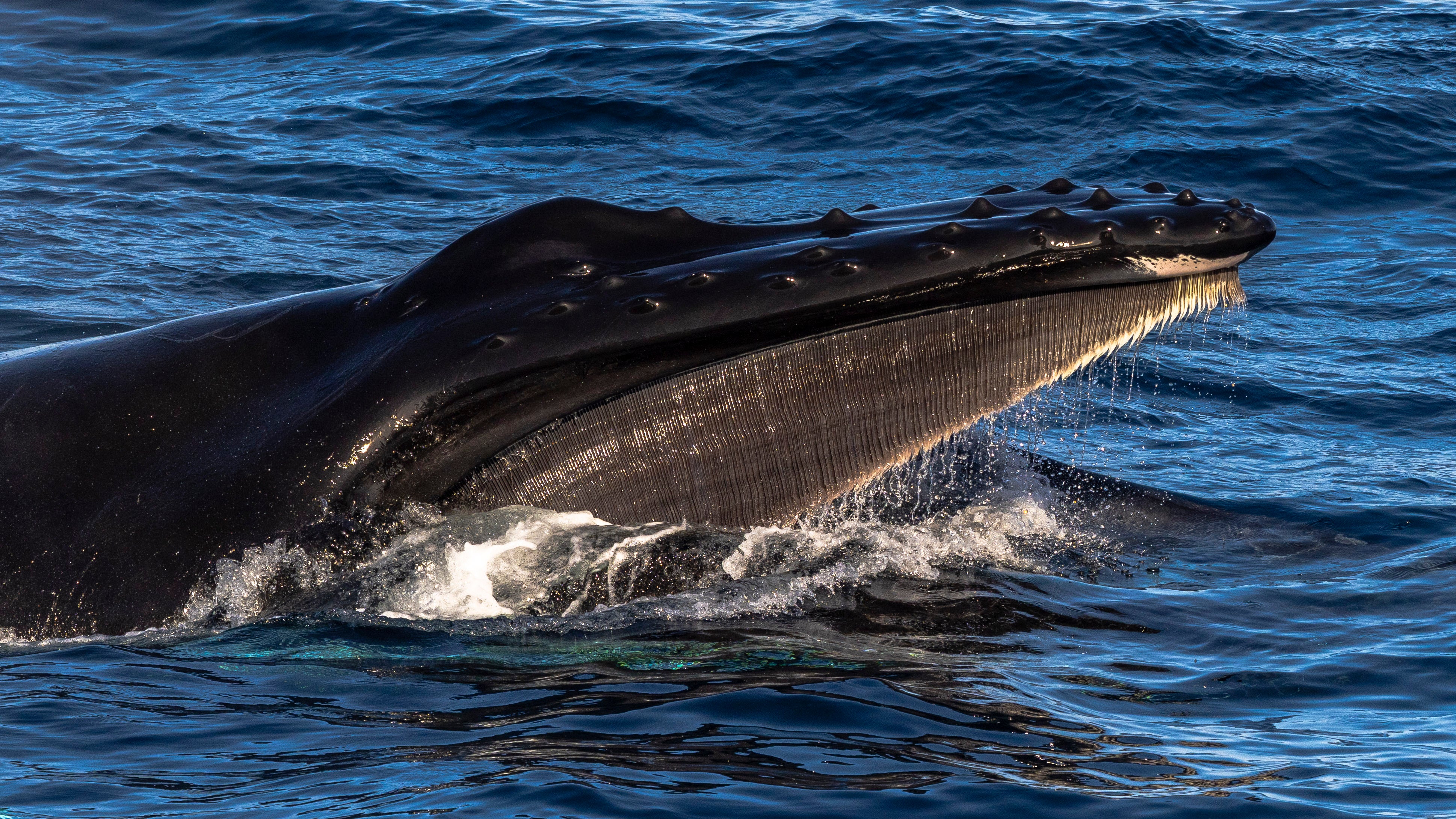
For more than an hour, a huge pod of humpback and fin whales feed hungrily just a few metres from the ship’s edge, so I head down to my balcony to be as close as possible to the water. Tears stream down my face, and I burst into gleeful peals of laughter as the whales seem to call out to each other.
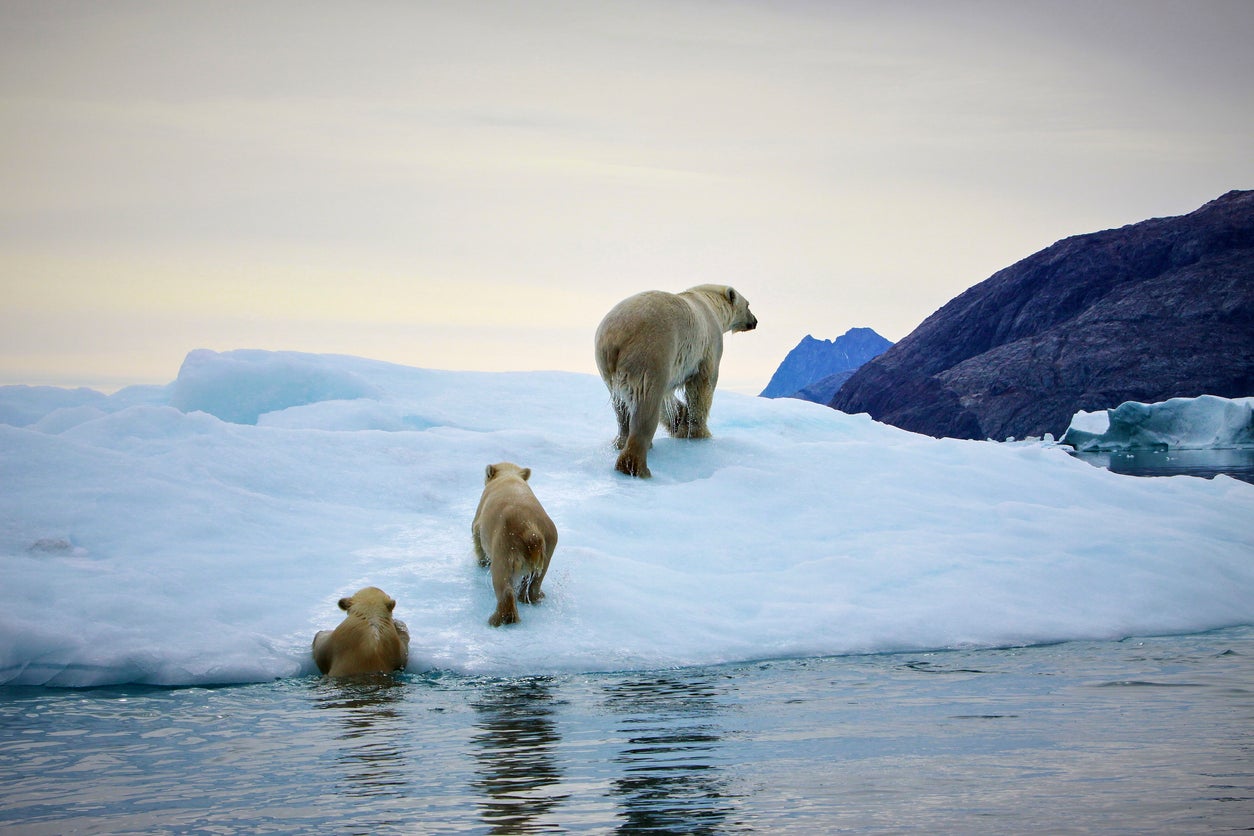
Some members of the crew have been working on expedition tours like these for decades and they’ve never seen anything quite like this. Then, on the final night, another announcement: there’s a faint aurora visible from the top deck. We see polar bears, musk oxen, a dapper-looking bearded seal perched atop one of the many icebergs we see, which I never seem to tire of photographing.
We zip across the water in hardy zodiac – miniature speedboats designed to withstand harsh conditions. One day, we pass slowly through water spattered with chunks of broken sea ice, watching in silence as ice tumbles from an active glacier. There are tiny waterfalls of meltwater dotted across the glacier; atop one, there’s a small rainbow. A few days later, a walk across a colourful tundra is interrupted by what sounds like a crack of thunder. I turn to see half an iceberg crumble suddenly, rocking to and fro in the water.
In the best way possible, life aboard the Sylvia Earle feels like a carefully-curated bubble; the outside world fades into the background, and days are spent cataloging Arctic birds and learning to marvel at the wonders of the world in new and unexpected ways. I’m starting to understand the thrill of the chase; needless to say, my second eclipse viewing topped my first.
How to do it
New Scientist Discovery Tours offers a range of total solar eclipse tours around the world, which range in price. Explore the full selection here. Aurora Expeditions offers Arctic and Antarctic cruises in partnership with New Scientist discovery tours, starting from £8,627.
Jake was a guest of New Scientist Discovery Tours