Many homeowners have a big insurance coverage gap — and don't even know it
Many consumers have a gap in their homeowners insurance coverage. This puts them at financial risk, and they are likely unaware, experts said.
 Lynk
Lynk

A home along the Fox River is surrounded by floodwaters, near Crystal Lake, Illinois, April 21, 2026.
Scott Olson | Getty Images
Many homeowners have a big gap in their insurance coverage — and they likely don't know it, according to insurance experts.
That leaves policyholders financially exposed to damage, including from natural disasters that are becoming more frequent or costly, such as wildfires, hurricanes and flooding — potentially putting their biggest financial asset at risk, experts said.
Costs for consumers to keep their coverage have risen substantially in recent years amid soaring insurance premiums.
"A supermajority of homeowners want to fully and adequately insure their homes, are willing to pay for it, and think they have it," Kenneth Klein, a law professor at California Western School of Law, wrote this year in a Lewis & Clark Law Review article. "But most of them are wrong and are short by a lot."
A 'crisis of underinsurance'
A burned neighborhood in the aftermath of the Marshall wildfire, Louisville, Colorado, Jan. 24, 2022.
Kent Raney | Istock | Getty Images
About 90% of owner-occupied homes in the U.S. are insured, Klein wrote.
The typical homeowners insurance policy puts financial limits on coverage in a variety of ways — for example, by excluding certain types of disasters or capping payouts for certain items or types of damage.
Klein conducted an analysis of California Department of Insurance data on 74,000 fire-related claims of any size — from wildfires to house fires — from 2018 to 2023. Among those claims, more than 70% of homeowners with insurance were underinsured by an average of roughly 20%, Klein wrote.
The problem is not limited to California, he said.
"This data shows that there is a barely hidden nationwide crisis of underinsurance," Klein wrote. The dynamic "persistently and inevitably robs homeowners of any chance to fully recover what they have lost," he wrote.
There are many reasons why homeowners are underinsured, experts said.
Some consumers may intentionally choose a lesser coverage amount just to afford any coverage at all, Amy Bach, co-founder of United Policyholders, a consumer advocacy group, wrote in an e-mail.
However, many consumers are unaware of the gap, experts said.
On one hand, a "broad swath" of Americans don't understand what they're buying due to confusing language in their insurance contracts, according to research published in May in Virginia Law Review.

Additionally, insurers continue to exclude more things from coverage and cap the dollar amounts for the things they do cover, Bach wrote.
Consumers also generally underestimate how much it would cost them to rebuild their homes, experts said.
Unfortunately, "coverage gaps are often discovered at the time of the loss — which is when you don't want to discover them," said Lareesa Klingler, director of national claims for the private risk solutions group of Lockton, an insurance brokerage.
Here are some of consumers' biggest insurance gaps, according to experts.
1. Flooding
A neighborhood that flooded after the failure of a temporary flood barrier along the White River, in Pacific, Washington, Dec. 16, 2025.
David Ryder | Reuters
The typical homeowners insurance policy excludes or limits coverage for damage from certain disasters, such as earthquakes, landslides and floods, according to insurance experts.
But consumers most often get tripped up by the latter — and it can be costly, according to insurance experts.
Homeowners need separate insurance to cover physical damage caused by a flood, defined as water entering a home from the ground up. That may occur due to storm surge, heavy rainfall or an overflowed body of water such as a lake or river.
Flooding is the most common and costly natural disaster in the U.S., according to the Insurance Information Institute.
Just one inch of water can cause about $25,000 of damage to a homeowner's property, according to the Federal Emergency Management Agency. Between 2020 and 2024, the average payment for all flood claims was $82,614, according to FEMA.
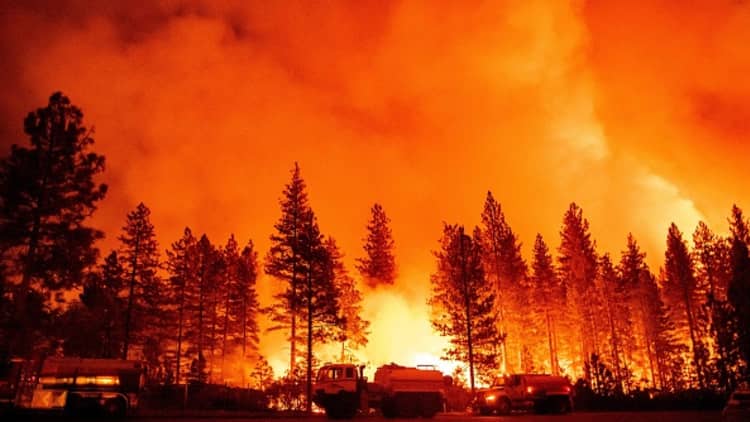
And flood insurance isn't just for those who live near the water: About 99% of U.S. counties have experienced a flood in the past 20 years, according to FEMA's floodsmart.gov.
But a 2025 blog post from the agency indicates less than 4% of U.S. households have bought a policy from the National Flood Insurance Program.
NFIP is the primary source of flood insurance coverage for residential properties.
A standard homeowners insurance policy does cover certain water damage: For example, in instances of "wind-driven rain," essentially when water gets into the house from the top down, experts said.
This might happen if a hurricane damages a roof, and rain gets inside and soaks the entire house or several rooms, experts said.
Insurers may exclude or cap benefits for mold damage, though, Bach said. They may also cap payouts for water damage at perhaps $5,000, $10,000 or $15,000 per loss, she said.
California Insurance Commissioner Ricardo Lara this week urged consumers to review their coverage and consider flood insurance ahead of a likely historic El Niño. People shouldn't wait until a disaster is approaching, Lara said: Flood insurance generally takes effect 30 days after purchase.
Even with flood insurance, there are caveats. For example, traditional policies typically restrict coverage for basements.
2. Rebuilding costs
New homes being built on cleared lots where homes had been destroyed by the Eaton Fire, Altadena, California, Sept. 17, 2026.
Mario Tama | Getty Images
Underestimating the cost of rebuilding is another big source of underinsurance, said Peter Kochenburger, visiting law professor at Southern University Law Center and managing fellow of its Insurance Law and Policy Institute.
"The cost of building and repairing has gone way up," Kochenburger said. "If you lose the house and the limits of your homeowners policy aren't sufficient to rebuild, you're sort of stuck unless you have your own financial assets — which many people don't."
Replacement costs for property-and-casualty-related losses increased by 45% between 2020 and 2023, on average, according to a Treasury Department report published last year. Homeowners insurance is a type of property and casualty insurance, as are renters insurance and auto insurance.
A supermajority of homeowners want to fully and adequately insure their homes, are willing to pay for it, and think they have it. But most of them are wrong and are short by a lot.
Kenneth Klein
law professor at California Western School of Law
Labor costs have increased, too. The cost of employing workers building single-family homes jumped 37% between 2018 and 2022 and 45% from 2014 to 2023, the report said.
Consumers can consider buying "extended replacement cost" coverage, an add-on to a traditional insurance policy, said Klingler, of Lockton.
This generally tacks on an additional 10% to 50% above a consumer's limit for dwelling coverage, which is the maximum a policy pays to rebuild a home from the ground up, according to Policygenius, an insurance comparison site.
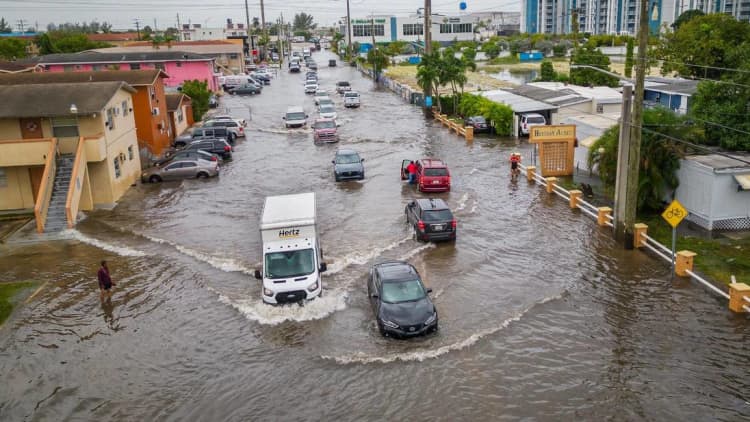
Consumers — especially those with older homes — can also consider buying something called "ordinance or law coverage," Klingler said.
This protects against higher costs that arise from the need to bring a home up to current building code — such as upgrades to wiring, plumbing or insulation — when rebuilding.
3. Limits on specific items
Peter Dazeley | Photodisc | Getty Images
Insurers commonly limit the amount of money they pay for many categories of specific contents, which may include artwork, collectibles, rugs, furs and other expensive items, experts said.
However, consumers can purchase add-ons to a traditional policy to raise the dollar limits for those individual items.
"If people have antiques or guns or electronics or jewelry or those kinds of special items, they need to verify how those are covered, and whether [they] need additional coverage for those items," said Brenda Cude, professor emeritus of financial planning, housing and consumer economics at the University of Georgia and a consumer representative at the National Association of Insurance Commissioners.





















.jpg&h=630&w=1200&q=100&v=c0f97a310e&c=1)