Microsoft threatened legal action, and this researcher just dropped a new Windows bug anyway
A researcher Microsoft threatened with legal action just published a new Windows zero-day called ShieldBreak, and there's still no patch for it.
 Konoly

Digital Trends may earn a commission when you buy through links on our site. Why trust us?
Windows Defender was supposed to protect you. Right now, it's the problem.
 Rachit Agarwal / Digital Trends
Microsoft’s legal threats clearly didn’t scare off security researcher Nightmare Eclipse. Just weeks after the company warned it might pursue researchers who release undisclosed bugs outside its official channels, Nightmare Eclipse published a fresh Windows vulnerability, and it’s a nasty one.
What exactly does ShieldBreak do?
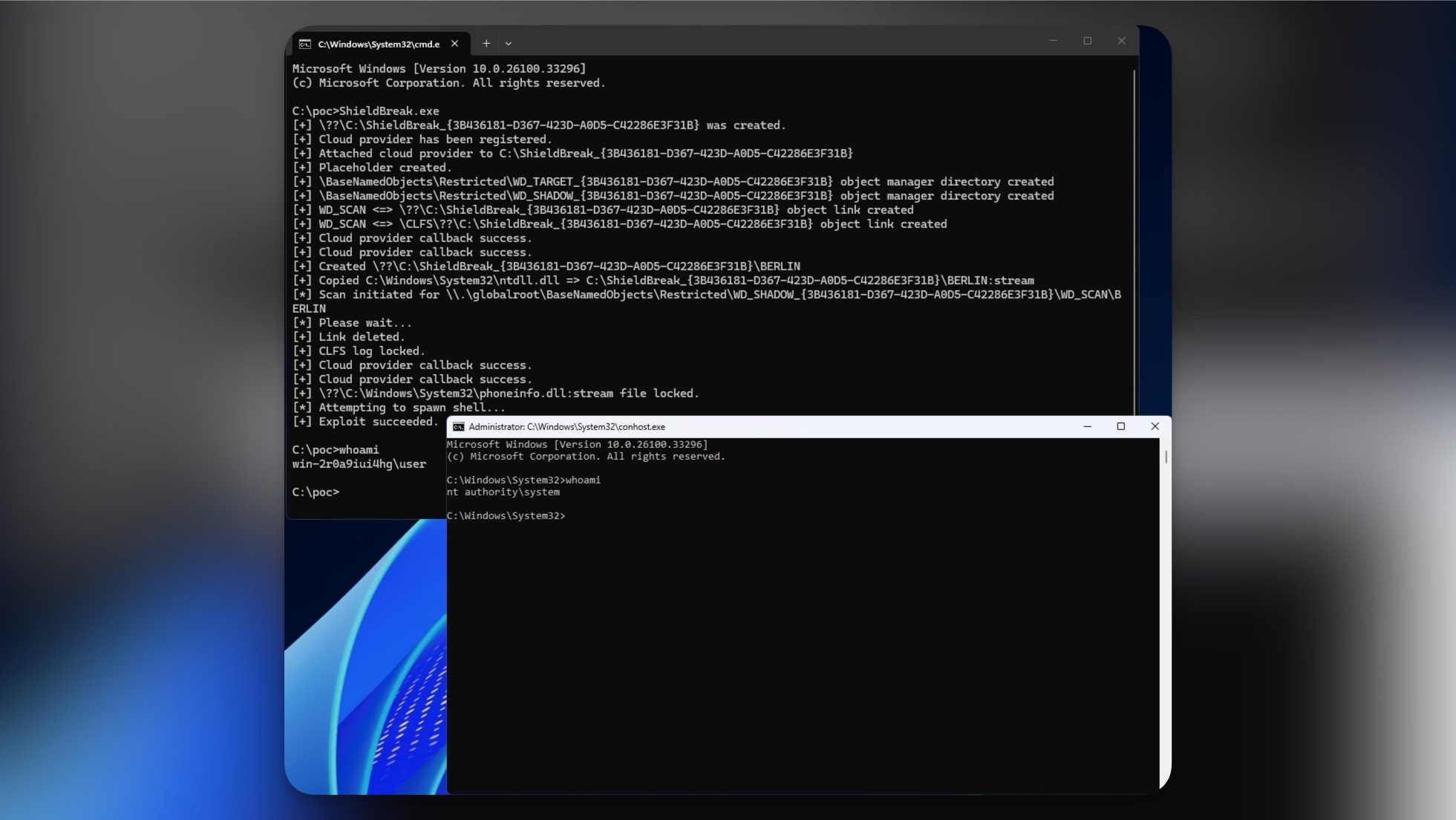
The new bug, called ShieldBreak, targets Windows Defender, the built-in anti-malware engine that ships with every copy of Windows. When exploited successfully, it lets an attacker jump from a low-level user account to full system access, essentially handing over the keys to your entire device.
 Nightmare Eclipse
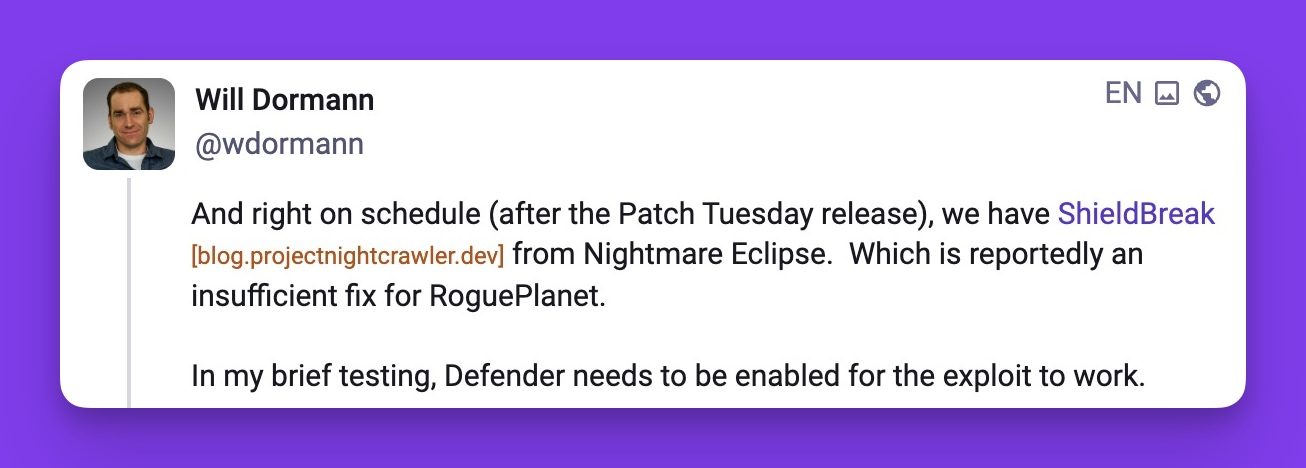
Nightmare Eclipse released the proof of concept as a downloadable Windows app, meaning someone would need to actually run it for the exploit to work. According to the researcher, ShieldBreak affects Windows 10, Windows 11, and Windows Server 2025. Security researcher Will Dormann confirmed the bug works, though he noted Windows Defender needs to be turned on for it to succeed.
 Will Dormann | Mastodon
This isn’t Nightmare Eclipse’s first rodeo either. ShieldBreak reportedly builds on an earlier exploit called RoguePlanet. Microsoft did patch that one, but the researcher claims the fix wasn’t good enough, and that ShieldBreak fully bypasses it.
Why is Microsoft caught in the middle again?
As TechCrunch first reported, this whole saga is part of a much longer feud between Nightmare Eclipse and Microsoft over how the company handles bug reports. The researcher has accused Microsoft of mishandling previous disclosures, which is why several bugs ended up published publicly instead of being quietly patched.
Back in May, Microsoft made things worse by threatening legal action against researchers who go public with zero-days outside its disclosure rules. The security community pushed back hard, and Microsoft eventually softened its stance on social media, though the original blog post is still live.
 Rachit Agarwal / Digital Trends
For now, Microsoft says it’s “aware of the reported vulnerability and is actively investigating.” No patch exists yet, so if you’re running Windows, this is one to keep an eye on.

Rachit is a seasoned tech journalist with over ten years of experience covering the consumer technology landscape.
Microsoft wants you to ditch SMS passwords as AI makes phishing harder to stop
AI made phishing too easy, so Microsoft is closing the door on SMS logins.

Microsoft just sent a warning to IT admins, and it's a big one. The company wants everyone to stop using SMS and voice-based authentication, and it's citing AI-powered phishing as the main reason.
Why is Microsoft killing SMS authentication?
Twitch is using your streams to train Amazon’s AI, and you’re opted in by default
Turns out your favorite stream might secretly be teaching Amazon's AI a thing or two.

Twitch has quietly started feeding your streams, VODs, and clips into Amazon's AI training pipeline, and the opt-out button is tucked so deep in your settings that most people will never stumble on it.
As Kotaku reports, streaming reporter Zach Bussey spotted a new toggle inside Twitch's account settings on August 12 that lets you block your content from training Amazon's generative AI tools. The screenshot spread quickly, and so did the direct link to the exact settings page, mostly because Twitch never bothered to announce the change in the first place.
Qualcomm reveals Snapdragon C specs for budget laptops, and Intel could have a serious headache
More speed, better battery, and a price built for everyone.

Qualcomm wants to fix the biggest problem with budget laptops: performance and battery life. In May of this year, the company showed off its entry-tier new Snapdragon C Platform, made for budget laptops starting at $300, promising speed, battery life, and AI smarts that budget shoppers usually have to skip.
Now, the chip giant has just revealed the specs for its latest chip and if what it shows comes true, Intel is going to have a big headache on its hands. But competition is good for consumers, so they will be the real winners here.











/cdn.vox-cdn.com/uploads/chorus_asset/file/23951496/VRG_Illo_STK169_L_Normand_MarkZuckerburg_Negative.jpg)