Skiers on the slopes in bikinis as ‘not natural’ weather hits US resorts
Resorts across America are struggling to stay open amid low snow fall
 KickT
KickT
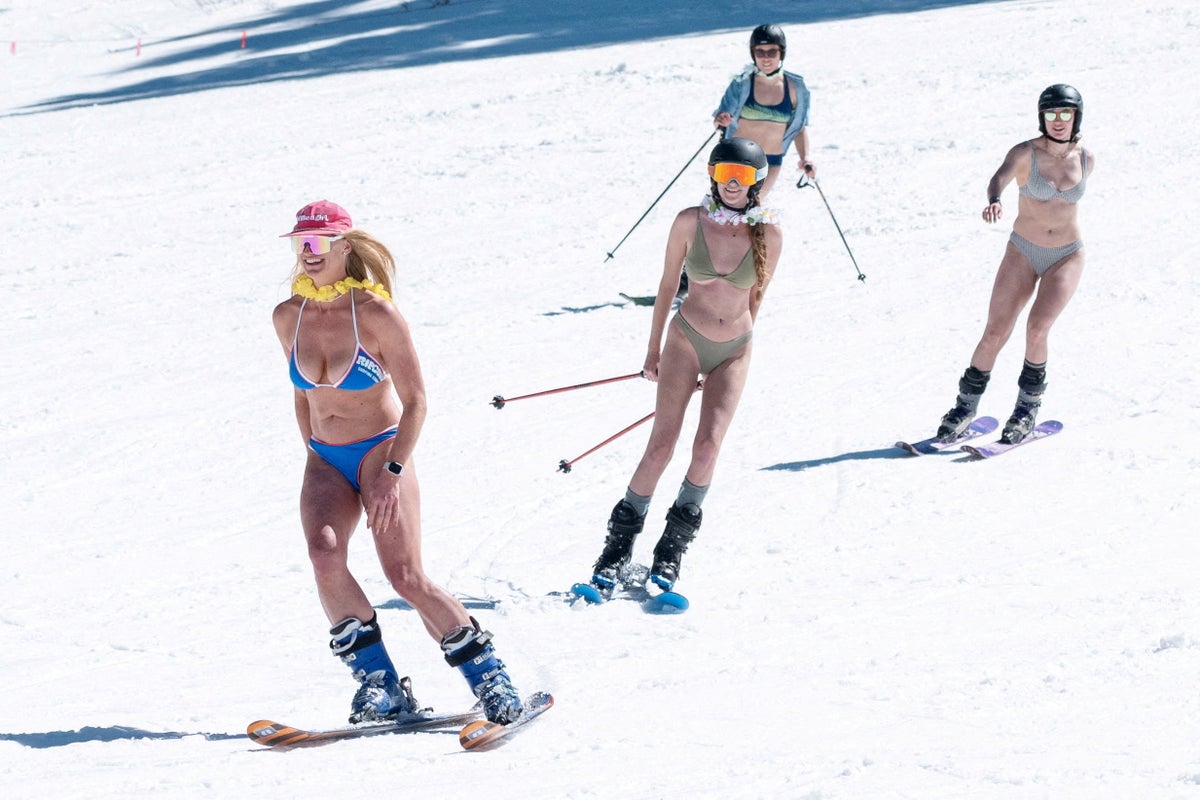
Ski resorts across the American West are battling the lowest snow levels in decades, exacerbated by a brutal heatwave.
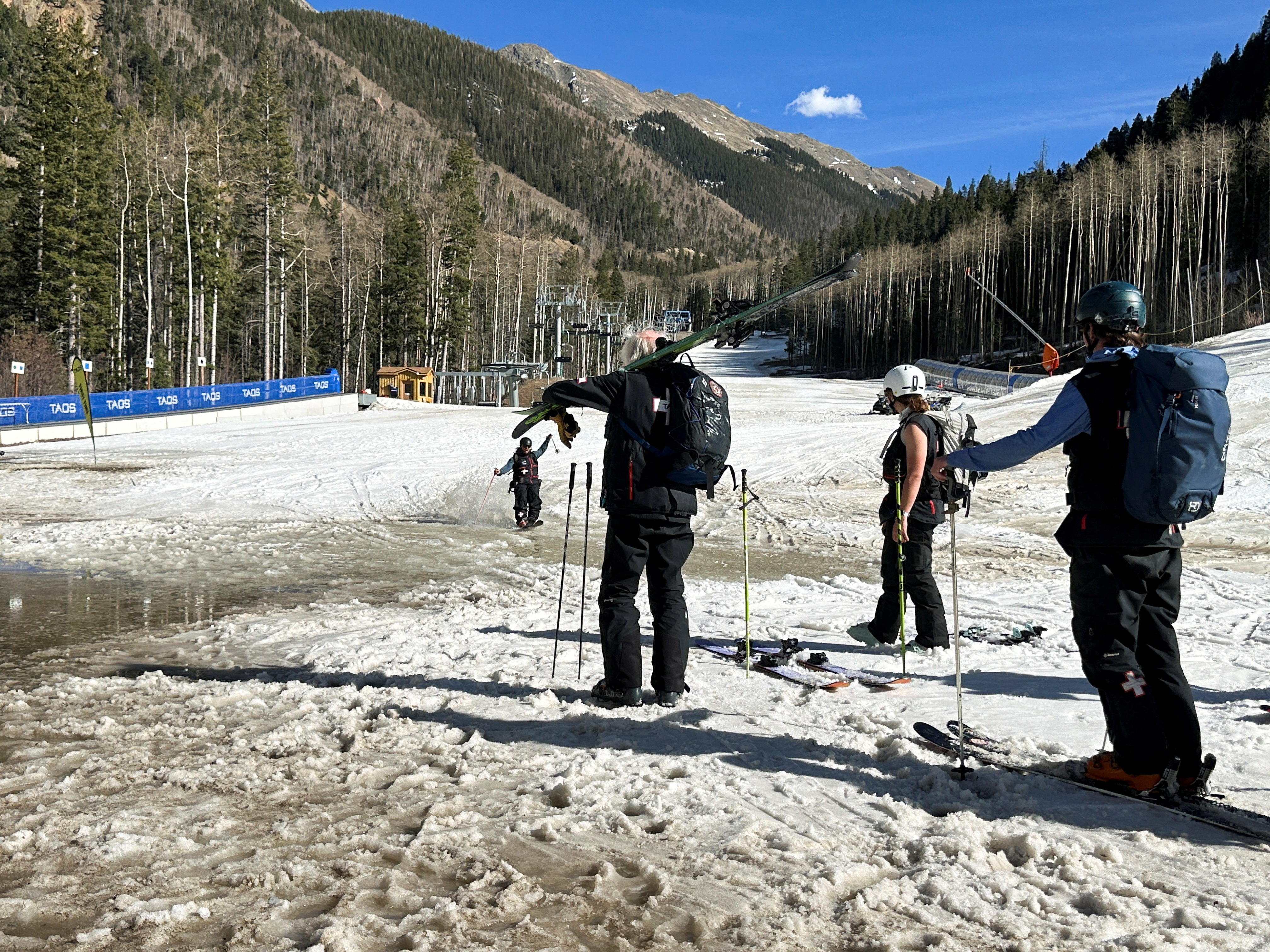
In New Mexico, Taos Ski Valley has been forced to bulldoze snow from mountain areas onto its runs in a desperate attempt to stay open.
The impact is evident in Park City, Utah, which has received only half its normal snowfall this year; its usually bustling streets and restaurants are now quiet.
Meanwhile, in Colorado, brown dirt patches mar ski runs at resorts like Vail, where less than 20 per cent of trails remain operational.
So much for spring skiing.
More than half of the 120 ski resorts in the U.S. West have already closed, will close early, or never opened this year due to the mild winter that saw record-low snowfall, according to a Reuters count.
In a normal year, only a dozen or so would close early due to poor conditions.
Climate scientist Daniel Swain said snowpack was on track to be the lowest on record at almost every western ski destination.
"This was a remarkably bad snow year, not just one basin, but across most of them," said Swain, an associate researcher with University of California Agriculture and Natural Resources. He attributed the trend to long-term climate change. "It's really just been a tale of astonishing warmth throughout the West."
To the dismay of skiers and snowboarders, the abnormally mild winter has turned into a scorching spring, a season that often brings cherished powder dumps and provides a last hurrah for the bars, restaurants, equipment stores and hotels that depend on spring break vacationers.
In the week to Thursday March 26, temperatures in the Western U.S. have been 20-30 degrees Fahrenheit (11-17 Celsius) higher than normal, breaking daily records in over 150 locations, according to the National Weather Service.
The dispiriting season has veteran ski patrollers talking about the sustainability of the roughly $20 billion U.S. ski and snowboard industry, should high winter temperatures persist. The sector supports more than 190,000 jobs.
The conditions have raised wildfire risks at higher elevations that are normally covered with snowpacks, but this year have little or none, causing soil and vegetation to dry out earlier, potentially fueling blazes. They also threaten water supply to major cities like Phoenix and Las Vegas, which rely on snowmelt that feeds the Colorado River.
A sci-fi landscape
In Park City, streets normally packed with cars had little traffic, said Abby Freireich, who has visited the ski area for about a decade. The resort received 158 inches (401 cm) of snow this year, less than half its annual average. It aims to stay open until April 20.
"It's otherworldly, almost like a sci-fi landscape, the terrain, so much of it is closed off or not skiable," said Freireich, 46, from New York. Her son Zachary, 11, said he had to dodge rocks and 15-foot-wide (4.57 meters) puddles as he skied.
Vail Resorts MTN.N, which counts Park City, Vail, Beaver Creek and Keystone among the areas it operates, described the year as the "worst-case weather scenario" for many of its 37 North American ski resorts. On March 9, the company cut its guidance on fiscal 2026 net income to $144 million to $190 million, down 30 percent at its midpoint from its previous Dec. 10 guidance of $201 million to $276 million.
"This has been the most challenging winter across the Rockies that we have ever experienced with the lowest snowfall levels in more than 30 years for our Colorado and Utah resorts," Chief Executive Rob Katz said in a statement.
In Silverthorne, Colorado, a town surrounded by ski resorts, Allison Buffum said business was down 10-15 per cent at her restaurant Saved by the Wine.
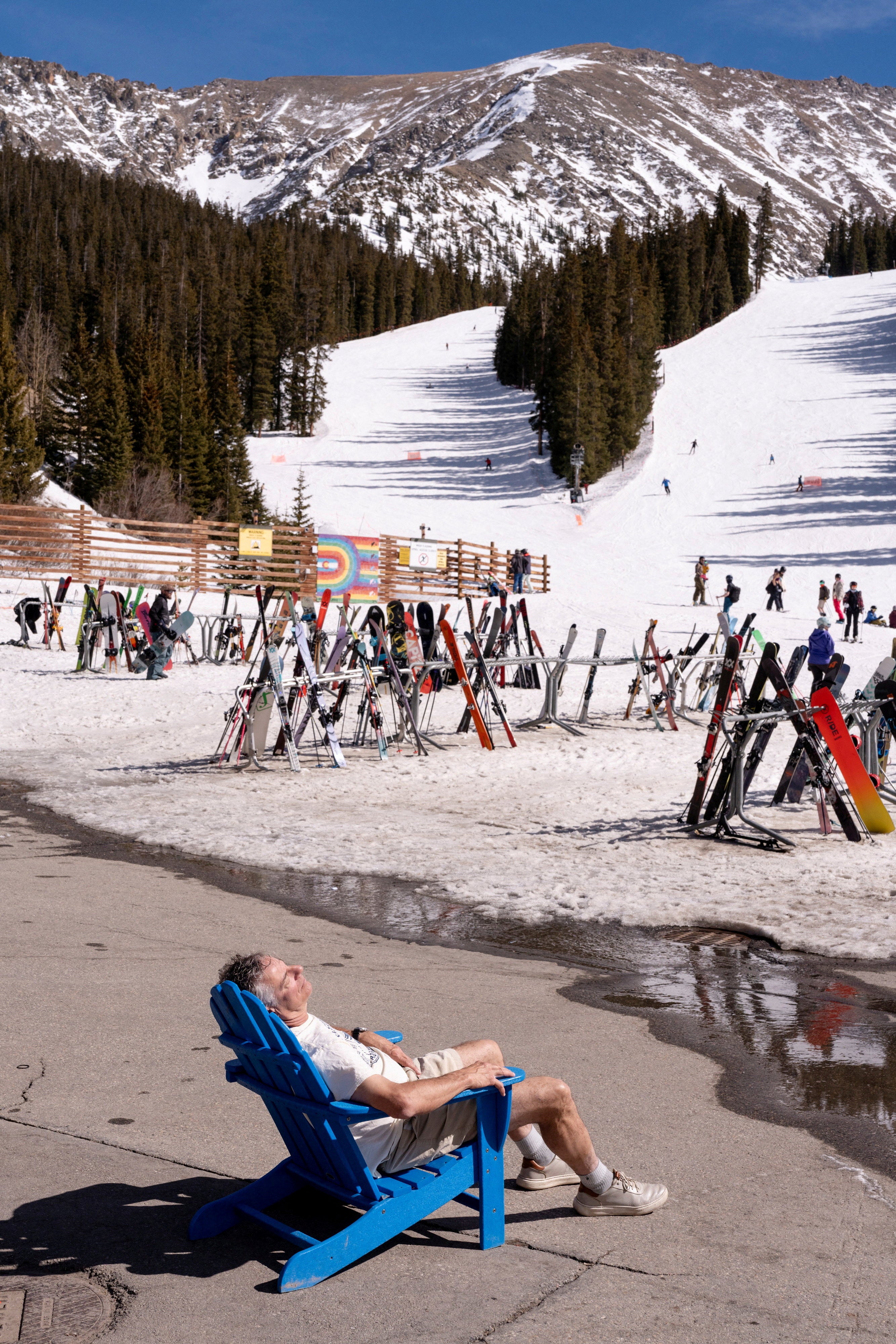
“There is no snow on the mountains. It was a pretty horrific winter, the worst since 1976,” said Buffum, adding that instead of skiing, some visitors were sunning on her patio as if it were summer.
In Breckenridge, Colorado, cross-country skiers shoveled snow to keep trails open.
Anton Artemenko and his wife volunteered at the Breckenridge Nordic Center to move snow from the forest onto slushy trails. The center closed on Thursday, three weeks early.
"That was difficult," he said of the back-breaking work.
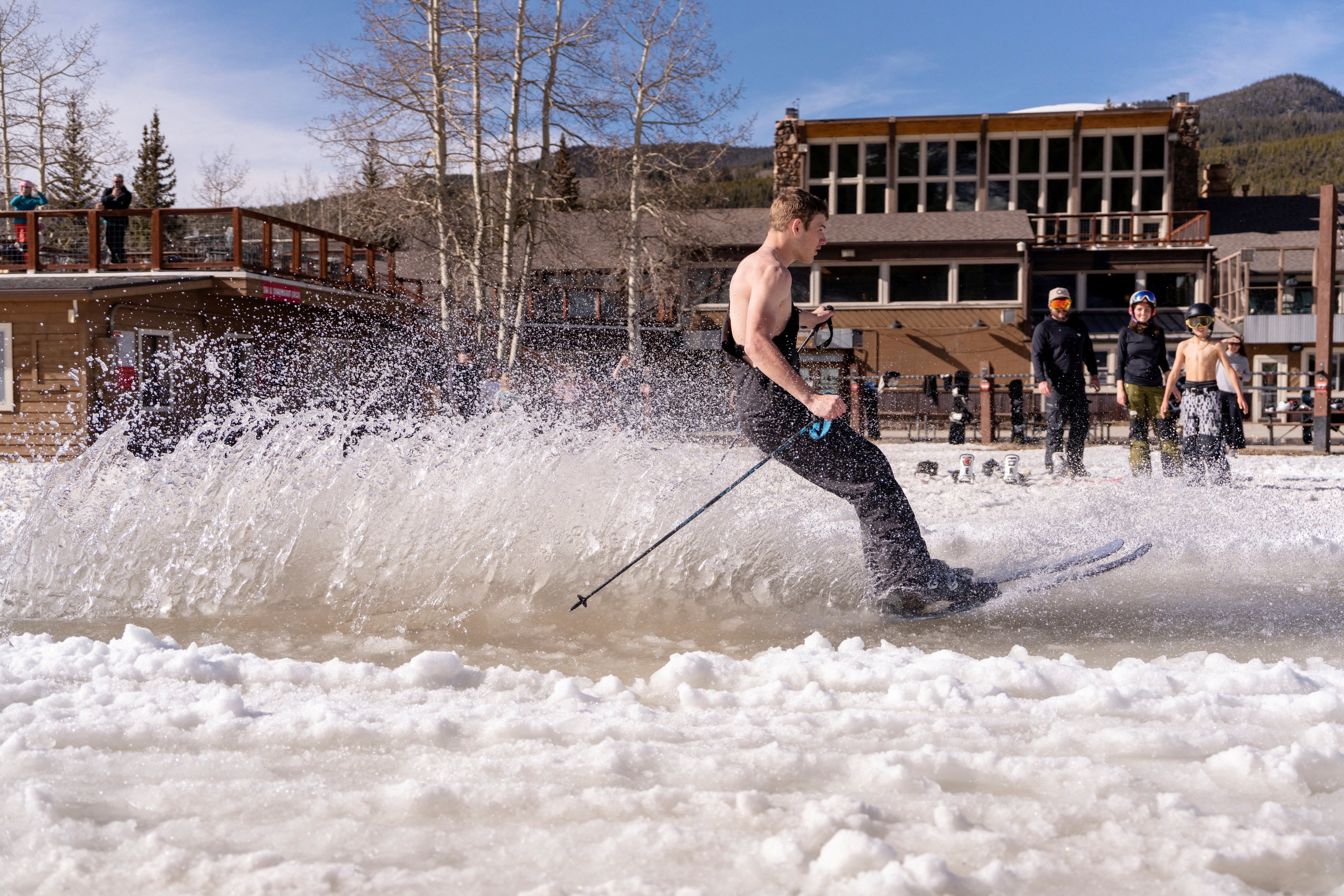
At Taos Ski Valley, where 76 inches of snowfall this year was less than a third of its annual average, shirtless skiers "water skied" over a large puddle forming at the base of the resort.
Maylyn Bubala wore an athletic bikini top to ski in the 80-degree (26.6 C) heat, just days before the resort closed.
"The rising temperatures, it's pretty insane," said Bubala, 19, a student at Oregon State University, who recently wrote a paper on the environmental impact of early melting of snowpacks. "This is not natural."