The Wisdom of Women
Tricycle contributor Erica Bassani discusses her new book, Women in Love with the Divine. The post The Wisdom of Women appeared first on Tricycle: The Buddhist Review.
 Astrong

Tricycle contributor Erica Bassani discusses her new book, Women in Love with the Divine.
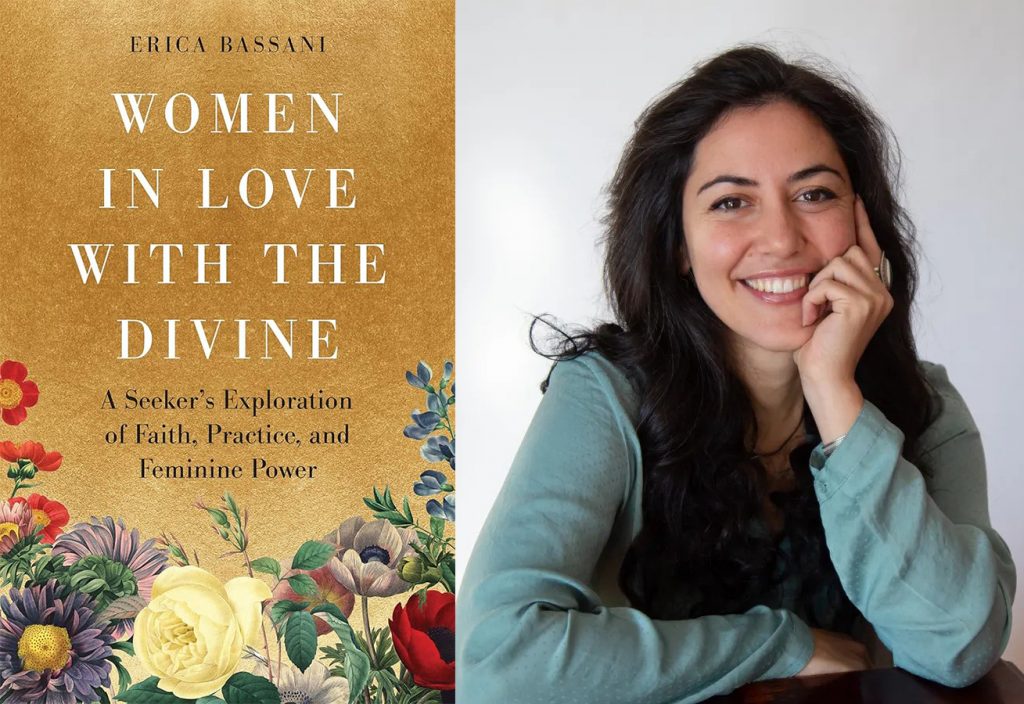
From New York City to Tiruvannamalai, Erica Bassani travels far and wide to meet with women dharma teachers. Originally from Italy, Bassani is a writer, translator, and creator of the Women Awakening Project, a multimedia platform dedicated to sharing the wisdom of female spiritual teachers. Since 2023, she has interviewed dozens of women from a range of different traditions, including Theravada nun Venerable Gotami and Plum Village monastic Sister True Virtue, for Tricycle. Her new book, Women in Love with the Divine, features twelve of these interviews, as well as Bassani’s insights as she explores what it means to be a woman who commits her life to that which is sacred.
In the introduction of your book, you talk about a spiritual breakthrough that you had, where you write, “Without warning and without explanation, God the Father became the Divine Mother.” Can you tell me more about this experience? That was an experience that came by itself, I didn’t look for it. It came in a moment of inner struggle and, also, in a moment of prayer, as it often happens. When we are at our most vulnerable, we’re also more open to receive and more open to really praying.
I was asking the divine to show me, how are we all supported intrinsically, just by being, just by the fact that we are? It feels to us that we are alone and separate, but it’s not true. I was asking the divine to show me how we are supported, and what happened was that how I perceived the divine shifted [to] this form of a Divine Mother, which has [a] profound holding nature.
This is how God the Father turned his face, and on the other side there was a beautiful goddess, the Divine Mother, bright and there to teach me a new chapter of life.
In general, what do you think differentiates the spiritual journey of women compared to that of men? That’s not an easy question to answer, because sometimes the journey of men can be very feminine, and sometimes the journey of women can be very masculine. But I could say that, at least in the research I’ve been doing so far across the women I’ve been meeting, there is an urge to feel the gap between matter and spirit. So we could say maybe women are more tuned in to feeling everything, feeling the whole of life. Maybe that is an aspect that differentiates the spirituality of women from men.
Even though you practice Buddhism, in the book you include interviews with women of other faiths as well. What have you learned from those conversations? My whole practice has been changing, and is still in the process of changing a lot after these meetings. I didn’t realize it in the beginning. It took me a year of this research for it to kind of kick in, and then, I started working on my whole inner attitude toward the spiritual path. [One of the things] I discovered [was] the power of softness in me. I had glimpses of it, I felt it through some of the women I met who also explicitly talked about it. In some other cases, it was just almost a transmission of presence, just their way of being, which was soft. This has been changing me a lot. This has been showing me how I’m still being hard on myself in so many ways, even in regard to the spiritual life. This inner critic has a very wide spectrum; it goes from the most gross aspects of us to the most subtle. Embracing softness is a process. But I can say, for me, it started thanks to writing this book. Thanks to these conversations, I really recognize in myself the parts that are still very hard. [I am grateful for] the faith that these women offered to me, because they offered me faith in the path and in the power of softness.
In the book you also describe a collective womanhood or sisterhood that bonds us together. How does embracing that contribute to our spiritual practice? I think that is an important part that is often, maybe, not fully understood. So when we talk about sisterhood, at least in the spiritual path, how I see it is that it’s something that also takes courage. It takes a kind of bravery to be with other women as they go through their own challenges, and deciding and feeling that it is possible to be open and to be in the space of healing together and in the space of researching together.
Just beyond that threshold of fear and insecurity and maybe even mistrust, there is always a greater will of the heart of all women to actually abide in sisterhood, because there is so much strength that comes to women when we bond deeply.
We are often powerful mirrors for each other. It can be challenging, this work. But from what I’ve seen from participating in women’s retreats and also leading women’s gatherings, is that just beyond that threshold of fear and insecurity and maybe even mistrust, there is always a greater will of the heart of all women to actually abide in sisterhood, because there is so much strength that comes to women when we bond deeply, when we bond from the heart and let go of all our mental constraints.
After interviewing so many women who hold so many different dimensions of wisdom, how has this project changed your own connection to the divine? When I started the project, I had actually just dropped my previous spiritual life, or, better yet, my previous spiritual life had dropped me. So I was in this new birth and in this void, and I have to say, I still haven’t figured out my spiritual practice. I’m still deeply searching for how to make daily life an act of devotion. How to not only cultivate presence when you’re cutting veggies and being present when you are with people, which, of course, is a beautiful endeavor. But what I feel has arisen in me is a desire to really be with this devotional longing, be with the longing for the divine, even when it’s not clear. When it’s not so clear how I should serve the divine, how to put it into action. And so that is the ongoing inspiration for me.
What would you say to women who are just getting started on their spiritual path? I would say it’s a beautiful time, actually, because although, yes, we live in this patriarchal system, it’s possible now to do things that were very hard to do just a few decades ago. I think now it’s possible for women to really embrace the spiritual path. There is an availability of various approaches like never before. There is this abundance in the offerings, and, [if you are lucky enough,] the possibility of traveling to go to meet a master, for example, or go on retreat [has never been more available]. This is incredible for me because it was not as available to me when I was small.
When I was a child, it was so different. Meditation was very rare [in Italy], while now, it’s far more common. I think this is beautiful, and we should really take advantage of this availability of the teachings. In this, we shall know that each one of us has their own unique way of finding the divine in themselves and cultivating their practice. It is possible to go forth, and we can definitely support each other in this. This was the idea behind the Women Awakening Project. It was to create not only a space to gather the wisdom of women across traditions but also this sense of possibility, this sense that for every woman, no matter the condition she’s in, there is a way to connect with the divine. It’s just up to each one of us to have that willingness to go deeper.

Thank you for subscribing to Tricycle! As a nonprofit, we depend on readers like you to keep Buddhist teachings and practices widely available.
This article is only for Subscribers!
Subscribe now to read this article and get immediate access to everything else.
Already a subscriber? Log in.