Unlocking Success: A Deep Dive into PayPal Marketing Strategy & Campaigns
Ever wondered what fuels the digital payments revolution? How does a company like PayPal keep millions of users not just clicking but eagerly paying? And what are the secret ingredients of PayPal’s digital marketing strategy that makes the competition...
 Kass
Kass
Ever wondered what fuels the digital payments revolution? How does a company like PayPal keep millions of users not just clicking but eagerly paying? And what are the secret ingredients of PayPal’s digital marketing strategy that makes the competition break a sweat? If these questions have ever crossed your mind, you’re in for an intriguing ride.
A few brands have managed to achieve the same level of recognition and trust as PayPal in the world of digital commerce. A titan in the online payment industry, PayPal is the 6th largest fintech company in the world. The brand has consistently adapted, innovated, and led from the front, maintaining its position as the go-to choice for 431 million users worldwide.
However, what truly sets PayPal apart is not just the intricacies of its marketing strategy but the systematic and strategic decisions that have underpinned its remarkable success.
Join us as we embark on this exciting expedition into the world of PayPal’s strategic marketing.
Inside Paypal Marketing Campaigns
Understanding PayPal Target Audience PayPal Value Proposition PayPal Marketing Strategy: Multi-Channel Approach Top PayPal Marketing Campaigns New Money Super Bowl Campaign (2016) New from PayPal, Money Pool (2018) Make It One to Remember (2021) The Chime Porch (2025) Make New Memories with the Ones You Love (2021) Shady Lemonade Stand (2025) PayPal’s Focus on User Experience PayPal’s Investment in Innovation PayPal vs. Stripe PayPal vs. Revolut How Other Businesses Can Learn from PayPal’s Marketing StrategyUnderstanding PayPal Target Audience
The key to any successful marketing strategy lies in truly comprehending who you’re speaking to. For PayPal, this understanding isn’t just surface-level; it’s intricate, detailed, and rooted in data-driven insights. Let’s take a look:
Individuals
The modern consumer seeks convenience, and PayPal answers this call immaculately. Catering primarily to individuals who transact online – be it for shopping, freelancing, or international purchases – PayPal ensures a smooth experience. These individuals, ranging from millennials making their first online purchase to the elderly securing their favorite book, all find solace in the brand’s simplicity. Moreover, PayPal regularly adds features designed to improve each user’s experience through monitoring transaction activities.
Businesses
The corporate world isn’t untouched by PayPal’s allure. Businesses, both large and small, lean on PayPal for B2B transactions. Recognizing the unique needs of this segment, PayPal offers specialized tools to streamline invoicing, facilitate easy international payments, and manage corporate expenses. In addition, the brand has consistently shown adaptability, introducing features that address emerging business challenges in the digital world.
Merchants
Arguably one of the most crucial segments for PayPal for paying, merchants form the backbone of its ecosystem. From eCommerce giants to local stores venturing online, merchants require a reliable payment gateway.
And PayPal, with its emphasis on secure and swift transactions, stands out as an ideal choice. The brand doesn’t stop at just being a transaction medium; it goes a step further. Merchants have access to a suite of analytics tools, helping them gain insights into sales patterns, customer behaviors, and more, allowing them to refine their strategies for increased profitability.
See PayPal-Level Engagement with the Right Partner by Your Side
Aiming for PayPal-level engagement? It starts with a partner who understands the rhythm of fintech. We explored agencies helping fintech and payment brands create experiences customers instantly trust.
PayPal Value Proposition
The world of online payments is perhaps more crowded than ever. This situation makes standing out a challenge. Yet, PayPal has not only managed to stand out but also to lead, and much of this is credited to its distinct value propositions. These propositions cater to the very needs and aspirations of its varied user base.
Convenience
PayPal understands deeply that time is of the essence in today’s fast-paced world. That is why the brand ensures a smooth and effortless process. Setting up a PayPal account is quick, allowing users to transact within minutes. With one-click transactions and integrations across numerous eCommerce platforms, users can check out swiftly without repeatedly entering payment details. Furthermore, with the ability to link multiple bank accounts and cards, users enjoy a seamless financial experience, making PayPal the preferred choice for many.
Security
Security features are perhaps the most crucial thing when it comes to finance and fintech brands, especially in fintech advertising. It’s one of the most important features to promote as a brand. When it comes to financial transactions, trust is crucial, and PayPal has based its whole business model on this idea. Utilizing state-of-the-art encryption technologies, the platform ensures that user data is shielded from potential threats. But beyond the tech, it’s the brand’s Buyer Protection initiative that truly wins hearts. Offering users peace of mind, this feature ensures that they are covered if they don’t receive an item, or it’s significantly different from its description. By prioritizing user safety, PayPal fosters an environment of trust and reliability.
Affordability
Although premium services are typically associated with a premium cost, PayPal breaks this convention. Its competitive pricing structure ensures transparency without hidden charges. Regular users, especially merchants, benefit from discounts on transaction fees, making large-scale operations more viable. By striking the right balance between quality service and affordability, PayPal ensures it remains accessible to all – from individual consumers to large businesses.
Additional Features
PayPal’s main purpose is to process payments, but it has continuously added a number of functions that go beyond that. Offerings such as PayPal Credit, which provides users with a line of credit, and “Pay in 4” a buy-now-pay-later solution, showcase the brand’s commitment to financial flexibility.
Additionally, its capability to handle international currency conversions effortlessly means that global transactions are as easy as local ones. These added features cement PayPal’s position as more than just a payment solution; it’s a comprehensive financial tool.
By carefully weaving these value propositions into its brand narrative, PayPal ensures that its users always find more than one reason to choose it over competitors. But having a strong value proposition is only half the battle.
PayPal Marketing Strategy: Multi-Channel Approach
Even the most compelling value proposition requires an equally compelling medium to reach its intended audience. Over the years, PayPal has masterfully wielded a multi-channel marketing approach to ensure its message not only reaches its target audience but also resonates deeply. However, in the complex world of tech marketing, where the audience can be both local and global, the need for expertise becomes essential. Thus, as a finance brand, collaborating with tech marketing agencies offers a strategic advantage that can’t be overstated.
These agencies bring a wealth of experience and industry knowledge to the table, enabling brands like PayPal to navigate the intricacies of local and global markets. They possess the insights to understand cultural nuances, economic trends, and regional preferences, allowing for a tailored and effective marketing strategy. Just like PayPal’s.
PayPal Online Advertising
You’re probably a little tired of hearing this, but having a strong online presence is genuinely crucial. PayPal not only recognizes this fact but has also established a solid foundation in the digital world through the implementation of various strategies. Naturally, the ongoing sustainability of these efforts is equally important.
Through strategic PPC campaigns, display ads, and retargeting efforts, PayPal ensures that it remains top of mind for potential users. By targeting keywords related to online transactions, eCommerce, and financial services, the brand effectively captures the attention of those seeking reliable payment solutions. Moreover, its sophisticated use of analytics allows it to fine-tune campaigns in real-time, optimizing for maximum ROI.
If you’re a finance brand venturing into the digital marketing landscape, you and I are both aware that you need to establish a strong online foundation that maximizes your digital ad ROI. While strategic PPC campaigns, display ads, and retargeting efforts are your tools of choice, the secret to unlocking their full potential lies in partnering with finance marketing agencies. They empower you to navigate the dynamic digital landscape and achieve the highest returns on your advertising investments, ultimately ensuring that your brand shines bright in the digital world.
Social media platforms are much more than just networking sites; PayPal knows how to take advantage of their potential. With a strong presence on platforms like Instagram, LinkedIn, and Twitter, the brand crafts engaging narratives. Whether it’s sharing success stories, announcing new features, or fostering community engagement, PayPal’s social media strategy is both dynamic and human-centric, resulting in authentic connections with its audience.
PayPal demonstrates its leadership in this sector by effectively engaging its nearly 700K Instagram followers. It entertains with engaging stories, like the DIY example below, while also providing valuable information about its key features.
Naturally, the brand posts more than just humorous posts and updates on social media. By tackling important topics like fraud and security, which are crucial in the digital and financial areas, they also educate their audience.
PayPal Email Marketing
Personalized, time, and relevant – that’s how PayPal’s email campaigns can be described. Through meticulously segmented lists, the brand ensures that its users receive content tailored to their needs. Transactional emails, newsletters, and promotional offers are not just seen as communication tools, but as opportunities to add value. And with high open and click-through rates, it’s evident that PayPal’s email marketing hits the right notes.
PayPal Content Marketing
The following principles guide PayPal’s content marketing initiatives: educate, inform, and engage. PayPal positioned itself as a thought leader in the online payment space with a rich repository of blogs, videos, webinars, and infographics.
Whether it’s guiding merchants in optimizing sales or helping individuals understand financial nuances, its content is always steeped in value. And by prioritizing SEO, the brand ensures that this content is easily discoverable, further enhancing its reach and impact.
Partnerships
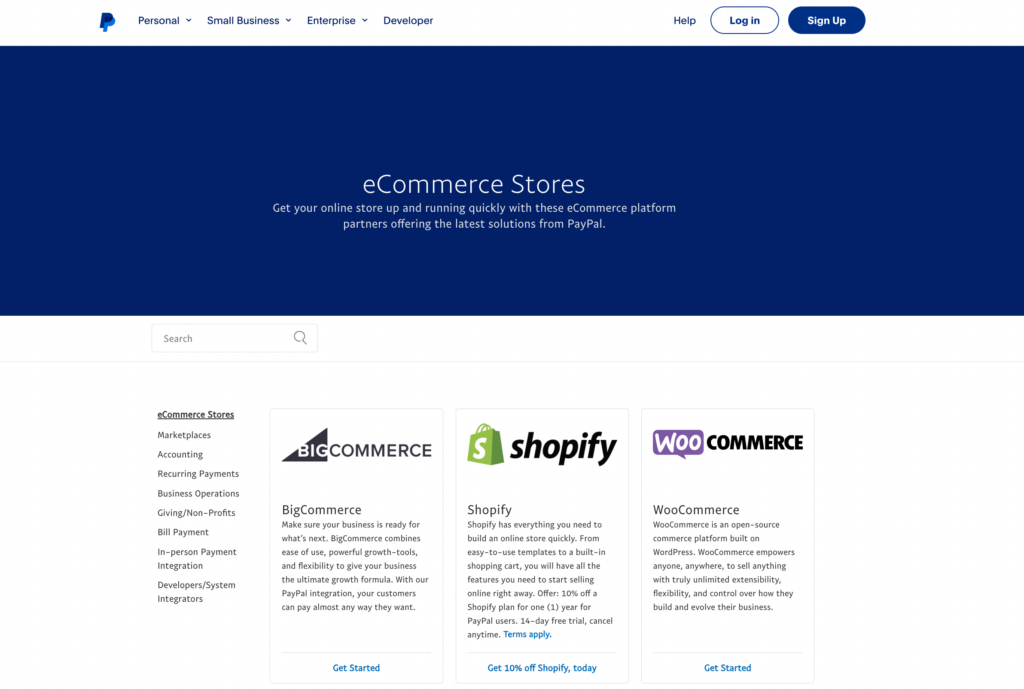
Strategic collaborations have been a cornerstone of PayPal’s marketing strategy. By forging alliances with eCommerce giants, tech platforms, and financial institutions, PayPal amplifies its reach exponentially. These partnerships, often marked by co-branded campaigns or special offers, result in a win-win situation. PayPal benefits from increased visibility and usage, while its partners can offer their users a tried-and-tested payment solution, enhancing their service quality.
PayPal creates a compelling and powerful marketing symphony by carefully combining different channels together. But as we’ve seen, the brand’s success isn’t just about reaching out; it’s about reaching out right.
Top PayPal Marketing Campaigns
Throughout its journey, PayPal has launched a plethora of marketing campaigns, each designed to resonate with its target audience and further its brand narrative.
As you know, for years, financial services marketing relied on rigid tropes like sterile bank vaults, stock photos of business suits, and dry explanations of transaction security… It was a safe approach built to project stability, but it rarely captured the rapid speed of marketing culture, especially in digital era.
When evaluating PayPal marketing campaigns, we ignored standard platform upgrades and routine legal policy updates. We chose these six campaigns because they reveal a sharp, intentional approach to modern digital commerce:
We selected activations that position modern digital currency as a revolutionary upgrade over physical paper bills and old banking systems. We prioritized initiatives highlighting the casual mechanics of peer-to-peer splitting, removing money talk awkwardness between close friends. We targeted campaigns that drop stiff corporate language to feature beloved comedic talent, turning standard utility features into viral internet memes. We chose examples focusing on deep human connections, anchoring a technical checkout button to real holiday memories.Let’s start to list the campaigns & why we loved them:
New Money Super Bowl Campaign (2016)
In 2016, PayPal made a splash with its debut Super Bowl commercial titled “New Money.” This campaign was a bold proclamation of the shift from traditional to digital money, showcasing PayPal as the forerunner of this revolution. The advertisement, with its dynamic visuals and compelling taglines, effectively communicated the brand’s vision of a more inclusive financial future, resonating deeply with a global audience.
Why We Loved That Campaign
The PayPal ad simply depicted “old money” as dirty paper bills, restrictive bank hours, and slow-moving lines, while presenting PayPal as a vibrant, inclusive tool built for the modern, constant digital age.
What’s more, it was a bold statement of purpose. The energetic tone made traditional banking look completely obsolete, reframing PayPal from a basic checkout link into a forward-thinking financial movement.
New from PayPal, Money Pool (2018)
To introduce its “Money Pools” feature, which allows users to connect money from friends and family for joint expenses, PayPal used a mix of influencer partnerships and social media marketing. Collaborating with influencers from diverse domains, the brand showcased real life scenarios where “Money Pool” could be beneficial. This relatable, user-centric approach amplified the feature’s value proposition, driving both awareness and adoption.
Why We Loved That Campaign
The creative depicted common scenarios like chasing friends for group holiday gifts, splitting dinner bills, or organizing party expenses, and it positioned the dedicated digital collection link as a seamless social solution.
Also, it tackled a highly specific personal annoyance with pure empathy. Highlighting the social awkwardness of asking friends for money made the digital pool feature feel like an essential tool for keeping friendships intact.
Make It One to Remember (2021)
This advertising campaign shows us how easy it is to make payments with PayPal. In this utterly charming campaign video, a loving father creates the perfect setting and decor for his daughter, who’s trying to learn and perform the ever-famous Nutcracker Ballet.
When the dad sees his daughter’s passion, he decides to order the necessary items to create a homemade theater ambiance to accompany her. He even learns the choreography too! This is a holiday gift for his daughter, made easier than ever with a seamless shopping and checkout process experience provided by PayPal.
Why We Loved That Campaign
It found a beautiful human pulse inside a cold digital transaction. Shifting the focus from technical convenience to the emotional outcome of a purchase helped PayPal build a powerful, trusted relationship with users during the holidays.
The Chime Porch (2025)
As part of a massive platform expansion, PayPal launched “The Chime Porch,” a stylized campaign that focuses on its acoustic app experience.
Featuring comedian Will Ferrell, the creative spotlights the crisp confirmation chime of a successful contactless transaction. It shows diverse shoppers tapping their phones at neighborhood stores while the signature audio cue echoes across an artistic suburban block.
Will’s now a wind chime musician? W T Ferrell???
Why We Loved That Campaign
It gamified a routine action through sound. Building a whole world around that single transaction sound transformed a standard mobile tap into a highly satisfying sensory habit.
Make New Memories with the Ones You Love (2021)
This global PayPal campaign focuses on the emotional side of post-pandemic family reunions.
The narratives show multi-generational families using the PayPal app to quickly split travel costs, book shared vacation rentals, and safely send instant funds to younger relatives across the country, all under a unified theme of reclaiming lost time.
Why We Loved That Campaign
It captured the collective mood of the public. Aligning the utility of instant peer-to-peer transfers with the joy of seeing family again made the platform feel vital to personal connections.
Shady Lemonade Stand (2025)
In its largest creative campaign to date, PayPal partnered with comedy star Will Ferrell for a series of ad spots set to a reimagined version of Fleetwood Mac’s classic track, “Everywhere.”
In one highly viral scene, Ferrell uses his PayPal Debit Card’s 5% cash back feature at a kid’s neighborhood lemonade stand, singing along to the track before comically calling the young entrepreneur “shady” during checkout.
Why We Loved That Campaign
It used pure comedy to deliver a straightforward product message. Will Ferrell’s energy and the catchy musical hook instantly broke finance advertising norms, making a debit card cash-back feature incredibly memorable.
PayPal’s Focus on User Experience
In the era of customer-centric businesses, user experience has transitioned from being just a buzzword to a fundamental pillar of brand success. And for a digital-first brand like PayPal, the importance of UX is magnified.
Intuitive Interface Design
From the moment a user lands on the PayPal website or opens the mobile app, they’re greeted with an interface that prioritizes simplicity and clarity. Large icons, clear calls-to-action, and a minimalistic design ensure that even first-time users can navigate with ease. This intentional design ensures that common tasks, like sending money or checking transaction history, are straightforward and hassle-free.
Responsive Customer Support
Even the best of platforms can occasionally face issues. What differentiates great brands from the rest is how they handle such instances. PayPal’s customer support is renowned for its efficiency and responsiveness. Whether it’s through live chats, phone calls, or email support, users always find a helping hand ready to assist them. Moreover, the extensive FAQ section addresses a majority of common queries, ensuring that users can find quick solutions.
Personalized User Journeys
Drawing from its vast data resources, PayPal offers personalized experiences for its users. Tailored product recommendations, customized notifications, and user-specific promotions ensure that every interaction feels unique and relevant. This level of personalization not only enhances user satisfaction but also drives increased transaction frequencies.
Seamless Integrations
PayPal understands the diverse needs of its audience. Thus PayPal makes sure that its services work seamlessly with a variety of platforms. Be it eCommerce websites, subscription platforms, or even charity donation portals, the PayPal button is ubiquitous. This seamless integration ensures that users can utilize PayPal’s services without disruptions, irrespective of the platform they’re on.
Continuous Feedback Loop
User feedback is a goldmine of insights, and PayPal is adept at tapping into this resource. Through periodic surveys, user testing sessions, and feedback forms, the brand continually gathers user opinions. This feedback is then channeled into refining and enhancing the platform, ensuring that the user experience is always evolving and improving.
PayPal’s Investment in Innovation
Complacency is a luxury no brand can afford, especially in the fintech sector. PayPal’s enduring success can be attributed, in large part, to its consistent drive for innovation. This commitment not only keeps the brand ahead of the curve but also reinforces its position as an industry leader.
Pioneering New Payment Methods
From its inception, PayPal has been at the forefront of redefining how we perceive online payments. Over the years, the brand has introduced numerous payment methods tailored to changing consumer habits. Features like “One Touch” for quicker checkouts and “Pay in 4” a not to the rising popularity of buy-now-pay-later schemes, showcase PayPal’s knack for anticipating and addressing evolving market needs.
Embracing Emerging Technologies
Blockchain, artificial intelligence, and machine learning – these aren’t just tech words for PayPal; they form the backbone of its innovation strategy. By actively researching and integrating these technologies, PayPal ensures enhanced security, faster transaction times, and more personalized user experiences. Their recent foray into cryptocurrency is a testament to the brand’s vision of shaping the future of digital payments.
Acquisitions and Collaborations
Over the years, PayPal has strategically acquired several companies that align with its vision and bring novel technologies to its portfolio. Be it the acquisition of Braintree, which brought Venmo under its wing, or the purchase of Honey, a shopping and rewards platform – such moves underscore PayPal’s intent to offer an ever-expanding suite of financial solutions. Collaborations, too, play a crucial role. By teaming up with tech innovators and industry leaders, PayPal taps into synergies that drive mutual growth.
PayPal vs. Stripe
Of the ten biggest fintech companies worldwide, seven are based in the United States and two in China. The Irish payment processing platform Stripe was the highest-valued fintech unicorn at the end of 2022, despite the dominance of both countries. Stripe is considered a competitor to PayPal because both companies offer online payment processing services. They often target the same customer base as well: businesses and eCommerce websites looking for reliable payment solutions. While they share this common ground, they also compete in various aspects of the payment processing industry.
Target Audience
We’ve already examined PayPal’s target audience above. As we’ve mentioned, PayPal‘s target audience includes users of all ages and income levels. Stripe, on the other hand, has primarily targeted developers and businesses that require more flexible and customizable payment solutions. It’s known for its developer-friendly approach.
Integration and APIs
PayPal provides APIs for developers to integrate its payment system into various platforms and websites. It offers PayPal Payments Standard, PayPal Payments Pro, and various other APIs to cater to different business needs. When we look at Stripe, however, we can see that it is well-regarded for its developer-centric APIs and extensive documentation. It’s designed to be highly customizable and is favored by tech-savvy businesses that want more control over their payment processing.
Payment Flow
PayPal often redirects users to its website for payment processing which can sometimes lead to a less seamless checkout experience. It does offer options like PayPal Express Checkout for a more streamlined experience. The difference between PayPal and Stripe is that Stripe allows for in-app or on-site processing, providing a smoother user experience without the need for users to leave the website or app during the payment process.
International Reach
PayPal has a global presence and supports transactions in multiple currencies, making it suitable for businesses with an international customer base. In fact, PayPal is available in more than 200 countries and support 25 currencies, its services being particularly popular in the U.S., The UK, and Australia. When we look at PayPal’s major competitors like Stripe, we can see that as opposed to PayPal, Stripe is only available in 46 countries as of today. Either way, both are an excellent choice for businesses looking to expand globally.
Fees and Pricing
PayPal’s pricing structure includes transaction fees, chargeback fees, and currency conversion fees. These fees can vary depending on the country and type of transaction. Stripe’s pricing is typically more straightforward, with transparent transaction fees. It also offers customizable pricing for large enterprises.
User Experience
PayPal offers a familiar and trusted brand, making it an attractive option for businesses that want to instill confidence in their customers. However, the checkout experience may vary depending on the integration method used. When evaluating Stripe though, we see that Stripe’s focus on providing a seamless and customizable payment experience can be appealing to businesses looking for a more branded and integrated checkout process.
Additional Services
Stripe primarily focuses on payment processing but has added features like Stripe Radar for fraud prevention and Stripe Connect for marketplace solutions. As opposed to Stripe, PayPal offers additional services like PayPal Credit, which allows customers to pay over time, and PayPal Working Capital, a lending service for businesses.
Not only Stripe, but PayPal has a lot of other competitors. If you’re curious about what these competitors are up to, you can discover intriguing insights into Wise’s marketing strategy.
PayPal vs. Revolut
When comparing PayPal and Revolut, it is important to recognize that they were built with different priorities in mind. PayPal established itself as one of the world’s leading digital payment platforms, helping individuals and businesses send, receive, and process online payments. Revolut entered the market as a fintech platform offering digital banking, multi-currency accounts, international transfers, and financial management tools.
While both support domestic and international transactions, their strengths differ significantly. PayPal is often the preferred choice for online payments and merchant acceptance, while Revolut stands out for its banking features, currency exchange capabilities, and international money management.
Let’s be more specific.
Target Audience
PayPal and Revolut serve different customer profiles despite some overlap in their offerings. PayPal is widely used by freelancers, eCommerce businesses, online sellers, and consumers who need a trusted payment gateway for digital transactions. Revolut appeals more to digital-first individuals, frequent travelers, remote workers, international businesses, and users seeking a broader financial platform that combines payments, banking, currency exchange, and budgeting tools.
Integration and APIs
PayPal offers one of the most mature developer ecosystems in the payments industry, with extensive APIs, SDKs, and integrations for eCommerce platforms such as Shopify, WooCommerce, Magento, and BigCommerce. Its infrastructure supports payment processing, subscriptions, invoicing, and marketplace payments. Revolut also provides robust APIs for business customers, enabling payment acceptance, account management, foreign exchange, and Open Banking functionality. However, Revolut’s API ecosystem is generally more focused on financial operations and banking services than on broad eCommerce payment integrations.
Payment Flow
PayPal’s payment flow is designed around online transactions, allowing customers to pay using their PayPal balance, linked bank accounts, debit cards, or credit cards. Users can complete purchases without sharing card details directly with merchants, which adds a layer of convenience and trust. Revolut’s payment flow centers on its app-based ecosystem, where users can send money, make card payments, transfer funds internationally, and manage multiple currency balances.
International Reach
PayPal operates in more than 200 markets and supports a large number of currencies. Its extensive merchant network allows users to make purchases across countless online stores worldwide. Revolut also supports international transactions and multi-currency accounts across numerous countries, offering competitive exchange rates and seamless spending abroad.
Fees and Pricing
PayPal is often considered more expensive for merchants and international transactions due to payment processing fees, currency conversion charges, and cross-border transaction costs. While the platform offers convenience and brand trust, businesses with high transaction volumes may find the fees significant. Revolut generally provides more competitive foreign exchange rates and lower international transfer costs, particularly through its premium plans.
User Experience
PayPal focuses on simplicity and familiarity, as we mentioned above. Its interface is accessible to users of all technical skill levels and benefits from strong brand recognition. Revolut delivers a more modern, feature-rich mobile experience, offering real-time spending notifications, budgeting tools, analytics, currency management, and investment features within a single app. Users seeking a comprehensive financial dashboard often find Revolut more engaging, while those prioritizing payment convenience may appreciate PayPal’s streamlined approach.
Additional Services
Beyond payments, PayPal offers invoicing, business financing solutions, subscription billing, fraud protection tools, and merchant services that support online commerce. Its ecosystem is heavily geared toward enabling businesses to accept and manage digital payments at scale. Revolut extends far beyond payments by providing banking-like services, multi-currency accounts, stock and cryptocurrency trading in supported regions, savings products, expense management tools, and corporate financial services. As a result, Revolut functions as a broader financial platform, while PayPal remains primarily focused on payment processing and digital commerce.
How Other Businesses Can Learn from PayPal’s Marketing Strategy
PayPal’s meteoric rise and sustained market leadership serve as a masterclass in strategic marketing. However, the lessons it offers aren’t exclusive to fintech giants or established brands. Businesses, ranging from budding startups to seasoned enterprises, can gain invaluable insights from PayPal’s playbook.
a. Understand and Cater to Your Audience
PayPal’s success in identifying and serving the unique needs of individuals, merchants, and businesses is a testament to the power of audience understanding. Businesses should invest time in market research, user surveys, and feedback loops to deeply comprehend their audience’s pain points, aspirations, and behaviors. Crafting solutions and campaigns that align with these insights ensures greater resonance and success.
b. Differentiation is Key
In a crowded market, standing out is imperative. PayPal’s emphasis on its unique value propositions, such as security and convenience, has set it apart from competitors. Businesses must identify what makes them distinct and ensure that this differentiation is communicated clearly and consistently across all marketing channels.
c. Embrace a Multi-Channel Approach
PayPal’s adeptness at weaving a consistent narrative across diverse platforms underlines the importance of a holistic marketing strategy. Businesses should look beyond siloed campaigns and strive for an integrated approach, ensuring that the brand message is harmonized, whether it’s an email, a social media post, or a billboard advertisement.
d. Prioritize User Experience
A stellar product or service, if paired with a subpar user experience, can deter potential customers. Taking a cue from PayPal’s relentless focus on UX, businesses should evaluate and optimize every touchpoint in the user journey. This not only bolsters customer satisfaction but also aids in retention and referrals.
e. Innovation is Continuous
Just as PayPal continuously innovates its offerings and technologies, businesses should foster a culture that celebrates experimentation and forward-thinking. Regularly revisiting and refreshing products, services, and marketing strategies can keep a brand relevant and ahead of the curve.
f. Build Authentic Connections
PayPal’s campaigns, often rooted in real stories and genuine emotions, highlight the importance of authenticity. Businesses should strive to build genuine connections with their audience, prioritizing transparency, empathy, and value addition. Remember that beyond transactions, it’s the relationships that sustain a brand.
Learning from PayPal: A Blueprint for Success
As we’ve traversed the intricate tapestry of PayPal’s marketing strategy, certain themes recur the power of understanding one’s audience, the need for continual innovation, and the imperative of creating authentic, user-centric experiences. But beyond these specific tactics and strategies lies a more profound truth: At the heart of PayPal’s success is its constant commitment to its users.
Businesses in today’s digital age are presented with a paradox. On one hand, there are more tools, platforms, and channels than ever before to reach potential customers. On the other, consumers are more discerning, with a plethora of choices at their fingertips.
In such a landscape, merely catching a user’s eye isn’t enough; brands need to build trust, offer undeniable value, and foster genuine connections.








![Meta Outlines Open Source Contributions in 2024 [Infographic]](https://imgproxy.divecdn.com/YOYEhTrhLX1rsEjXqZJNhFf8sC0vMoNHeK_qbzpVVKY/g:ce/rs:fit:770:435/Z3M6Ly9kaXZlc2l0ZS1zdG9yYWdlL2RpdmVpbWFnZS9tZXRhX29wZW5fc291cmNlX2luZm8yLnBuZw==.webp)


![The Top Search Engines Other Than Google [+ Some You Might Not Expect]](https://www.hubspot.com/hubfs/other%20search%20engines%20header%20image%20.jpg)