What are the new travel rules and how do they affect dual citizens?
Travellers could be denied boarding on flights to the UK unless they have the correct paperwork
 JimMin

“Dual nationals: prove you are British or you can’t come in”: that is the prospect facing people who have citizenship of both the UK and another country.
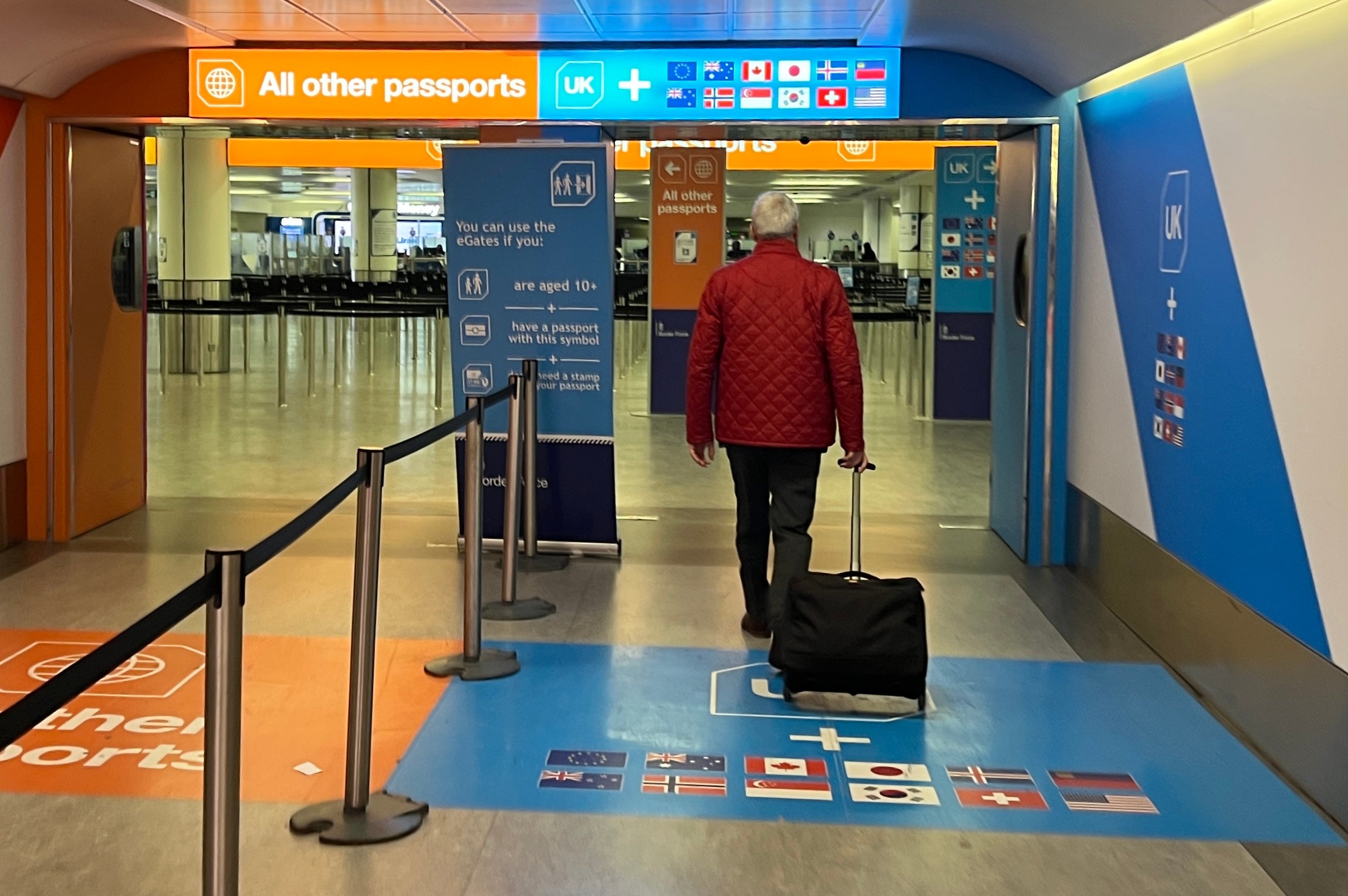
Millions of British citizens live abroad. An estimated 1.2 million have dual nationality and own a passport issued by their country of residence. Most live in nations whose citizens do not require a visa to enter the UK. These include member states of the European Union and wider Schengen area, as well as Australia, Canada, Japan, New Zealand, Singapore, South Korea and the US.
Passports issued by these countries allow travellers to visit the UK for a stay of up to six months for tourism, family visits or business.
Until 25 February 2026, British dual nationals could use their foreign passport to enter and exit the UK. But that option has ended – obliging British citizens who want to return to get a UK passport or an expensive “certificate showing right of abode”. These are the key questions and answers.
What has changed?
The Home Office says British people who are citizens of a second country must travel to the UK using:
Why the change?
Someone with a passport issued by a “non-visa” nation can enter the UK for up to six months without formality. If the individual stays longer, the Home Office cannot tell whether the person is an overstayer or a British citizen who happens to have entered on a foreign passport.
One aim of the UK’s electronic travel authorisation (ETA) is to remove that confusion. The online permit required by every foreign visitor (except an Irish national) who is entitled to travel to the UK without a visa. Conversely, the government says: “You cannot get an electronic travel authorisation (ETA) if you’re a British or Irish dual citizen.”
While in theory the ETA has been required since 2 April 2025, full enforcement began only on 25 February 2026.
The problem now for British people who have only a foreign passport and do not have proof of citizenship is that they have no legal way to show they are entitled to enter the UK. They cannot get an ETA. Airlines and shipping operators could therefore deny them boarding.
Read more: What is an ETA and how can visitors to the UK apply for the new visa?
What are the options for UK dual nationals?
The relatively inexpensive choice is to obtain a British passport. The price is £94.50, with an estimated processing time of three weeks (it is usually less) in the UK. But the procedure for British people living abroad takes longer.
Another option is a certificate of entitlement that is attached to your foreign passport. The “certificate showing right of abode” costs £589. If you are still interested, search online for “Form ROA”.
At the 11th hour, the Home Office said that airlines could accept, at their discretion, an expired British passport issued at any time since 1989 along with a valid foreign passport – as long as the biographic details (full name, date and place of birth) match exactly.
The airlines have discretion to decide whether or not to allow the two-passport combination.
So far British Airways, easyJet, Lufthansa , Qantas, United and Virgin Atlantic have confirmed they will accept the expired document with a valid foreign passport.
A Wizz Air spokesperson said: ““As directed by the Home Office, we will consider each passenger on a case-by-case basis and if needed would contact Carrier Support Hub (CSH) to establish the passengers’ circumstances and which combination of documents they are presenting.”
Air New Zealand is reported not to be accepting the current/expired passport combo. But since the carrier no longer flies to the UK, partner airlines may accommodate travellers. Singapore Airlines has responded, enigmatically, by indicating the decision rests with the British authorities: “The UK Home Office may accept proof of citizenship if customers have an expired British passport issued 1989 or later and a valid non-visa-national third-country passport, with their personal particulars matching (e.g. full name, date of birth).”
One final option: renouncing British citizenship, which takes weeks and costs £482.
But I need to travel in an emergency…
If you cannot get a new or replacement passport in time to travel, you can apply for an emergency travel document, costing £125 and valid for a single trip to the UK.
I was born abroad and have never had a UK passport, but am a British citizen by descent. Should I worry?
Plenty of prospective visitors to the UK are concerned. You can check if you are a British citizen by descent on this UK government website.
According to the strict letter of the law, anyone who has British nationality through ancestry must to declare the fact and obtain a passport or certificate of right of abode before travelling to the UK.
The same even applies to people with Irish citizenship who have never been near the island.
In practice, I predict the vast majority of such travellers will not declare the fact and apply for an ETA in the usual manner without a problem. But there is no guarantee of success.
Data sleuth Dr Nick Brown gives the example of an Australian family travelling to the UK in which the father and children have Australian passports and are issued ETAs, but the mother has a British passport: “They get to Heathrow. Border Force officer looks at Mum’s UK passport. Place of birth, London. So the kids are British citizens. They should have a UK passport, and in addition must have made a false declaration when getting their ETA.”
Which passport do I use when returning to my country of residence?
Your foreign passport. Bear in mind, there are no passport checks when departing the UK. The airline, ferry company or Eurostar will be interested in knowing that you are entitled to travel to your destination. A passport from that country (or, in the case of the EU, any member state) is the best way to demonstrate that you will be allowed in. If you use your British passport, things will get messy.
But my airline expects me to travel on the same document in and out of the UK…
Airlines have different policies. Most allow you to specify your chosen travel document when you check in for your flight. Checking in for the return half of a trip with Ryanair, for example, you should be offered the opportunity to travel on your UK passport or a new document. Select the latter, obviously, and fill in your foreign passport details.
Some airlines are trickier, and you may need to call the carrier (or use online chat) to get the document details changed.
Just remind me why the ETA was brought in?
The government says it is “a more streamlined, digital immigration system” that it claims “will be quicker and more secure for the millions of people who pass through the UK border each year”.
What if I have an Irish passport?
Congratulations: you are the most fortunate of travellers. You are in the ideal position of being able to travel freely between the UK, the EU and the wider Schengen area with no need for further documentation either now or in the future – when the Etias permit becomes compulsory for all British travellers.
This piece is kept updated with the latest information


























.jpg&h=630&w=1200&q=100&v=c0f97a310e&c=1)