Why Cooling Potatoes Lowers Their Glycemic Load
If you eat potatoes when they’re cold, as in potato salad, or chilled and reheated, you can get a nearly 40% lower glycemic impact. If […]
 JaneWalter
If you eat potatoes when they’re cold, as in potato salad, or chilled and reheated, you can get a nearly 40% lower glycemic impact.
If you systematically pull together all the best studies on potato consumption and chronic disease risk, an association is found for the risk of type 2 diabetes and hypertension—but that’s for French fries. Consumption of boiled, baked, or mashed potatoes was not associated with the risk of high blood pressure, but there was still a pesky link with diabetes. Overall, eating potatoes is not related to risk for many chronic diseases, but boiled potatoes could potentially pose a small increase in risk for diabetes. That’s one of the reasons some question whether they should be counted as vegetables when you’re trying to reach your recommended daily servings of fruits and vegetables.
If you look at other whole plant foods—nuts, vegetables, fruits, and legumes (which are beans, split peas, chickpeas, and lentils)—they’re associated with living a longer life. Significantly less risk of dying from cancer, dying from cardiovascular diseases like heart attacks, and 25% less chance of dying prematurely from all causes put together. But no such protection is gained from potatoes for cancer, heart disease, or overall mortality. So, the fact that potatoes don’t seem to affect mortality can be seen as a downside. Now, it’s not like meat, which may actually actively shorten your life, as you can see below and at 1:28 in my video Glycemic Index of Potatoes: Why You Should Chill and Reheat Them.
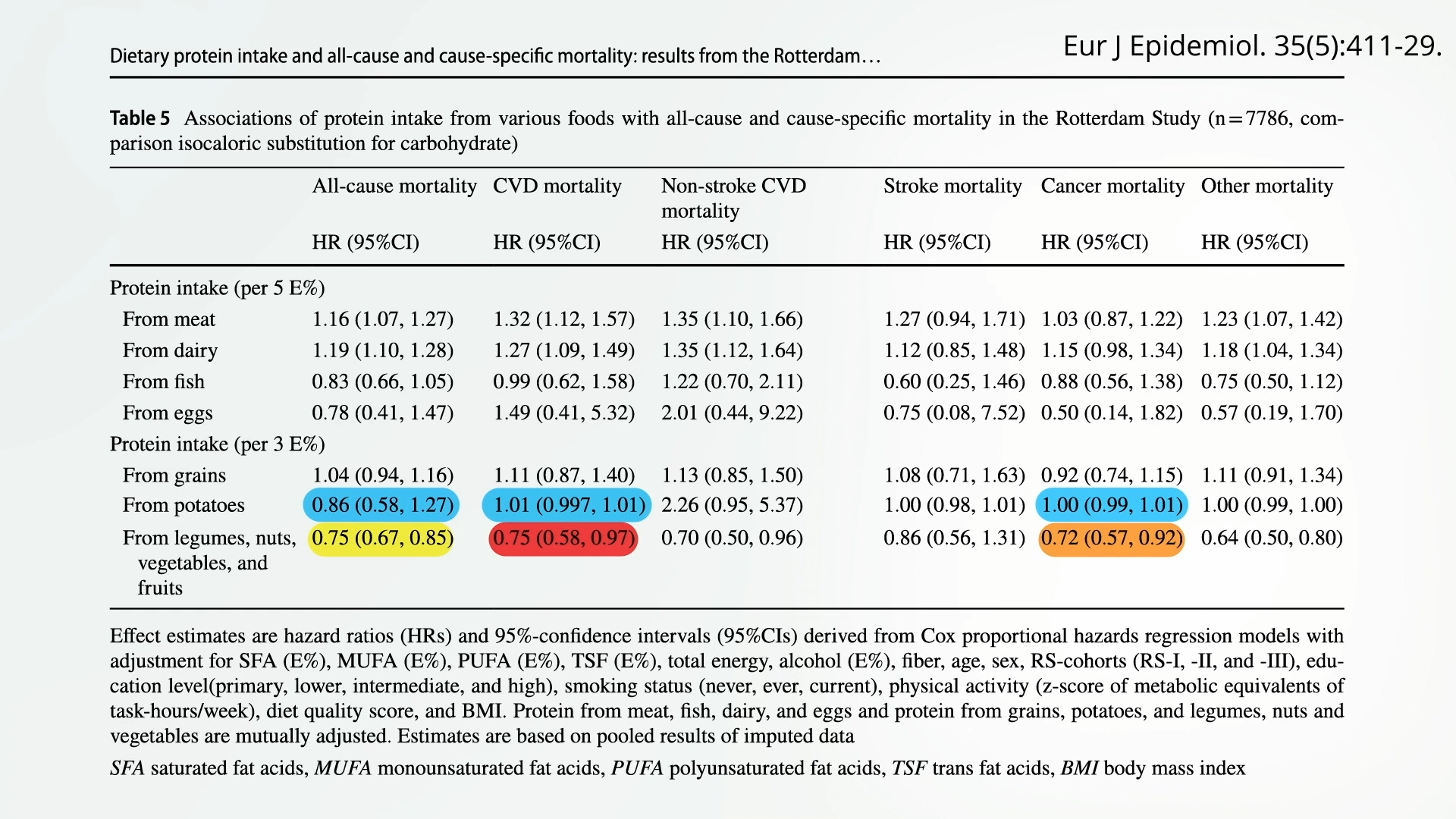
But there may be an opportunity cost to eating white potatoes, since every bite of a potato is a lost opportunity to put something even healthier in your mouth—something that may actively make you live longer.
So, potatoes are kind of “a double-edged sword.” The reason that potato consumption may have just a neutral impact on mortality risk is that all the fiber, vitamin C, and potassium in white potatoes might be counterbalanced by the adverse effects of their high glycemic index. Not only are high glycemic impact diets “robustly associated” with developing type 2 diabetes, but current evidence suggests that this relationship is cause and effect.
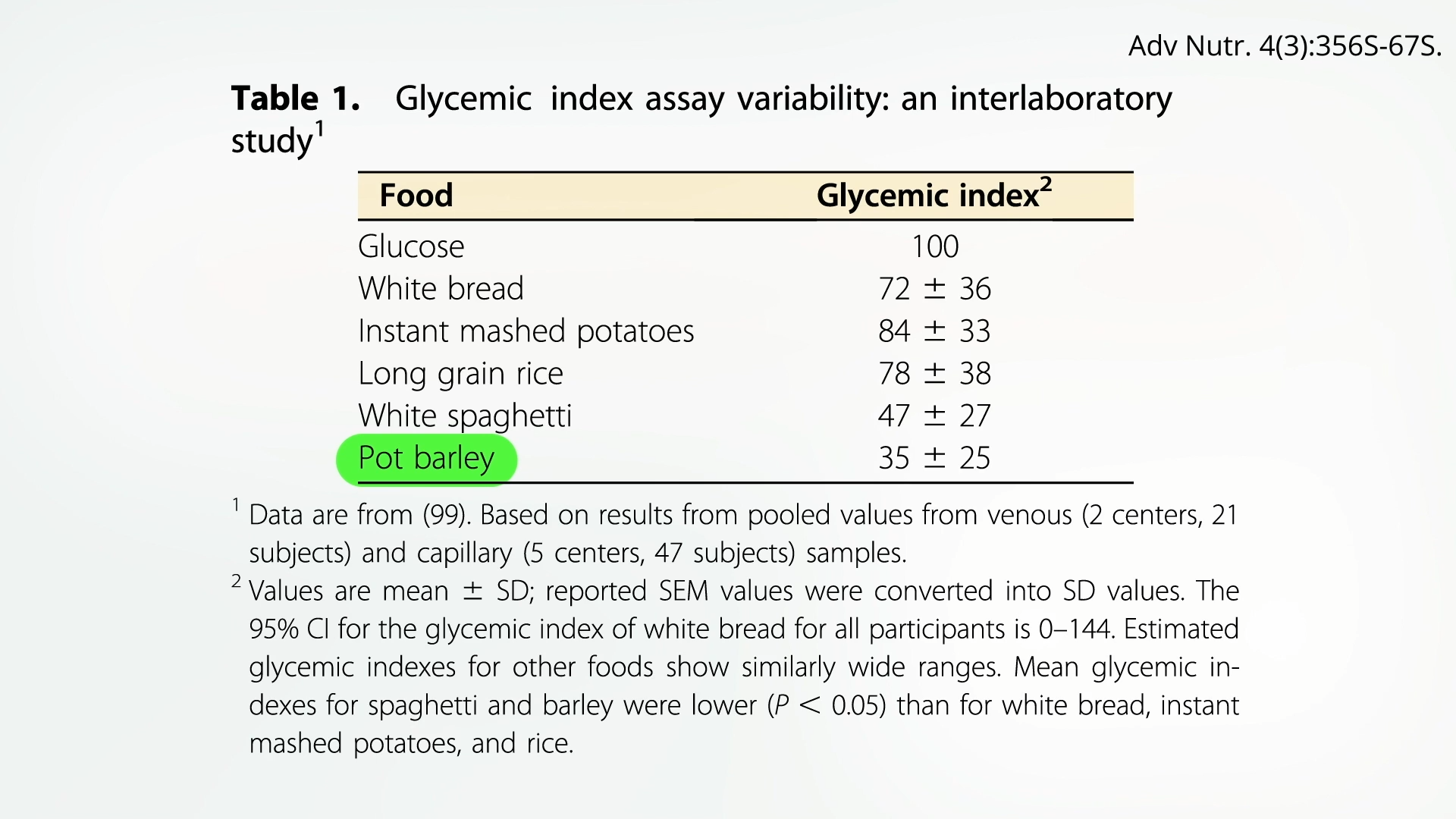
A front group for the potato industry called the Alliance for Potato Research and Education funded a study that found that intake of non-fried potatoes does not affect blood sugar markers, when compared with the likes of Wonder Bread, that is, so that isn’t really saying very much. Foods with a glycemic index (GI) higher than 70 are classified as high-GI foods (high glycemic index foods), and those lower than 55 are low-GI foods. Pure sugar water, for example, is often standardized at 100, and white bread and white potatoes are also way up there as high glycemic index foods. But when you compare them to an intact grain, like barley groats (also known as pot barley), which is a super-low GI food, you can see how refined grains and potatoes are simply no match. Check out the numbers below or at 2:47 in my video.
Is there any way we can have our potatoes and eat them too, by somehow lowering their glycemic index? Well, if you boil potatoes and then put them in the fridge to cool, some of the starch crystallizes into a form that can no longer be broken down by the starch-munching enzymes in your gut, as you can see below and at 3:06 in my video.
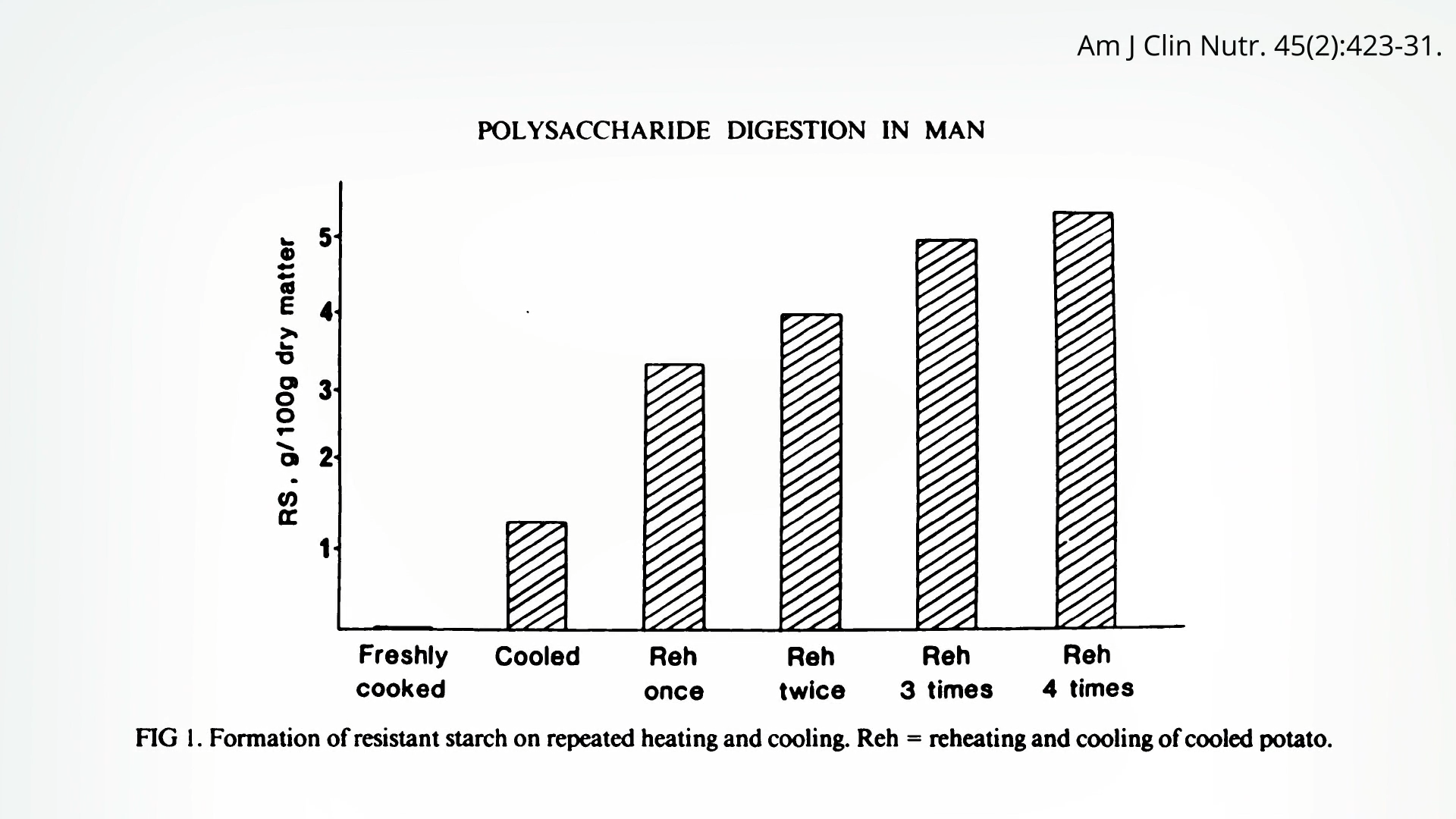
However, the amounts of this so-called resistant starch that are formed are relatively small, making it hard to recommend cold potatoes as a solution. But when put to the test, you actually see a dramatic drop in glycemic index in cold versus hot potatoes, shown below and at 3:23 in my video.
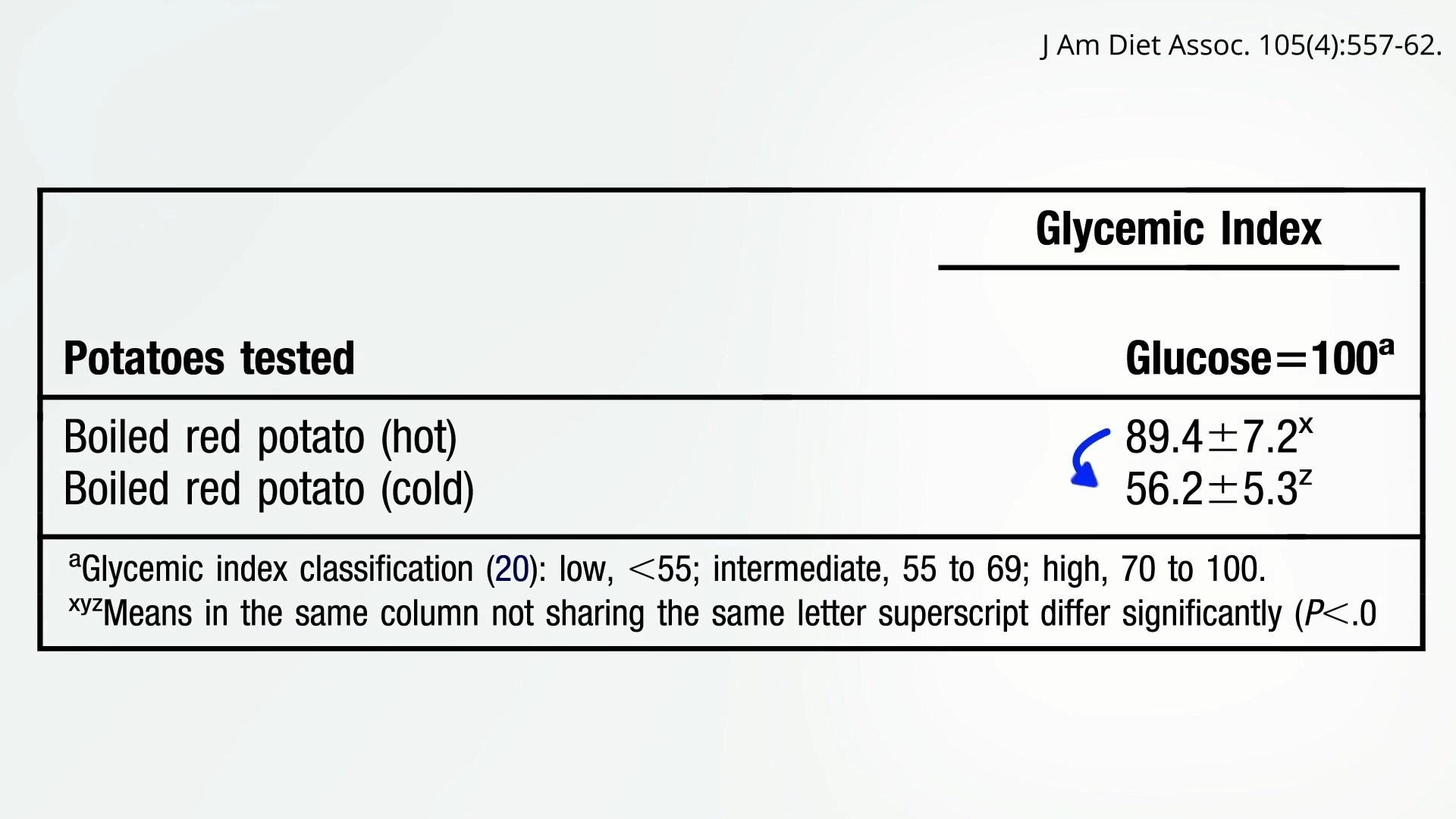
So, by consuming potatoes as potato salad, for instance, you can get nearly a 40% lower glycemic impact. The chilling effect might, therefore, also slow the rate at which the starch is broken down and absorbed. So, people who want to minimize dietary glycemic index may consider precooking potatoes and having them chilled or reheated. The downside of eating potatoes cold is that they might not be as satiating as eating hot potatoes. But you may get the best of both worlds by first cooling them and then reheating them, which is exactly what was done in that famous study I profiled in my book How Not to Diet. The single most satiating food out of the dozens tested was boiled-then-cooled-then-reheated potatoes, as you can see below and at 4:09 in my video.
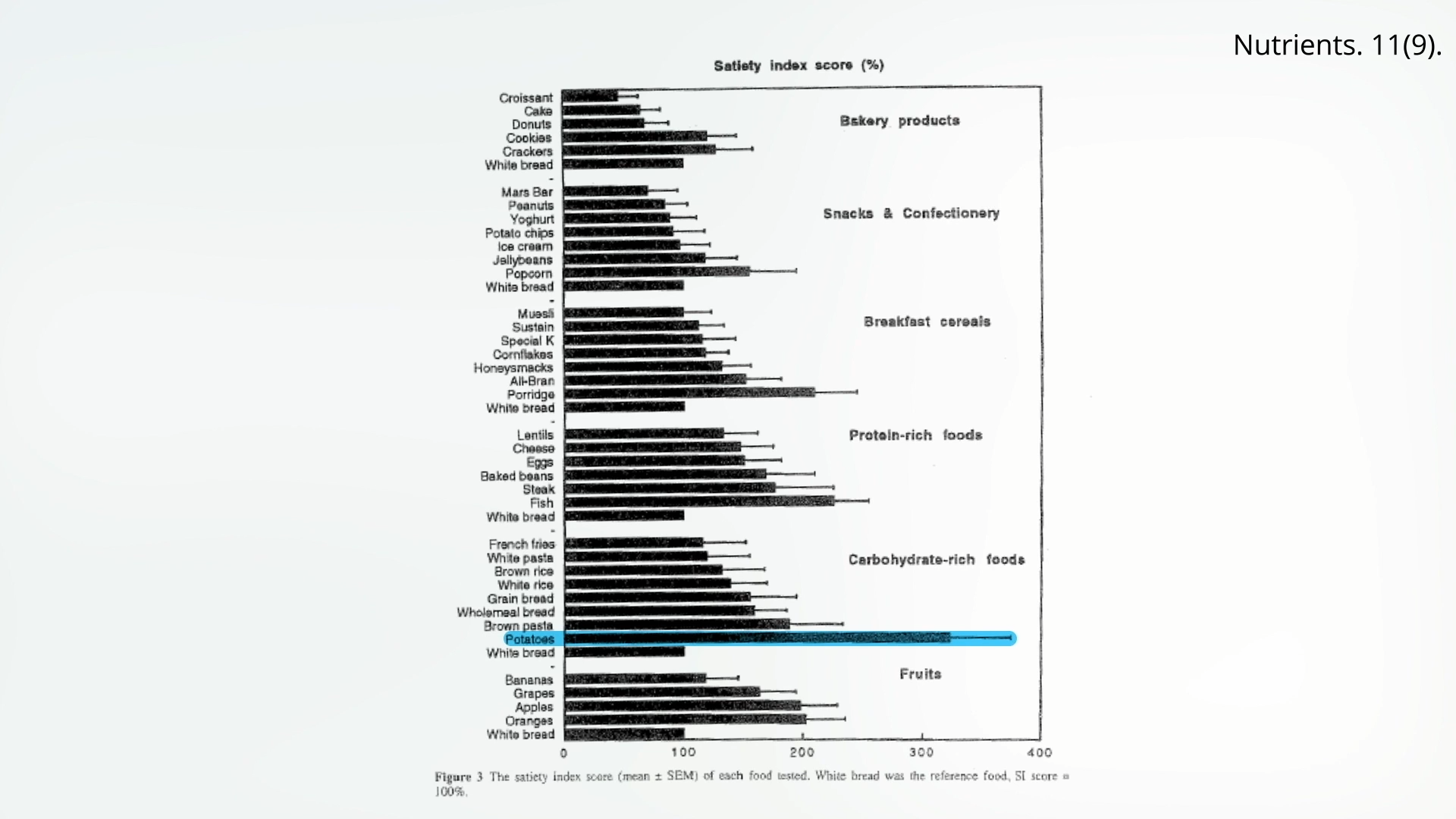
There is actually an appetite-suppressing protein in potatoes called potato protease inhibitor II, but the way you prepare your potatoes makes a difference. Both boiled and mashed potatoes are significantly more satiating than French fries, as shown below and at 4:26 in my video.
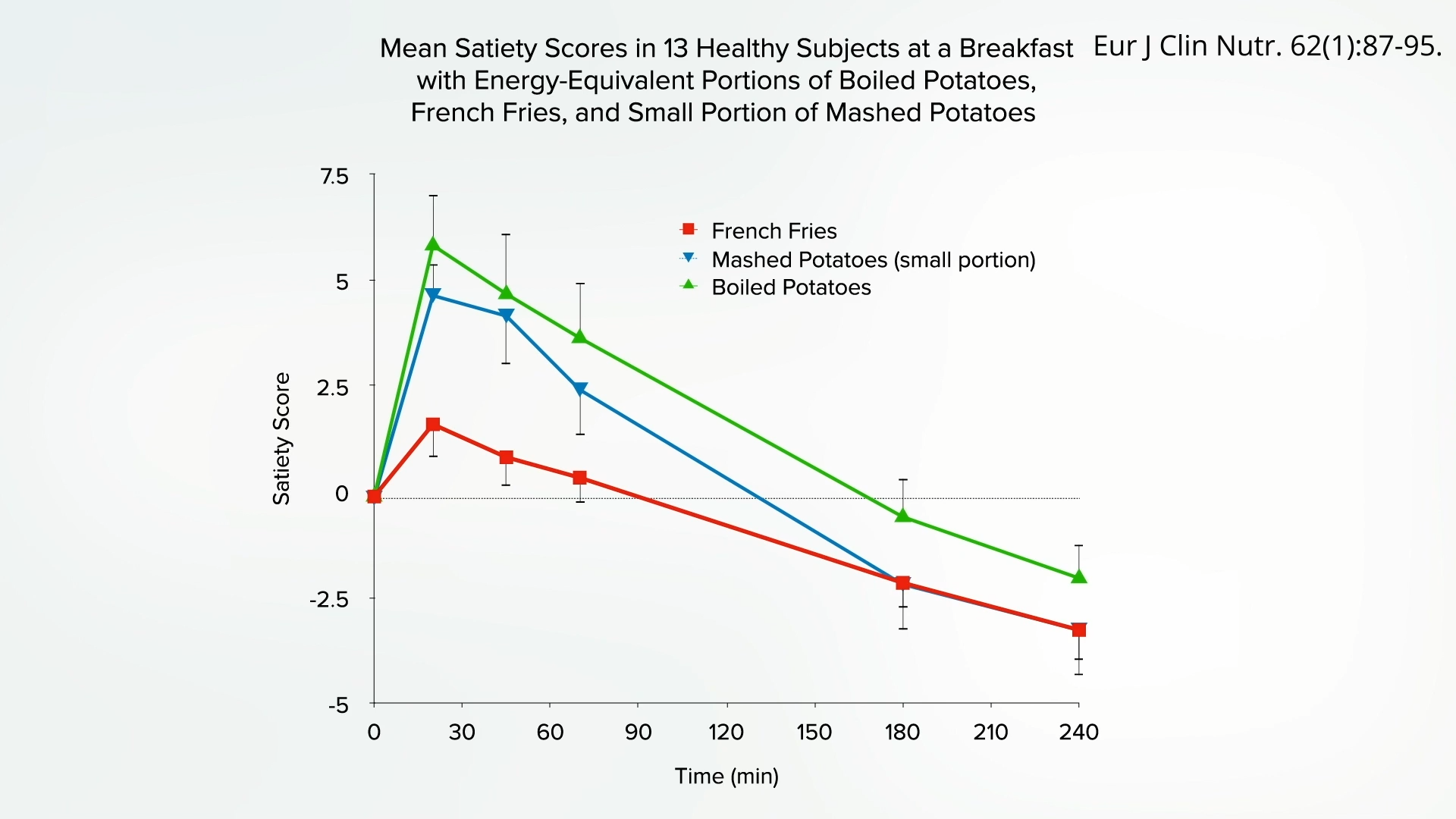
That was for fried French fries, though. What about baked French fries? Folks had a big drop in appetite after eating boiled mashed potatoes, compared to white rice or white pasta, which is right where fried French fries were stuck, as well as baked French fries. So, though baked fries may be your BFF, they’re not very satiating.
Doctor’s Note
Just to be clear, you don’t have to reheat. Chilling is the crucial step to dramatically lower the glycemic index, so you can certainly enjoy a cold potato salad. If you’re trying to control your weight, though, you may want to avoid even baked fries.
This is the third in a five-video series on potatoes. If you missed the first two, see Do Potatoes Increase the Risk of Diabetes? and Do Potatoes Increase the Risk of High Blood Pressure and Death?.
Chilling isn’t the only trick to blunt the glycemic impact. You can also add vinegar, lemon, or broccoli.
Stay tuned for the final two videos in this series: How to Reduce the Glycemic Impact of Potatoes and The Healthiest Type of Potato.
Join the resistance! Check out related posts below.




















.jpg&h=630&w=1200&q=100&v=c0f97a310e&c=1)
.jpg&h=630&w=1200&q=100&v=c0f97a310e&c=1)