Why You Should Keep These Two Lesser-Known Heart Tests On Your Radar
There's more to heart health than LDL and HDL; these are two tests you should ask about.
 Aliver

Image by Geber86 / iStock June 06, 2026 Most people walk out of a routine physical with one number in mind: their LDL. If it looks okay, they assume their heart is fine. But a new study1 suggests that two blood markers almost never tested together may be doing far more damage in combination than either does alone, particularly in adults under 55. For anyone already paying attention to heart health, the findings offer something rare: a plausible explanation for why some people with one of these risk factors seem to do fine, while others don't.
About the study
Researchers enrolled 1,741 people who had experienced their first heart attack at age 55 or younger at a hospital in Tianjin, China.
Participants were followed for just over 19 months, with researchers tracking whether they went on to experience another major heart event (including heart attack, stroke, or cardiovascular death).
The two markers at the center of the study were lipoprotein(a) or Lp(a), a type of cholesterol particle, and homocysteine, a metabolic byproduct that builds up when your body isn't getting enough of certain B vitamins.
Neither is included in a standard cholesterol panel. Lp(a) is highly heritable and largely unaffected by standard cholesterol-lowering drugs.
Homocysteine, by contrast, is directly shaped by diet—specifically, how much folate, B12, and B6 you're getting.
Elevated together, the risk more than triples
When researchers looked at each marker on its own, both were associated with higher risk. People with elevated Lp(a) were about 2.3 times more likely to have a second heart event. Those with elevated homocysteine were about 1.6 times more likely.
When both markers were elevated at the same time, the risk jumped to more than 3.5 times higher. That's well beyond what you'd get by simply adding those two numbers together.
The analysis confirmed this wasn't a statistical fluke. Roughly 45.6% of the combined risk came specifically from the interaction between the two markers, not from either one on its own.
Why this combination is so dangerous
Lp(a) is a modified form of LDL cholesterol with an extra protein attached. It promotes plaque buildup in artery walls and makes blood more prone to clotting.
Standard cholesterol-lowering drugs like statins have little to no effect on it, which is why Lp(a) is increasingly recognized as a major "residual risk" factor, helping explain why some people have heart attacks even when their LDL looks normal.
Elevated homocysteine damages the inner lining of blood vessels and creates conditions that make clotting more likely.
The researchers propose that these two mechanisms converge in a particularly destructive way. Lp(a) destabilizes arterial plaques, while homocysteine injures the vessel wall and promotes clotting.
Together, they may create conditions where plaques are more likely to rupture—and where the resulting clot is more likely to be catastrophic.
The gap in standard screening
Neither Lp(a) nor homocysteine is part of a standard cholesterol panel, and the heart tests most worth knowing about are often the ones a conventional doctor never orders.
Lp(a) has been gaining more attention in cardiology, and some guidelines now recommend testing it at least once in adulthood.
But homocysteine remains largely off the radar in conventional primary care despite being inexpensive to test and directly modifiable through diet and supplementation.
The study proposes a simple "50–15" dual-threshold screening strategy: Lp(a) above 50 mg/dL and homocysteine above 15 μmol/L as the cutoffs for identifying people at elevated combined risk.
If your Lp(a) is high and your homocysteine is also elevated, your risk profile is substantially worse than either number suggests on its own; and one of those two numbers is something you can actually change.
How to lower your homocysteine if your Lp(a) is already high
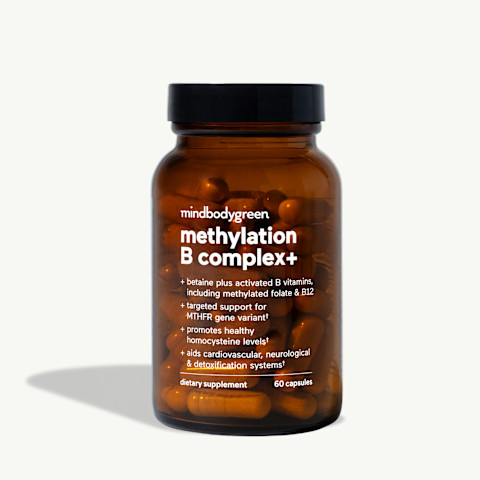
Homocysteine responds to nutritional changes more reliably than almost any other heart health marker. The process your body uses to clear it depends on three key B vitamins:
The study also found that smoking and alcohol use were more common among people in the highest-risk group. Both are known to raise homocysteine levels and independently damage blood vessel health.
Here's what this study practically means for you:
The takeaway
A new study found that elevated Lp(a) and elevated homocysteine together raise the risk of a second major heart event by more than 3.5 times in adults under 55 — with nearly half of that risk coming from the interaction between the two markers, not from either one alone.
Homocysteine is one of the most nutritionally responsive heart health markers there is: folate, B12, and B6 are the primary levers. If you have high Lp(a) and haven't tested your homocysteine, that's the most actionable next step available to you right now.






















.jpg&h=630&w=1200&q=100&v=1a56ad72fe&c=1)