Awakening to Reverence
A Triratna teacher on accessing our innate capacity for reverence and awe The post Awakening to Reverence appeared first on Tricycle: The Buddhist Review.
 MikeTyes
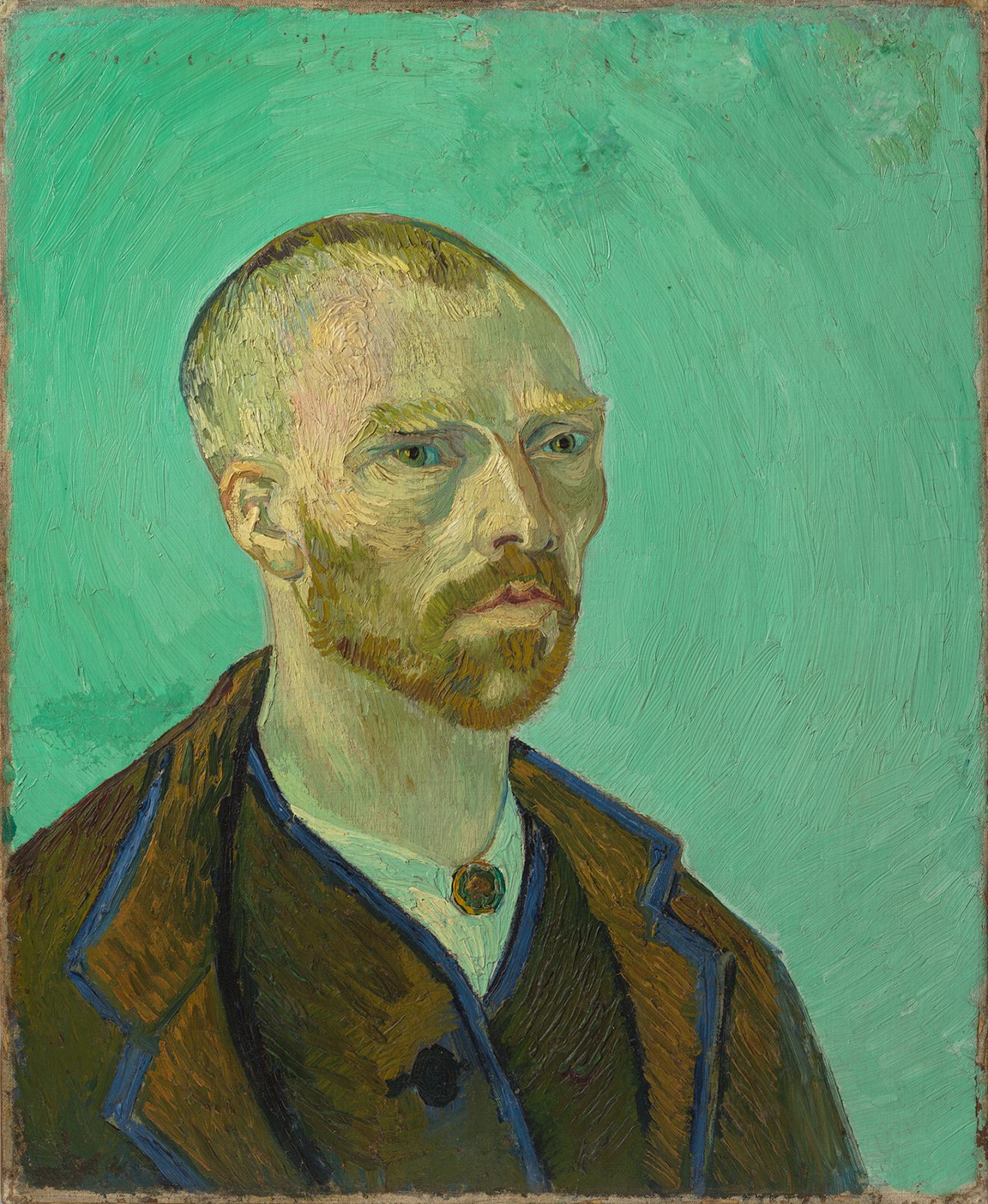
Not long ago, I visited the Harvard Art Museum, which is home to a spectacular self-portrait by Van Gogh. The painting lights up the entire room. As I approached, it captured my attention and seemed to steal the glory from the other paintings that hang there (some of which are masterpieces in their own right by Cézanne, Monet, and Picasso). Van Gogh had originally painted it as a gift for Paul Gauguin who, after their friendship soured, promptly sold it for 300 francs. The painter’s face is set against an ethereal, Veronese green backdrop. It radiates light, fervor, and a fierce human singularity. It imposed itself upon me as an uncapturable phenomenon, like an icon opening onto a spiritual dimension. The painting reveals the clarity and intensity of Van Gogh’s perception; it transfigures the ordinary into the extraordinary and so humbles us with the weight of its inordinate evidence. In flooding us with existential transparency, it thwarts any attempt to frame it, calling forth a reverential gaze.
Reverence is a vital human response, and it enables us to attune to what is truly excellent, to that which uplifts us, and draws us toward what is transcendental—something that we can never fully assimilate or appropriate. Reverence ennobles our modest daily routine, sacralizes the moment, and organizes our world according to a scale of values. Reverence defines our sacred horizon. Without it, we are merely reproductive organisms, genetic transmitters, survival machines. Reverence bubbles up from within like a subterranean spring whenever it encounters the sublime, or even just an intimation of it, purifying and cleansing our perception and ennobling our sense of relation. Yet it is so often stifled, mistrusted, and even derided. It may be dismissed as naive, unduly humble, a glorification of submission. Recognizing, honoring, and refining our primordial capacity for reverence is integral to the Buddhist life; indeed, it is essential to any attempt to connect with the transcendent or sublime. Without reverence, there is no intuition of higher value; there is no glory. Yet, this virtue is seldom valued in today’s deconsecrated world.
Reverence is a vital human response, and it enables us to attune to what is truly excellent, to that which uplifts us, and draws us toward what is transcendental—something that we can never fully assimilate or appropriate.
We may reverence pop stars, politicians, influencers, and models. While these figures may incarnate our highest values to some limited degree, they mostly cannot support the dignity and scope of our reverence. They will inevitably disappoint, even coarsen, our reverential disposition. This may lead us to feel depressed, cynical, and less willing to trust in our reverential impulse in the future. Reverence is no luxury but a necessity for any meaningful human flourishing. If there is no reverence, then there can be no hierarchy of value; perhaps there is no value at all—there are just competing choices that cannot be ranked according to merit but merely selected out of whim or habit. There is no call and no response.
The transcendent can never be discerned by the consuming gaze, which inevitably reduces, flattens, and brutalizes it. Such a gaze trivializes what is uncontainable by squashing its traces into digestible forms. It relegates icons to mere signs. In contrast, reverence aligns itself with the glory of the sacred, allowing its effulgence and grandeur to unfold. It is a mode of perception that makes the sacred manifest—what is transcendent, what opens out into vastness, what is filled with wonder and awe—bringing into awareness that which is supremely and gloriously valuable. Reverence not only renders the sacred perceptible but also shapes our response to it. Through reverence, we offer ourselves in service to the ideal; we become vessels through which the sacred finds expression. In such a state, the sacred is not perceived as an object but is already given as the very context within which perception, meaning, and value arise to astonish and bless us.
My Awakening to Reverence
When I crossed the threshold of a Buddhist center for the very first time, I soon became aware of the customary ritual acts of bowing before the Buddha, offering incense, and performing puja, or “supreme worship.” At first, bowing before a statue was both awkward and compelling. While I was estranged from my reverential sensibility, I nevertheless felt summoned. In part, the estrangement was a hangover from having attended church as a child; far from discerning a sacred presence there, I had instead been haunted by the absence of the sacred. The church carried a lingering scent of elsewhere, but there was no bridge, no opening, no trace that led to any elsewhere. The way was blocked. I felt clumsy, self-conscious; my gestures of reverence felt bogus, directionless.
Soon after I became a regular at the Leeds Buddhist Centre, I was gifted my first buddha image by Becky, a fellow philosophy student. It was a small, brass figure in the style of the hunched Kamakura Buddha. Following the example of some of my new Buddhist friends, I took the opportunity to create my first personal shrine in my bedroom. I draped a satin cloth over a cardboard box and arranged the Buddha at the center of several other valued items now long forgotten. I practiced bowing before this image, although I admit that I felt a bit phony. While I cherished and reverenced this image as a manifestation of the sacred, I had only the haziest intuition of what that sacred signified and how it would remake my life horizon.
A couple of years later, as part of my preparation for ordination into the Triratna Buddhist Order, I took up the “going for refuge and prostration practice.” This devotional exercise consists in visualizing a “refuge tree”—a symbolic representation of sacred values and lineage—and then physically prostrating before the imagined scene. Later, through the medium of light, one absorbs the blessings from all the revered figures on the tree. Ideally, one completes 100,000 prostrations, though I think I still haven’t reached that number. In undertaking this practice, I was following centuries of tradition within Tibetan Buddhism, since the going for refuge and prostration practice is one of its mula yogas, or “root practices.” In the first instance, I performed it daily for around two years, mostly with my roommates Arthapriya and Priyavadita. But, far from feeling reverence, I often felt resistance, irritation, and even boredom. Yet the practice worked on me—worked underground—gradually redirecting my volition, steering me toward an encounter with the three jewels, and shaping my response to them.
Much later, in 2016, I was on an ordination retreat near Alicante, Spain, during which I was blessed to ordain three men into the Triratna Buddhist Order. As part of the retreat’s ritual structure, after reciting the standard “Salutation to the three jewels,” we performed the panchang pranam, the “fivepoint salutation,” which is a kind of prostration in which one kneels on the floor and touches the forehead and palms to the ground three times. This is the standard way to show reverence and respect in India—even to parents or teachers—but it goes quite a bit beyond a simple bow. I resolved to take this up as a practice, not just during the retreat itself but as part of my daily routine. When I carry out the panchang pranam, at times I feel clumsy, self-conscious, and even contrived. I ask myself: Do I really mean this? What am I bowing to anyway? Isn’t this just a kind of performance—a show to make others think that I am reverent? Yet I keep doing it. It feels as though a stubborn resistance is slowly breaking down, melting away; a certain distance is closing, and my capacity to connect with what is worthy of reverence is closer to hand. My cynicism is starved of its power, worn down by the persistence of this reverent gesture. It wears away my pride, my clinging to self-power, and, in moments, I render myself. It has given me a language with which to intuit the transcendent.
Reverence in Buddhism
We have an innate capacity for admiration, an impulse to look upward. We intuitively respond to what calls us to service, what seems worthy, noble, and exalted. This is a capacity we should treasure and refine rather than dismiss or repress, since it expresses our urge to reach toward what is of infinite value, or even to allow what is of infinite value to reach toward us.
Newcomers are sometimes surprised to see Buddhists engaging in acts of reverence, as they don’t regard Buddhism as a “religion” and may associate such acts with blind belief, and perhaps even with subservience. What are we reverencing and why?
Most obviously, we are reverencing the Buddha: the pathfinder, the exemplar, and the guide who shows the way. The Buddha incarnates the maximum possibilities of human existence: the possibility of enlightenment. What the Buddha attained, we too can attain; we can become buddhas. Reverence is the means by which we come into relationship with this possibility and begin to close the gap between it and our present consciousness.
Reverence is integral to the Buddhist life. It affords a language with which to intuit the sacred. While we might assume that the more enlightened a being becomes, the less need there is to express reverence, the opposite is actually true. This is confirmed in various scriptures where the more “advanced” spiritual beings are characterized by a greater impulse and capacity for reverence. For instance, in the Larger Pure Land Sutra, the great bodhisattva Dharmakara—who would become Amitabha Buddha—vows that, in his Pure Land, beings reborn there will be able to honor all buddhas everywhere and at all times, traveling freely across innumerable worlds to make offerings to them.
Reverence is integral to the Buddhist life. It affords a language with which to intuit the sacred.
The Buddha himself stressed the importance of reverence, valuing its ritual embodiment in devotional acts. A pivotal discourse in the Pali canon reveals how central reverence is in the Buddhist cosmovision. In the Garava Sutta, we meet the Buddha still absorbing the momentous insights of his spiritual awakening. As he reflects on what he has seen and understood, the Buddha muses: “One experiences suffering if dwelling without reverence or deference.” The word translated here as “suffering” is dukkha, which is sometimes translated as “dissatisfaction” or even “lack.” The term translated as “reverence” is garava, which can also mean “admiration,” “amazement,” and “delight”—the delight we take in the existence of others who are more elevated or superior to ourselves in creative ability or spiritual attainment. It bears comparison with other important terms such as vandana (“salutation”) and puja (“worship”). These attitudes express skillful emotion connected with coming into relation with what is worthy, what is magnificent, embodying our sensitivity to values beyond the mundane self.
The term translated above as “deference” is patissa, which comes from a root connected with listening or hearing. It signifies paying careful attention to someone’s counsel, most notably within the teacher–disciple relationship.
According to the Buddha, to live without reverence and deference is to invite suffering. Why is this so? In part, this suffering arises because living without reverence implies recognizing nothing beyond ourselves—no point of reference higher than our own egocentric will. We ourselves are, so to speak, as good as it gets: Nothing more refined, sublime, or transcendent is admissible. What a terrifying thought! Such a view of the world may satisfy an extreme narcissist, but, for the great majority of humanity, it is profoundly insufficient. Sangharakshita puts it like this: “To live without looking up to anyone represents an impoverishment of one’s emotional life and, indeed, an impairment of one’s very humanity.”
We need something to look up to, a transcendent orientation, a point of reference that raises us up and inspires us to actualize our deepest aspirations. Without this, we risk feeling not just empty but even depressed. We know that we are not, at least not yet, the most noble beings possible. We know that it is possible to develop admirable qualities and carry out noble actions that we don’t yet exemplify. Thus garava and patissa are words that underline our fundamental capacity to recognize and respond to more complete and refined manifestations of our highest ideals.
When lived with integrity, a dharma life will embody the principle of reverence or devotion. This doesn’t necessarily mean that we’re constantly performing pujas or prostrating ourselves in the direction of Bodhgaya (though these practices may indeed be valuable ways to express our reverence). Instead, reverence may be expressed in simple, everyday actions: cleaning the shrine room, making tea for a respected friend, offering a small gift to a distinguished visitor. Our whole practice—including the very act of meditation—becomes a quiet offering of attention and presence.
Mandala of Reverence
We might carry out a spiritual inventory of reverence. How and toward what is reverence expressed in our own lives? This will enable us to see our most prized values with greater clarity. We might usefully ask ourselves: Are we reverencing something mundane, an improper focus for our most sacred praise (what theologian Paul Tillich calls idolatry)? Or are we reverencing something that raises us up to itself, that inspires us toward self-transcendence, that properly corresponds to our ultimate concern? In the words of Henry Corbin:
Idolatry consists in immobilizing oneself before an idol because one sees it as opaque, because one is incapable of discerning in it the hidden invitation that it offers to go beyond it. Hence, the opposite of idolatry . . . would rather consist in rendering the idol transparent to the light invested in it. In short, it means transmuting the idol into an icon.
We might even create a kind of mandala of reverence. A mandala, we could say, is a map of value. What we place in the center tells us what we truly value, or, in other words, what we go for refuge to. Through such an exercise, we may discover that the values we have chosen to prioritize are rather mundane ones. We may differentiate between false or limited refuges and the ultimate, true refuge. For Buddhism, the most complete refuge is the three jewels, which function as our transcendental object. Consequently, if the three jewels are not at the center of our mandala of reverence, we are engaged in a form of “idolatry”—that is to say, settling on a limited refuge. To that extent, we remain alienated from our ultimate concern and thus from the true significance of our lives.
Through devotional acts and attitudes directed toward the three jewels, we can restore and even celebrate our connection with our ultimate concern and so allow that ultimate concern to bless our existence. To go for refuge to the Buddha means to comport ourselves toward the Buddha as a focus of devotion, inspiration, and aspiration. It means to convert the Buddha image into an icon. It means to commit ourselves to minimizing, and even closing, the breach between our mind and the mind of the Buddha. Ultimately, this means to become the Buddha. Through reverence, I permit the transcendent to reconstitute me. I give way to the weight of its glory, which fills me with blessing.
♦
From The Possibility of Amazement: Awakening the Five Spiritual Faculties by Nagapriya © 2026. Reprinted with permission from Windhorse Publications.



























.jpg&h=630&w=1200&q=100&v=c0f97a310e&c=1)