Best of the Haiku Challenge (May 2026)
Announcing the winning poems from Tricycle’s monthly challenge The post Best of the Haiku Challenge (May 2026) appeared first on Tricycle: The Buddhist Review.
 FrankLin
Announcing the winning poems from Tricycle’s monthly challenge
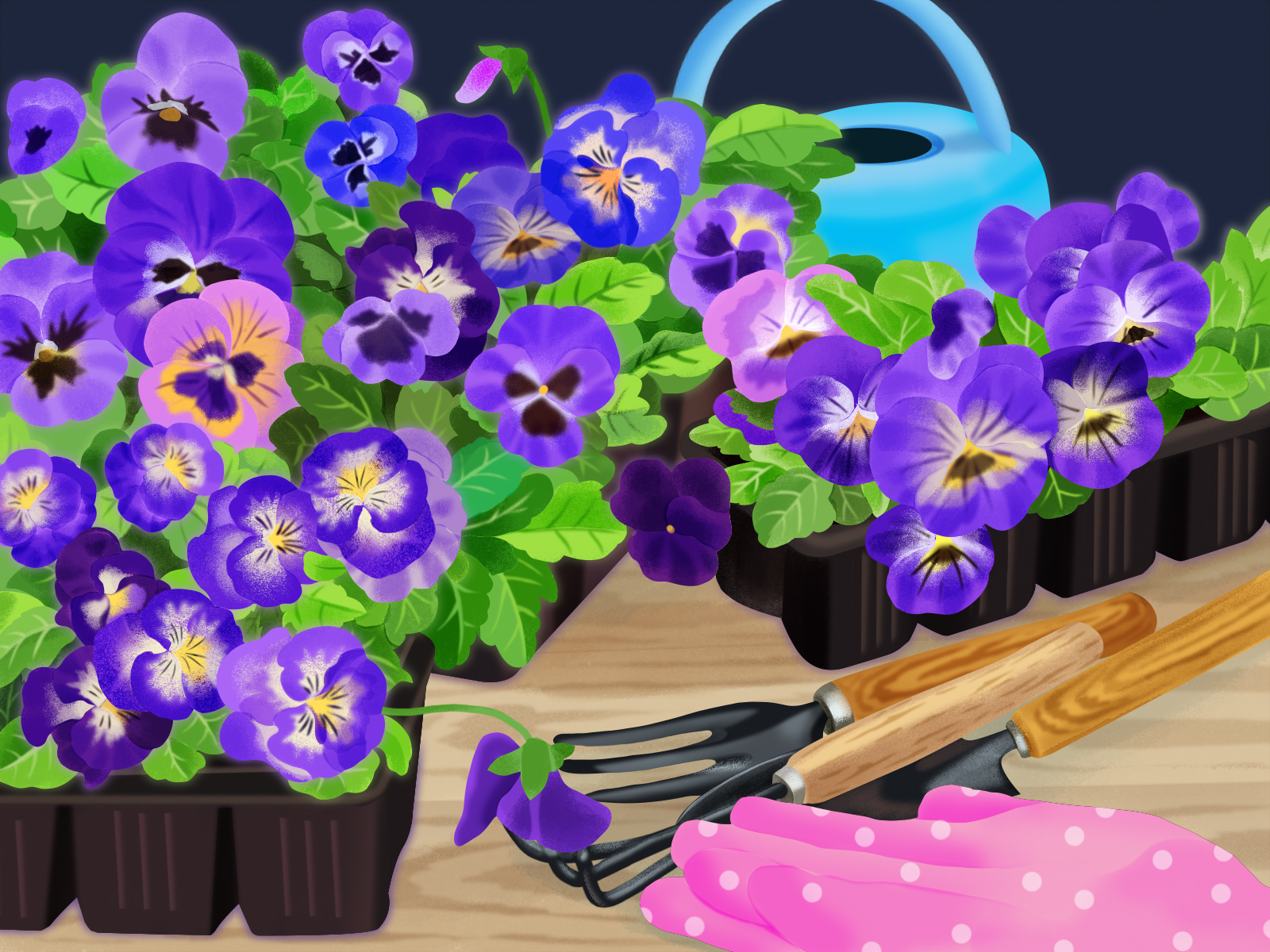
 Illustration by Jing Li
Because they appear in coldest, darkest months of the year, winter stars have a remote, austere beauty that makes us contemplate the big themes of literature—like love and loss, birth and death, and a longing for the eternal. Not surprisingly, last month’s winning and honorable mention haiku all concerned the passage of time.
Sari Grandstaff explores the dark history of two cultures in his poem about mountain ranges connected by “the same winter star.” Valerie Rosenfeld captures the wonder of starlight “born many far-off kalpas past” finally reaching him on a winter night Benjamin Bläsi realizes that nothing endures forever—even the winter stars that go on shining “long after they’re gone.”Congratulations to all! To read additional poems of merit from recent months, visit our Tricycle Haiku Challenge group on Facebook.
You can submit a haiku for the current challenge here.
Spring Season Word: Violet
WINNER:
abandoned drain pipe
except for the violets
and the graffiti
— Sari Grandstaff
HONORABLE MENTIONS:
a few months ago
it was as if violets
never existed
— Valerie Rosenfeld
city violets:
in a wild corner they gleam
with sunshine and dew
— Benjamin Bläsi
◆
You can find more on May’s season word, as well as relevant haiku tips, in last month’s challenge below:
Spring season word: “Violet”
to make that color
you’d think its roots were deeper
common violet
Submit as many haiku as you wish that include the season word “violet.” Your poems must be written in three lines of 5, 7, and 5 syllables, respectively, and should focus on a single moment of time happening now.
Be straightforward in your description and try to limit your subject matter. Haiku are nearly always better when they don’t have too many ideas or images. So make your focus the season word* and try to stay close to that.
*REMEMBER: To qualify for the challenge, your haiku must be written in 5-7-5 syllables and include the word “violet.”
Haiku Tip: Join the Great Reality!
To master haiku is to live so fully within its two basic conventions that they become the principal imaginative endeavor of our lives. It means that we live, eat, breathe, sleep, work, and eventually die inside of those conventions, using them to express every aspect of our experience.
The first convention of haiku, the fixed 5-7-5 syllable pattern, reminds us that all things express themselves through form. A wild rose has five petals. The heart has four chambers. The primary colors, three in number, combine to make all of the rest. There is infinite variety in Nature, but all of it fits into the greater pattern of the whole. Everything has a form.
Given time and practice, the 5-7-5 syllable form enters so deeply into our consciousness it transforms our consciousness, giving us “a mind to follow Nature and return to Nature,” which Bashō claimed was the secret of all great art.
The second convention, the use of season words, binds us to the wisdom of Nature. Just as all beings exist within the limits established by their form, they exist in relationship to all other beings because of Time. Nothing is static. What goes up comes down. Whatever eats is eaten.
For the haiku poet, the whole universe is constantly becoming—forever dying and being reborn. The season words anchor us in that Great Reality, showing us that we belong to it, and showing us where to belong.
There is much more that we can say about mastering haiku, but this is the pith of it. It takes a lifetime. Or many lifetimes. So it’s best to be patient and stay focused on the basics. The rest will come as it will.
A word about violets: First of all, vi•o•let has three syllables. These are spoken so quickly and so close together that the ear sometimes hears them as one. Violets bloom from March through June in most temperate regions of the Northern Hemisphere, but are found in Australia, New Zealand, and the Andes as well. In Haiku World: An International Poetry Almanac, William J. Higginson observes that violets range in color from white to yellow to blue, but notes that “the word ‘violet’ will always be taken to mean one of the many blue or ‘violet-colored’ violets unless something else is specified.”
One of the most traditional signs of spring, violets have an unusually broad range of symbolic meanings. Because they are small in size and grow close to the ground, they have often been associated with humility, while their return each spring connects them with faithfulness and fidelity. Additionally, they may symbolize transformation, transcendence, tranquility, grief, sacrifice, or peace. Violets were used in love potions and sleeping potions and in creation of many perfumes. Because they are edible, they are often added to salads. Violets are a natural source of Vitamins A and C.

Thank you for subscribing to Tricycle! As a nonprofit, we depend on readers like you to keep Buddhist teachings and practices widely available.