Blood Test That Screens For Multiple Cancers Shows Promise In 36K Person Trial
Fair warning: this does NOT replace your colonoscopy (yet).
 JimMin

Image by Victor Torres / Stocksy October 01, 2026 The idea of a blood test that can detect dozens of possible cancers has been circling the medical world for years, but it has been hard to know how much of it was was real versus hype. Now researchers have published results 1from nearly 36,000 adults who actually took one of these tests as part of routine care, and the numbers give a much clearer sense of what the technology can and cannot do today. Here, we break down what this possibly revolutionary blood actually tells us.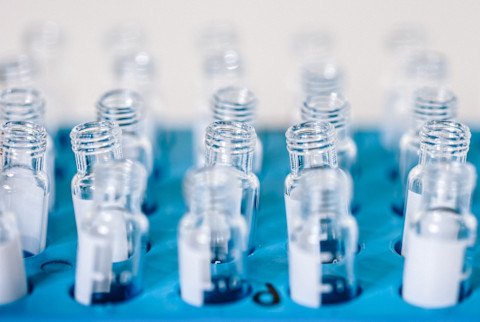
About the study
Most cancers found in the United States are not picked up by routine screening because only a handful of cancer types have a recommended screening test at all. That gap is why researchers have been chasing a single test that could detect several cancers at once. This trial measured how well one such screening, the Galleri multi-cancer early detection test, performs in the kind of people who would realistically use it.
Investigators enrolled 35,878 adults age 50 and older across 32 clinical sites in the U.S. and Canada, all of whom had no signs pointing to cancer and had not been diagnosed or treated for cancer in the prior three years. Each gave a blood sample, which the test then screened stray bits of DNA floating in the blood for chemical patterns that tend to show up when cancer cells are present.
A positive result also came with a prediction of where in the body the signal was coming from, which told doctors where to look first. All participants were followed for 12 months.
About 6 in 10 positive results turned out to be cancer
Among the 32,007 participants with a full year of follow-up, 287 got a positive result, and 173 of them were diagnosed with cancer. That works out to 60.3% of positive results being accurate, a rate the study authors note is higher than what single-cancer screening tests typically deliver.
On the flip side, the test correctly came back negative for 99.64% of people who did not have cancer, so false alarms were rare. Overall, cancer turned up in 0.54% of everyone tested, which amounts to roughly one cancer case for every 185 people screened.
The test was far from perfect at catching all cancers, though. When including all cancer types, the blood test only picked up 39.3% of the cancers diagnosed during the follow-up year. It performed best when catching the most deadly cancers, like pancreatic, liver, colorectal, stomach, and reproductive cancers, catching 69.8% of those. It missed many breast and prostate cancers, but these cancers already have robust screening protocols established.
Most of the cancers it caught were still early
Of the new cancers the blood test found, 53% were stage I or II, and 70.9% were stage I, II, or III, meaning treatment towards full remission was on the table.
The bigger story may be which cancers showed up. Nearly three quarters of the cancers the test detected were types with no widely recommended screening test, including cancers of the liver, pancreas, blood, and head and neck. Adding the blood test on top of standard recommended screening, which includes tests like colonoscopies and mammograms, roughly tripled the number of cancers caught by screening in this group.
Fewer than 1% of participants faced an invasive follow-up
A common worry about broad screening is the cascade of scans, biopsies, procedures, and fear it can trigger for people who turn out to be fine.
However, the study found just 0.6% of all participants had an invasive procedure after a positive result, and about 9 in 10 of those procedures were nonsurgical, such as an endoscopy or a biopsy. Most follow-up testing was noninvasive.
For participants who did have cancer, it took a median of 37 days from getting their result to a confirmed diagnosis. Anxiety rose briefly among people whose positive result turned out to be cancer, then settled back to where it started by the one-year mark.
What to ask before you consider one of these tests
This test is not a substitute for your mammogram, colonoscopy, pap smear, or any other screening your doctor recommends—the study's own missed cases make that clear. A negative result also is not a clean bill of health, only a sign that no signal was detected on that day. The researchers say trials with longer follow-up are still necessary before anyone can say for certain whether these tests help people live longer.
However, if you are 50 or older and concerned about cancer, it may be worth bringing up a multi-cancer blood screening at your next physical.
That fits into a bigger pattern: bloodwork can reveal signs of disease long before symptoms start, which is part of why researchers are so interested in this category of testing.
The takeaway
For now, the multi-cancer blood test is a promising add-on, and the strongest predictors of cancer remain with the screenings already on your chart. If you are interested in this test, keep your existing screening appointments, and treat this technology as a conversation to start with your doctor. This way, you can know what makes most sense for your risk profile before the next testing advancement hits the headlines.