Best of the Haiku Challenge (August 2026)
Announcing the winning poems from Tricycle’s monthly challenge The post Best of the Haiku Challenge (August 2026) appeared first on Tricycle: The Buddhist Review.
 KickT
KickT
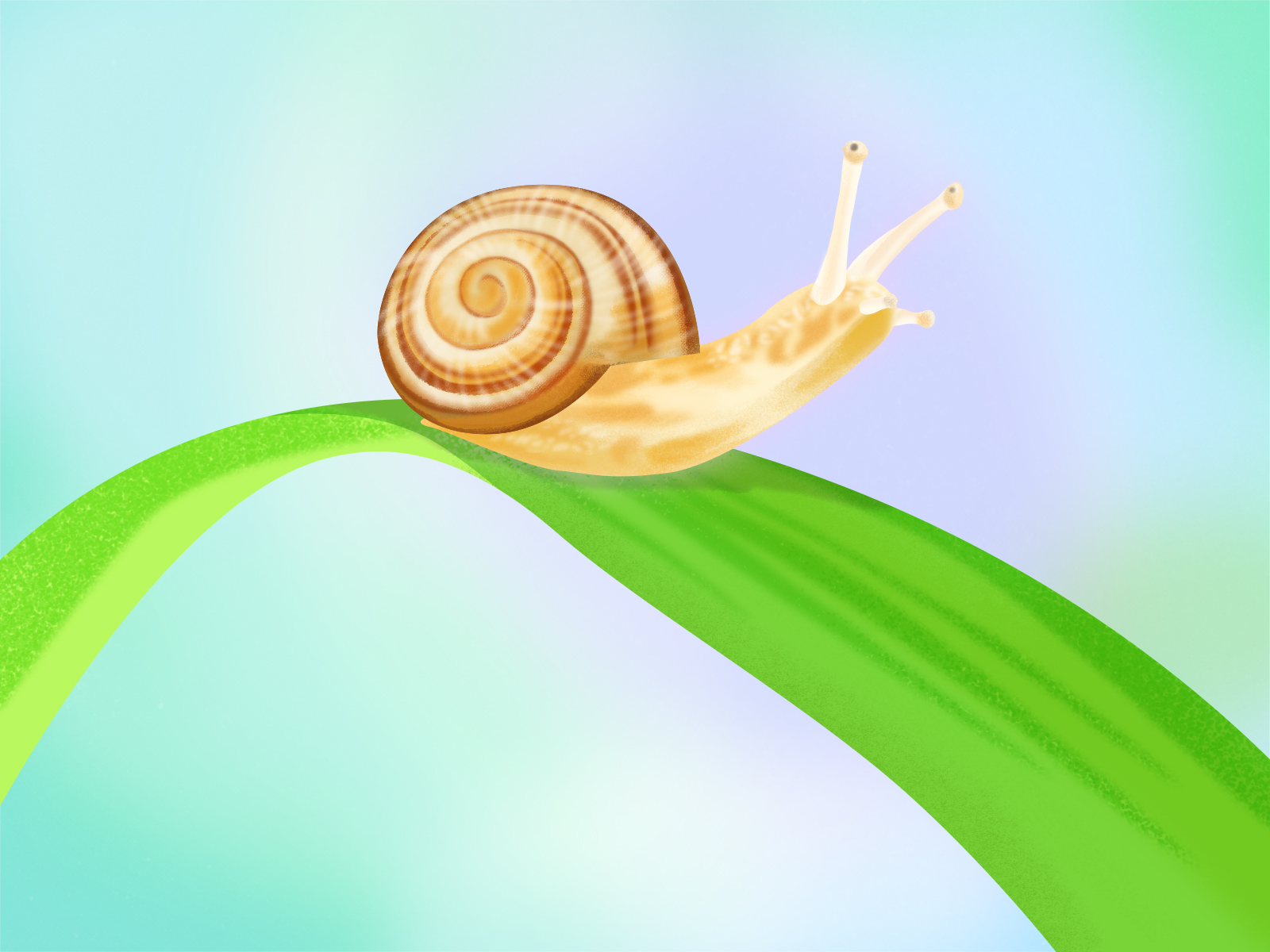
“Snails” are a favorite subject of classical haiku, where they are often anthropomorphized as comical figures. But they may also be used to treat serious subjects, like solitude, confinement during an illness, or the pathos we feel for creatures who are vulnerable to harm because of their smallness or the fragility of their bodies. Each of last month’s winning and honorable mention haiku explored the darker, moodier side of the theme.
Stevie Rosenfeld offers an avant-garde, surrealist portrait of a snail that “becomes a mountain” within the solitude of her shell. Molly Skeen’s snail makes her way through this world with feelers that sense light and dark but are “at home with either.” Monica Kakkar shares a moment of stillness with the snail on her window, both of them “solitary” inside their shells.Congratulations to all! To read additional poems of merit from recent months, visit our Tricycle Haiku Challenge group on Facebook.
You can submit a haiku for the current challenge here.
Summer Season Word: Snail
WINNER:
deep inside her shell
the snail becomes a mountain
and lets the sun go
— Stevie Rosenfeld
The editors of magazines devoted to haiku in the West have been reluctant to publish poems like last month’s winning haiku, although such verses are not uncommon in Japan. Avant-garde or surrealist haiku have been popular in Japanese poetry for almost a century.
Let’s begin by considering a well-known example.
plum trees in blossom
blue sharks arrive everywhere
throughout the garden
— Kaneko Tōta (1919-2018)
This is one of the most famous modern haiku—one that can be recited from memory by most haiku lovers in Japan. It was selected in 2018 by the poet and critic Ozawa Minoru for inclusion in his anthology WELL-VERSED: Exploring Modern Japanese Haiku as the poem most representative of Tōta’s style. Minoru writes:
A surreal, fantastic scene. When republishing this poem, the poet described it as “a poem about the great joy of spring’s arrival, and on first reading it does seem to be quite cheerful in tone.
However, when originally published in “Blue Sharks,” this poem was placed between two others which add deep shadows to the image of the shark in spring. Those two poems are: “The spirit/of a blue shark in the mist/stabs me,” in which the spirit of a shark attacks him; and “The blue shark/turns over, shows its stomach/at the house where I was born,” in which a shark turns over on its back, as sharks do before snatching their prey.
I can’t help thinking that the blue shark showing its stomach might be about to devour the flesh of fallen soldiers. Tōta was a soldier during World War II and wrote about his experience in the fighting at Truk Atoll (Chuuk Lagoon). You can read the blue sharks who visit his garden in spring as the souls of his comrades who died there and never returned.
It is interesting to note that Tōta’s shark poem has often been cited in English language haiku journals where, however, we find few poems remotely like it in terms of style or content.
Tōta himself often complained that haiku had become too tame. His ideal poet was an ara bompu—a Buddhist term he used to describe his favorite poet Kobayashi Issa (1763-1828), which he translated as “wild, raw, ordinary human being.”
Last month’s winner offers a nod to Issa’s famous haiku inviting a snail to climb Mt. Fuji (“but slowly, slowly”), while using the season word in a decidedly unconventional way. The snail doesn’t climb the mountain, she becomes the mountain “deep inside her shell.”
The poet has given us much to ponder here. About solitude and stillness. About interiority. About the depth of an inner resolve.
The last line expresses a forlornness I have rarely seen equaled in a modern haiku. To “let the sun go” is to let the world go. To let life go. But maybe this, too, is meant to express a strong resolve. The snail in the poem is like those mountain recluses we read about in the Buddhist folk literature of the Himalayas—hermits who undergo the voluntary immurement of having themselves walled up inside of a cave.
I sat with this poem for a full week before I felt I understood it, because it was so fresh and original, and such poems are always more difficult to write about. But I’m glad I waited. After seven days of thinking about it, it finally occurred to me that, whatever else it might mean, the poem might also describe a fossil—a snail that had quite literally turned to stone inside a mountain . . . “and let the sun go.”
Presumably, this would have happened millions of years ago—which adds considerable depth to an already deep poem.
HONORABLE MENTIONS:
the snail makes its way
feelers sensing light and dark
at home with either
— Molly Skeen
sharing the stillness
on both sides of the window . . .
solitary snails
— Monica Kakkar
◆
You can find more on August’s season word, as well as relevant haiku tips, in last month’s challenge below:
Summer season word: “Snail”
watch—you’ll see moonbeams
spiral for the fun of it
on the wet snail’s shell
— Caroline LeBlanc
Grammatical imperatives like “Look!” or “Watch!” rarely appear in haiku. Haiku are already biased toward direct, close observation, and so such words are thought to be redundant. But there are exceptions. Here the poet is directing our attention toward something the eye might miss if not for the imagination. It is one thing to see the moonlight reflecting off a snail’s shell and quite another to watch it “spiral for the fun of it.” Only then do we experience the moonlight as alive. — Clark Strand
Submit as many haiku as you wish that include the season word “snail.” Your poems must be written in three lines of 5, 7, and 5 syllables, respectively, and should focus on a single moment of time happening now.
Be straightforward in your description and try to limit your subject matter. Haiku are nearly always better when they don’t have too many ideas or images. So make your focus the season word* and try to stay close to that.
*REMEMBER: To qualify for the challenge, your haiku must be written in 5-7-5 syllables and include the word “snail.”
Haiku Tip: Keep It Light!
Lightness is a virtue in haiku. It has to be. If we try to say something too serious in so short a poem, it will come out sounding ponderous, pretentious, or forced. And yet, paradoxically, saying something serious is often easy, provided we don’t try too hard.
In haiku we learn to say difficult things simply, using seventeen syllables and a season word. If a thing is true, it can be stated in a haiku. For haiku poets, that is our primary article of faith. It’s what gives us the confidence to tackle virtually any subject—the knowledge that, in observing the 17-syllable limit, we will be able to winnow out what is distracting or evasive and get to the pith of what we have to say.
In haiku, lightness and humor are closely connected. Most haiku humor is lighthearted. That is why the Japanese characters for haiku (俳句) are sometimes translated as “humorous verse” and sometimes as “light verse.” In haiku, lightness and humor are often the same.
But a word about not trying too hard. It doesn’t mean we don’t struggle to get at the truth we want to convey. It means that we handle that truth lightly . . . simply . . . even easily. At a certain point in our quest to get the right poem, we will find ourselves relaxing and breathing a little more evenly. Whatever strain we felt before will dissipate and the syllables will just slip right out.
Learning to stick with a theme until this has happened in the greater part of mastering the art of haiku. That is why we write each month on a single seasonal theme. This kind of training will stand us in good stead for the rest of our poetic lives. So keep at it! Month after month. Season after season. Year after year.
A word about snails: A snail is a gastropod with a coiled shell that is large enough for the animal to completely retract its body. Snails can be found in an extremely broad range of environments, including ditches, deserts, freshwater streams, and deep sea trenches, although in haiku the season word does not refer to sea snails.
Snails hatch as “tiny adults” and grow their shells over the course of their lives by consuming calcium. They may be male, female, hermaphroditic, or parthenogenetic (i.e., capable of reproducing on their own). Most land snails are herbivores and are more active at night or during damp weather, since mucus is essential to their locomotion.
Snails are an important food source for humans in many cultures and have been used from ancient times to make expensive blue or purple dyes. In folklore, they symbolize slowness. But in some cultures, they are associated with sexual desire.
you need an hour
because it happens slowly
garden snails in love