Countries are no longer allowed to suspend EES in peak times – how will this affect travellers?
Countries will no longer be able to suspend the entry/exit system during busy travel periods
 Konoly
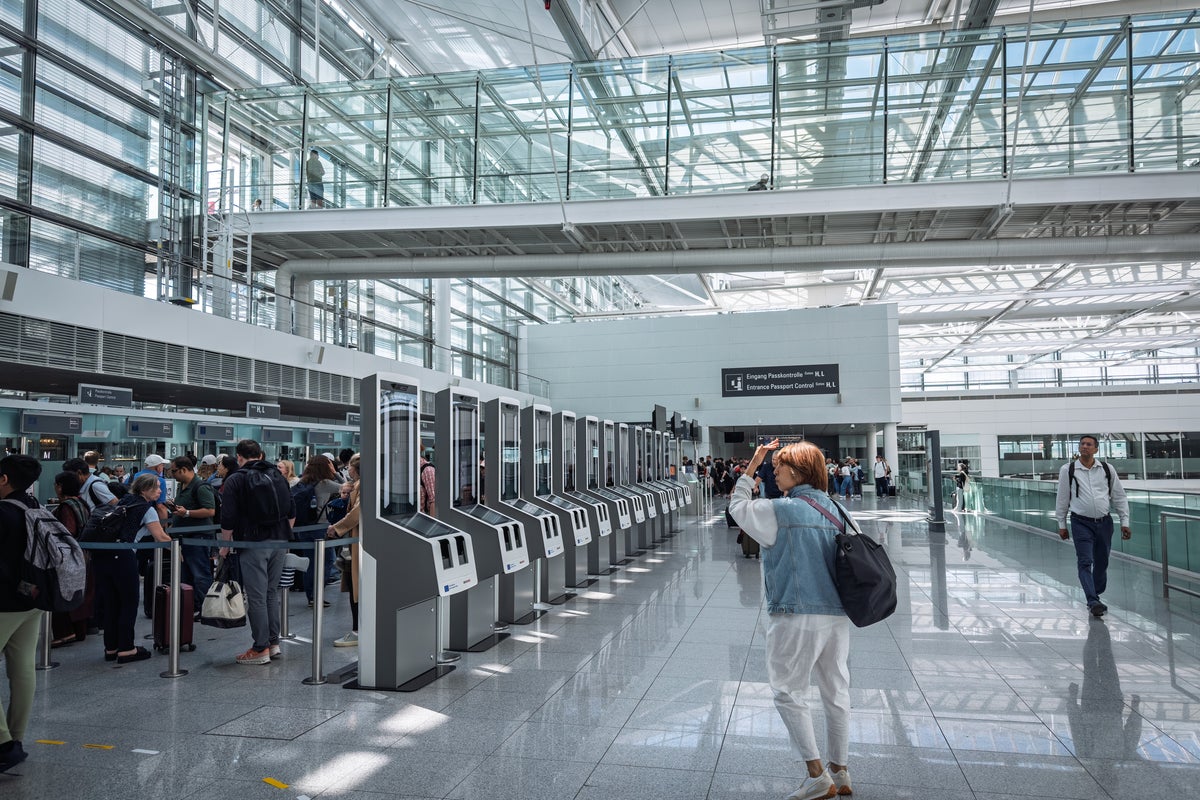
European countries will no longer be able to suspend the biometric entry/exit system (EES) at their borders under new rules, sparking concerns that airport queues could get worse this autumn.
The new EES system launched almost a year ago with a partial rollout in October 2025, before it was fully rolled out across the Schengen travel zone in April 2026.
The system requires people entering and leaving the travel zone, which comprises most EU countries and some other European nations, to give biometric information such as fingerprints and a photo upon first entry, then undergo a quick biometric verification thereafter.
Due to the nature of the system – which has involved installing new kiosks and equipment, staff training and passengers registering on first entry – travel bodies have been concerned that teething issues would cause widespread travel delays across the bloc.
Earlier this summer, delays were reported in several European countries following the initial EES rollout. Trade association Airports Council International (ACI) said it had seen wait times increase significantly, reaching five hours during peak times in July.
As a result, European countries were given the power to temporarily suspend EES during worst-case scenarios, such as when airport queues became unmanageable.
However, this flexibility is no longer available and Schengen zone states must now enforce EES for all “third country nationals” who enter and leave, including UK citizens.
It is unclear which airports used the flexibility rule to suspend EES and over what periods of the summer it was enacted. BBC News said that Portuguese airports, including Lisbon, Faro and Porto, had reportedly been using the suspension flexibility during this summer.
Frontex boss Uku Särekanno previously clarified there was “no intention” of any further easing of EES rules beyond September.
Travel bodies have criticised the EU over the rollout of EES, and have called for changes to be made for a smoother process while the industry and passengers adapt to the changes.
Thomas Reynaert, head of external affairs at the International Air Transport Association (Iata), disagrees with the EU’s decision to remove flexibility after the summer period ended.
“Iata’s position remains that the temporary EES flexibility measures should be resumed until at least the end of the winter season and until the remaining operational issues have been resolved,” he said in a statement to The Independent.
“That includes a stable system performance and full deployment of supporting infrastructure and personnel.”
Mr Reynaert said that Iata fully supports the objectives of EES, but believes it was premature to remove the “safety valve” before the system could operate consistently across Europe.
He added that it is unclear how many countries used the flexibility rule over summer due to lack of visible data, but calls for closer collaboration between the EU Commission, member states, airports, airlines and authorities for a “more coordinated approach” to EES.
He outlined certain actions that could be taken to smooth out the process, such as encouraging travellers to complete pre-registration procedures remotely to reduce border processing times and mitigate delays.
In an open letter to EU, president Ursula von der Leyen published in early July, the European branch of ACI said EES is creating “unsustainable pressure” and urged immediate intervention before the situation deteriorates further.
ACI asked if from September border control authorities could have the flexibility to suspend EES procedures during exceptional circumstances.
Airlines like Ryanair have made standalone calls too, asking for the flexibility rule to be extended until early 2027.
Ryanair says this will give airports and border authorities the time needed to fix kiosks, increase staffing levels and ensure the system can operate efficiently.
The Independent has contacted the European Commission for comment.
Read more: 10 European countries that do not have EES for 2026 holidays





















.jpg&h=630&w=1200&q=100&v=c0f97a310e&c=1)
.jpg&h=630&w=1200&q=100&v=c0f97a310e&c=1)