From the Academy: Treasure Texts
The mysterious texts that shaped Tibetan Buddhism The post From the Academy: Treasure Texts appeared first on Tricycle: The Buddhist Review.
 Aliver
The mysterious texts that shaped Tibetan Buddhism
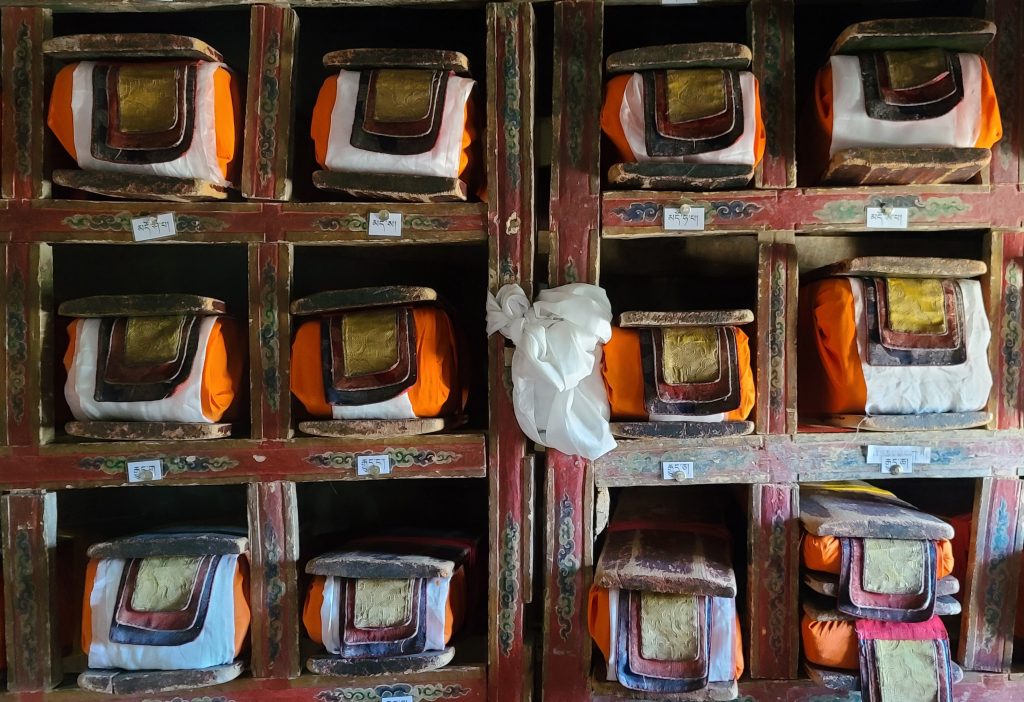 Tibetan Buddhist texts stored in a traditional library, Tiksey Monastery, Ladakh, India. | Photo courtesy Frederick M. Ranallo-Higgins
From the Academy is a monthly email newsletter for Premium subscribers, developed in collaboration with Tricycle’s resident Ho Family Foundation Buddhism Public Scholar. Each issue offers a scholarly take on a key topic in Buddhist thought and practice, with further readings and videos for exploration. Select issues are published here for the wider Tricycle community.
Treasures, or terma (Tib.: gter ma), are Tibetan Buddhist scriptures said to be hidden by masters from the past and revealed when needed. The person who discovers these texts is a treasure revealer, or terton (gter ston). The principal types of terma are earth treasures (manuscripts and objects found in nature) and mind treasures, which are directly revealed to the terton, who writes them down.
An Ongoing Revelation
Treasure texts emerged in the 11th century, when Tibetan Buddhist traditions were taking form. Buddhist scriptures had previously been traced to India for legitimacy, but by the 13th century, terma had become a key source of Tibetan scripture. Terma are most common in the Nyingma school, although they are also found in Kagyu and Bön traditions. Nyingma treasures are typically attributed to Padmasambhava—the 8th-century tantric adept particularly revered in this school—and his consort Yeshe Tsogyal, who recorded his teachings and hid them for future generations.
Lists of famous tertons include many of the most influential figures in the Nyingma school, including female treasure revealers, from Jomo Menmo in the 13th century to Sera Khandro in the 20th. Treasure scriptures continue to be revealed in the 21st century, and some treasure texts, such as the Tibetan Book of the Dead, have even become popular outside Tibet.
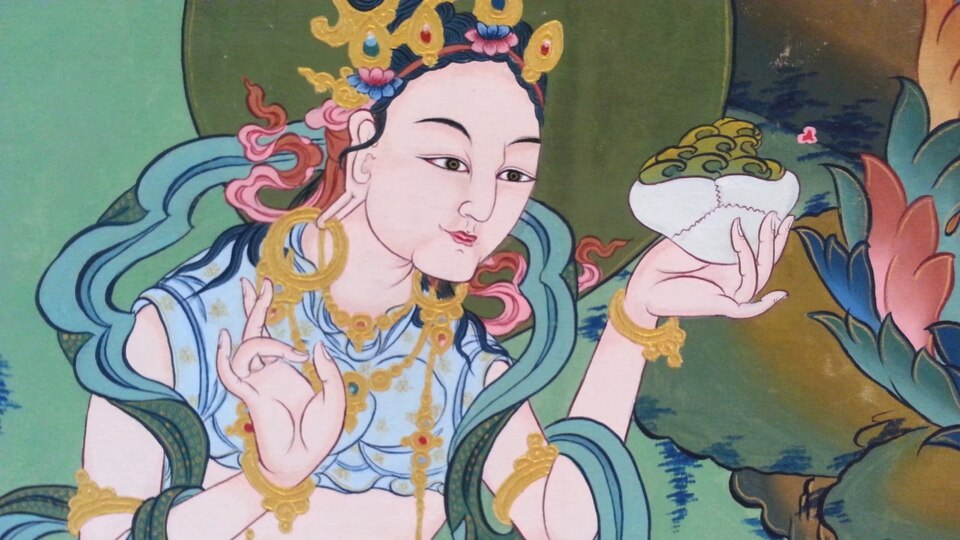 Detail of Yeshe Tsogyal from inside The Lhakhang, Centennial Museum and Chihuahuan Desert Gardens, University of Texas at El Paso. | Ignutius / Wikimedia Commons
Crisis and Revelation
Nyingma treasure texts are meant to be revealed during times of crisis to promote core practices, including dzogchen (great perfection) meditation, visionary yogic techniques, and rituals for Avalokiteshvara (the bodhisattva of compassion) and Padmasambhava that gird the Buddhists of Tibet against sociopolitical upheaval and spiritual degeneration. The legendary King Gesar is another popular Tibetan figure whose influence and power are renewed through terma revelations. By harking back to the golden age of the Tibetan Empire (c. 618–842 CE) and to indigenous kings, termas have long been a means of reinvigorating distinctly Tibetan sources of Buddhist identity.
But Are They Authentic?
Terma are often contested, with rival schools questioning their origins and revelation methods. To address such concerns, proponents of treasure texts took pains to demonstrate their validity and the tertön’s elevated spiritual realization. Even so, scholars suggest that attributing terma texts to Padmasambhava was primarily a way of legitimizing apocryphal scriptures. Similar concerns surrounded new Mahayana sutras and tantras in India, and like the Tibetan treasures, these texts demonstrate how Buddhist movements offer innovative practices in keeping with tradition. Questions of authenticity have followed terma from the beginning and remain unresolved.
Revelation and History
The revelation of sacred texts is common across religions. Some view it as a transmission of timeless wisdom, while scholars examine broader historical patterns. Scholars have noted parallels, for instance, between Tibetan treasure revelations and the steps by which Joseph Smith produced the Book of Mormon. Whether seen as divinely inspired or historically constructed, revelatory texts have indelibly shaped Buddhist traditions and helped to sustain them over centuries.
Additional Resources
Donagh Coleman, A Gesar Bard’s Tale, film. A documentary following a traditional Tibetan bard who performs the epic of King Gesar—renewed through terma—which remains important to Tibetan cultural and religious identity. Andreas Doctor, Tibetan Treasure Literature: Revelation, Tradition, and Accomplishment in Visionary Buddhism, 2005. A scholarly examination of the textual, historical, and doctrinal dimensions of terma, with close attention to Nyingma religious culture. Janet Gyatso, “The Logic of Legitimation in the Tibetan Treasure Tradition,” in History of Religions, 1993. A foundational academic analysis of the strategies by which Tibetan communities established the authority and authenticity of treasure texts. Tulku Thondup, Hidden Teachings of Tibet: An Explanation of the Terma Tradition of Tibetan Buddhism, 1994. An accessible account by a Nyingma scholar-practitioner explaining the doctrinal basis, classification, and discovery process of terma, drawing on traditional Tibetan sources.
Thank you for subscribing to Tricycle! As a nonprofit, we depend on readers like you to keep Buddhist teachings and practices widely available.
This article is only for Subscribers!
Subscribe now to read this article and get immediate access to everything else.
Already a subscriber? Log in.