
I took a sleeper train to Hamburg and discovered the most exciting way to travel
Travel expert James Manning hopped aboard a brand-new overnight rail link to explore Germany’s underrated second city
 Kass
Kass

I love travelling by train: no depressing airports, no hidden luggage charges and much more legroom. But it’s not just the practical stuff. There’s also the sense of freedom, possibility and immersion you only get on the rails, letting the journey become part of the holiday, not a hurdle to cross before you get there. All of which means that I’m a sucker for a sleeper train.
Many of Europe’s classic sleeper routes were axed during the 2010s and the pandemic. But in the last few years, there’s been talk of a night train renaissance: new routes, new operators and a dawning sense that a way of getting from A to B previously considered passé might just be the future of travel.
Although state railway bureaucracy doesn’t make it easy, the map of sleeper trains across Europe keeps expanding. And now there’s a new link that makes it simpler to travel flight-free from the UK to one of the great cities of northern Europe: Hamburg.
.jpeg)
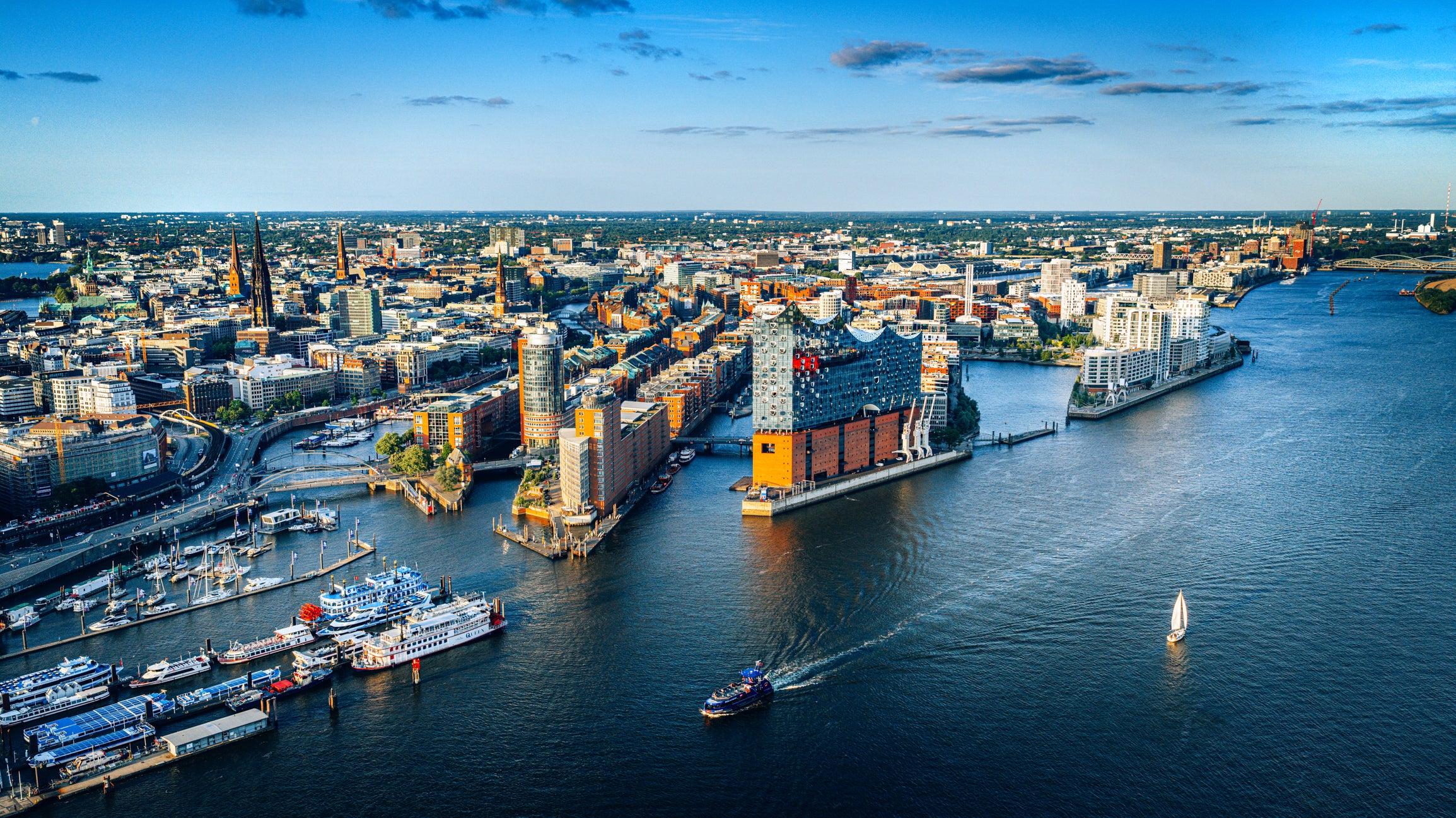
Germany’s second-biggest city, with a population significantly larger than Birmingham, Hamburg has centuries of seafaring history – and some legendary nightlife in the old sailor-town of St Pauli. I’ve wanted to visit for years, but getting there without flying involved a whole day of train-hopping, with multiple changes. Until now.
A new, direct overnight service from Brussels to Hamburg has just been launched by European Sleeper, a plucky, independent Dutch-Belgian rail company. It runs three times a week, with just one easy change of trains between London and Hamburg. This means you can leave London in the afternoon and arrive in Hamburg early the next morning, doing much of your travelling while you’re asleep. I didn’t need any more persuading to hop aboard the first ever eastbound voyage of the “Good Night Train” to Germany’s northern metropolis.
Starting in London, the first step is Eurostar, ever the gateway to European adventures. I’m always amazed at how short the cross-channel journey is. One minute you’re gazing over the industrial estates of the Thames Estuary, the next you’re surrounded by the redbrick houses and bulbous water towers of Belgium’s capital.
Brussels is in the midst of overturning its drab reputation with a new wave of genuinely cool cultural openings, such as the upcoming Kanal offshoot of Paris’s Pompidou Centre. Unfortunately, there isn’t time to gallery-hop – I’ve got just a couple of hours for a veggie couscous at a North African friterie and a stroll around the multicultural Marolles neighbourhood, before it’s time to hop the overnight train to Germany.
No “arrive two hours early for your flight” here: I rock up to the platform five minutes before the train pulls in. There’s a buzz among the waiting passengers that you never get at an airport gate. We’ve all chosen the adventurous over the obvious, and there’s a real sense of community among the student backpackers, young families, hip-looking groups of friends and solo travellers of all ages.
The train pulls in; there’s a shuffle on the platform and some polite, multilingual squeezing-past in the train corridors as everyone hops aboard and finds where they’ll be sleeping for the night. Across its ten carriages, this train can carry nearly 400 passengers – roughly two planes’ worth.
I’m booked into a couchette cabin: the classic sleeper train set-up, with five fairly basic bunks accessed via a ladder. I’ve booked the very top bunk, which is harder to climb up to, but darker, more private and with better storage space. My return ticket cost around €230 (£195), plus the price of the Eurostar. Yes, it’s more expensive than a budget flight, but a bit of a bargain once you realise you’re saving on two nights’ accommodation.
Read more: The German city that has Berlin teetering on its trendy pedestal
There are also more luxurious cabin with proper beds and duvets, sleeping up to three people (and with the option to book out the whole room for just one or two travellers). At the opposite end of the scale is the budget carriage where you kip in your seat, populated mostly by the aforementioned student backpackers.
My couchette cabin is full of different nationalities: French, Belgian, German, me. There are night-train veterans like Charles, from Toulouse. He’s on his way from Paris to Berlin, as part of an Interrail adventure that’ll take him via the Baltics all the way to Narvik, Europe’s most northerly rail station outside Russia, high up in Norway’s Arctic Circle. Then there are first-timers, like Malte, a Hamburger on his way home from Paris. He thought he’d give the sleeper train a try, and is surprised to hear that a week ago, this journey wouldn’t even have been possible.
We’re moving. The sun sets and the Belgian countryside whips by outside. After a final evening stop at Liege’s soaring Guillemins station, it’s lights off.
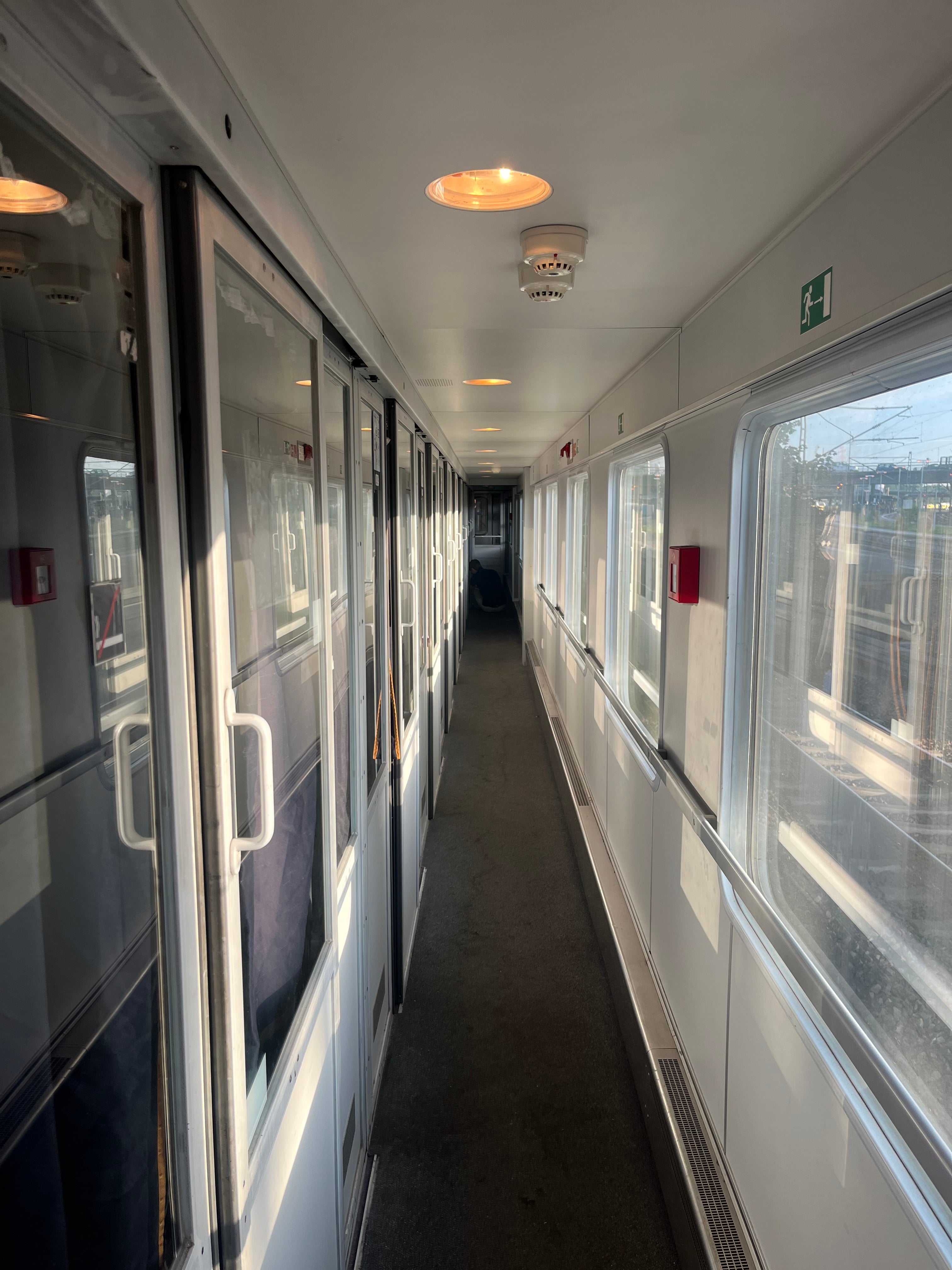
It is worth clarifying at this point that the European Sleeper’s “Good Night Train” is not the Orient Express. Finding suitable carriages is one of the biggest challenges for any company wanting to launch night train routes, and the train I’m riding is decidedly retro. The corridors are dotted with lights and dials that look something from a Cold War submarine, and the toilets are prone to getting blocked (hence the repeated reminders to not flush paper towels). The air conditioning leaves a lot to be desired, though it’s a blast (literally) to rattle along with the carriage window open. There’s a sort of Wes Anderson charm to the old-school atmosphere, but it’s best not to expect luxury.
Still, I get a surprisingly decent night’s rest, woken only sporadically by metallic clanks and the rattle of other trains passing. The swaying of the train is mostly soothing – so much so that I’m woken a few times by a sudden stillness as we pull into a siding.
But I soon drift off again, and when I next wake, I get an almost magical surprise. It’s 6am, the cabin is light and the train has come to rest at Platform 5 of Hamburg Harburg station. I grab my bags, trying not to wake my fellow passengers (most of whom are still dozing, bound for Berlin), and hop down into a brand new city.
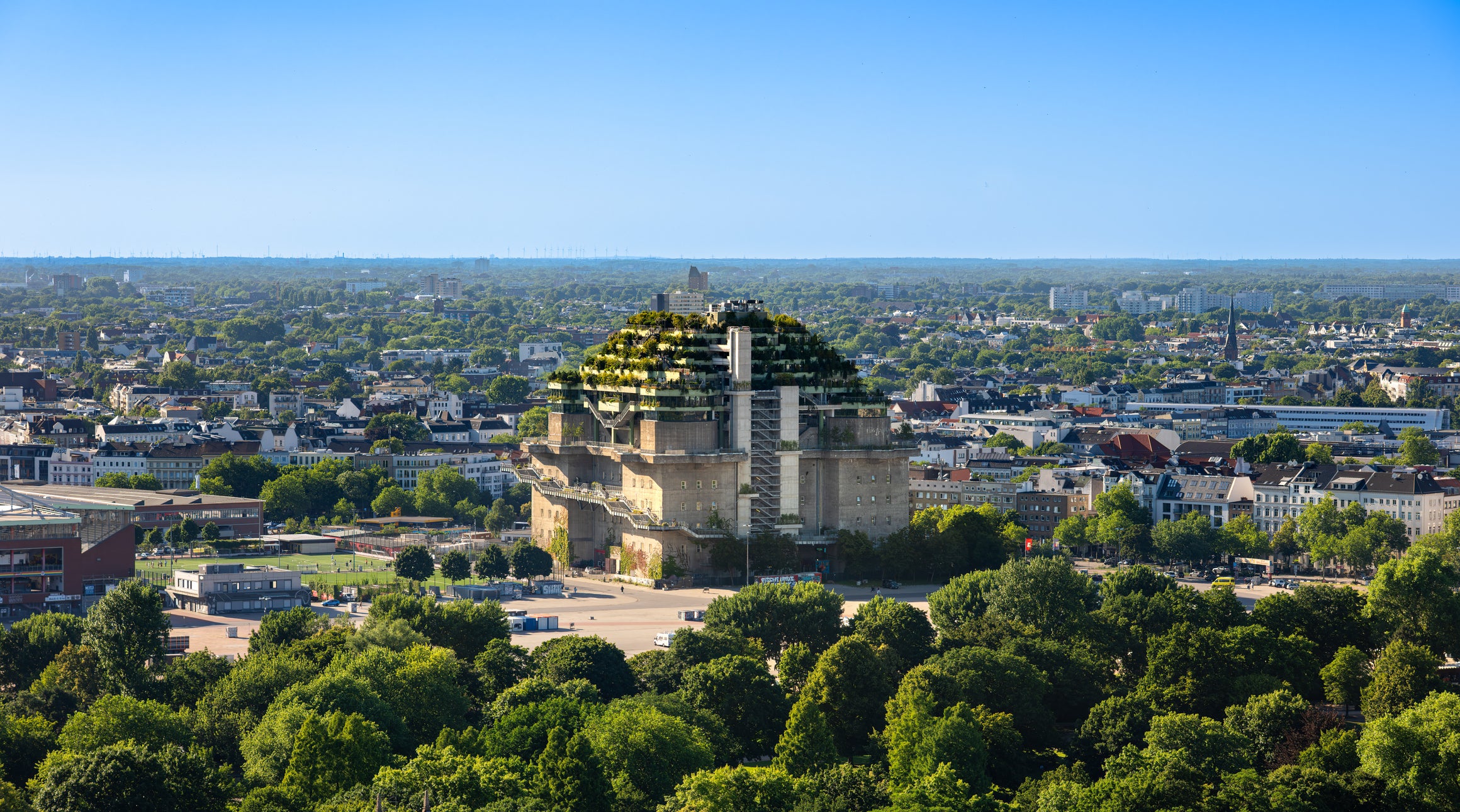
After coffee at the Elbgold roastery and a morning dip and shower at the stunning, neo-gothic Kaifubad pool complex, I spend a colourful day running around Hamburg. I climb a former Nazi bunker that’s recently been converted into a panoramic roof garden. I wander the buzzy, graffiti-decked streets of Schanzenviertel and Karolinenviertel and the peaceful paths of the Planten un Blomen botanical garden. I eat superbly: Austrian dumplings at Marend, pizza alla Norma at vibey Tazzi, and a pastel de nata in the Portuguese Quarter that could have come fresh from Lisbon.
As befits a port city (Europe’s third largest, in fact), Hamburg is an open-minded place with a thriving counterculture. The skull-and-crossbones symbol of anti-fascist football heroes FC St Pauli is everywhere, and venues like the anarchist art squat Rote Flora, the art-filled micro-neighbourhood Gängeviertel and the punk record shop Fischkopp provide a support system for the kind of alternative, creative communities that are increasingly being squeezed out of British cities.
Read more: 10 European countries that do not have EES for 2026 holidays
St Pauli’s red-light district (where The Beatles famously honed their rock ’n’ roll chops) and its waterfront are undeniably pretty touristy. But perhaps the biggest surprise: I hardly overhear anyone speaking English all day.
Could that change? Hamburg is ripe for discovery by UK travellers: it’s a creative, vibrant city with a distinctive northern character that’s very different from what you’ll find in Berlin or Munich.
And for train fans, there’s one extra draw: Hamburg is a vital link to the north. From here, direct trains (including sleepers) run all the way to Copenhagen, Stockholm and Malmo. From 2028, that list will also include Oslo and Gothenburg.
So the new European Sleeper link doesn’t just make it much simpler to get from London to an underrated city-break destination – it also unlocks a whole world of flight-free Scandinavian adventures. Who needs planes, anyway?
How to do it
Take a Eurostar from London St Pancras to Brussels-Midi (from £39 one-way), then a European Sleeper to Hamburg (from £25 one-way for a seat, or £60 for a couchette). Total travel time is from 12 hours.
Where to stay
If you’re not boarding the sleeper train straight home again, check in to Side Design Hotel Hamburg. It’s halfway between the city centre and hip Schanzenviertel, with easy U-Bahn connections across the city, and has a pool, sauna and hot tub – plus a sleek roof terrace. Rooms cost from £160 a night.
James travelled as a guest of Eurostar






























.jpg&h=630&w=1200&q=100&v=c0f97a310e&c=1)