Nadi Shodhana Pranayama (Alternate Nostril Breathing): Steps, Benefits, More
Nadi Shodhana is a purificatory pranayama breathing exercise that cleanses the nadis of any kind of impurities. In this pranayama, breathing is done in an alternating manner, one by one through a single nostril at a time. Therefore, it...
 Lynk
Lynk

 Image: Shutterstock
Nadi Shodhana is a purificatory pranayama breathing exercise that cleanses the nadis of any kind of impurities. In this pranayama, breathing is done in an alternating manner, one by one through a single nostril at a time. Therefore, it is also called alternate nostril breathing.
After practising Nadi Shodhana Pranayama, you will feel a clear opening in your nasal passages. Clear and fully open nostrils give the best results in any pranayama. This makes Nadi Shodhana a good preparatory exercise before beginning other types of pranayama. In fact, this is the reason why, in the Hatha Yoga Pradipika, Nadi Shodhana Pranayama is described before the eight classical pranayamas.
The practice of Nadi Shodhana Pranayama helps the mind become still and tranquil, which further reduces problems such as stress and anxiety.
Meaning of Nadi Shodhana
Nadi Shodhana is a Sanskrit term in which ‘Nadi’ means ‘flow’ or ‘channel’, and ‘Shodhana’ means ‘to purify’. The purification of the nadis takes place when breathing is practised continuously for some time through alternate nostrils.
The process of purifying the nadis to awaken the central energy channel, Sushumna, is called “nadi shuddhi.” The pranayama technique used for this purification process is known as Nadi Shodhana Pranayama.
Purpose of Nadi Shodhana Pranayama
Yogic science explains that energy in our body travels through channels in the subtle body called nadis. Due to physical and psychological factors such as injury, stress, anxiety, and fear, these nadis can become blocked, resulting in the improper functioning of the body and mind.
There are three important nadis Ida, Pingala, and Sushumna through which prana energy spreads into the 72,000 nadis and flows throughout the whole body.
The purpose of Nadi Shodhana Pranayama is to clear all 72,000 nadis so that there is no obstruction in the flow of prana. Hatha Yoga states that after asana practice, when there is a surge of energy in the body, Nadi Shodhana helps purify the nadis before that energy spreads throughout the whole body. Moreover, consistent practice of Nadi Shodhana activates and harmonises the Ida and Pingala nadis, which leads to the opening of the Sushumna nadi. The opening of the Sushumna nadi further leads to the awakening of Kundalini.
Effect of Nadi Shuddhi on Ida, Pingala, and Sushumna
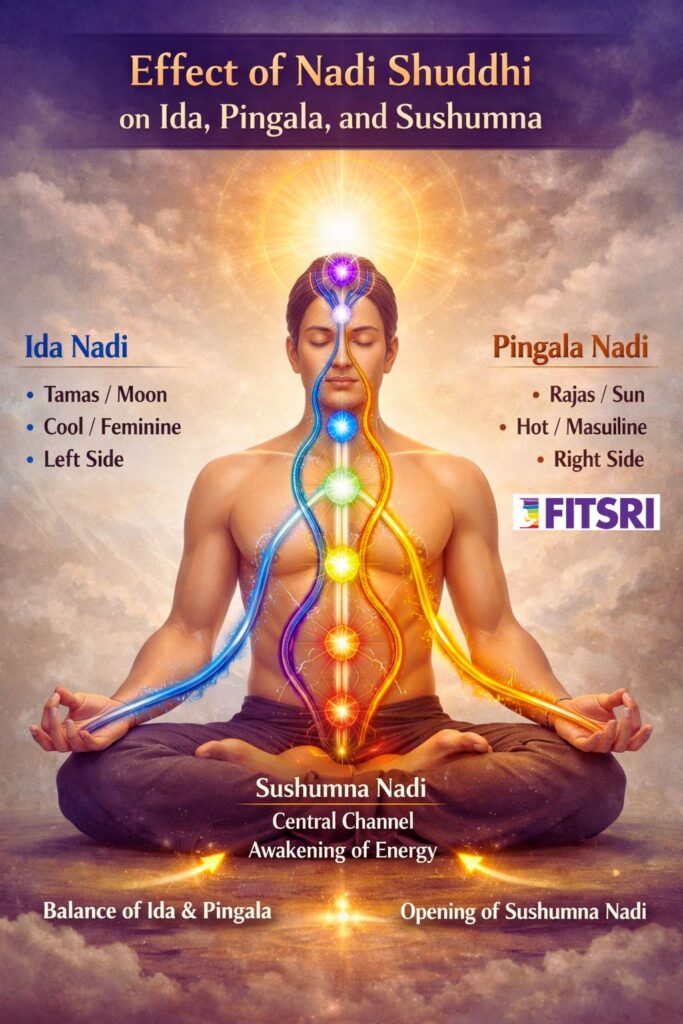 source: FITSRI
Ida and Pingala nadis run on either side of the spinal column. When they are balanced, the Sushumna nadi the central energy channel opens.
Ida nadi represents the tamas guna, the moon, coolness, and the feminine aspects, and is associated with the left nostril. In contrast, Pingala nadi represents the rajas guna, heat, the sun, and the masculine aspect, and is associated with the right nostril.
When an individual practises Nadi Shodhana Pranayama, it helps balance the Ida and Pingala nadis, or the left and right brain hemispheres, as well as the feminine and masculine aspects. This balance leads to the activation of the Sushumna nadi, the central channel that runs through all seven chakras along the spine.
This process opens up deeper levels of health and well-being and guides the practitioner on the path of spiritual awakening the ultimate goal of life. Apart from this, it also supports the proper functioning and efficiency of the respiratory system, helping to sustain the practice of Nadi Shodhana Pranayama.
Preparation for Nadi Shodhana Pranayama
Before one begins the actual practice of Nadi Shodhana, especially the beginners in pranayama, it’s advised to know the basics of practice.
Nadi Shodhana Pranayama Mudra
In Nadi Shodhana Pranayama, a person can use Vishnu Mudra and Nasagra Mudra to close the nostrils in an easy manner and effectively. Both mudras are always made using the right hand only.
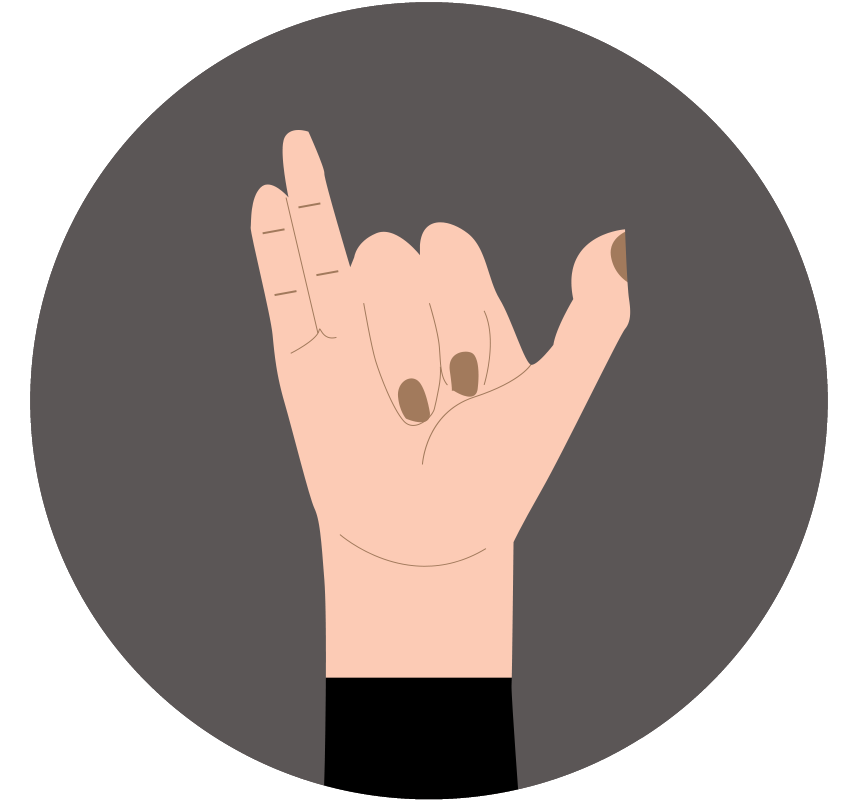
For Vishnu mudra, curl the index and middle finger of your right hand towards the palm. Now with the right thumb, the right nostril is closed and with the ring finger, the left nostril is close. To close nostrils in breath retention, thumb and ring fingers are pressed together.
People who feel discomfort in bending fingers while practicing can make Nasagra mudra.
For Nasagra mudra, the index and middle finger are extended up placed between the two eyebrows at the root of the nose. Nostrils are operated similarly to Vishnu mudra. However the working of both mudras are the same, but it becomes easier to concentrate in Nadi Shodhana with Nasagra mudra.
Inhale-exhale same nostril
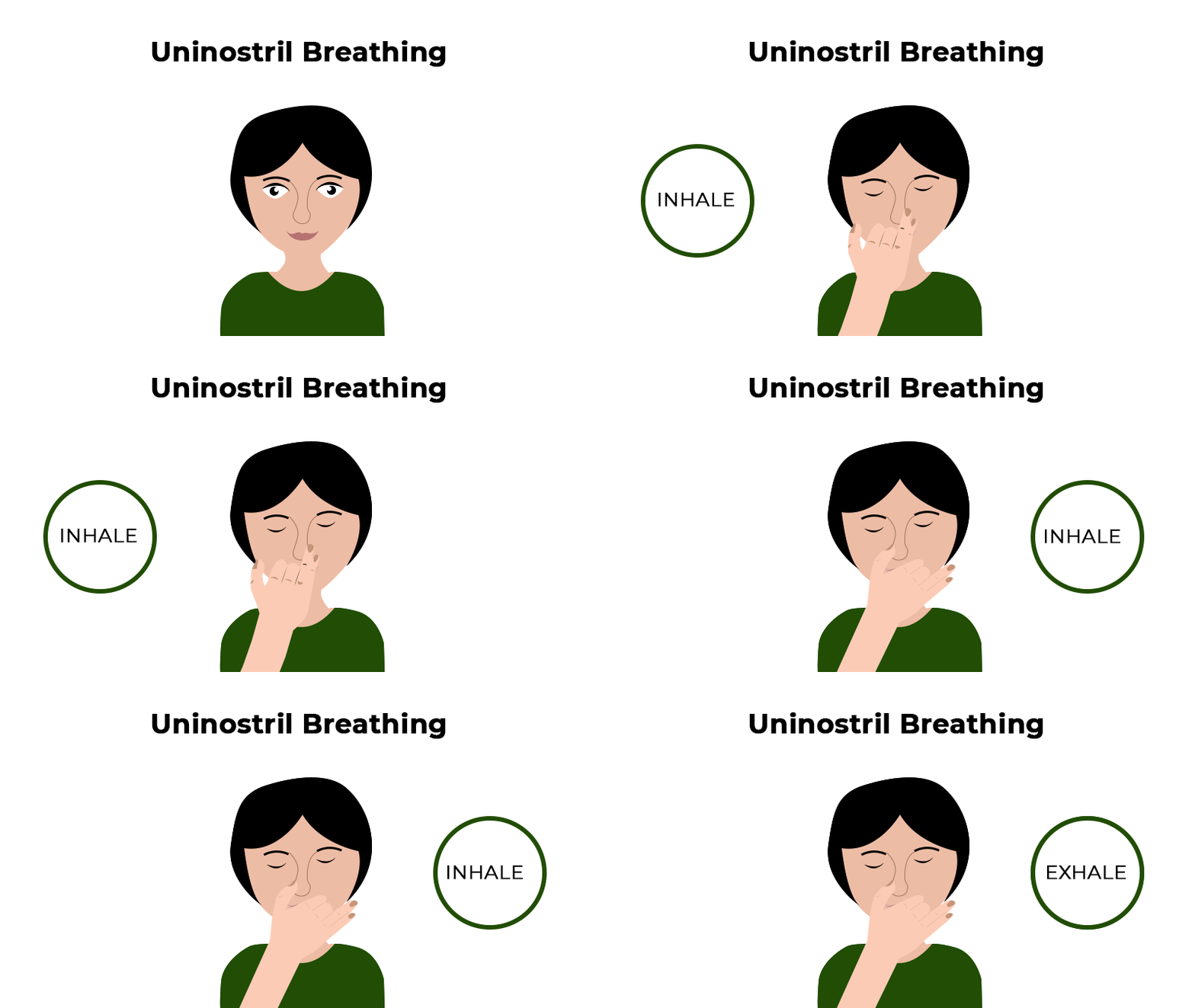
To fully open both nostrils before Nadi Shodhan Pranayama, always start with this simple breathing. Here inhale and exhale is done with a single nostril, called uninostril breathing.
Sit in siddhasana. Close your right nostril with your right thumb, inhale deeply through the left nostril and exhale completely through the same nostril. Do it 10 times. Then close the left nostril with your right ring finger. Inhale and exhale in the same manner through right nostril – 10 times.In this preparation, start with a breathing ratio of 1:1 then progressively work on 1:2.
Inhale-exhale opposite nostril at one time
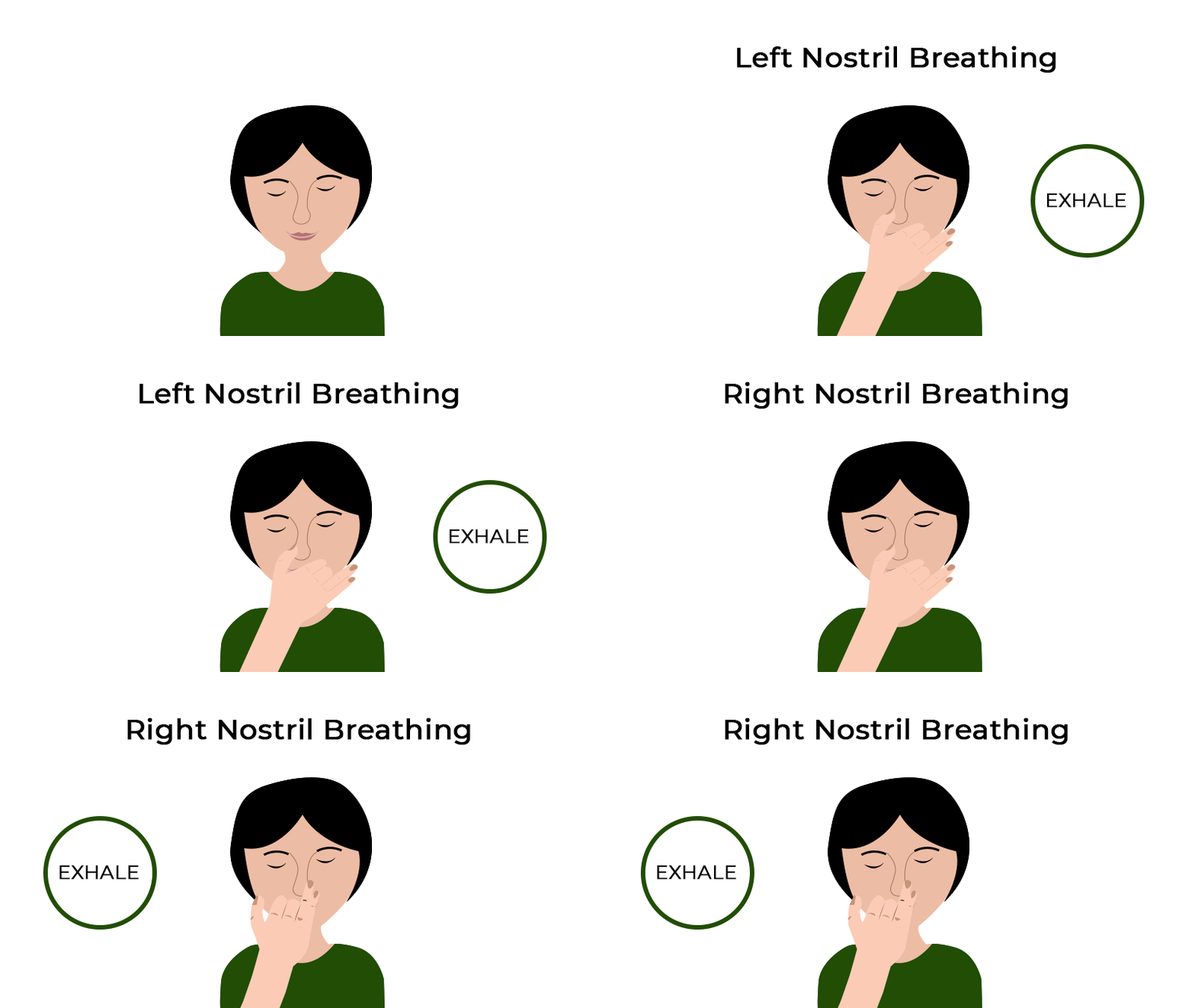
To harmonize the flow of breathing, work on inhalation-exhalation from opposite nostrils in one cycle.
Sit as in the previous stage. Close the right nostril with the right thumb then take a deep breath through the left nostril. Close the left nostril with the right ring finger then exhale out the complete air. It’s one cycle. Repeat this cycle 10 times – inhale left and exhale right. It’s called Chandra Bhedana Pranayama. After the 10th round, reverse your breathing pattern i.e. firstly inhale through the right nostril while the left nostril close. And then exhale through the left nostril while the right nostril is close. It’s called Surya Bhedana Pranayama.When Chandra bhedana and Surya Bhedana both are combined in one cycle, it becomes Nadi Shodhana Pranayama without breath retention.
How to Do Nadi Shodhana Pranayama?
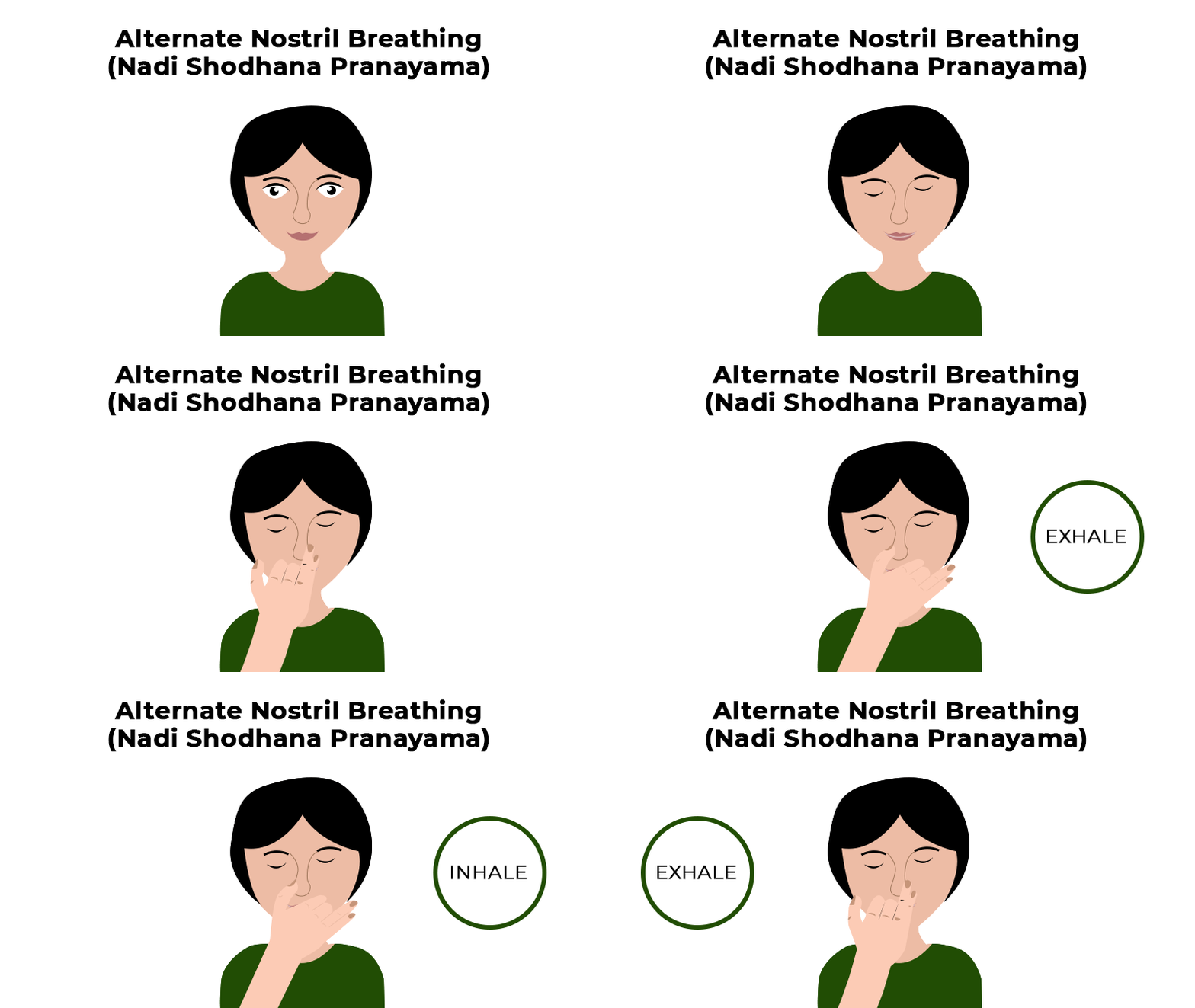 Source: Fitsri
Breathing Ratio
As per yogic texts, the ratio of inhale, breath retention, and exhale in Nadi Shodhana Pranayama is 1:4:2.
Gheranda Samhita, a hatha yoga text suggest that Yogis under the guidance of Guru begins with 12 counts of inhalation, 48 counts of retention, and 24 counts of exhalation. With time and progressive increase, breath counts can be increased up to 20 inhalation, 80 retention and 40 exhalation.
However, for beginners who practicing Nadi Shodhana without any Guru’s guidance, it’s advised to start with a ratio of 1:1:1 and with a month of consistent practice increase this ratio up to 1:2:2. Then progressively build up the stamina to achieve the normal ratio of 1:4:2.
Moreover, In further higher stages, external breath retention (Kumbhaka) is added into Nadi Shodhana. It makes the breathing ratio look like this 1:4:2:2.
Contraindications of Nadi Shodhana Pranayama
Avoid practising Nadi Shodhana Pranayama when you have a cold or a runny nose. This can disturb the breathing process or may cause discomfort in the windpipe. Practitioners who are sensitive to dust or have allergies should avoid practising this pranayama in dirty or polluted places. An open space with clean air or a well-ventilated indoor room is a better option. People with sinus issues should avoid practising Nadi Shodhana Pranayama when they experience pain or inflammation in the nasal or throat region. The practice may not give the desired results during such discomfort.Precautions
Practitioners with asthma or high blood pressure should avoid breath retention, as it may be harmful if ignored. Feeling shortness of breath during Nadi Shodhana is a sign that you are pushing beyond your natural limits. Stop the practice immediately if you feel lightheaded, dizzy, or nauseous. Individuals suffering from infections of the mouth, nose, throat, or lungs should avoid practising Nadi Shodhana Pranayama, as it may worsen the condition. This pranayama should not be practised immediately after a meal. Wait at least 3 to 4 hours before beginning the practice.Beginner’s Tips
Beginners should avoid applying pressure on either side of the nose while practising Nadi Shodhana Pranayama, as this may harm the soft tissues and cartilage.
New practitioners should focus on slow and deep breathing rather than rushing the breath. Rushing will not lead to proper results.
Beginners should keep their spine straight, allowing enough space for the lungs and diaphragm to expand and contract. This helps deepen the effect of the breath on the body.
Nadi Shodhana Pranayama Benefits
Nadi Shodhana Pranayama benefits both the body and mind in many ways. It brings the brain into a balanced state and helps you become more mindful of the present moment. Here’s how it benefits:
1. Synchronize Brain Hemisphere
Nadi Shodhana Pranayama helps create balance between the Ida and Pingala nadis, which are connected to the opposite hemispheres of the brain. Inhaling through the left nostril activates the right hemisphere or the parasympathetic nervous system (rest and relaxation response), while inhaling through the right nostril activates the left hemisphere or the sympathetic nervous system (fight or flight response).
Nadi Shodhana ensures the optimal functioning of both brain hemispheres along with proper coordination between them.
2. Improves Blood Circulation
Deep breathing in this pranayama improves blood circulation throughout the body. This helps the muscles, lungs, heart, and other organs function efficiently. As a result, it may help prevent diseases and strengthen immunity.
3. Supports Pulmonary Health and Keeps Lungs Healthy
Deep and slow breathing allows every part of the Pulmonary system like the nose, pharynx, larynx, trachea, bronchi, and lungs to function in a coordinated way. This results in the productive output in the face of improved respiratory capacity along with Volumes (expiratory Flow).
4. Promotes upliftment of Prana
The main aim of Nadi Shodhana Pranayama is to clear the subtle energy channels so that prana can flow freely. This breathing practice effectively stimulates prana and balances the Ida and Pingala nadis. It further activates the Sushumna nadi, through which spiritual energy rises.
5. Helpful in Cardiovascular Health
According to one of the studies , it has shown that Slow breathing like Nadi Shodhana Pranayama helps in significantly lowering the heart rate. This maintains the rhythmic pattern of the heart, which ensures healthy heart functioning.
6. Help to Activates Sahashrara Chakra
When Ida and Pingala nadis are balanced, it leads to the activation of the Sushumna nadi, which runs from the base of the spine (Root Chakra) to the crown of the head (Crown Chakra). As prana flows freely through this central channel, it rises through all six chakras and finally reaches the Sahasrara Chakra. This awakening is believed to enhance spiritual awareness, release emotional blockages, and bring a sense of inner peace.
Conclusion
Nadi Shodhana Pranayama, or alternate nostril breathing, is an effective practice that purifies the subtle channels called nadis, allowing the life force, prana, to flow freely without obstruction.
This practice supports mental, physical, and spiritual well-being. It balances the Ida and Pingala nadis, which helps activate the Sushumna nadi and further stimulates the Sahasrara Chakra. As a result, it brings spiritual upliftment to the practitioner’s life.
FAQs
1. How many rounds of Nadi Shodhana should I do daily?
Beginners can start with 5–10 rounds. With practice, you can increase to 15–20 rounds or practise for 10–15 minutes daily.
2. Can I practise Nadi Shodhana Pranayama at night?
Yes, you can practise it at night. It helps calm the mind and can improve sleep quality when done before bedtime.
3. Should I hold my breath in Nadi Shodhana Pranayama?
Beginners should avoid breath retention. Once comfortable, retention (kumbhaka) can be added under proper guidance.
4. Which nostril should I start with in Nadi Shodhana?
It is generally recommended to start with the left nostril and end on the left for a calming effect.
5. Can Nadi Shodhana Pranayama unblock a blocked nose?
It may help improve nasal airflow over time, but it should not be practised when the nose is completely blocked or during a severe cold.
6. When is the best time to practise Nadi Shodhana Pranayama?
The best time is early morning on an empty stomach. You can also practise it in the evening, at least 3–4 hours after a meal.
7. Who should avoid Nadi Shodhana Pranayama?
People with severe cold, nasal blockage, sinus infection, or breathing issues should avoid it. Those with high blood pressure or asthma should avoid breath retention and practise under guidance.
















.jpg&h=630&w=1200&q=100&v=7abd35f457&c=1)