The Dhamma of Dolly Parton
On the “Queen of Country,” culture war pacifism, and the nondiscriminatory nature of refuge The post The Dhamma of Dolly Parton appeared first on Tricycle: The Buddhist Review.
 MikeTyes
Several years ago, I came back to the US, after being in Thailand for some time, on Election Day of 2020—so a fortuitous landing. As I was preparing to come back, one of the teachers whom I spoke to, Ajahn Siripanyo, said, “When you return, you can look at the news every now and again, but only if you can make the determination not to let it give rise to even one unwholesome mind-state.” That’s a tall order, right? I said, OK, and he said, “Look, remember, America is just one big convention. It’s a convention.” And I can’t say I’ve completely managed that. But upon this return, I found America changed. People were still living lives that were, by and large, as beautiful as they had been when I’d left seven years earlier—people were surrounded by loving people doing beautiful things—yet their hearts were ragged with talk of the news and the headlines, and I saw people forgetting the Eden that their hands worked in for the faint distant whisper of a serpent.
The Buddha has a term called “appropriate attention” (Pali: yoniso manasikara). Yoni means womb, and manasikara means attention, action of the citta, of the mind. This idea of attention goes to the heart, the womb, the source of things. That that attention is, in a very real sense, what births all states of our mind and heart is a central teaching. The Buddha says that just as the dawn, the band of light on the horizon, signals the coming of the sun, so, too, does yoniso manasikara, appropriate attention, precede the arising of the noble eightfold path.
This idea of the importance of attention is a central teaching in Buddhism. It’s a sankhara, which in Buddhist terminology means it’s a program, a formation, which energizes what it looks at. And appropriate attention is especially significant because, in the words of G. W. F. Hegel (and popularized in modern philosophy by Slavoj Zizek), “Evil lies in the gaze that sees evil all around it.”
I remember my dad, he’s a practitioner, visiting some relatives a few years ago. There’s a famous saying in Buddhism that if you think you’re enlightened, go spend a week with your family. And so, at his relative’s home, the conversation turned to politics. And my dad got up, and he went over to where the dog was lying on the ground, and he lay down with the dog.
So how do we become conscientious objectors in the culture wars? It’s a bit of anathema to the American psyche, what it means to have a part of society that’s not political. And yet it’s one of the key functions of the sangha in Thailand, to have some realm where people can enter and they’re not this or that; they’re just Buddhist. They’re just practitioners. They don’t even have to be Buddhist. They’re just people looking for refuge. And this is important for several reasons. If the sangha aligns with a certain political party and the opposite party comes into power, it can wipe out the sangha. That happens. It also alienates half of society, if you get one alignment. Democrats deserve dhamma. Republicans deserve dhamma. Everyone deserves dhamma. It’s important to have a part of society where that connection can occur. Ironically, that’s actually how a lot of these things resolve themselves—by having some space where people can come together and be human together and that’s it.
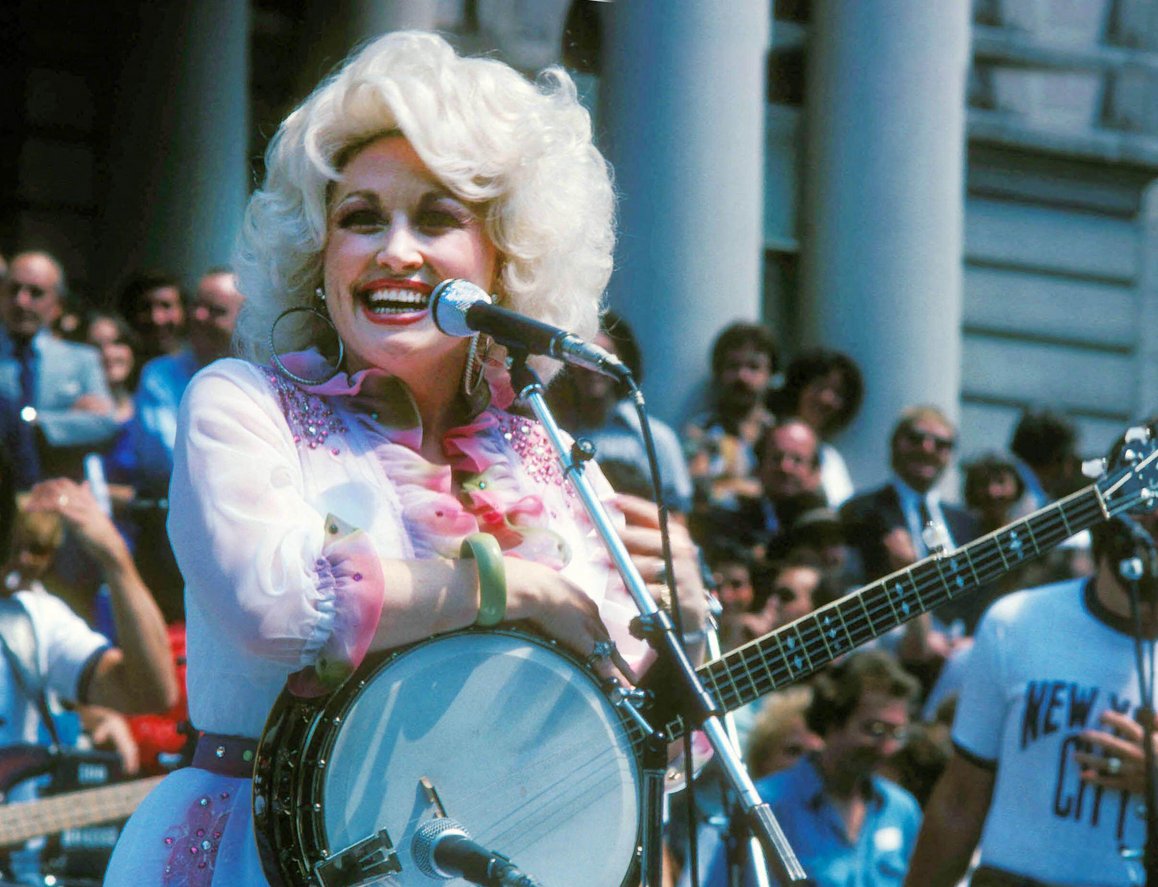
We have an institution like this here in the US. It’s called Dolly Parton. And it’s one of the few places in the US where truckers and drag queens come together, and they can stand by one another. And that’s wonderful. And I’ve heard her referred to as the Dolly Mama. Her political leanings are a carefully guarded secret, and thank goodness for that. It’s pretty beautiful to have something in the US like that.
What’s important to acknowledge are two very large caveats. There is a role for political discussion, for talking to people about what is meaningful. There is a role for political action and taking action. But when one is determining when and how to do that, it’s very important to understand that as practitioners of this path, you have stepped into a higher-order narrative, and a higher-order purpose, and you’re in possession of something that is far more important than the political debate of the day. This dhamma, which was given to us 2,500 years ago, this psychology, is profound. I know it’s saved my life, in a sense. I know many whom it’s given meaning to. So few people have this or have access to it, that once you’ve come into contact with it, it’s very important to understand that if an interaction with someone comes down to engaging in the usual narrative or debate, versus maybe thinking that you can, for a time, put that aside and assume that many of these people are hearing the opposite argument from many places already, that you might be the one conduit in that person’s life to something they really need. Practice, a refuge, right view, a spiritual path, and a canopy of meaning that in our society has been left in tatters. Then, later, you can weigh very carefully what conversations to have and what actions to take. And if it’s right to go lie down with the dog, you go lie down with the dog, and wait until the conversation turns toward something else.
I find that one really useful way of understanding this higher-order narrative and feeling its power and gravity is to recollect the beings in the past who have carried on this teaching for us—to think of the Dalai Lama, for instance, and what it means for someone to come into contact with him and how that can change a life. In the 1970s, one of the Dalai Lama’s disciples was put into Chinese prison and tortured for thirty-three years. When he emerged, they asked him if he ever became afraid in prison, and he said, “My biggest fear was losing compassion for my torturers.” But he didn’t.
There are the monks and nuns in China during the Maoist revolution who, when beaten, and when the Maoist guards tried to get them to disrobe, simply said the name of their bodhisattva again and again and remained in robes. And this is why this teaching, this institution of the sangha, has outlasted the rise and fall of empires. And I don’t know if we really understand the impact it’s had over history to have this thin silver thread of these teachings. And I don’t think we can underestimate the impact that that flash, that supernova of insight that the Buddha gave us, has had. This ripple of this insight has spread throughout our history.
And so when we come and we land in a world with smartphones and updates and Apple News and some vague, nebulous conception of “staying informed,” it’s very important for us to look at that term as practitioners and ask: What does it really mean to stay informed? How many times a day do we really have to check the news to stay informed? Ajahn Sona says, “Look, you can totally continue to watch the local news. And by local news, I mean what’s six feet away from you.” I think that can be a little extreme. I don’t think we have to take it that far, necessarily, although you could.
But it’s important to understand that, as practitioners, you have a responsibility to embody this path and carry it forward with integrity. You represent it. And you might be the one person to represent it to someone in their life when they need it most.
When we begin to practice, often, it’s as if you’re scraping off a crust that’s formed on the heart. And then there’s a real period of rawness where the wound can become infected again. And you feel it; old stimuli you used to have no problem processing suddenly make you feel their residue, their stickiness, their infection. And it’s OK to give yourself permission for a time to step back from it, to protect this precious thing you’ve created or created space for, to cultivate the heart and to consider that a real duty and your foremost duty. This means unsubscribing from the news in a lot of cases. If you need to read a long-form article or two every week, that’s fine. Honestly, if you have a few friends who are up-to-date, if you really stop watching the news, you’ll find you get everything you need from those conversations. Truly, it’s enough. And then, if you need to do a bit more research before you vote, great. But to protect your heart and to understand this anger, we have a responsibility to ourselves, to the practice, and to those around us to point to and embody and communicate a higher-order narrative now, because you’ve stumbled across it and so few people in the world have access to it.
There are a few really useful tools in this tool kit. One is in the vinaya, the monastic code, which says that we, as monks, have to meet several conditions before we can admonish another monk.
1. We have to have a mind of loving-kindness. That’s a big one. I know a monk who had to wait a whole year before that could be accomplished.
2. We have to speak in a timely way. At the monastery, we eat once a day, and you don’t talk to monks before the meal.
3. You have to speak truthfully.
4. Speak what is connected with the matter at hand. That’s huge.
5. Ask for permission, and receive permission.
All five of those conditions have to be met.
And you find that if, before engaging with whatever it is that is causing you stress, you see if those conditions can be met and are very careful when you engage in that, it’s this very beautiful wall. Because if there’s even a sliver of anger in the statement, in the conversation, it changes everything. And whomever you are talking to can sense it.
In a sense, often, right speech can be embodied in listening. So often listening is right speech. And people are kind of confused by that. When you listen and are actually curious about where they’re coming from, people are often touched. It’s very easy to find nice people; it’s very hard to find curious people. And often, that’s the key in a relationship. We very much notice when someone’s actually interested in us. And that’s such a pure form of loving-kindness. People want so deeply to be seen. In some sense, the volume with which someone expresses a view is just them wanting to be seen.
The four noble truths are a foundational framework for Buddhist thought: to comprehend suffering, to let go of its cause, craving, to realize peace, to develop the path to that peace. And it all starts, often, with the initiating wound, the first noble truth, so much of our action comes from our pain. It often drives our whole lives. Jung said, “When an inner situation is not made conscious, it happens outside, as fate.” This is useful in our own experience. If you lash out, can you see what vulnerability you’re protecting against? But also using the framework of the four noble truths to understand how someone’s coming to a view, because so often it’s based on suffering. If there’s a certain push for a powerful movement of some kind in the political arena, is it coming from communities that have been ripped apart and want some means or sense of control? And is that understandable? Can you see where that’s coming from? Can you trace it back to the shared wound of humanity? And can you do that in conversation, and just for a time, take that space of listening and kindness, and see where that goes?
As a young monk, I would often go visit my Idahoan relatives, and they were very confused with what I was doing. There’s a whole variety, a spectrum of political views there. Yet I found that where we connected was the fact that they had deep, deep faith in God. They were profoundly earnest Christians. And that’s what I cared about discussing. And, in a sense, the fact that so many realms of conversation right now are fraught is a strange blessing, because it means you are forced to focus on what actually matters, because everything else will get you in an argument, so that’s a gift. Can you focus on what matters?
It’s very easy to find nice people; it’s very hard to find curious people.
There’s a certain type of compassion with a shadow, where you’ll hear someone lament something that came up in the news, and you know the next sentence is going to be, “And those people. . . .” Can you begin to detect that? And is there a place for gently not feeding that? Can you point to compassion? Can you point to where those people might be coming from? Can you find, again, this thread back to the shared wound and transcendent narrative that we all have?
And this really feeds into the broader aspect in Buddhist practice of controlling anger and softening into loving-kindness. Because one of the reasons that these political powers and narratives and debates have such a grip on us is that we are very prone to anger. And it’s a part of us that we don’t acknowledge that much. We love to come into a meditation hall and spread metta, and that’s great. But when the Buddha spoke about right intention, the second factor of the path, he spoke about the intention toward renunciation, the intention toward non–ill will, avyapada, and the intention toward nonharming, ahimsa. So two of those are about giving up aversion because we can really dwell in a low-grade hum of aversion for most of our lives. It’s there a lot. One of the chief functions of mindfulness in life is first to protect your morality, to keep on the path. But second, and very much second, is to avoid dwelling in ill will. Those two standards for right mindfulness are not bad ones to keep.
It’s very important to put the caveat here that some people have never learned to express anger or to assert themselves or to set boundaries. And, obviously, you need to do that. There’s also a very clear distinction between repression and suppression. Repression is saying, “I’m not angry, I’m not angry, I’m not angry.” Suppression is saying, “OK, here’s anger, I’m not going to act from this.” And then you wait an hour or two, you go for a walk, and then you speak from a place of kindness. You take it as a signal, but it’s never skillful to express.
So how can we work to soften anger? Anger can be very prominent, and you’ll usually have to bring out a wide tool belt to actually address it, because it’ll shape-shift, and one method will work for a while and then stop. So the Buddha gave us a lot of methods. Ajahn Sona says, “If you can’t spread loving-kindness to someone, spread it to their chair.” That’s good. Another great one from the Buddha: If you feel aversion toward someone, try to spread loving-kindness to them. If that doesn’t work, try to spread compassion, karuna. If that doesn’t work, try to be equanimous with them. Notice that he skips sympathetic joy. I think he knows it’s a tall order to feel sympathetic joy toward someone you’re having trouble with. If that doesn’t work, reflect that they’re subject to their kamma. And if that doesn’t work, don’t bring them to mind. That’s a novel one in the US because we think we’ve got to confront everything and figure it out.
Sometimes it’s OK to write their name on a piece of paper, put it in an envelope, put it in a drawer, and say, “In six months, I’ll take this out. And if I’m ready to maintain a skillful, balanced mind-state when I think of this person, then great.” And if you take it out, and it’s still as raw as it ever was, it may be all right to put it aside for a time. That’s OK. And the same goes for politics. If you stop steering your attention there every single day, the heart brightens naturally. So if there’s that politician whose name you don’t like, write it on a piece of paper and put it in a drawer.
One of the most powerful tools in cultivating loving-kindness and dispelling anger is that, often, the best you can do is acknowledge that metta needs you to be by yourself when you’re angry. Instead of trying to spread it to the person you’re angry with, just feel how much it hurts to be angry. How painful it is. And spread loving-kindness there. If you get caught up in self-righteous anger, feel the draw of it so you understand it. The Buddha said that to let go of something, you need to understand the attraction, the drawback, and the escape. And there’s a real attraction to self-righteous anger. The Buddha called it anger “with its honeyed tip and poisoned root.”
Another tool is to look at these people in our lives who trigger us, who don’t have the same views as us, as teachers. In the Mahayana conception, there’s this idea that bodhisattvas can split off a piece of their mind and send it down as an incarnation of a situation—of your boss, of a drunk in the street—to teach you. And if you really turn toward those people in your life who are most difficult not as obstacles to your path but as exactly what you need to learn to develop loving-kindness and patience, then that’s something. Take them as your teacher. And if you need to bow in their direction every morning, then do that. Maybe not when they’re there. But it’s useful.
I remember one monk whom I was having a lot of trouble with. And he was getting on my case for a lot of things. And I realized that if a senior teacher was giving this much attention to me and refining my conduct, I would be so grateful. And so for that year, he was my teacher, and it was one of the most powerful practices in my life.
When we turn toward the higher-order narrative, when someone’s getting into a heated discussion, find the first noble truth for them. What is meaningful to them? What’s difficult for them? Where are they coming from? Just ask questions. See if we can pull back on expressing our opinions and assume that they’re hearing enough. And maybe we have something different to hear from them, and to listen to and to say, that might be much more important as Buddhists, as practitioners, as whatever you want to call yourself. That’s a higher-order narrative that you have in your hands now. And when you come to these gatherings, even if it’s in a gym, you’re stepping into a tradition that’s 2,500 years old. Do not underestimate the gravity of that commitment and responsibility and duty we have. It’s not just a gift, it’s a duty.
In a sense, a lot of the culture wars, a lot of the back-and-forth, can be explained because the canopies of meaning of our society have been ripped to shreds. When people have no spiritual framework, they’re forced to project that meaning onto things that are not worthy of it. Ideologies are crippled religions. They limp along, they provide cohesion and purpose, but only at a shallow level. And, ironically, if you cannot engage in that narrative but maybe give someone a deeper narrative, you’re addressing the root cause of this imbalance. If people get on a spiritual path, they’re inoculated against the worst excesses of our culture. And that’s what you give. You give a chance of connection, of resolution. And you’re embodying the true promise of this path and also following in the example of the “Queen of Country.”


























.jpg&h=630&w=1200&q=100&v=c0f97a310e&c=1)