Windows 11 is finally rolling out the option to kick Bing out of Search
Microsoft is rolling out its redesigned Windows 11 Search with the option to disable Bing, but the feature is still being activated gradually and may not appear immediately.
 AbJimroe

The Bing clutter that has annoyed Windows 11 users for years is finally getting a proper off switch
 Windows 11
Unsplash
Windows 11
Unsplash
Microsoft has spent the past few months testing a much cleaner version of Windows Search, and it is finally starting to reach regular Windows 11 PCs.
According to Windows Latest, the redesigned Search experience is included in the August 2026 optional update, KB5120998, for Windows 11 24H2 and 25H2. Microsoft confirms that the update moves PCs to builds 26100.9278 and 26200.9278, respectively, although some of its new features are being enabled gradually.
We first covered these Search changes in July, when they were limited to Windows Insiders in the Experimental channel.
 Windows
You can finally keep Bing out of Windows Search
The biggest improvement is a pair of controls under Settings > Privacy & security > Search. One toggle controls web results, while another handles Microsoft Store suggestions.
Turning off web results removes Bing suggestions from Search, while disabling both leaves Windows focused almost entirely on results from the PC. Windows Latest also found that Search feels faster this way because it no longer waits for an online Bing request before returning results.
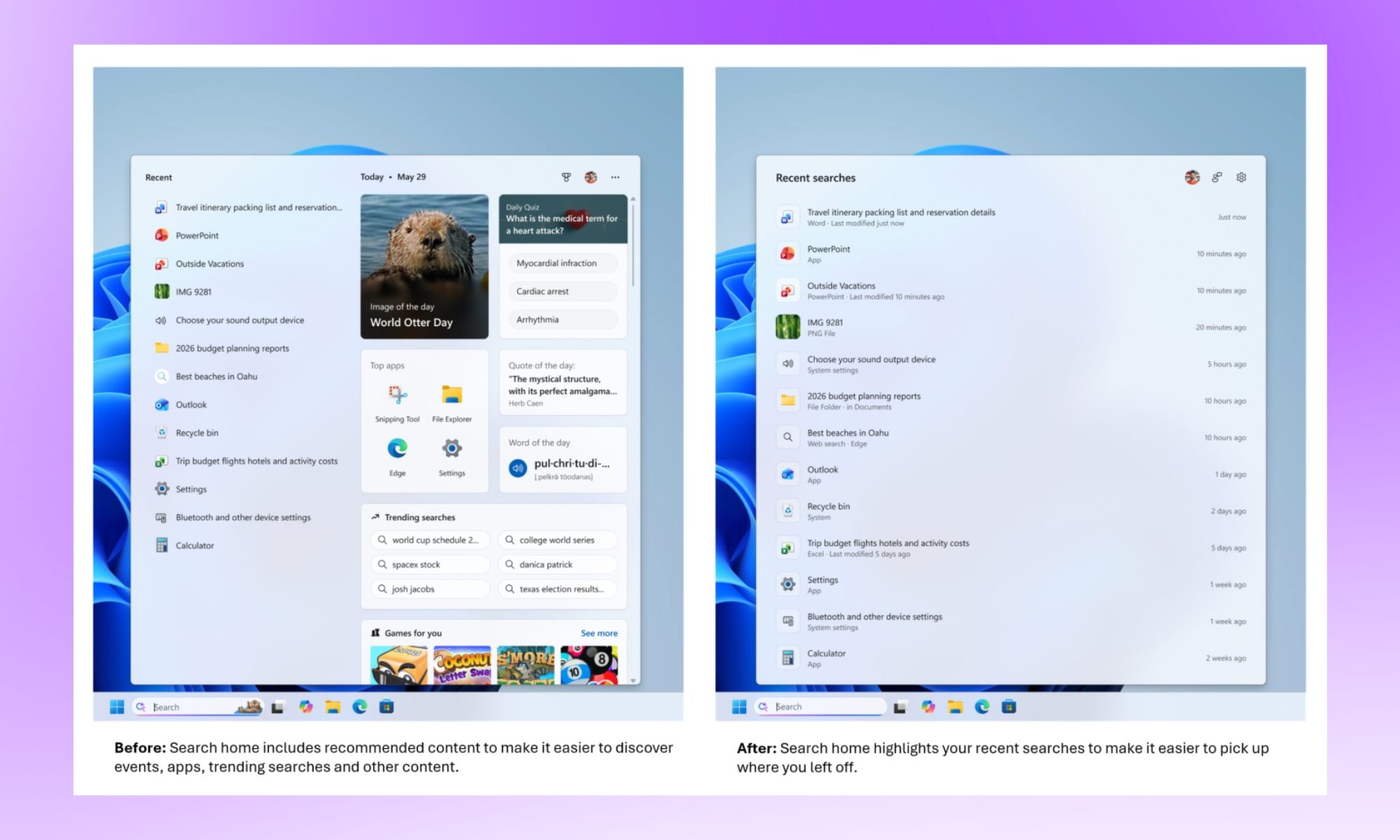
The Search home screen is cleaner as well. Microsoft has removed much of the old Bing-powered clutter, including trending searches and promotional content, while results now clearly identify whether they come from an app, file, setting, the web, or Microsoft Store. Typo handling and local result prioritization have also been improved.
 Nadeem Sarwar / Digital Trends
The rollout is still gradual
Installing KB5120998 does not necessarily mean the new Search will appear immediately. Microsoft is using its Controlled Feature Rollout system, meaning the necessary components can already be installed while the feature itself remains disabled on some PCs.
Windows Latest says users who do not want to wait can force-enable it through ViVeTool, although everyone else can simply wait for Microsoft to activate the feature automatically.
Windows Search should never have needed a web request to help someone find Calculator, Settings, or a file sitting on their own PC. Microsoft has taken its time getting here, but the option to remove Bing finally makes Search behave much closer to what a desktop search tool should be.

I’ve got about 4 years of experience, mostly covering gaming, PC hardware, and smartphones. In my free time, I like…
Google Maps has another “America” on the map, and Canadians aren’t amused
First the Gulf of Mexico, now Google Maps has renamed Lake Ontario

If you're in the US and open Google Maps to go looking for Lake Ontario, something is going to look a little off. It’s now called Lake America. Google began rolling out the change after the US Geographic Names Information System formally changed the lake’s name following an executive order from President Donald Trump. Google says its longstanding policy is to reflect geographic names from official government sources.
The result is a map that changes depending on where you happen to be looking at it. US Google Maps users see Lake America. Canadians still see Lake Ontario. Everyone outside those two countries gets both, displayed as Lake Ontario (Lake America). Sound familiar yet?
You worry about AI taking your job because you know too much about AI, says research
AI experts fear job loss far more than people with limited AI knowledge do.

If you have been paying close attention to artificial intelligence, you may have noticed your worries about job security growing instead of shrinking. According to the AI Monitor 2026 from TU Darmstadt, the more you understand AI, the more you worry it'll take your job, not less. Based on a representative survey of over 2,000 people in Germany, the study breaks the long-held belief that fear comes from ignorance.
The more you know, the more you worry
The Internet Archive just made decades of vintage AI playable in your browser, and it’s fascinating
Before large language models, an entire generation of home computer software was already faking the experience of talking to something alive.

The Internet Archive has a habit of preserving unique things, ones that nobody else thought about, and its newest collection is the best example yet. I’d say it's one that every AI historian should bookmark.
Curated under the title “Vintage Artificial Intelligence,” the collection contains decades of software that tried to convince people that they were talking to a thinking machine (though with wildly varying success).