Nvidia’s new PAIR software uses idle home PCs to speed up AI tasks
Nvidia’s new PAIR software turns every idle PC in your house into a shared AI cluster, free, open-source, and live in beta starting today.
 KickT
KickT
Digital Trends may earn a commission when you buy through links on our site. Why trust us?
Nvidia just put a dollar figure on the AI compute quietly wasting away inside your house, and built free software to actually use it.
 Nvidia
You might be sitting on a tiny or considerable fortune in wasted computing power right now.
Nvidia just put a number on that waste at IFA 2026, but that’s not the big story. The company has announced free software designed to put that idle computing power to good use.
Your devices are stronger together. 🖥️🤝🖥️
Just announced at IFA, NVIDIA PAIR automatically links systems across your local network and sends inference requests wherever there’s available capacity, helping agents run more efficiently. pic.twitter.com/0WZPKdDXcj
How does PAIR actually work?
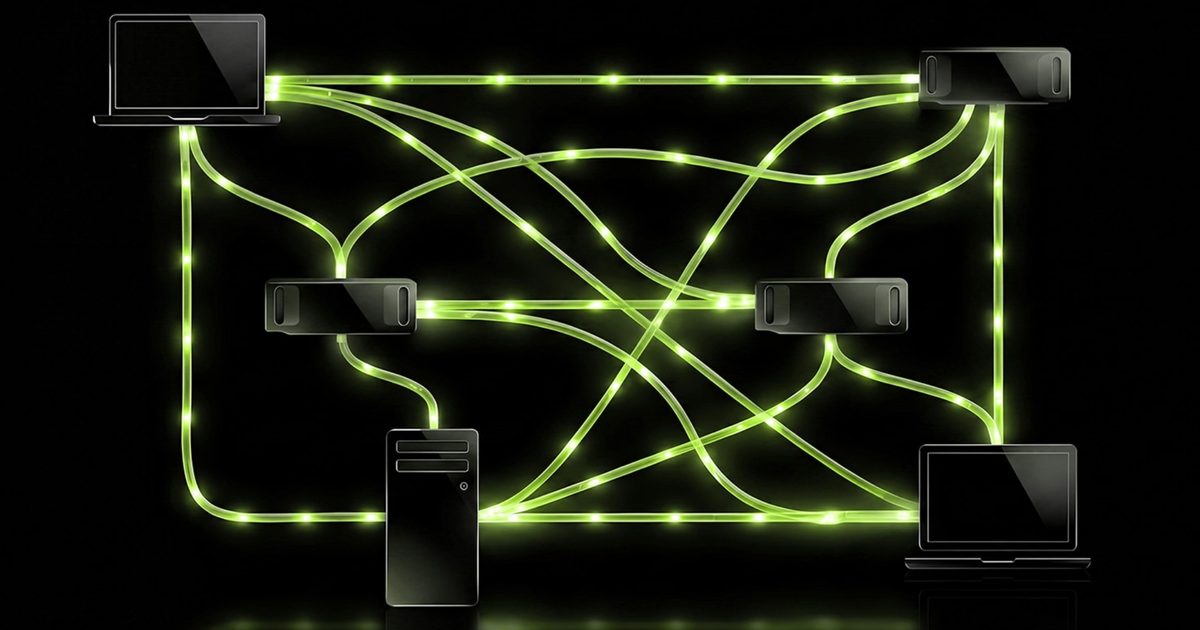
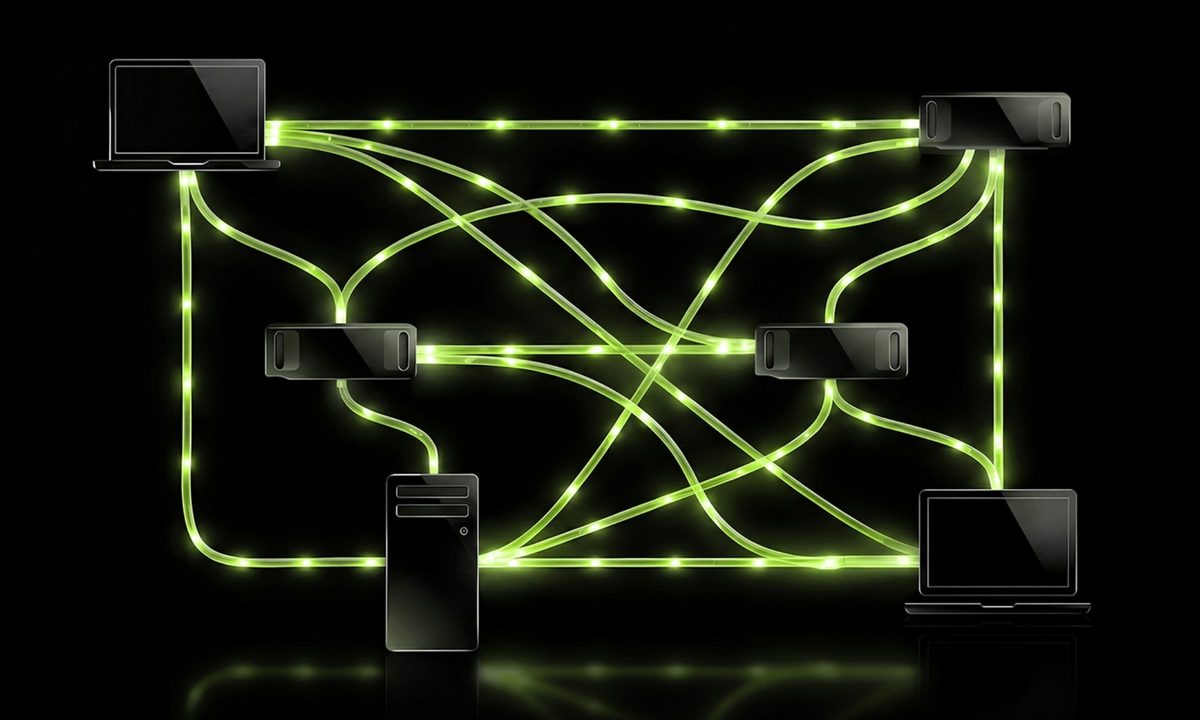
The software is called PAIR. It’s an acronym for Personal AI Router. The open-source software pools the unused computing power from all the PCs in your house and divides a complex AI task among their respective GPUs (which are sitting idle).
So, instead of your main computer tackling the workload, the PCs connected to your local network use their own graphics chips to complete delegated tasks and send the results back to the main computer. This is how the company promises to turn downtime into usable GPU compute.
All of this happens over a secure local network, without requiring an additional purchase or new hardware. Once you install the software, it automatically finds idle PCs on your home network and pairs them for seamless, encrypted communication.
From there, PAIR watches which PCs are actually free and routes AI tasks to those with computational room, while skipping anything you’re actively using. PAIR is a smart traffic manager, if you will (hence the name “AI Router”), not a tool that combines those GPUs into a single powerful processor.
How much compute is actually sitting idle in a typical home?
According to Nvidia, most American households already have two or more PCs. However, those machines are used for just 17% of an average day; around four hours.
Multiply those idle hours across all the computers in a typical home, and Nvidia estimates become genuinely concerning. Families are wasting about 165 teraflops of processing power, roughly equivalent to leaving a high-end gaming PC sitting idle all day.
Put a dollar figure on it, and the pitch behind PAIR gets even more compelling. Nvidia claims that running those idle machines, even at 60% utilization, could process around 120 million tokens a day with a mid-sized open model, or several million tokens an hour with a larger model. Outsourcing this type of AI workload would otherwise cost roughly $1,200 a month through cloud-based AI services, plus up to $120 in added electricity costs.
Starting today, the beta is live for Windows, macOS, and Linux, covering NVIDIA RTX 20-series GPUs and newer models, including RTX PRO workstation cards, DGX Spark, and Apple M4 or newer Macs.

For more than five years, Shikhar has consistently simplified developments in the field of consumer tech and presented them…
Lenovo puts Nvidia RTX Spark into its new Yoga Pro laptops for local AI at IFA 2026
Lenovo unveils RTX Spark-powered Yoga Pro 9n and Yoga 9n 2-in-1
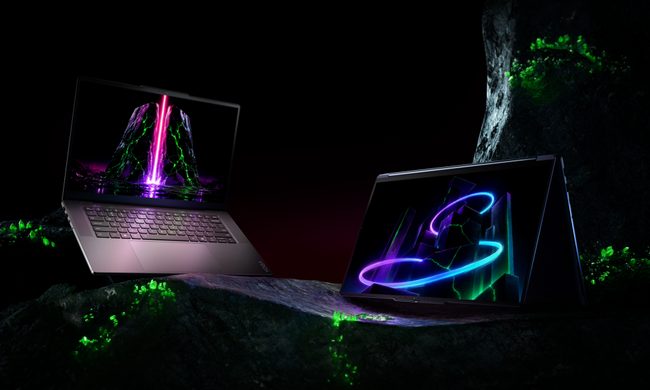
Lenovo is taking its Yoga lineup into a more demanding AI era, announcing new creator-focused laptops powered by Nvidia’s RTX Spark platform at IFA 2026. The company says the new Yoga Pro 9n and Yoga 9n 2-in-1 are designed for people who need substantial computing power for AI development, content creation, software development and 3D rendering - without sending every workload to the cloud.
The announcement is part of Lenovo’s broader push to make AI a more integrated part of personal computing. Rather than treating AI as a collection of individual features, Lenovo is pitching these machines as systems capable of running increasingly sophisticated AI models locally.
Lenovo reveals iMac rival that upstages Apple with more goodies at a lower price
A faster 120Hz touch-sensitive display, IR camera, plenty of ports, and a lower asking price.

A big theme of IFA 2026 has been brands making products that can catch up with Apple's computing gear, or even one-up the hot new Macs. Dell did it. Acer did it. And it seems Lenovo is fully on board with that trend, as well. Though the IdeaPad Vibe stole all the attention as a potent MacBook Neo rival, the company also dropped a competitor for the iMac with a handful of extra goodies. Say hello to the Lenovo IdeaCentre AIO i, which mimics the color palette of Apple's all-in-one machine and color-matched I/O accessories as well, but with slightly muted tones.
Lenovo says it worked with the Pantone Color Institute to pick the shades for its latest all-in-one desktop, which comes in Dreamy Violet, Radiant Coral, Zen Green, Luna Grey, and Cloud Grey color options. Beyond the obvious iMac inspiration, there are a few areas where the Lenovo machine stands out, despite a lower asking price.
Lenovo’s new IdeaPad Vibe offers more versatility than Apple’s MacBook Neo at a similar price
WIth multiple chip options, OLED displays, expandable storage, and a generous array of ports, Lenovo's new budget laptop gives buyers more flexibility.
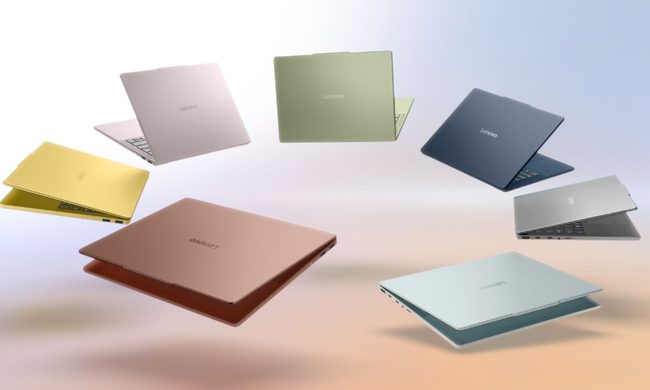
Lenovo is taking aim at Apple's budget-friendly MacBook Neo with its new IdeaPad Vibe series. Announced at IFA 2026 in Berlin, the lineup takes a more playful approach to mainstream computing with bright color options, modular styling tweaks, and a broad range of silicon choices.
Personality and practical design choices











/cdn.vox-cdn.com/uploads/chorus_asset/file/25334828/STK466_ELECTION_2024_CVirginia_F.jpg)