Saga Dawa Düchen (Tibetan Tradition) Sangye Düchen Nyangde Duchen 300 MILLION MERIT DAY!
This full moon day of the auspicious fourth month of the Himalayan lunar calendar is also known as Sangye and Nyangde Duchen. This day commemorates both the Enlightenment and Parinirvana of Shakyamuni Buddha. The entire Lunar month, which began...
 Hollif
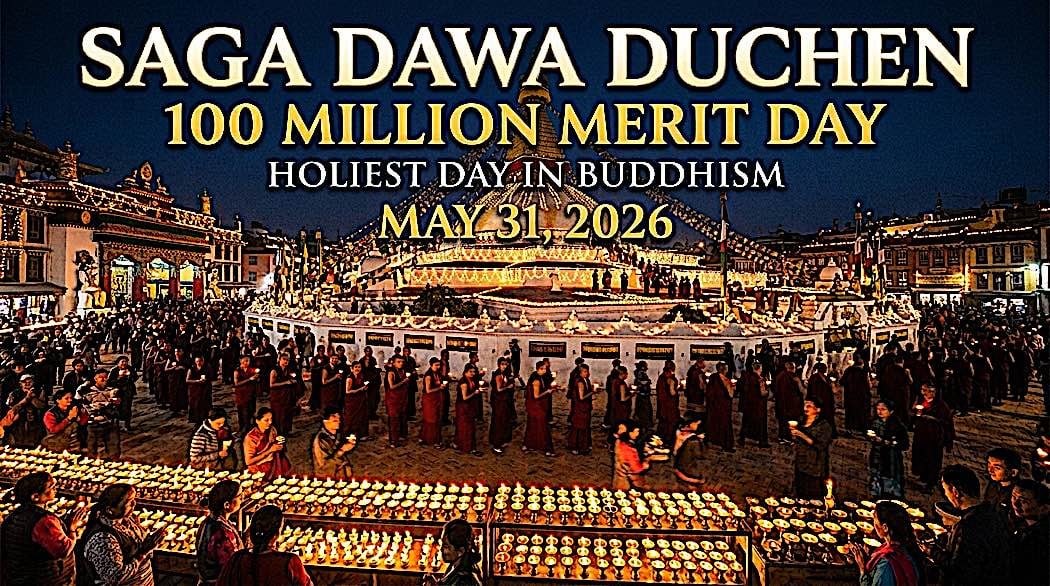
This full moon day of the auspicious fourth month of the Himalayan lunar calendar is also known as Sangye and Nyangde Duchen. This day commemorates both the Enlightenment and Parinirvana of Shakyamuni Buddha. The entire Lunar month, which began May 17, and ends June 15, 2026 is auspicious and merit for good deeds is multiplied.
Saga Dawa Duchen, on the full moon of the “fortunate month” of Saga Dawa is a day of highest merits — may all beings benefit! Every positive karma activity is multiplied 300 Million Times on this most sacred of days according to sacred texts.
How to Celebrate Saga Dawa Duchen
The most important day in the month (perhaps for the entire year, for many Buddhists) is Saga Dawa Duchen on the full moon. Duchen means “great occasion,” and this year falls on the full moon day, May 31. It is similar to Vesak in Theravadin Buddhism — celebrating the birth, Enlightenment and Paranirvana of Shakyamuni Buddha, but is based on the Tibetan lunar calendar. Both are the “4th month” of the lunar calendars, but they are calculated differently. (See this feature on lunar confusion for clarification>>)
The day of the “Great Occasion” this year on May 31, 2026 is the best day of the entire year for “making merit” for the benefit of all sentient beings. In addition to the 8 precepts, other activities recommended include:
Strongly recommended by Lama Zopa: do a Shakyamuni Buddha Puja. There are long and short forms of this Puja, downloadable here from FPMT>> Reciting the Sutra Remembering the Three Jewels [For a feature on the benefits of reciting sutra out loud, see this special story>>] Your regular daily practices. Reciting sutras, such as Vajra Cutter Sutra, Sutra of Golden Light, and Sanghata Sutra Reciting other prayers, such as Chanting the Names of Manjushri, and King of Prayers Undertaking Nyung nes Performing self-initiation, for those who fulfilled the necessary prerequisites (normally only for people who have completed a particular retreat protocol and fire puja.) Performing Lama Chopa, and at either the beginning of the practice or during the lamrim section, you can meditate on emptiness Reciting the names of the Thirty-Five Buddhas, with prostrations Reciting Vajrasattva mantras Reciting OṂ MAṆI PADME HŪṂ with bodhichitta Meditating on emptiness and dependent arising Meditating on bodhichitta Practicing tonglen Rejoicing Liberating animals Listening to Dharma teachings (live or online is fine). For those with the empowerments, Kalachakra practice — Shakyamuni Buddha’s Highest Yoga form — or your own Yidam practice as a long Sadhana with Tsog.Taking the 8 Precepts for a day
The late, great Lama Zopa recommends taking the full 8 precepts — the precepts of a monk or nun — for the day. Traditionally, lay disciples follow five of the precepts — but for the day they take all eight. This should be done in the early morning (earlier the better!) He explains: