Navel, Bury
Following her child’s birth, a new mother reflects on the true meaning of home. The post Navel, Bury appeared first on Tricycle: The Buddhist Review.
 JimMin
A week after the birth, baby’s umbilical cord fell off. It was brown-purple-black, the color of dried blood, and brittle. The end that had been cut fanned out and curled at the edges, like an ear or a flower. Where the stump had been, baby’s skin puckered and oozed a thick pus that smelled like rot. The sight of his tender, newly made belly button made me cry. I insisted we keep the umbilical stump. It was grotesque, like all body parts are once removed from the body: hair, nails, teeth—but the grotesque was what I wanted to preserve. The memory of my husband clamping the cord, a translucent rope the lavender-gray of mollusk shells, bright red drops of blood splattering on baby’s cheeks.
***
We live on the first floor of a little white house built in the year 1880. Above us live two statisticians and their cats, and below us is the unfinished basement where we have found spiderwebs, the carcasses of crickets, and mice droppings. I am afraid of the basement, as I am of all basements, but I no longer believe it is haunted. Our street is named after a tree, or a nut, or a color of wood, and is so small that our house is one of only two on the block. The front door opens onto a vestibule, which opens onto the front porch, and from the front porch I can see, in the east, the bell tower of the chapel. An emblem of the college.
The town where we live and the college where we teach have the same name. The college is named after the town and the town is named after a man, and the man, of course, is named after other men—his father, and his father’s father, and so on. But it is the singular man—and not the forefathers who passed down his name—for whom the town is named. This singular man, the namesake, was a man of violence, and much has already been written about him. I do not want to write more. I do not want to name him. I want, perhaps, to un-name him, to take his name away, wrest it, pry it loose.
***
After baby’s umbilical stump fell off, my mother, who was visiting from across the country, said it meant this place was baby’s မွေးရပ်မြေ.
What is a မွေးရပ်မြေ? I asked.
I had never heard the word before, though I knew its component parts, ချက်—navel, and မြှုပ်—to bury.
Hometown, my mother said in English.
***
At the end of my first trimester, my husband’s mother gives me a journal, along with an annotated copy of What to Expect When You’re Expecting. The journal is meant to record my pregnancy. I do not know what to write in it. I have spent the past three months immobilized by nausea. Every day I lie in bed or on the sofa beneath an open window. It rains, or snows, or the windchill falls below freezing, and I press my face against the window screen. It is the only way I can breathe. If I cannot lie perfectly still, I retch. I keep a bucket nearby, though I prefer the toilet bowl. I retch, heave, gag, but can rarely make myself vomit because I am barely eating. I cannot remember the feeling of hunger.
My husband is desperate to help, but neither of us can guess what would be helpful. All I want is for the nausea to dispel, though I know I should want baby more. I do want baby, very much. It is just hard to believe that there is, or will be, a baby at all. My belly, which was never flat, remains the same in its soft roundness. I have lost rather than gained weight. My body does not look or feel different, not even to me, not even to my husband, though I question him daily.
Do I look pregnant yet? Look at me. Look at my belly.
No, he says each time. No, you don’t.
Sometimes, he sounds weary when he answers. Sometimes almost irritated. Sometimes it makes me cry. The journal from my husband’s mother is hardcover, faux-antique with gold accents. I do not think it can contain my experience.
***
The first time I visited this place where we now live and where baby is born, I was 21, a senior in college. The evening light falling into my lap. My friend was going to see his girlfriend, and I came along so I wouldn’t have to spend spring break alone in my empty dorm. Driving through a thicket of trees, the gauzy tips tickling the sky. I was already a writer then. Brick houses, the village rotunda, an expanse of land lying flat along the highway. I kept not a journal exactly, but an array of journals and loose pages, sheets torn out of school notebooks, then typed up. A farmhouse, a line of trees. My memory of this trip is now inextricable from what I wrote then. It was the night. On the drive over, I made the mistake of telling my friend I liked all music, and he played country songs about trucks the whole time we were on the interstate. It was the day, and the day after, and the weekend, the Wednesday through Sunday of the week, and the whole week. When we turned onto the back roads, though, I remember only silence. The last real spring of my life. I remember the little wells beside farmhouses, stone walls rising and falling like breath. The Trapeze Swinger, and how gossamer the trees. We drove past what could only be described as pastures. How the light was falling. We felt what could only be described as longing. Seeping into the earth again. Longing for the drive to never end, for the village rotunda to take us round and round. Stacking pebbles into small piles. I did not want my friend to stop the car, for us to step out into the cold, the snow still on the ground. Lovers’ graffiti etched into the gazebo by the pond. The pond water so still. I did not want to arrive.
***
There is no written record of my mother’s pregnancies, and no archive of my early childhood. The first picture that was ever taken of me was when I was already nine or ten months old. My husband’s mother asked for pictures of me as an infant, and I did not want to explain why there were none. I was born at a time of political upheaval, a military dictatorship renewing its reign of terror, and my parents had no time for mementos, only for survival. Or perhaps no photos existed of me, no photos existed of anyone in my family at that time, the year of my conception and the year following my birth—1988 to 1990—because cameras were not readily available to ordinary citizens, or because ordinary citizens were afraid to be caught holding cameras, because it was dangerous to be taking photos at all, because the military junta wanted no record of what was happening in the country.
***
The second time I visited this place, I was 29 and ABD, an acronym I found depressing since I learned it in my penultimate year of graduate school. I was picked up at the nearest airport the next state over and driven to this town, to this college, under the cover of night. When the shuttle—which was just an ordinary car—arrived at the inn where they put me up, it was as if the town materialized out of nothing, out of the pitch dark. It felt like waking up from a dream.
ABD means all but dissertation. It is a liminal state that could last only a year, or several years, or an entire decade, or the rest of one’s life, as was the case for my father. I was already past the halfway mark of my first year as ABD, and my dissertation, my second book, was not anywhere close to halfway finished. I was beginning to fear I would never finish it.
Dinner my first night was at the inn’s restaurant with the search committee. I was overdressed and pretended to be more familiar with Isabelle Eberhardt than I really was. From my potential future colleagues, I learned that the risotto was good and that the inn had historically and recently been named something else, after the former school mascot, the same man for whom the town and college were named. The inn’s name was changed and the mascot was removed, not because new information was discovered about the man but because it was no longer socially acceptable that he, generally speaking, had been a colonizer and imperialist, and more specifically, had advocated in his letters for the use of biological warfare against Native peoples.
The next evening, after a full day of formal and informal interviews culminating in a job talk—which did not register in my memory because I was so nervous—I came to in the passenger seat of a colleague’s car. I was being dropped off at the inn again, the campus visit was almost over. In an effort to make small talk, I repeated what I had learned about the inn’s recent name change. The colleague driving me began to explain then stopped. She didn’t want to tell me about the man, the namesake, she said. He wasn’t worth talking about.
***
The first time I heard a land acknowledgment at the college, it was at an event organized by student activists, a panel subtitled “(In)visibility & Asian American Studies Womxn Scholars.” I was an invited panelist, despite having no background in Asian American studies as a discipline. The other panelists were far more qualified, but all of us were visitors. We were gathered in a glass room in the Robert Frost Library called “the Think Tank.” The student introducing the panel said, “I’d like to begin this event by acknowledging that we stand on Nonotuck land. I’d also like to acknowledge our neighboring Indigenous nations: the Nipmuc and the Wampanoag to the east, the Mohegan and Pequot to the south, the Mohican to the west, and the Abenaki to the north.”
East, south, west, north. It made me think of the metta chant I recited every night on my first monthlong retreat. In the eastern direction, in the western direction, in the northern direction, in the southern direction. Free from enmity and danger, from physical suffering, from mental suffering. May all beings take care of themselves happily.
***
I do not write in my husband’s mother’s journal, not only because I do not know what to write in it but also because I do not have time to write at all. I am teaching, attending department meetings, committee meetings, meetings with students, vomiting—or worse, attempting and failing to vomit—before, after, and between engagements. I am also on the academic job market. My second book, which I finally finished right before I became pregnant, is coming out next year. I spend the fall dispatching cover letters like prayers, coveting, then dreading the rare interview and the even rarer campus visit.
Come winter, I am teaching two classes, advising two senior theses, helping to organize a literary festival, and interviewing for days, sometimes weeks at a time. I meet with search committees, presidents, deans, interim deans, provosts, humanities executive committees, undergraduate committees, department chairs, departments, pre-tenure colleagues, diversity, equity, and inclusion officers, diversity and equity advisory boards, graduate students, graduate directors, undergraduate students, and student tour guides, all the while keeping my burgeoning belly off-screen. I talk endlessly about myself until I am bored with myself, until I begin to loathe myself, my writing, my writing process, my teaching, my teaching philosophy, how I think a workshop should be run, what I think the difference is between fiction and nonfiction. After every campus visit, my husband and I swell with hope, imagining ourselves back in California, Colorado, Ohio, then deflate with doubt and anxiety.
Every weekend, I collapse. I fear that the stress I am under is bad for baby. Despite the kindness and innocence of my husband’s mother’s gift, I begin to resent the pregnancy journal, the leisure that is required to keep one.
***
The first photos of me are family photos. They were taken to capture not my babyhood, but the home my father was leaving forever. I think he knew—even then, when the photographs were being taken—that he would not return. The photographs are proof of this knowledge. They are formal and posed. My mother has dressed herself and my sisters and me in matching outfits. In the one family portrait, my mother is seated on a low tree branch. The sunlight illuminates her high cheekbones and her blazing white blouse, her silk longyi drapes over her feet in elaborate folds. My eldest sister stands on her right side, in a sleeveless red dress that ties at her shoulders, white lace at the neck and hem. One of her legs is bent awkwardly behind the other, and with the pointer finger of one hand she grasps the ring finger of her other. It is as if that point of contact is what holds her still. My middle sister is perched behind my mother’s left shoulder, also in a red dress, but with white puffy sleeves and a ruffle collar. She is holding something blurry in her little hands, a toy or a brown leaf plucked from the ground. My father is standing behind everyone. Most of his face is in shadow, and in his dark blue shirt and jacket, he seems to recede into the background, into the trees in his parents’ yard, as if he has already left, as if he is already far away, in another country.
I am sitting on my mother’s lap. I am wearing a white floral onesie and red tights, a floppy bonnet on my head. My brows are deeply knitted and my lips pursed. I am scowling. In almost all of the photographs taken on this day, on the eve of my father’s departure, I scowl. In the arms of my mother, my father, my young babysitter. There is only one photograph, of my sisters and me seated on the wood floor of my grandparents’ house surrounded by our toys, in which I look innocent and curious. This is the photo I send to my husband’s mother when she asks me for a baby picture. She asks if there are any of me alone. Any of me when I am younger.
***
At the launch for my second book—an event that was held virtually, because of the ongoing pandemic, and because I was caring for and nursing a newborn—the moderator asked me and my conversation partner what gods we brought with us to this country. A beautifully odd question I had never been asked before. I remember answering that my gods, our gods, were already here. The cosmology I was raised in included this and every other place. On this earth, and elsewhere, beyond, through, or behind it.
***
Without discussing it, my husband and I both settle on chanting metta to put baby down to sleep. When I was a young child, my mother sang to me in English so I would be bilingual: “Home on the Range”; “Take Me Home, Country Roads”; “Yesterday Once More.” All songs about nostalgia. Songs that I realize—only now that I am the same age my mother was when she left her country—were born out of the pain of exile. That is how my father calls the country where he and my mother were born and where my sisters and I were born: my country.
I sing to baby in Pali, not so he will be bilingual but so the chant will fill baby’s little body, and fill our apartment, and make it our home.
The metta chant is in Pali, the liturgical language of Theravada Buddhism. The language of my name, and the language that the faithful believe was spoken by the awakened one himself. I am faithful as well, but I do not know what I believe. I do not know what belief is, if it is something that must be fixed and hard and jealous. Pali is long dead as a spoken language. I sing to baby in Pali, not so he will be bilingual but so the chant will fill baby’s little body, and fill our apartment, and make it our home. There is more than one way to know a language, I think. More than one way for it to be yours. Perhaps this is true of places as well, even of countries.
***
The third and final time I arrived, I was 30 years old, a newly anointed PhD and a newlywed, though both my degree and my marriage felt unreal, almost fraudulent. I had still not finished my second book. I submitted three-fifths of it as my dissertation and passed my defense. My husband and I had not yet had a wedding, or even an offering to the monks. One morning we drove to city hall and signed papers and were married, and we did not know how to spend the rest of the day.
My official position at the college was Visiting Writer. It was a three-year position, renewable for another three years. We did not know if we would stay a year, or two, or more. For the past decade, my husband and I had both moved almost every single year—across town, across the country, across the world. I had lived in Rhode Island, California, Spain, Indiana, and Colorado, and my husband had lived in Missouri, Taiwan, Colorado, Oregon, Malta, and Colorado again. We met in Denver, a city that felt inhospitable to us—because of its thin air, traffic, rising rent—and escaped together to this place.
We arrived days before our things, our furniture, which was mostly bought for cheap from former roommates, or at the back of thrift stores, or not bought at all but picked up from curbs and alleyways. The cost of moving the furniture far outweighed the furniture’s value, but the college had paid the moving costs, so we packed all of it. When we moved again, we told ourselves, we would buy new things, nice things. In the days before our furniture arrived, we ate on the bare floor in a sunny corner, slept on an air mattress that swayed like a boat, and spent our days wandering around the town. It felt like a camping trip, a vacation. That is all this place was meant to be: a brief respite.
***
We are naming baby based on the day of his birth, so we have to come up with names for eight different days. The week is divided into eight days because eight is an auspicious number. Wednesday before noon and Wednesday after noon are two different days: the gentle tuskless elephant and the tusked elephant. My mother calculates that the luckiest days for baby to be born are Monday, Tuesday, Friday, and Sunday, so we focus on finding names for those days. I collect family names over three or four generations and we scour the internet, but I feel unsatisfied with everything we come up with. My husband’s family, and sometimes my husband himself, cannot pronounce half the names. I joke we should name the baby after my husband and his father, make the baby a third. My husband begs me not to make that joke. We decide on a hyphenated last name despite both families’ distaste for them. My eldest sister says we should use our last name, my middle sister says just pick one, and my parents say there are no last names in our culture. My husband’s sister admits she thinks hyphenated last names are weird and complicated, then takes it back once she realizes why we are asking for her opinion.
Since I am on the job market and we may leave this place soon after baby is born, we consider naming baby after this place. Of course, we do not want to name baby after the man for whom the town is named, but we wonder if we could name baby after a street, or the bike path near our house, or the trails, or the mountains. Perhaps a middle name, we muse, a private tether to the place of his conception and birth.
***
But we do not name baby after this place because we end up staying in this place. We accept a last-minute retention offer from the college. Baby will not only be born here but will also grow up here. It would be embarrassing for him, we decide, to have a local name. Besides, all the names in this place are references to other people, or peoples, languages, and histories that are not ours. Perhaps this is true of all names everywhere. Naming is fraught, impossible.
***
The first photograph of baby is taken minutes after the birth. He is red-faced and screaming against my naked breast. Little forehead scrunched, eyes squeezed shut, nostrils flaring. Mouth open wide, howling. I remember the sharp sound of his cries. How relieved I was to hear them. When the nurse first placed baby on my chest, he was silent, and my heart froze. I heard the nurse yell for something, saw a bulb appear in her hand, watched as she pushed it inside baby’s mouth and squeezed, once, twice. Then, miraculously, he screamed and screamed and screamed. From the corner of my eye, I saw the pediatrician leave the room. A good sign. My husband took this photograph, I think. I remember hearing his voice over baby’s screams. I could not hear what he was saying, but I knew what he meant, because I meant it too. I remember hearing myself say oh my god over and over again, even though I knew it was the wrong thing to say. I did not believe in god, but here was baby; red, warm, limbs long and numerous, and I kept saying god, god, god. The photograph is out of focus, and baby’s face is blurry. This is why I think my husband took it. My hands were shaking too.
***
The one entry I made in the pregnancy journal describes a long walk my husband and I took. It was a rare temperate day in late December. The entry is very neatly written and quite boring. It reads like a set of directions—south on South Pleasant, right onto another trail, cross the golf course, past the football field, up Woodside—and is full of proper nouns we never use: the Common School, Larch Hill Conservation Area, Bramble Hill Farm. My husband and I usually referred to places as that place by that other place or that place we went with so-and-so or that place we passed that time. I do not know why I broke from this in the journal entry, why I felt the need to look up and use the official names of places. Maybe I thought that baby would one day need names and directions to retrace our footsteps, to orient himself. I think now that I was wrong.
***
Baby’s umbilical cord is still in a plastic bag, in a box in the laundry room, unburied. This town is the place where baby’s cord fell off, but it does not have to be his မွေးရပ်မြေ. I want baby to be able to choose where the cord is buried. I want him to be able to name his home.
♦
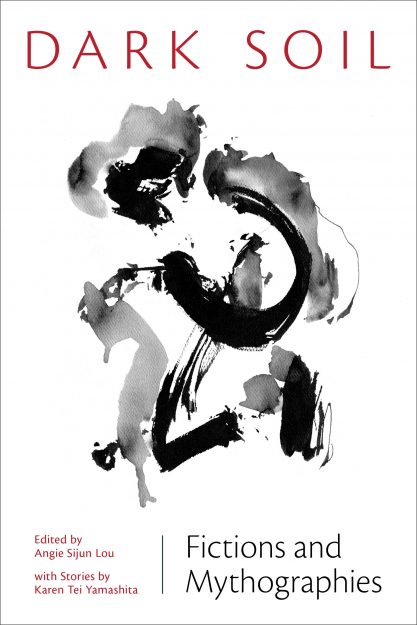
Thiri Myo Kyaw Myint, “Navel, Bury” from Dark Soil: Fictions and Mythographies © 2024, Coffee House Press. Reprinted with permission from Coffee House Press.