The Art of Talking
Psychologist Friedemann Schulz von Thun and scholar Bernhard Poerksen discuss death and the end of communication. The post The Art of Talking appeared first on Tricycle: The Buddhist Review.
 Hollif
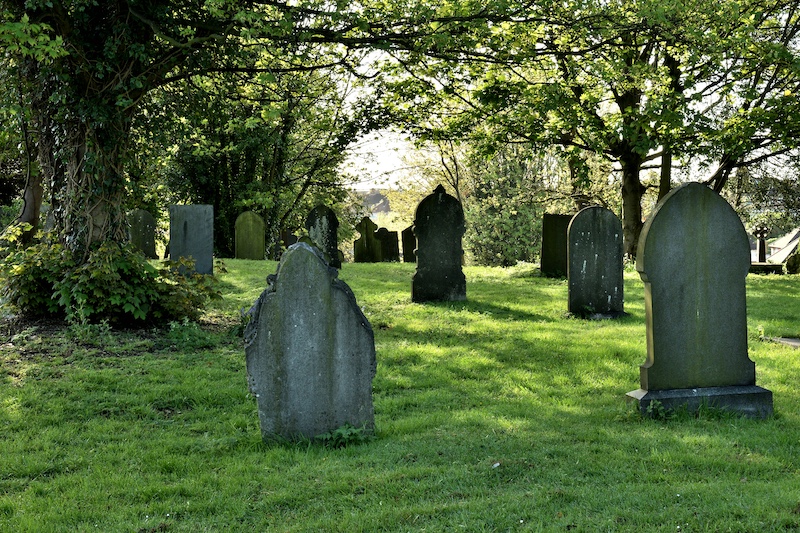
“God is the completely unknown addressee of my gratitude as a creature”
It is a striking fact that many protagonists of humanistic psychology in later life engaged with spiritual and religious questions: Abraham Maslow founded transpersonal psychology with the aim of bringing spiritual experiences into mainstream science. The Gestalt therapist Fritz Perls turned to Zen Buddhism. Roberto Assagioli, the founder of psychosynthesis, ran meditation groups and was a professed Theosophist. The talk therapist Carl Rogers said that any description of the world had to be open to the mysterious dimensions of other, barely comprehensible realities that existed alongside the objectively describable universe. And the psychologist Ruth Cohn, who lived for a long time in the United States (including at the Esalen Institute in Big Sur, California), openly wrote about her experiences of God in the mountains.
In the following conversation, media studies scholar Bernhard Poerksen talks with humanistic psychologist Friedemann Schulz von Thun. Much like in the examples above, Schulz von Thun’s thinking, too, reveals an implicit spirituality and reflects on impermanence, a fundamental truth of Buddhism, which can be the cause, yet also the overcoming, of suffering. Schulz von Thun does not employ Buddhist vocabulary but, rather, uses the language of psychology. He is one of the most widely read and influential psychologists in the German-speaking world and has made the art of talking with each other his life’s theme. Coauthored by Bernhard Poerksen and Friedemann Schulz von Thun, the book Communication as an Art of Living: The Philosophy and Practice of Talking with Each Other provides an introduction to Schulz von Thun’s communication psychology in dialogic form. It takes on the big questions of human existence, and the search for meaning, truth, and happiness in the face of mortality, illness, and death.
Bernhard Poerksen (BP): At the moment, we are constantly exposed to images of injured and dead people. Death is currently a regular guest on news programs around the world. How does this cumulative violence affect viewers who are actually not directly involved?
Friedemann Schulz von Thun (FST): I see three possible reactions: First, plain indifference and ignorance—we humans are masters at fending off fear! Second, all kinds of avoidance reflexes designed to not let these horrific images get to us. And finally—this, too, is a conceivable response—a vague fear, a feeling that the impacts are closing in and that the conflict zones are expanding unchecked.
BP: Can images of violence and torture also raise a kind of awareness of the finite nature of human life? So the meta-message of the horror would be to confront the fragility of one’s own existence.
FST: No, I don’t think so. Admittedly, these images can unsettle a primal sense of safety and security. But irrespective of extreme events such as experiencing violence and war, the awareness of finiteness is also there in our everyday lives. Deep down inside and regardless of the current news situation, we know, of course, that we must die.
BP: You have spent a lifetime thinking, studying, and writing about communication. So I’d say that you have basically always been concerned with how to go on living and talking. The premise has always been that it is possible to talk again one more time—provided you’re alive, strong, and healthy enough. Seen from this perspective, death must seem like a scandal that brutally destroys the chance of a new beginning in the sphere of communication.
FST: Here’s my response: Whether you see death as a scandal depends on your worldview and on your existential self-concept. If you see yourself as the pinnacle of creation and are a bit narcissistically inclined, then death is the maximum insult. If you bear in mind that your life can become very painful, death can be a release—a kind of life insurance that the agony will not last forever. Perhaps in that case you will welcome death as a good friend, and medically assisted suicide as a merciful prospect. And if you bear in mind that you have been invented as a link in a chain, exactly in between those who went before you and those who will come after you, it makes sense to clear the way.
BP: And yet it is only natural to see death as an enemy. All religious and philosophical attempts at consolation notwithstanding, death is a horrible fact.
FST: Because it destroys everything we love? Of course, we could say with Arthur Schopenhauer that the way our life is constructed is an intolerable abomination. First, we are seduced into falling in love with life. And just when we have become one and friends with ourselves, we receive our death warrant, which we actually carry around with us from the moment we are born.
BP: Woody Allen once formulated this regret about one’s own finiteness in a both funny and yet melancholy way: “Someone once asked me if it was my dream to live on in people’s hearts. I said that I would rather live on in my apartment.”
FST: For me, the question is: What attitude toward death is worth striving for? What attitude can help me feel positive about life even though it has this inbuilt expiry date? I’ll give it a try: Isn’t sleep scandalous too? We are here on this planet for such a short time—and then we miss out on a third of this precious time by sleeping! And yet, if the day was exhausting and full, it is wonderful to drift off into sleep; I am not going to complain about that. So perhaps, analogous to this little death, a fulfilled and rich life can at some point result in a deep satiation and tiredness with life, so that it seems congruent and right to smoothly drift off into death?
BP: But the certainty of waking up the next morning makes drifting off into sleep infinitely easier—and perhaps only beautiful in the first place.
FST: You’re right, I agree! If you had the certainty that death, too, is only the beginning of a transformation toward something new, that there will be another awakening and a new day, though perhaps not in the traditional sense of the word, it would be much easier to admit this feeling of delicious weariness, to rest easy and close your eyes. Unfortunately, I don’t have this certainty, and if I’m not mistaken, you don’t have it either.
BP: No. To me, such a belief ultimately seems an attempt to console us for an existential meaninglessness and homelessness that we don’t want to look in the face.
FST: But we’re not quite that existentially homeless, after all. The fact that the two of us are sitting here, that we are breathing and having a friendly conversation and a roof over our heads in case of rain, shows that we are very much at home on this earth. What I am trying to get at: Your hypothesis of cruel meaninglessness and homelessness does not resonate with my own experience of life.
BP: But all that remains at the end is a bagful of dust.
FST: Yes, at the end! But before that lies our whole life—for example, right now, this very moment, when we are sitting here across from each other and looking at each other. It’s true that we cannot live forever. But by looking at everything from the perspective of the end, you run the risk of demonizing death and giving it a significance that defines and overshadows your entire life.
BP: That’s a different way of looking at it. Would you say that it is simply a matter of different perspectives that one is more or less free to choose?
FST: More or less. Whether I allow myself to be impressed by this sensational and mysterious life or whether I am totally caught up in the fact of my own finiteness is a choice I make. As a matter of fact, I believe that it is right and necessary not to give too much power to thoughts of the end in order not to have death hanging over your childhood, youth, and adult life like the sword of Damocles. That would be a shame, wouldn’t it? Death is powerful and important, but there is, after all, one thing it cannot take away from us: having lived and possibly having lived this wonderful life to its fullest. On that score, death is a powerless fellow.
BP: Your entire work, your entire psychology of communication aims at talking with each other, at negotiating different perspectives, at compromise. Death, however, is not able to compromise; it is final and absolute. So I am surprised that the fact of death does not make you much angrier. It threatens life and an art of living that strives for compromise and balance. It is existentially and intellectually annihilating.
FST: On this issue, I am indeed not as upset and angry as you are. The awareness that I am doomed to a human fate, that I was born without being asked and that I will die without being asked and that, in the time in between, fate will offer and foist some things on me that I really can’t take credit for—this awareness of being lived suggests that a certain humility toward fate is a congruent attitude to life. At the same time, we are tasked with unfolding our potentials and talents, and thus, more or less, become a responsible subject and the author of our own life’s story. What matters is that we combine these two things in our thinking and in our lives.
BP: If I understand you correctly, it is about balancing humility toward fate and self-determination.
FST: Yes, I think so. For if we only feel humility toward fate, we will end up as resigned fatalists who do not take responsibility for our lives. If we only believe in self-determination, we might end up with a feeling of omnipotence that is not only maniacal but also comes with a painful over-responsibility—along the lines of: As true author of everything that’s going on, I am responsible for everything that happens to me.
BP: The writer Wilhelm Schmid, author of numerous books on a philosophy-inspired art of living, once presented a kind of ratiocination solution to the problem of death. His proposition is that, no matter what, it is wise to imagine death as merely a kind of transition, as this would make life easier and more tolerable in the here and now. He argues that, ultimately, everything is a matter of faith, and that nobody knows anything for sure. So we are free to choose what to believe. If something came after death, we could continue to enjoy our existence. If nothing came after, it wouldn’t matter either—for everything would be over and done with, anyway. In short, Schmid recommends the belief in a life after death as a happiness-inducing hypothesis.
FST: This seems to be a smart, or at least clever, solution. But this will only work if this belief is also confirmed in the deeper levels of your psyche; otherwise, it will remain a figment of the mind and not take hold of the whole person. I don’t want to criticize his suggestion; it’s just that I probably wouldn’t be able to do that. For it assumes that you first choose, from among the various possible positions, the most agreeable one and then decide to believe in it. If I did that, I would not be able to shake off the feeling that I was deceiving myself in order to console myself.
BP: How would you describe your own position?
FST I am not at all sure whether there is something after death that will transcend my current existence. It’s probably most likely that everything will be the way it was before my conception—infinite nothingness, as far as I can remember. But I cannot be sure of that either, because I am only a speck of dust in this mysterious universe, equipped with a cognitive apparatus that is barely suitable to help me find my bearings on planet Earth. This world, including myself and my life on earth, is a big mystery to me, from top to bottom. At times, I am seized by humility and awe—and this, to me, is existentially more congruent than pretending to hold firm beliefs.
BP: What you call mystery, a mystic would probably call God. God would thus be a cipher for the wholly Other that cannot be grasped by mental categories.
FST: If this is your definition of God—as a cipher for the mystery of being—then I am sometimes close to God. For me, God is the completely unknown addressee of my gratitude as a creature. I say “creature,” because nothing that makes me, me—eyes, ears, heart, genes, blood, hands, legs, sex, brain, etc.—is something I made, ordered, or invented, but it was all there—complete with the “self” that identifies with this ready-made life.
BP: Does this formulation of the unknown addressee of your gratitude hold a more specific religious meaning for you?
FST: Religious, yes, but not in the church sense. For me, the story of creation told by the theory of evolution, astronomy, and the natural sciences seems actually much more awe-inspiring than the creation story told by the Bible. So I am supposed to have been created from two tiny cells, one from my mother and one from my father? And then this tiny lump of cells is supposed to have grown millionfold in the womb of somebody descending from predators and mammals, based on a construction plan that can be found inside these cells? Hello? I can trace back my ancestors to the beginnings of life on earth? And there is still something of the fish inside of me—this ancestor who lived in the water, who ate and was eaten? Hello? Without a single exception, all my ancestors have “procreated” before being eaten or dying some other way? What a tradition of survival artists across hundreds of millions of years! It’s all quite incredible and breathtaking, right?
BP: I’ve noticed that many protagonists of humanistic psychology engaged with religious questions in later years: Abraham Maslow founded transpersonal psychology, a psychology of spiritual experiences; the Gestalt therapist Fritz Perls turned to Zen Buddhism; and Ruth Cohn candidly wrote about her God-experiences in the Swiss mountains.
FST: Well, I am still—if you allow me this little ironic deflection of your big and heavy questions—a young man, so who knows what I will be up to should I actually grow as old as Carl Rogers or Ruth Cohn? I am still stuck in an earthbound pragmatism and am only gradually and somewhat timidly opening up to the spiritual questions that we have talked about. I am almost tempted to say that I have no “spiritual skills.” But something’s happening. Slowly. I notice that occasionally, and more and more frequently, figure and background change places.
BP: What do you mean by this analogy from Gestalt psychology?
FST: What I mean is that, in my everyday life, the awareness of the mystery of being remains far in the background. The figure in front consists of the real-life pragmatism of the daily matters that monopolize my time. But now and then, and more and more often (partly this happens by itself, partly I try to induce this state), figure and background change places: I suddenly get a glimpse of the amazing mystery of my being while engaging in routine activities such as, for example, climbing stairs. In moments like these, climbing stairs is not merely a means to an end, to get somewhere, but a moment that happens for its own sake.
BP: Can you elaborate on this thought?
FST: It’s not easy to explain. It’s this sudden sense of being humbled and awed that here I am, climbing these stairs in an erect posture (an achievement I owe to my most recent ancestors), my mind set on a goal, seeing and breathing and feeling a certain way. In this moment, the cosmic mega-sensation of which I am a final descendant steps out from the background of incidental matter-of-factness into the foreground of my awareness. This can lead to a sense of life’s preciousness, which is heightened by the knowledge that I will not be able to climb these stairs forever.
♦
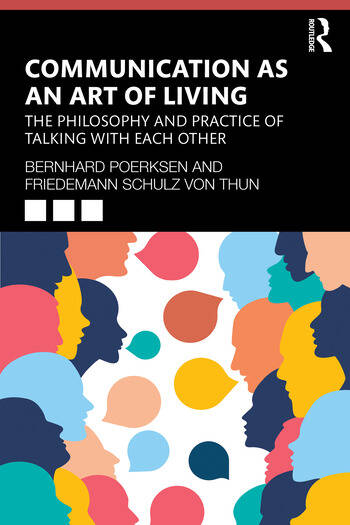
This conversation is an abridged and edited excerpt from Communication as an Art of Living: The Philosophy and Practice of Talking with Each Other by Bernhard Poerksen and Friedemann Schulz von Thun, published by Routledge on July 13, 2026.





















.jpg&h=630&w=1200&q=100&v=c0f97a310e&c=1)

.jpg&h=630&w=1200&q=100&v=c0f97a310e&c=1)