The Paradox of Letting Go
The self cannot be the one to unbind itself, and seeing this clearly is where liberation begins The post The Paradox of Letting Go appeared first on Tricycle: The Buddhist Review.
 ValVades
The difficulty of letting go is not just that we cling too tightly, but that the very stance from which we try to let go is itself the bind. This is the spiritual double-bind: every attempt at release quietly tightens the knot.
Our culture has trained us to approach everything as a project: define the problem, apply a method, track results. Even in spiritual practice, this same logic takes over. We imagine we must “practice letting go” as if unbinding were one more skill to master. But the moment we treat it this way, we reinstall the very structures we are trying to escape: the self as agent, the world as obstacle, the present as stage for success or failure. That is why practice so easily slides into the rhythm of progress and setback. A glimpse of openness is chalked up as achievement; a lapse becomes evidence of failure. Calm and clarity are logged as proof that “I” am advancing. The framework of gain and loss remains intact, while the outputs—self, world, time—go unquestioned.
Letting go is not about loosening a rope—it is about realizing the rope was smoke all along. The error was never in failing to untie it, but in mistaking it for something solid. The self we strive to perfect, the world we try to master, the time we try to capture—these are not foundations but appearances. Once this is seen, there is nothing left to grasp or release. The project dissolves because its premise was never real.
This is the paradox: letting go is impossible if we think the self is the one who must do it, but inevitable once we see that the self’s claim to be the unbinder is only an appearance. In that collapse, openness reveals itself as already present.
Letting go, then, is not something we perform but something we stop insisting must be done.
Letting go, then, is not something we perform but something we stop insisting must be done. It is not a technique, but a recognition that self, world, and time have never stood apart from immediacy. The paradox does not block the path; it clears it. What remains is not a method to master, but a new vantage: to shift attention from what binds to the openness that has always been here.
Exercise: A New Focus on Space
We’ve reached a threshold. The paradox of letting go cannot be resolved by thought or effort; it can only be felt through another way of inhabiting experience. That is why, at this point, it is helpful to return to the body—not as a possession of the self, but as a living doorway into openness.
Settle into a comfortable posture. Let the body rest as though supported by something vast and unseen, as if space itself were holding you up. There is no need to control the breath or manufacture calm. Let everything be as it is, but notice the quieting that comes when you no longer insist on managing.
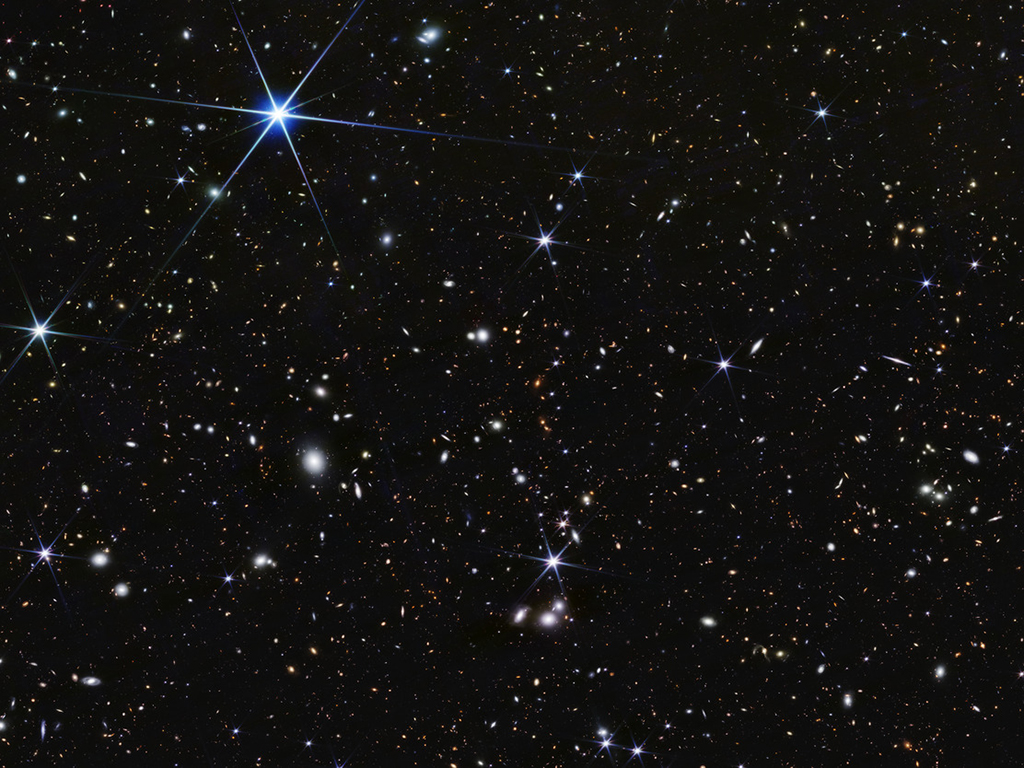
Now, bring to mind the sense of “having a body.” Feel the weight of it, the way it sits here. Usually, we take this as proof of our location: I am here, inside this body, looking out. For a moment, let that assumption soften. Instead, imagine the body as translucent, its outlines less rigid, as though every cell were open to space. Organs, bones, tissues, all being gently porous, pervaded by a vitality that belongs not to you but to the openness in which the body appears.
See if you can sense this “giant body,” not limited by skin or contained by posture, but expanding beyond your frame. Arms and legs dissolve into the room; the room itself dissolves into a wider atmosphere. It is not that your body extends outward like a balloon, but that boundaries no longer define what is inside and what is outside. The body is appearing within space, and space is alive within the body.
Notice also the observer: that subtle sense of a “someone” registering what is happening. Instead of treating it as the owner of the experience, let it be part of the same field, another shimmering appearance within openness. The watcher is not behind the eyes, directing attention. It too is floating in the vastness, a momentary flicker in the same space that allows breath and sound and sensation.
The body is appearing within space, and space is alive within the body.
Allow this recognition to deepen: the mind, like the body, is not a fixed and continuous thing. Thoughts rise and dissolve like currents in water. The “I” that claims them appears and disappears just as fluidly. None of it needs to be held together. Space supports everything without requiring a center.
In this openness, savor the freedom from narrow preconceptions. There is no need to manage what arises, no need to measure success. Even the thought Am I doing this right? can be welcomed as another ripple in space. The point is not to suppress or transcend, but to notice that everything—body, mind, observer, question—is already appearing within a vastness that is inexhaustible.
Let yourself rest here. Not as someone resting in space, but as the resting that space itself makes possible. This is a new focus, not on the body or the mind, but on the openness that allows them both to appear. The more you taste it, the more you see: space is not a backdrop, not an emptiness, but a living capacity that can host infinitely many perspectives without ever being diminished.
When you are ready, open your eyes. Let the world appear, not as something outside you, not as something to manage or hold, but as part of the same openness in which you, too, are shimmering. Space supports it all, effortlessly. There is no cave, no barrier, nothing standing apart. Only the play of appearances within an openness that was here all along.
Reflection
This exercise points to a simple but radical shift. Letting go is not a task to perform. It happens when we notice that body, mind, and even the watcher of experience are already appearing within space. Nothing needs to be managed or held together. Seen this way, self and world are no longer fixed poles staring at each other across a divide. They are expressions in the same field, given together. Space is not a backdrop or container but the openness that makes every appearance possible.
The value of this recognition shows up in ordinary life. A conversation, a walk down the street, even the moment before sending an email—each unfolds within the same accommodating space. The sense that “I” must secure, control, or validate the moment begins to ease. Sometimes this feels liberating, sometimes it feels disorienting. Both are signs that the old stance is loosening. What once seemed like a solid foundation is revealed as a projection, unnecessary to carry. Space does the work for us, it always has. The lesson is straightforward: to live as though openness were already the ground of our being, because it is. Having tasted immediacy, notice the old habit that returns almost automatically: the sense that what matters lies behind us or ahead of us on a path.
♦

From Mind Space: Discovering Meditation without the Meditator, by Ronald E Purser. © 2026 Dharma Publishing. Reprinted with permission.