Your Partner Is Not Your Project
Why you can’t control how others practice—especially your loved ones The post Your Partner Is Not Your Project appeared first on Tricycle: The Buddhist Review.
 Troov
Troov

Devon has been practicing meditation intensively for nearly thirty years. She’s spent six of those years in deep retreat, the kind where you sit ten or twelve hours a day, alone with your mind for months at a time.
So it comes as a surprise to us both when, for reasons I can’t quite fathom, I think I know what she should be doing with her mind on the cushion, or whether she should be on the cushion at all.
There are few things that irritate devon more than this persistent habit.
And yet. There it is. A small tightening. A quiet sense that I can see something she’s missing. That if she would just—and here the sentence completes itself differently on different days: Sit longer. Go deeper. Let go of that. Try this.
In the Buddhist tradition, there’s a word for this tightening: upadana. Usually translated as clinging or attachment, we feel upadana in the body as something more like contraction, a bunching up around how things should be, or could be. Around a desire. A view. An identity.
And that, it turns out, is painful.
***
A student of mine, Sarah, has been practicing for eight years. Her husband has never meditated. When he gets reactive, she watches him the way you’d watch someone fumbling with a lock you know how to open. She doesn’t say anything. She has learned not to say anything. But the watching is active, and he feels it. Maybe he can’t name what he feels exactly, but he carries a faint but persistent sense that he is failing some test he never agreed to take.
Sarah’s slight tightening doesn’t always show up as a thought. More like a small closing down.
This is upadana in the body. And in intimate relationship, it has a particular texture. It doesn’t obviously arrive as craving. It can look like clarity. Even care. Or the oh so reasonable assumption that you can see something your partner cannot yet see, and that seeing it puts you in a position to help.
Upadana, in other words, doesn’t announce itself. It just quietly organizes your attention around a fixed point: for instance, like the gap between where your partner is and where they could be. And once that gap is all you’re looking at, everything filters through it. Their struggles confirm it. Their moments of insight might even confirm it. The gap persists, because you maintain it.
***
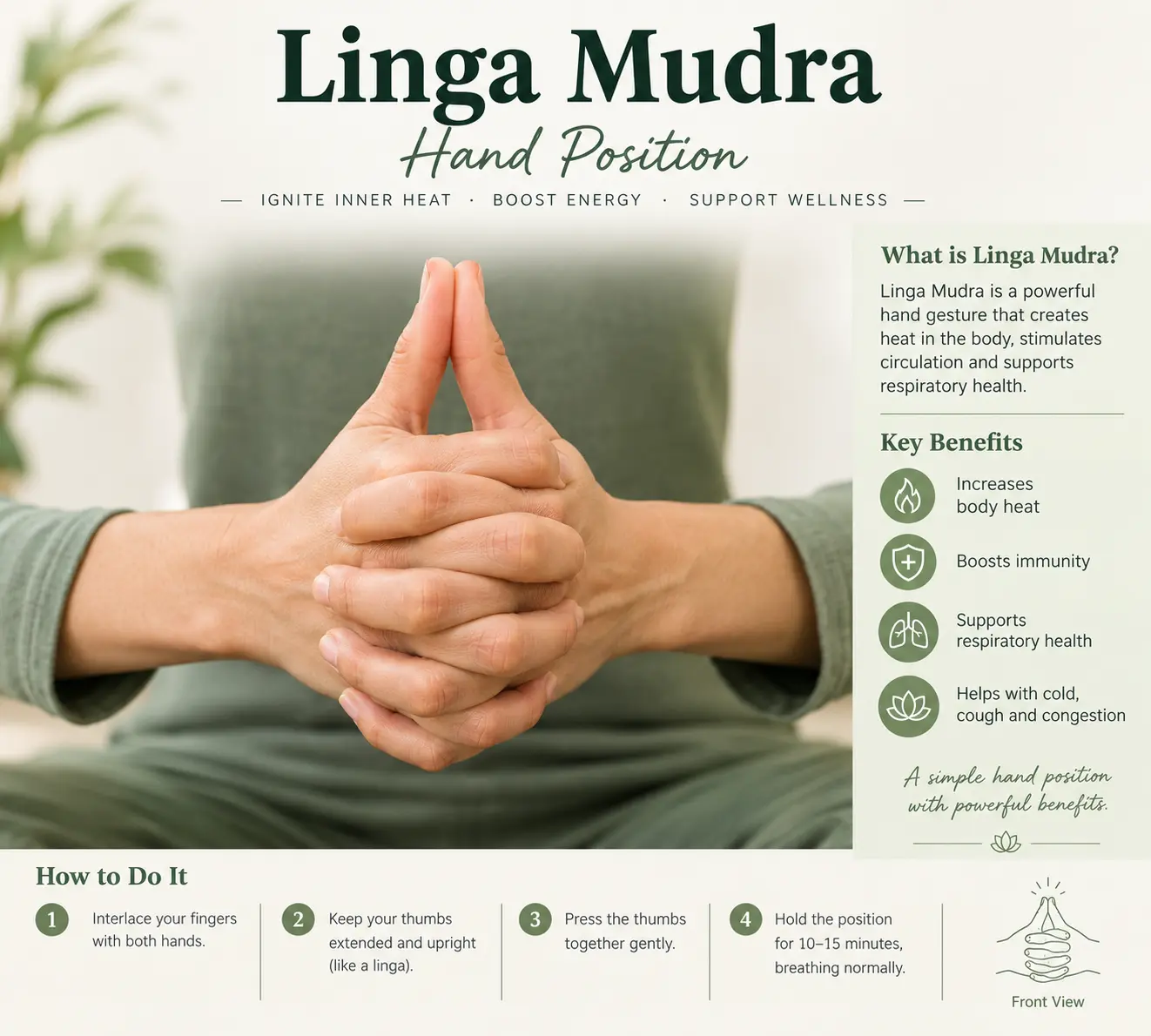
There is an exercise I like to do with my students. It is accessible most anywhere or anytime.
First, make a fist.
Hold it for a few seconds.
Now squeeze tighter.
Now tighter.
Hold it there a little longer.
Really bear down.
Now. Does that feel good? This is what clinging feels like. When you’re contracted around a vision of who your partner should be, around what their practice should look like, that’s the fist. Held, sometimes, for years.
Now open your hand.
That release, that softening, that return of circulation, of sudden space, is what nonclinging feels like. The fist, opened.
***
I have practiced beside devon for nearly twenty years now. I have watched her mind in retreat, in conflict, in teaching, in the ordinary textures of a shared life. I know her practice intimately, the places where it opens, where it sticks, the conditions under which it deepens.
And sometimes, from that deep knowing of a person, something slips. It could be about anything—her health, her work, the way she’s handling a difficult friendship. But it shows up most insidiously around practice, the territory we share.
She’s speaking, and I can feel the sentence forming in my own mind, a sense of where this should go, what she’s not quite seeing yet.
In those moments, I’m no longer fully present. I’m already ahead of her. Calculating what she needs. Discerning, usually wrongly, where her practice is stuck, what’s getting in the way, what would help. And because I can see it, or because I believe I can see it, it starts to feel like my responsibility to do something about it. Or at least to mention it. Or maybe to create the right conditions. Sometimes to wait, with a patience that has an agenda inside of it, for her to arrive at the insight I’ve already had on her behalf.
In the haphazard unfurling of a dharmic life, the conditions for awakening can’t be imported from outside. They have to be grown from the inside.
But however well I know devon, her relationship to her own mind remains beyond my reach. I can practice with her. I can participate in her conditions. I can offer what I can based on what I can see, when she asks. But I cannot practice for her. I cannot see from inside her experience what her path requires.
And the moment I start to act as though I can, I am no longer in contact with her. I am in contact with my idea of her. With the project of what she could be.
In the haphazard unfurling of a dharmic life, the conditions for awakening can’t be imported from outside. They have to be grown from the inside, through the quality of one’s own attention, one’s own willingness and readiness. With others, of course, yet simultaneously and inextricably, on one’s own.
***
The most radical turn we make in practice is that single moment when we remember to pay attention.
In Pali, the word for this is sati. We usually translate this as mindfulness. But the experience of sati is closer to a deep and sustained listening that doesn’t try to fix what it hears.
So when the contraction arises, the instruction is simple and not easy: Turn toward it. Feel it in the body. What is the actual texture of this? Where does it live? In the chest, the jaw, the belly? What is the story it’s telling? What does it want? What is it afraid of?
You don’t have to fix any of that. You don’t have to agree with it or disagree with it. You just have to keep listening.
For me, when I stay with it long enough, what the listening reveals is . . . discomfort. Devon is an extraordinarily accomplished practitioner. She can also, like any human being, cycle through anxiety, irritation, and the same habitual difficulties again and again. And when she does, I feel it. I tell myself I don’t want her to suffer. That I’m just trying to help. And that’s true. But underneath that, if I’m really honest, is something more self-interested: I don’t want to feel what I feel when she’s struggling. The tension in my own body. My own irritability. And underneath that, something closer to fear. Of losing my most important support, even temporarily.
The project, at its root, is about managing my own distress.
If I can be honest with the hard fact of this, the forgivable selfishness in my own longing, something shifts. The contraction becomes workable. I can stay with it, keep my attention stretched toward what’s actually here, with all its gunk and drama and fear and bristling, all the fuel that’s driving the project, until the contraction releases on its own.
***
What thirty years of practice has made plain to me is that nonclinging is not the path toward love. It is love. Not a love you earn or finally achieve after however many hours of meditation. Just what remains when the gripping releases. When the project falls away. When you stop measuring the distance between who your partner is and who they could become, and find yourself here instead, in contact with an actual person, in an actual moment.
This is what intimate relationship keeps teaching me, again and again, whether I want the lesson or not: that the most generous thing I can offer the person I love is not my clarity about their path. It is my full presence, unadulterated and ready to be surprised. The willingness to let them be exactly, entirely, stubbornly themselves. To love what actually showed up, rather than remaining faithful to a vision of what could have showed up in a better moment.
Just this person. As they actually are.
I don’t always get this right. The contraction still arises, and sometimes, even as I’m noticing it, the momentum carries me straight into the project anyway. I can see exactly what I’m doing and still do it regardless.
But when I do turn toward it, when I can stay with the tightening long enough for it to move through its full arc, the project dissolves. And devon is just there.
Not the devon I’ve been quietly revising. Nor the one I can see so clearly from the outside, the one who just needs to sit a little longer, go a little deeper, let go of that particular thing.
Just her. Doing it her way, on her own path, in her own time.