How To Open Kundalini Chakra: A Step-By-Step Guide
✨ QUICK ANSWER Opening your kundalini chakra requires consistent practice in meditation, breathing techniques (pranayama), and specific yoga poses that […]
 Lynk
Lynk
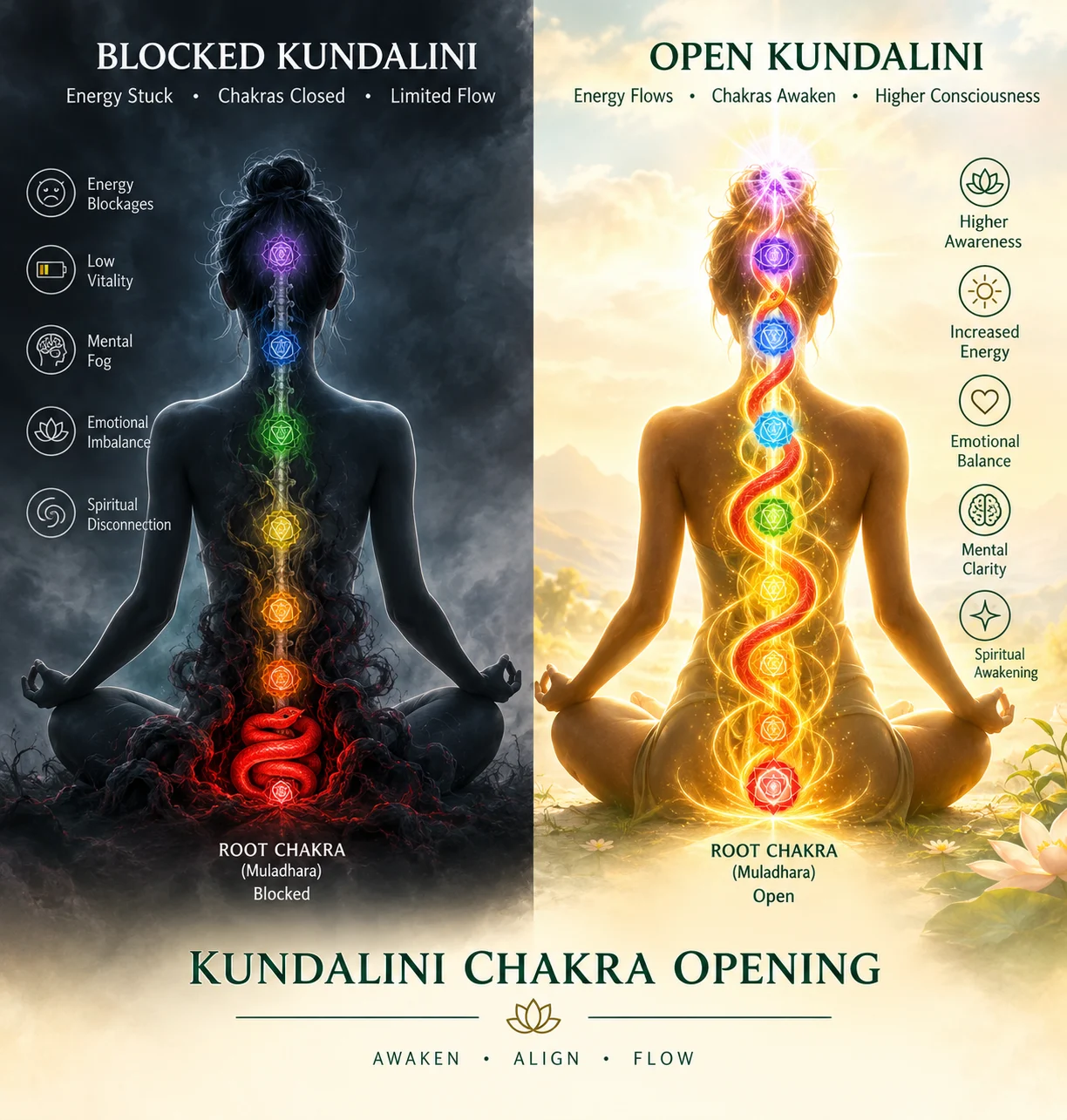
✨ QUICK ANSWER
Opening your kundalini chakra requires consistent practice in meditation, breathing techniques (pranayama), and specific yoga poses that activate the root chakra (muladhara). The process involves grounding energy through your legs, clearing blockages with breathwork, and directing prana upward through energy channels. Safe kundalini awakening typically takes 4-12 weeks of daily practice and works best with proper guidance to avoid overwhelming the nervous system.
The kundalini chakra—your body’s dormant spiritual energy reservoir located at the base of your spine—holds the key to profound personal transformation, heightened awareness, and deep spiritual connection.
But awakening this powerful force requires more than enthusiasm. It demands a structured, scientifically-grounded approach that protects your nervous system while gradually expanding your energetic capacity.
Many practitioners attempt kundalini activation without proper preparation, leading to overwhelming sensations, energy imbalances, or frustration. This comprehensive guide provides the exact step-by-step framework used by experienced yoga teachers to safely open kundalini energy, activate your root chakra, and harness transformative spiritual power.
By the end of this post, you’ll understand precisely how kundalini energy works, which practices activate it safely, how to recognize authentic awakening signs, and how to integrate this profound shift into daily life.
Let’s begin your kundalini journey.
What Is Kundalini Chakra (And Why It Matters)
Kundalini is the primal spiritual energy coiled at the base of your spine, specifically at the muladhara (root) chakra. In Sanskrit, “kundalini” means “coiled serpent”—a reference to the dormant spiritual force that, when awakened, rises through your seven chakras and activates your highest consciousness.
Unlike vague spiritual concepts, kundalini energy has measurable physiological correlates:
Increased parasympathetic nervous system activation (vagal tone) Enhanced coherence between brain hemispheres (EEG studies show alpha-theta synchronization) Improved heart rate variability (HRV) Heightened neurotransmitter production (serotonin, dopamine, GABA)The Three Energy Channels (Nadis):
Kundalini moves through three primary energy pathways:
Ida Nadi (left channel) – Lunar, cooling, feminine, parasympathetic, creative Pingala Nadi (right channel) – Solar, warming, masculine, sympathetic, logical Sushumna Nadi (central channel) – Neutral pathway where kundalini fully awakens; aligned with the spinal cordWhen kundalini awakens, it travels upward through sushumna nadi, activating each chakra sequentially and creating profound shifts in consciousness, intuition, and spiritual perception.
Why Your Kundalini Chakra May Be Blocked
Before you can open kundalini, you must identify what’s preventing its natural flow. Kundalini blockages occur when energy cannot move freely through your root chakra and up your spine.
Common Root Chakra Blockages:
| Fear-based | Anxiety, hypervigilance, scattered focus | Unprocessed trauma, survival stress |
| Grounding deficit | Feeling “unrooted,” disconnected from body | Weak earth element connection, unstable life circumstances |
| Tension patterns | Tight hips, lower back pain, pelvic floor dysfunction | Muscular armor from emotional suppression |
| Energy stagnation | Heaviness, lethargy, difficulty concentrating | Poor circulation, weak prana flow |
| Psychological resistance | Doubt, skepticism, resistance to spirituality | Mental resistance to surrender, control issues |
Misinformation Alert: Many sources claim blocked chakras are the primary obstacle to kundalini awakening. The truth is more nuanced: kundalini rises through blockages to clear them. However, severe blockages (particularly unprocessed trauma) can create uncomfortable activation symptoms. Proper preparation minimizes discomfort.
Seven Signs Your Kundalini Is Opening
Kundalini awakening creates unmistakable physiological, emotional, and energetic signs. These indicate your root chakra is activating and energy is preparing to rise.
Sign 1: Spontaneous Trembling or Kriyas (Involuntary Movements)
Your body spontaneously jerks, trembles, or moves in waves. You may feel energy spiraling up your spine without conscious effort. These “kriyas” (spontaneous cleansing movements) indicate kundalini is moving through stuck energy patterns and releasing blockages.
Safety note: Kriyas are natural and safe. They typically decrease as energy moves and blockages clear.
Sign 2: Intense Heat at the Base of Spine
You experience burning sensations, tingling, or intense warmth at your tailbone or lower back. This is kundalini activating muladhara chakra and beginning its upward journey. The heat usually concentrates around the sacral region before dispersing upward.
Sign 3: Deep Sleep Requirement (Followed by Enhanced Wakefulness)
Your body demands 10-12 hours of sleep as kundalini integrates into your system, then you awaken needing less sleep (5-6 hours) but feeling more alert and energized. This reflects your nervous system reorganizing at a higher functional level.
Sign 4: Emotional Purging and Mood Shifts
You experience spontaneous crying, laughter, or emotional release without clear trigger. Kundalini moves through suppressed emotional memories stored in your nervous system, activating their release. Feelings that seemed resolved suddenly resurface for final clearing.
Sign 5: Heightened Sensory Perception
Colors appear more vivid, sounds seem louder, tastes more intense. Your intuition strengthens—you “know” things without logical explanation. This reflects heightened nervous system sensitivity as kundalini activates and harmonizes all sensory systems.
Sign 6: Spontaneous Meditation and Mental Stillness
Your mind becomes naturally quiet without effort. Thoughts dissolve mid-way. You experience extended periods of peaceful emptiness (meditation-like states) happening spontaneously, even during daily activities.
Sign 7: Kundalini Sensations (Tingling, Spiraling, Pressure)
You feel distinct sensations moving up your spine: tingling, pressure waves, spiraling energy, or the sense of something “unfurling” inside your body. Many practitioners describe it as a serpent moving upward or energy waves rolling through your torso.
The 8-Step Framework To Open Kundalini Chakra Safely
Opening kundalini requires sequential preparation before the main activation. Attempting advanced practices without foundation creates overwhelming sensations and nervous system dysregulation. This 8-step system ensures safe, sustainable awakening.
Step 1: Prepare Your Physical Foundation (Weeks 1-2)
Your body must be ready before kundalini rises. Without proper foundation, awakening creates uncomfortable symptoms: excess heat, racing heart, scattered energy, or overwhelming emotions.
What to do:
Daily grounding practice (5 minutes): Stand barefoot on earth, visualizing roots extending from your feet deep into the ground. Feel stability, heaviness, and connection. This activates your parasympathetic nervous system and primes muladhara. Root chakra yoga poses (10 minutes daily): Mountain Pose (Tadasana) – Activate all four corners of feet, press root chakra downward Warrior I (Virabhadrasana I) – Build lower body strength and grounding Child’s Pose (Balasana) – Release lower back tension and calm nervous system Pigeon Pose (Eka Pada Rajakapotasana Prep) – Open hips and release pelvic floor tension Stabilize your life: Ensure sleep, nutrition, and emotional stability are solid. Kundalini activation is more intense during sleep deprivation or emotional crisis.Why this works: Physical grounding prevents kundalini from rising too quickly. Your body needs a stable foundation before channeling intense spiritual energy. This step protects your nervous system.
Step 2: Clear Energy Blockages With Alternate Nostril Breathing (Weeks 2-3)
Before kundalini rises through sushumna nadi, you must balance the ida and pingala channels. Nadi Shodhana (alternate nostril breathing) clears these primary energy pathways and creates a “clean channel” for kundalini.
Nadi Shodhana Technique (5 rounds daily):
Sit in a comfortable meditative posture (Sukhasana or Siddhasana) Bring your right hand to your face, index and middle fingers to third eye Use thumb to close right nostril; inhale through left nostril (4 counts) Close left nostril with ring finger; exhale through right nostril (4 counts) Inhale through right nostril (4 counts) Close right nostril; exhale through left nostril (4 counts) Repeat 10 times (one complete round); do 5 rounds total dailyExpected results: You’ll notice energy flowing more smoothly, clearer thinking, better emotional balance, and reduced anxiety within 3-5 days.
Misinformation Alert: Some sources claim alternate nostril breathing alone awakens kundalini. While it’s essential preparation, kundalini awakening requires additional practices (pranayama, meditation, specific asanas). Nadi Shodhana is preparatory, not the main catalyst.
Step 3: Activate Prana With Root Chakra Breathing (Weeks 3-4)
Now that your channels are clearer, you’ll specifically direct prana into the root chakra using Muladhara Chakra Activation Breath.
Muladhara Activation Breath (3-5 minutes daily):
Sit in comfortable meditation posture Visualize your root chakra as a glowing red sphere at the base of your spine Inhale for 4 counts while contracting your pelvic floor muscles (root lock/Mula Bandha) Hold the breath for 4 counts, maintaining the contraction Exhale for 4 counts while releasing the contraction Pause for 4 counts at the empty lungs Repeat 12-15 timesDuring practice, simultaneously:
Chant “LAM” (muladhara seed mantra) on the exhale Visualize red energy gathering at your tailbone Feel stability, safety, and grounding with each breathScientific correlation: This breathing pattern activates your sympathetic nervous system momentarily (through breath retention), then triggers a parasympathetic rebound (vagal activation) on the exhale. This creates rhythmic nervous system activation ideal for kundalini preparation.
Why this works: The combination of breath, mantra, visualization, and root lock directly stimulates muladhara chakra and trains prana to move through specific energy pathways.
Step 4: Build Energetic Capacity With Breath of Fire (Weeks 4-5)
Breath of Fire (Kapalabhati Pranayama) generates massive prana production and rapidly activates the root chakra. This is where you begin to actively generate the energy kundalini will use to rise.
Kapalabhati Breath Technique (Start small, build gradually):
Sit upright with spine straight Inhale deeply through both nostrils Exhale forcefully and rapidly through nose (1-2 second bursts) while contracting your abdomen sharply Allow passive inhales between the forced exhales Complete 30 rapid exhales, then breathe normally Rest 15 seconds Repeat for 2-3 rounds totalBeginner protocol: Start with 20 exhales per round. After 1 week, increase to 30. After 2 weeks, increase to 40.
Expected sensations: Tingling in your legs, warmth at your tailbone, energy movement, tingling in fingertips, and mental clarity. These are signs prana is activating.
Caution: Kapalabhati is powerful. If you feel dizzy or overwhelmed, return to normal breathing. Never force or rush this practice.
Step 5: Direct Energy Upward With Root Lock + Visualization (Weeks 5-6)
Now your kundalini has awakened energy to work with. This step teaches you to consciously direct that energy upward through your spine using the root lock combined with visualization and intention.
Kundalini Direction Practice (5-10 minutes daily):
Sit in a comfortable meditative position Take 5 deep, grounding breaths to settle your nervous system Inhale slowly through your nose As you inhale, engage Mula Bandha (pelvic floor contraction) Visualize red kundalini energy spiraling upward from your base chakra through your spine With each inhale-hold, visualize the energy moving higher (root → sacral → solar plexus → heart) Exhale slowly, releasing the lock but maintaining the visualization Repeat 12-20 timesKey technique: The visualization is not imagination—you’re directing actual energy flow through intention. Over time, you’ll feel the energy move without conscious direction.
What to expect: Sensations of energy moving up your spine, tingling in your legs intensifying, warmth moving upward, and spontaneous muscle contractions along your spine.
Step 6: Activate Chakra Resonance With Bija Mantras (Weeks 6-7)

Each chakra vibrates at a specific frequency. Chanting bija (seed) mantras harmonizes each chakra with kundalini energy as it rises. This ensures smooth progression through all seven chakras.
Daily Chakra Mantra Practice (10 minutes):
Sit comfortably and chant these mantras in sequence, spending 1-2 minutes on each:
LAM (Root/Muladhara) – Low pitch, grounding, red VAM (Sacral/Svadhisthana) – Slightly higher pitch, creative, orange RAM (Solar Plexus/Manipura) – Higher pitch, powerful, yellow YAM (Heart/Anahata) – Medium-high pitch, loving, green HAM (Throat/Vishuddha) – High pitch, expressive, blue OM (Third Eye/Ajna) – Very high pitch, intuitive, indigo OM or Silence (Crown/Sahasrara) – Highest vibration, unified, violet/whiteTechnique: Chant each mantra on the exhale, maintaining the sound for the full breath. Feel the vibration in each corresponding chakra.
Why this works: Mantras create vibrational resonance that aligns your physical and energetic bodies. This prevents kundalini from getting “stuck” at any single chakra during its upward journey.
Step 7: Deepen With Kundalini Meditation (Weeks 7-8)
Now that your foundation is solid, kundalini energy is flowing, and your chakras are harmonized, you can practice deep meditation specifically designed to facilitate full kundalini activation.
Complete Kundalini Activation Meditation (15-20 minutes):
Setup (2 minutes): Sit in padmasana (full lotus) or sukhasana (easy pose). Ensure your spine is perfectly straight. Close your eyes. Grounding phase (3 minutes): Take slow, deep breaths. Visualize roots extending from the base of your spine into the earth. Feel stability and heaviness. Energy generation (3 minutes): Practice Breath of Fire (30 exhales, 3 rounds) to activate prana. Feel tingling and warmth at your base chakra. Energy direction (7 minutes): Slow your breathing. With each inhale, visualize kundalini energy spiraling upward from muladhara through each chakra. Chant the corresponding mantra silently or aloud: Root (inhale up 15 seconds) – LAM Sacral (inhale up 15 seconds) – VAM Solar Plexus (inhale up 15 seconds) – RAM Heart (inhale up 15 seconds) – YAM Throat (inhale up 15 seconds) – HAM Third Eye (inhale up 15 seconds) – OM Crown (pause 30 seconds at crown) Integration (3 minutes): Allow energy to settle. Take natural breaths. Feel the unified consciousness at your crown. Rest in stillness. Closing (1-2 minutes): Slowly open your eyes. Gently massage your face and hands. Take time to ground before standing.Frequency: Practice 3-5 times per week. Daily practice accelerates awakening but may be overwhelming for beginners.
Step 8: Integrate and Stabilize (Weeks 8-12)
Kundalini awakening is not the endpoint—integration is. Once kundalini rises, you must stabilize it in your daily life, ground the energy, and prevent it from dissipating or creating imbalance.
Integration Practices (Daily, indefinitely):
Morning grounding (5 minutes): Root chakra visualization + Tadasana Breathwork (5 minutes): Nadi Shodhana or Alternate Nostril Breathing Gentle yoga (15 minutes): Slow, mindful practice focusing on spinal alignment Meditation (10-15 minutes): Kundalini activation or simple mindfulness Earthing (10-15 minutes): Barefoot walking on grass, soil, or sand Energy awareness (throughout day): Notice tingling, sensations, energy movementReality check: Kundalini activation is not a one-time event. It’s an ongoing spiral where you continually awaken deeper layers of the same energy. The “opening” process repeats throughout your life at increasingly subtle levels.
Common Mistakes When Opening Kundalini (And How To Fix Them)
Most kundalini practitioners encounter obstacles that delay or complicate their awakening. Recognizing and correcting these mistakes prevents frustration and nervous system overwhelm.
Mistake 1: Skipping the Foundation
Many practitioners jump directly to advanced kundalini meditations without the 4-6 week preparation phase.
What happens: Kundalini rises faster than your nervous system can integrate, creating kundalini syndrome: anxiety, insomnia, uncontrolled emotions, scattered energy, or physical pain.
The fix: Complete all 8 steps sequentially. Don’t accelerate the timeline. Your nervous system must gradually acclimate to higher energetic states. Rushing this is counterproductive.
Mistake 2: Forcing Kundalini to Rise
Practitioners aggressively practice intense breathing, advanced meditations, or extended retention in an effort to “force” kundalini awakening.
What happens: You overwhelm your nervous system, creating resistance and blockages that slow the process. Forced kundalini is like forcing a plant to grow—it damages the foundation.
The fix: Kundalini rises when conditions are right, not through force. Your job is to prepare the conditions (grounding, channel clearing, prana building) and allow kundalini to rise naturally. This feels effortless, not strained.
Mistake 3: Practicing Without Proper Guidance
Self-teaching kundalini from random YouTube videos or articles creates inconsistency, missed steps, and confusion about what’s happening.
What happens: You misinterpret symptoms, skip essential steps, or practice incorrect techniques that don’t work or create imbalance.
The fix: Ideally, work with an experienced kundalini yoga teacher who can assess your current state, customize your practice, and guide you through challenges. At minimum, follow a complete system (like this guide) rather than piecing together random practices.
Mistake 4: Ignoring Contraindications
Certain conditions (trauma, mental health challenges, severe anxiety, medication interactions) require modified approaches or professional support.
What happens: Kundalini activation overwhelms someone with unprocessed trauma or unstable mental health, creating crisis symptoms.
The fix: See the “Contraindications” section below. If you have trauma history or mental health challenges, work with a trauma-informed yoga therapist or kundalini teacher before beginning intensive practice.
Mistake 5: Not Grounding Between Practices
Some practitioners become so focused on “spiritual” experiences that they neglect basic grounding and earthing.
What happens: You become “ungrounded”—scattered, anxious, unable to focus, feeling “spacey” or disconnected from your body. Symptoms of ungrounding actually interrupt kundalini integration.
The fix: Balance all spiritual practice with grounding. After each meditation, spend 5 minutes in child’s pose or earthing. Walk barefoot daily. Eat heavier foods (root vegetables, grains). This ensures kundalini energy stays integrated in your physical body.
When To Practice Kundalini Awakening (Daily Routine Integration)
Kundalini activation is most effective during specific times of day and seasons. Aligning your practice with natural rhythms accelerates results and prevents overwhelm.
Optimal Practice Times:
Early Morning (4:00 AM – 6:00 AM | “Brahma Muhurta”)
The most powerful time for spiritual practice Your mind is naturally clear; fewer distractions exist Prana is most active in your body Your nervous system is fresh and receptive Complete your full 8-step sequence before breakfastEvening (5:00 PM – 7:00 PM)
Secondary ideal time, particularly for meditation and integration Practice calming techniques to prevent sleep disruption Avoid intense breathing or activation practices; focus on gentle meditationSeasonal Considerations:
Spring (Best season for kundalini activation):
Natural upward energy movement aligns with spiritual work Warmer temperatures support intensity Ideal for beginning the 8-week programSummer (Good for deepening):
Continue intensive practice but may need more water and cooling practices Include cooling breathing (Shitali or Sitkari pranayama)Autumn (Maintenance season):
Practice becomes more grounded and stabilizing Reduce intensity; focus on integration and stabilityWinter (Introspection season):
Slower, deeper practice Use warming practices if needed Focus on meditation over intense activationDaily Sequence Template:
5:00 AM: Wake, drink water 5:10-5:15 AM: Grounding breathing (Nadi Shodhana, 5 minutes) 5:15-5:30 AM: Root chakra yoga poses (15 minutes) 5:30-5:45 AM: Prana activation (Breath of Fire, root lock practice, 15 minutes) 5:45-6:05 AM: Full kundalini meditation (20 minutes) 6:05-6:10 AM: Grounding and integration (5 minutes) 6:10 AM onwards: Eat nourishing breakfast, begin day groundedFrequency:
Weeks 1-4: 5-6 days per week (1 rest day) Weeks 5-8: Daily if possible, but never more than once daily After week 8: 5-6 days per week indefinitely; kundalini practice requires consistency but not obsessivenessImportant note: Practicing kundalini twice in one day or multiple times weekly creates excessive energetic activity that your nervous system can’t integrate. This leads to the exact overwhelm and dysregulation you’re trying to avoid.
Contraindications: When NOT To Practice Kundalini Activation
While kundalini awakening is beneficial for most practitioners, certain conditions require modification, delay, or professional support.
Do NOT practice kundalini activation if you have:
1. Unprocessed Trauma or PTSD
Kundalini moves through stored trauma in your nervous system, triggering overwhelming emotional and physical responses Alternative: Work with a trauma-informed yoga therapist first. Focus on grounding, gentle restorative yoga, and nervous system regulation for 3-6 months before kundalini work When to start: Once you’ve developed strong grounding and emotional regulation skills2. Active Mental Health Crisis (Severe depression, acute anxiety, psychosis, or active suicidal ideation)
Kundalini can intensify emotional symptoms Do this instead: Stabilize your mental health with professional support (therapist, psychiatrist) first When to start: Once your mental health is stable for at least 3-6 months3. Severe Sleep Deprivation or Chronic Insomnia
Kundalini activation demands nervous system resources; depleted reserves create overwhelm Alternative: Establish stable sleep patterns (7-9 hours nightly) for at least 4 weeks before beginning kundalini practice Additional support: Restorative yoga, valerian root, magnesium glycinate4. Cardiac Conditions or Severe Hypertension
Intense breathing practices can affect heart rate and blood pressure Talk to your doctor first: Get explicit permission before practicing intense pranayama Modified approach: Use very gentle, extended exhale practices (exhale twice as long as inhale) instead of intense breathing5. Pregnancy (Especially First Trimester)
Kundalini activation creates energetic intensity that can destabilize early pregnancy Timeline: Avoid kundalini practices until the second trimester; even then, use very gentle approaches Safe alternative: Grounding practices, gentle prenatal yoga, pelvic floor breathing (focusing on stability, not activation)6. Medications That Affect Nervous System Function
SSRIs (antidepressants), benzodiazepines, or other psychotropic drugs can interact unpredictably with kundalini activation What to do: Consult with both your prescribing doctor AND an experienced kundalini teacher; some medications require delaying kundalini practice Important: Never stop psychiatric medication to practice kundalini7. Recent Addictions or Substance Use
Your nervous system is already dysregulated; kundalini can destabilize recovery Timeline: Wait at least 1 year of sobriety before intensive kundalini practice Safe approach: Use gentle grounding practices to support recovery8. Extreme Life Instability (Homelessness, active abusive relationship, severe financial crisis, active legal trouble)
You lack the physical safety and nervous system resources needed for kundalini integration Priority first: Establish basic safety, stability, and housing Then: Begin kundalini practice once your external life supports itIf you have ANY of these conditions:
Work with a qualified kundalini yoga teacher or trauma-informed yoga therapist before practicing independently Do NOT begin the 8-step framework without professional guidance Modify intensity and pace based on professional recommendations Consider that kundalini awakening may need to wait until conditions are more stableMild conditions that need modifications (NOT contraindications):
Mild anxiety: Increase grounding practices; reduce breath retention time Mild ADHD: Add more physical movement; use mantras to focus mind Lower back pain: Focus on spinal alignment; avoid deep backbends; increase pelvic floor awareness Tight hips: Extend hip opening practices; hold poses longer before advancing Mild insomnia: Move kundalini practice to early morning only; practice calming meditation before bedKEY TAKEAWAYS
Kundalini is coiled spiritual energy at your root chakra that awakens through sequential preparation, not force or intensity. The 8-step framework provides safe progression: grounding → channel clearing → prana activation → energy direction → chakra resonance → meditation → integration. Preparation takes 4-8 weeks before full kundalini rise; rushing this timeline creates nervous system overwhelm and kundalini syndrome. Grounding is non-negotiable; without consistent earthing and root chakra work, kundalini energy becomes unintegrated and creates scattered, anxious symptoms. Seven unmistakable signs indicate authentic kundalini opening: spontaneous trembling, heat at base of spine, sleep changes, emotional purging, heightened senses, spontaneous meditation, and distinct energy sensations. Nadi Shodhana (alternate nostril breathing) clears energy channels before kundalini rises, creating a clean pathway for smooth activation. Breath of Fire (Kapalabhati pranayama) generates the prana energy that kundalini needs to rise; it’s the primary activation technique. Root lock (Mula Bandha) combined with visualization directs energy consciously upward through your spine rather than allowing it to dissipate. Chakra mantras (LAM, VAM, RAM, YAM, HAM, OM) align each chakra with kundalini energy as it rises, preventing energy from getting stuck. Five absolute contraindications require professional support: unprocessed trauma, active mental health crisis, severe sleep deprivation, cardiac conditions, and pregnancy (first trimester). Integration is more important than activation; once kundalini rises, maintaining daily grounding, gentle practice, and earthing ensures stable, beneficial transformation. Kundalini is not a destination but an ongoing spiral where you continually awaken deeper layers throughout your life.FAQ: Your Kundalini Questions Answered
Q1: How long does kundalini chakra opening take?
Kundalini awakening typically unfolds over 4-12 weeks following the 8-step system. However, full integration takes months or years. Initial awakening (energy rising for the first time) often happens within 6-8 weeks of consistent daily practice. Deepening and stabilization continue indefinitely. Every practitioner progresses differently based on nervous system capacity, life stability, and practice consistency.
Q2: What happens if kundalini rises too quickly?
Rapid kundalini rise creates kundalini syndrome: racing heart, anxiety, uncontrolled emotions, insomnia, or intense physical sensations. Your nervous system becomes overwhelmed. If this occurs, immediately ground yourself (barefoot on earth, child’s pose, grounding breathing) and stop intense practice. Work with a yoga therapist to recalibrate. The fix: slow down, extend the preparation phase, and proceed more gradually.
Q3: Can kundalini opening be reversed or stopped?
Once kundalini awakens, it doesn’t fully reverse—but you can stabilize it or slow its rise through grounding practices. If activation becomes too intense, focus exclusively on grounding (earth element, root chakra work, minimal meditation) for 1-2 weeks until symptoms settle. The awakened energy doesn’t disappear; you’re just stabilizing its integration.
Q4: Is it dangerous to awaken kundalini without a teacher?
It’s possible but carries higher risk of overwhelm, misinterpretation, and extended kundalini syndrome. A qualified teacher significantly reduces risk by personalizing your practice, monitoring your progress, and adjusting intensity. If you’re practicing alone, follow a complete system (not random practices), begin conservatively, and immediately seek guidance if symptoms become uncomfortable.
Q5: Can women safely open kundalini?
Yes, absolutely. Female practitioners often experience kundalini activation faster than males (potentially due to refined nervous system sensitivity). Special consideration: modify practices during menstruation (reduce intense breathing; focus on grounding). During the menstrual phase, avoid advanced pranayama; instead, practice gentle restorative poses and calming meditation.
CONCLUSION
Opening your kundalini chakra is one of the most transformative spiritual practices available to you—but only when approached with patience, proper preparation, and nervous system awareness.
The eight-step framework in this guide removes the guesswork from kundalini activation. Rather than piecing together random techniques from scattered sources, you now have a proven, sequential system that honors both the ancient wisdom of yoga and modern neuroscience.
Here’s what you now know:
Your kundalini is not distant or dangerous—it’s a natural spiritual capacity that awakens gradually when you prepare your physical and energetic foundation. The trembling, heat, emotional waves, and spontaneous meditation you experience aren’t spiritual crises; they’re authentic signs that your root chakra is opening and kundalini energy is preparing to rise.
The 4-8 week timeline is not a race. Your nervous system requires time to acclimate to higher energetic frequencies. Rushing this process creates the exact overwhelm and kundalini syndrome that many fearful practitioners worry about. Honoring the timeline—grounding in weeks 1-2, clearing channels in weeks 2-3, building prana in weeks 4-5—creates sustainable, joyful awakening.
The most critical insight: Grounding is not separate from kundalini opening. Grounding IS kundalini opening. Every time you stand barefoot on earth, visualize roots extending downward, or practice root chakra breathing, you’re directly activating muladhara chakra and preparing kundalini to rise safely. This is why the eight-step system begins with foundation, not intensity.
Your next step is simple: Choose your start date—ideally a Monday or the beginning of a season. Commit to the first four weeks of the foundation + channel clearing phase. Show up each morning at 5 AM for just 30-40 minutes. Notice the shifts in your body, emotions, and energy.
Most practitioners report authentic kundalini sensations within 4-6 weeks of consistent practice. Some experience activation faster; others need 8-12 weeks. Your timeline is perfect for your unique nervous system and life circumstances.
The transformation awaits—not “someday” or in some distant spiritual future, but now, through the simple daily practices you’ve learned in this guide.
Your kundalini is ready. The question is: are you ready to awaken it?