Entity SEO for AI Search: How to Build a Clear Brand Entity
Learn how entity SEO uses consistent organization data, structured markup, source-of-truth pages, authors, products, and external evidence to reduce ambiguity.
 Netzender Editorial Team
Entity SEO is the practice of making people, organizations, products, places, and concepts easier for search systems to identify and distinguish.
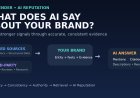
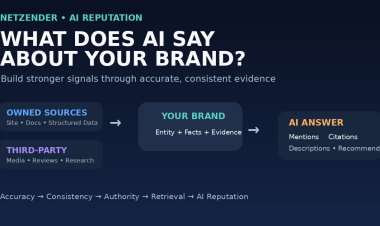
In AI search, entity clarity matters because generated answers can combine information from many sources. If your brand name is ambiguous, product descriptions conflict, or important facts differ across pages, the evidence becomes harder to reconcile.
What Is an Entity?
An entity is a distinct thing that can be identified independently of one particular keyword phrase.
- a company;
- a person;
- a software product;
- a destination;
- a university;
- an event;
- a concept.
Keywords and Entities Are Different
A keyword is text. An entity is the thing the text refers to.
Multiple phrases can describe the same entity, while two unrelated entities can have similar names.
1. Establish One Clear Organization Identity
Use the official organization name consistently. Add an alternate name where it genuinely helps disambiguation.
2. Maintain a Strong About Page
An effective About page should clearly describe:
- organization name;
- what it does;
- who it serves;
- important products;
- leadership where appropriate;
- markets or location;
- official contact information.
3. Keep Brand Facts Consistent
Common inconsistencies include:
- different founding dates;
- old executive biographies;
- obsolete product names;
- old addresses;
- conflicting descriptions;
- outdated features.
4. Use Organization Structured Data
Organization markup can reinforce administrative information that is also visible on the site.
Useful properties may include:
- name;
- alternateName;
- url;
- logo;
- description;
- address;
- contact information;
- sameAs.
5. Use the Most Specific Appropriate Type
A university, restaurant, person, store, and general corporation are different entity types. Use the most appropriate schema type when available.
6. Connect Genuine Official Profiles
Official external profiles can reinforce identity when they clearly belong to the entity.
Do not add unrelated profiles simply to increase the number of sameAs links.
7. Build Clear Author Entities
Expert content should make the author or reviewer understandable.
An author page can include:
- full name;
- role;
- expertise;
- biography;
- published work;
- relevant professional profiles.
8. Keep Product Entities Consistent
Products often accumulate naming problems after launches and rebrands.
Keep product names, features, pricing terminology, documentation, and support references aligned.
9. Build Entity Relationships With Internal Links
Internal links show relationships between the organization, products, authors, documentation, research, and topics.
10. Create Source-of-Truth Pages
Important facts deserve stable URLs.
- company information;
- leadership;
- product specifications;
- pricing;
- security;
- methodology;
- press resources.
11. Correct Old Information
Publishing a new accurate page does not automatically neutralize an older contradictory page.
Update, consolidate, redirect, or remove obsolete content where appropriate.
12. Earn Legitimate Third-Party Confirmation
Independent evidence can include:
- industry publications;
- partner sites;
- conference profiles;
- professional databases;
- research references;
- news coverage.
13. Separate Entity Clarity From Reputation
A system understanding who your brand is does not guarantee that every description will be positive.
Identity, visibility, citations, and reputation are separate dimensions.
14. Monitor Entity Descriptions in AI Answers
Test questions such as:
- What is [Brand]?
- Who owns [Brand]?
- What does [Product] do?
- Who is [Person]?
- What is [Brand] known for?
15. Inspect Citations Behind Claims
When an AI answer provides supporting links, inspect which sources are being used for important facts.
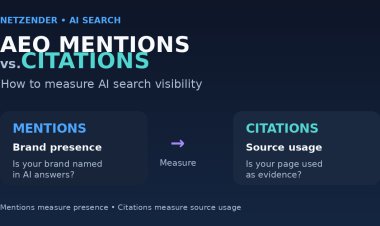
See AEO Mentions vs. Citations.
16. Do Not Treat Schema as a Reputation Hack
Structured data helps machines interpret information. It does not force a search or AI system to repeat your preferred marketing message.
Entity SEO Checklist
- Consistent organization name.
- Clear About page.
- Accurate administrative information.
- Relevant Organization markup.
- Correct schema subtype.
- Official profiles.
- Author identity pages.
- Consistent product names.
- Source-of-truth pages.
- Strong internal relationships.
- Old contradictions corrected.
- Legitimate external evidence.
- AI descriptions monitored.
- Citations reviewed.
17. Create an Internal Entity Map
For larger sites, document the important entities your organization publishes about and how they connect.
A simple internal entity map might contain:
- organization;
- brands;
- products;
- executives;
- authors;
- locations;
- services;
- major topics.
For each entity, identify the preferred name, canonical page, important attributes, and relationships with other entities.
This is useful editorially because it reduces situations where different teams accidentally publish conflicting descriptions of the same product or organization.
18. Audit Entity Ambiguity
Some names are naturally ambiguous. A company may share a name with a product, another organization, a person, or a generic term.
Review search results and AI answers for questions such as:
- What is [Name]?
- Who owns [Name]?
- Where is [Name] based?
- Is [Name] the same as [Other Name]?
If users and systems can easily confuse two entities, strengthen visible context on the canonical page rather than relying only on metadata.
19. Keep Entity History Understandable
Rebrands, acquisitions, mergers, product renaming, and executive changes often create conflicting public information.
When important changes occur, update the relevant source-of-truth pages and explain the relationship between old and new names where users may still encounter both.
A stable historical explanation is usually more useful than pretending the previous identity never existed.
20. Measure Entity SEO by Outcomes
Entity SEO should ultimately improve clarity, discoverability, and the consistency of how important entities are represented.
Possible measurements include:
- fewer incorrect AI descriptions;
- more consistent branded search results;
- correct organization and author attribution;
- more citations to authoritative pages;
- fewer conflicts between old and current product information;
- better visibility for relevant brand and product queries.
Do not create a proprietary “entity score” unless you can explain exactly what it measures. Use observable outcomes instead.
Final Takeaway
Entity SEO is information architecture for identity.
Make it easy for people and machines to determine who an organization is, what it does, which products and people belong to it, and which pages contain authoritative facts.