How to Audit AI Search Visibility with Semrush in 2026
A practical workflow for auditing AI visibility with Semrush using mentions, citations, cited pages, prompts, competitors, platform data, crawler issues, and business outcomes.
 Netzender Editorial Team

Semrush's AI Visibility Toolkit helps answer a different set of questions from traditional rank tracking: How often is your brand mentioned in AI answers? Which pages get cited? Which competitors appear instead? Which prompts create the largest visibility gaps?
The product was previously known as the AI SEO Toolkit, so older references may still use that name.
1. Establish a Baseline
Start with the main AI Visibility overview.
Record:
- AI visibility;
- mentions;
- citations;
- cited pages;
- platform distribution;
- country distribution.
2. Do Not Treat One Score as the Whole Audit
A benchmark score is useful for comparison but does not explain why your brand appears or whether the visibility produces business value.
3. Audit Brand Mentions
Group prompts where your brand appears by intent:
- brand;
- informational;
- commercial;
- comparison;
- recommendation;
- support;
- product research.
4. Audit Missing Mentions
Prompts where competitors appear but your brand does not may expose useful gaps.
Possible causes include missing content, stronger competitor evidence, weak relevance, or stronger third-party references.
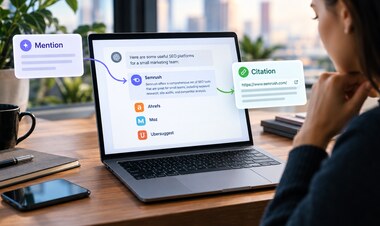
5. Separate Mentions From Citations
A brand can appear in an answer without its website being cited.
Review our mentions vs. citations framework.
6. Review Cited Pages
Identify which URLs are actually being selected as sources.
- blog guides;
- documentation;
- tools;
- research;
- comparison pages;
- landing pages.
7. Find Important Pages That Are Never Cited
If an authoritative page performs well in traditional Search but rarely appears in AI citations, investigate whether the answer structure, evidence, entity context, or crawler accessibility can be improved.
8. Compare Competitors by Topic
Identify topics they dominate, prompts where they appear, pages being cited, and external sources supporting them.
9. Compare AI Platforms
Visibility may differ across ChatGPT, Gemini, Google AI experiences, and other supported platforms.
Different retrieval systems can select different evidence.
10. Review Countries Separately
Global brands should not assume one market represents all users.
11. Track Important Prompts
Create a controlled prompt set around:
- brand identity;
- products;
- use cases;
- competitors;
- customer problems;
- commercial questions.
12. Monitor Trends
Record important changes such as:
- new content;
- technical fixes;
- site migrations;
- rebrands;
- product launches;
- major external coverage.
13. Review Sentiment Carefully
Sentiment can identify recurring patterns but should not be treated as a universal reputation score.
Inspect the underlying responses.
14. Audit Technical AI-Crawler Issues
Cross-check technical findings with:
- robots.txt;
- server logs;
- HTTP status codes;
- canonical configuration;
- indexation.
15. Compare AI Visibility With Traditional SEO
Look for pages strong in Google but weak in AI citations, topics visible in AI but weak in traditional traffic, and pages winning across both.
16. Connect Visibility With Business Outcomes
Use your analytics to measure:
- AI referral traffic;
- engagement;
- leads;
- sign-ups;
- sales;
- assisted conversions.
17. Build an Action Queue
Use four groups:
- Fix: technical or factual problem.
- Improve: existing page needs stronger evidence.
- Create: important topic has no useful page.
- Monitor: change worth tracking but not acting on yet.
Semrush AI Visibility Audit Checklist
- Record baseline metrics.
- Review mentions.
- Review cited pages.
- Identify citation leaders.
- Find uncited strategic pages.
- Compare competitors.
- Review missing prompts.
- Segment by topic.
- Segment by platform.
- Segment by country.
- Review narratives.
- Check crawler issues.
- Compare traditional SEO.
- Measure AI referrals.
- Create prioritized actions.
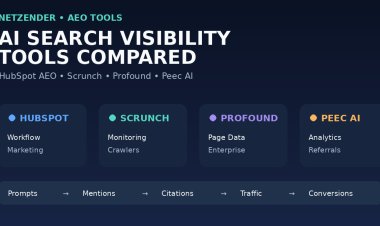
For other platforms, see AEO Tools Compared.
For source selection, see How AI Search Engines Choose Sources.
18. Create a Topic-Level Visibility Matrix
Do not review AI visibility only at domain level. Build a simple matrix that compares the topics most important to the business.
For each topic, record:
- tracked prompts;
- brand mention rate;
- citation rate;
- top cited URL;
- strongest competitor;
- largest content gap;
- recommended action.
This makes the audit easier to prioritize because a high overall visibility score can otherwise hide weak performance for strategically important products or markets.
19. Separate Discovery From Diagnosis
Use the toolkit first to identify where a problem exists. Then move into diagnosis.
For example:
Discovery: A competitor appears in most prompts about a high-value use case.
Diagnosis: Their product page is frequently cited, several independent publications support their claims, and your site lacks a comparable source-of-truth page.
The second step is what turns monitoring data into an editorial or technical action.
20. Record Audit Decisions
Maintain a change log for major actions created from the audit.
- page updated;
- new page created;
- technical crawl issue fixed;
- obsolete content redirected;
- brand fact corrected;
- new research published;
- internal links added.
When visibility changes later, this log gives the team a timeline for understanding what may have contributed.
21. Re-Audit on a Fixed Cadence
AI-search results and retrieval systems change frequently, so a one-time audit becomes stale quickly.
A practical cadence might include:
- weekly review of major visibility changes;
- monthly topic and competitor review;
- quarterly technical and content audit;
- additional review after major migrations, rebrands, or product launches.
The exact cadence should reflect how quickly the site's products, content, and competitive environment change.
Final Takeaway
A useful Semrush AI visibility audit goes beyond one headline score.
The real value comes from connecting prompts, mentions, citations, cited URLs, competitors, technical accessibility, and actual business outcomes.