ChatGPT Ads in 2026: Visual Ads, Attribution and Measurement Explained
OpenAI is expanding ChatGPT Ads with visual formats, conversion integrations, attribution partners, incrementality testing and brand-suitability evaluation. Here is what marketers should know before testing the channel.
 Netzender Editorial Team
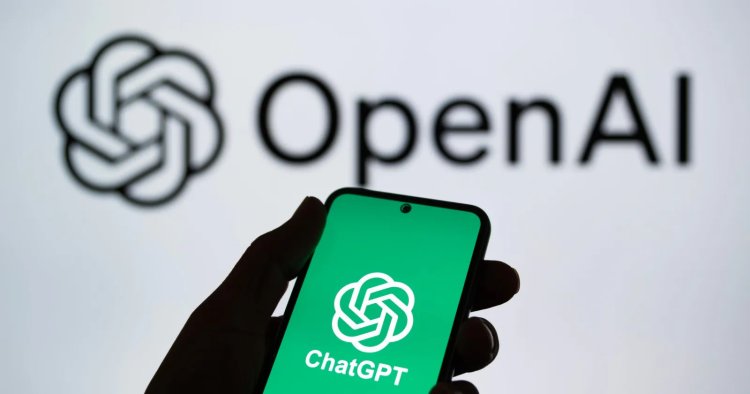
ChatGPT advertising is becoming a much more serious performance-marketing channel. OpenAI has introduced a new visual ad format while expanding the measurement, attribution and brand-suitability infrastructure around ChatGPT Ads.
The announcement changes the conversation for advertisers. The question is no longer simply whether OpenAI can sell ads. The more useful question is whether marketers can now measure ChatGPT campaigns with enough discipline to justify real budget.
What changed with ChatGPT Ads?
OpenAI announced three major developments in October 2026: a new visual advertising format, a broader measurement and attribution ecosystem, and additional work around brand suitability.
The new visual format will initially be tested during image generation in ChatGPT. Ads will be clearly labeled and remain separate from the image a user is creating.
Testing is expected to begin in the United States with an initial group of advertisers.
This matters because visual discovery opens commercial opportunities that text-only advertising cannot always capture well. Retail, travel, beauty, food, home products and other visually driven categories could benefit from showing products or experiences while users are actively exploring ideas.
ChatGPT Ads are getting a more mature measurement stack
The bigger development for performance marketers may be measurement rather than the visual creative itself.
OpenAI says integrations with Hightouch, Tealium and LiveRamp can help advertisers send conversion data from existing systems into ChatGPT Ads.
The company also supports attribution and measurement partners including AppsFlyer, Triple Whale, Adjust, DV Rockerbox, Northbeam, Branch, Singular, Kochava, Airbridge and Tenjin.
For full-funnel and advanced measurement, OpenAI also named partners including Fospha, Measured and INCRMNTAL.
This makes it easier for advertisers to compare ChatGPT Ads against channels such as paid search and paid social using systems they may already trust.
Why attribution matters more in AI-native advertising
ChatGPT does not behave exactly like a traditional search engine or social feed.
A user may begin with a broad question, explore several options, ask follow-up questions and only later move toward a commercial decision.
That creates a more complex customer journey than a simple search query followed by a click.
For that reason, relying only on last-click attribution can produce an incomplete picture of performance.
Marketers should ideally combine platform reporting with first-party conversion data and independent attribution wherever practical.
OpenAI is also exploring incrementality measurement
OpenAI says it is working with Haus, Measured and WorkMagic on geo-based experiments designed to measure the causal impact of ChatGPT Ads.
This distinction is important.
Attribution asks which marketing touchpoint receives credit for a conversion. Incrementality asks whether the conversion would have happened without the advertising.
For a new advertising environment such as ChatGPT, incrementality can be especially useful because advertisers do not yet have years of stable benchmark data.
What do the early results show?
OpenAI published several early partner-reported findings.
According to DV Rockerbox, WeightWatchers saw an attributed cost per acquisition from ChatGPT Ads that was 15.3% lower than its blended paid-search benchmark.
WorkMagic reported statistically significant lift for wellness brand Dose, with 67% of incremental purchases coming from net-new customers.
Triple Whale reported that 93% of Portland Leather visitors attributed to ChatGPT Ads were new.
These results are useful signals, but they should not be interpreted as universal benchmarks.
They come from individual advertisers, specific campaigns and specific measurement partners.
The more reasonable conclusion is that ChatGPT Ads now have enough measurement infrastructure to support more serious testing.
Brand suitability becomes part of the platform
Advertisers also need confidence that their ads appear in appropriate environments.
OpenAI says its placement safeguards are designed to keep advertising away from emotionally vulnerable, sensitive or otherwise unsuitable conversations.
Qualifying advertisers can also use Negative Phrases for narrower placement requirements.
OpenAI is developing brand-suitability evaluation pilots with DoubleVerify and Integral Ad Science.
The goal is to allow independent partners to evaluate how safeguards work without giving those partners access to private user conversations.
How ChatGPT Ads differ from search advertising
Search advertising generally starts with a query that already expresses some level of intent.
ChatGPT conversations can reveal intent over a longer sequence: understanding a problem, comparing alternatives, refining preferences and eventually making a decision.
This could make ChatGPT valuable in categories where people spend time researching before they buy.
However, advertisers should not assume that search-ad creative, bidding strategies or attribution models will transfer directly to an AI-native environment.
Should marketers test ChatGPT Ads now?
For most advertisers, ChatGPT Ads should still be treated as an experimental acquisition channel rather than an automatic replacement for paid search or paid social.
A sensible test should begin with a controlled budget and clearly defined conversion goals.
Where possible, advertisers should connect first-party conversion data and use an independent attribution provider.
The most useful benchmark is not simply click-through rate. Marketers should compare acquisition cost, conversion quality and new-customer rate against their existing channels.
A practical ChatGPT Ads testing framework
- Define the business outcome before launching a campaign.
- Use first-party conversion data wherever possible.
- Track acquisition cost as well as new-customer rate.
- Compare performance against paid search, paid social or another established benchmark.
- Use independent attribution when campaign size justifies it.
- Test incrementality once there is enough conversion volume.
- Review brand-suitability requirements before increasing spend.
- Do not treat individual case studies as universal benchmarks.
What marketers should watch next
The most important shift is that OpenAI is now building the infrastructure expected from a serious advertising platform.
That includes new creative formats, conversion integrations, third-party attribution, incrementality experiments and independent brand-suitability evaluation.
The next questions will be about execution: how broadly visual ads become available, how targeting evolves, which campaign controls advertisers receive and whether independent measurement continues to validate the early results.
For brands already testing emerging acquisition channels, ChatGPT Ads are becoming increasingly difficult to ignore.
For everyone else, disciplined experimentation remains a better strategy than rushing budget into an immature platform.
Primary source
This article is based on OpenAI's October 5, 2026 product announcement, Building advertising for the way people use AI.